
TL;DR

Get the latest gadgets delivered free with Prime
- Fast, free delivery on millions of items
- Prime Video, Amazon Music and more included
- Member-only deals all year
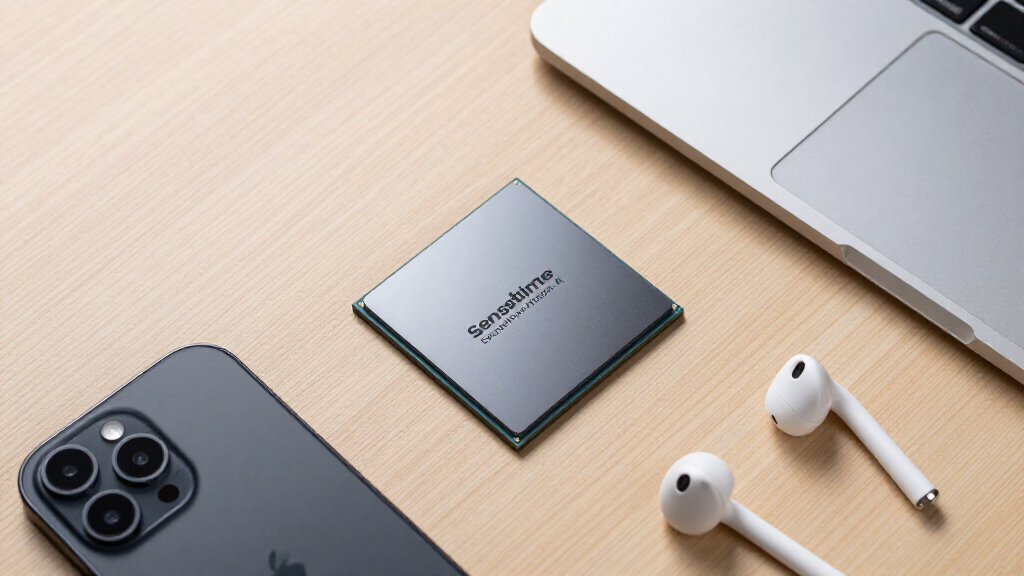
SenseTime has released its flagship SenseNova-Vision model as open source, allowing outside developers to access and adapt it. This move signals a strategic shift towards ecosystem growth and aligns with China’s broader open-source AI initiatives. Details on technical performance and licensing remain forthcoming.
SenseTime has open-sourced its SenseNova-Vision model, a unified vision system within its flagship SenseNova family, making it accessible to external developers and researchers. The move marks a significant shift as the Chinese AI firm embraces open-source strategies to expand its ecosystem and influence, amid growing global attention on Chinese models.
The SenseNova-Vision model is described by SenseTime as a unified vision system capable of performing multiple visual tasks within a open-source framework. The company states that this model is part of its larger SenseNova foundation model line, which underpins its commercial AI offerings. The open-source release allows developers to download, deploy, and adapt the model, although specific technical details such as parameter count, benchmark scores, and licensing terms have not yet been disclosed.
While SenseTime emphasizes that the release aims to lower barriers for developers working on vision-based applications, there has been no independent testing or validation of the model’s capabilities reported so far. The move aligns with broader trends among Chinese AI firms, which are increasingly releasing open models to foster innovation and challenge US competitors. For more details, see the original analysis.
Strategic Shift Toward Ecosystem Expansion
The open-sourcing of SenseTime’s SenseNova-Vision model represents a strategic pivot from proprietary software sales toward fostering a broader developer ecosystem. This approach aims to accelerate innovation in vision AI applications like image analysis and multimodal assistants, potentially expanding the company’s influence and market reach. It also positions China as a key player in open-source AI development, countering US dominance in the field.
For developers and companies, access to a high-quality, unified vision model could reduce costs and development time, fostering new applications across industries such as security, healthcare, and autonomous systems. However, the actual impact depends on the model’s real-world performance and licensing terms, which remain unconfirmed.
As an affiliate, we earn on qualifying purchases.
Chinese Open-Source AI Trends and Market Dynamics
Since its founding in 2014, SenseTime has built a reputation on computer vision, including facial recognition and surveillance. Facing US sanctions and sluggish commercial returns, the company shifted focus toward generative AI and large models in 2023, launching the SenseNova family. The recent open-source release aligns with a broader movement among Chinese AI firms—such as Alibaba with its Qwen models and DeepSeek with language models—to release open-source projects and build international developer communities. This strategy aims to challenge US-led AI dominance and foster innovation within China and globally.
While the company’s previous offerings were primarily proprietary, the move to open-source indicates a new phase in its growth strategy, emphasizing ecosystem development and collaborative innovation.
“SenseNova-Vision is a unified vision model.”
— SenseTime
open-source computer vision software
As an affiliate, we earn on qualifying purchases.
As an affiliate, we earn on qualifying purchases.
Details on Model Capabilities and Licensing Still Unclear
Key technical specifics, including the model’s size, training data, benchmark performance, and licensing terms, have not been publicly disclosed. It is also unclear whether the ‘unified’ label encompasses image generation capabilities or is limited to understanding tasks. Without independent evaluations, claims about performance remain unverified, and the commercial usability of the model depends on licensing conditions that are yet to be announced.
As an affiliate, we earn on qualifying purchases.
Expected Technical Documentation and Benchmark Testing
Developers will likely begin testing SenseNova-Vision soon, which should yield initial benchmark comparisons and performance insights. SenseTime is expected to publish detailed technical documentation and licensing terms, which will determine how widely the model can be adopted in commercial applications. Further releases from the SenseNova family may follow as the company continues its open-source strategy.
machine learning image analysis software
As an affiliate, we earn on qualifying purchases.
As an affiliate, we earn on qualifying purchases.
Key Questions
What is SenseNova-Vision?
SenseNova-Vision is a vision AI model released by SenseTime, described as a unified system capable of handling multiple visual tasks within a single architecture. It is part of the company’s SenseNova foundation model family.
Is SenseNova-Vision free to use?
The model has been released as open source, allowing developers to download and adapt it. Licensing details, including whether commercial use is permitted, have not yet been disclosed.
What does ‘unified vision model’ mean?
It refers to a single model architecture designed to perform various vision tasks—such as image understanding and possibly image generation—within one framework, reducing the need for multiple specialized models.
How does this compare with other open AI models?
SenseTime’s release adds to a growing list of Chinese open-source models, like Alibaba’s Qwen and DeepSeek’s language models, positioning China as a competitive force in open AI development and challenging US dominance.
Source: ThorstenMeyerAI.com
Halloween Picks
halloween
As an affiliate, we earn on qualifying purchases.