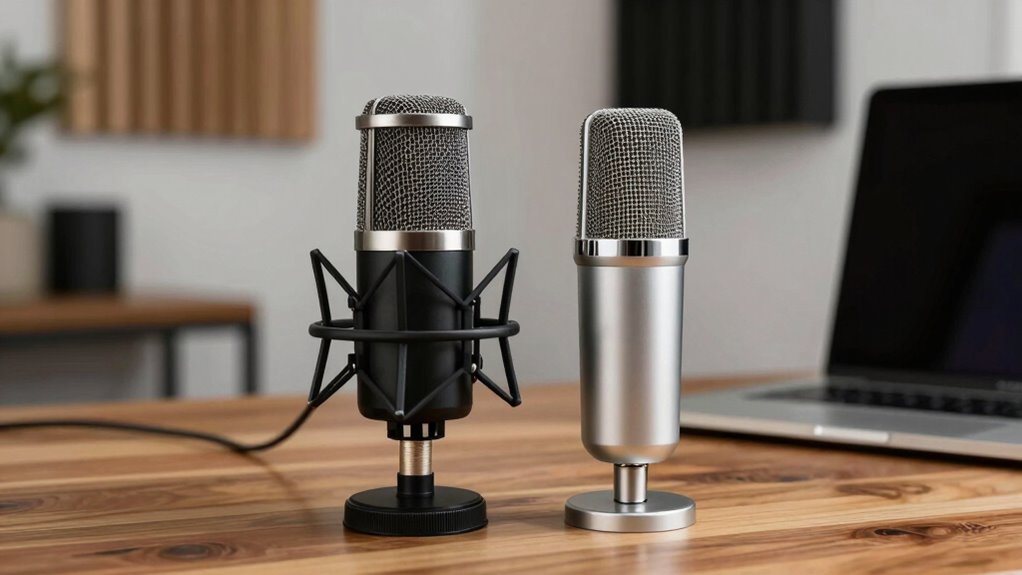

If you’re choosing between dynamic and condenser microphones for your home office, consider your environment and needs. Dynamic mics are durable, great for noisy spaces, and reduce background sounds, making them ideal for casual calls or streaming. Condenser microphones are more sensitive, offering crisp, detailed sound perfect for professional meetings or recordings, but they need a quieter setting. To find out which type suits your setup best, explore the details further—you’ll discover the ideal option for your needs.

Get the latest gadgets delivered free with Prime
- Fast, free delivery on millions of items
- Prime Video, Amazon Music and more included
- Member-only deals all year
Key Takeaways
- Dynamic microphones are durable and ideal for noisy environments, while condenser microphones offer high sensitivity for professional-quality recordings.
- Condenser mics provide clearer, more detailed sound but require external power and are more delicate.
- Dynamic microphones are cost-effective, easy to set up, and better at isolating voice in echo-prone spaces.
- Condenser microphones excel in capturing nuances, making them suitable for high-quality virtual meetings and content creation.
- Choice depends on environment, budget, and desired sound quality, with dynamic mics preferred for casual use and condensers for professional setups.
Products Worth Considering

Sony WH-1000XM6 Wireless Noise-Canceling Over-Ear Headphones, Blue, Bundle

Sony WH-1000XM4C Wireless Noise-Cancelling Headphones, Black

Bose QuietComfort Headphones (2nd Gen), Wireless Noise-Cancelling Over-Ear Headphones, Eucalyptus Green
As an affiliate, we earn on qualifying purchases.
What Are Dynamic and Condenser Microphones?

Dynamic and condenser microphones are the two most common types used in various audio applications. Their differences stem from microphone technology and how they’re designed within audio equipment. Dynamic microphones use electromagnetic induction, making them durable and excellent for handling loud sounds. They feature simple audio equipment design, which contributes to their reliability and affordability. Condenser microphones, on the other hand, rely on capacitor technology, capturing more detail and nuance in sound. They often require external power, like phantom power, and are favored for studio recording and vocal clarity. Your choice depends on what your setup needs. Both types serve different purposes, but understanding their core design helps you select the right microphone for your home office or any audio environment. Understanding microphone technology can help you make more informed decisions when choosing audio equipment. Additionally, considering application-specific features ensures you select the best microphone for your particular needs. Recognizing how microphone placement impacts sound quality can also improve your audio setup.
How Do Microphone Types Differ in Sound and Noise Handling?
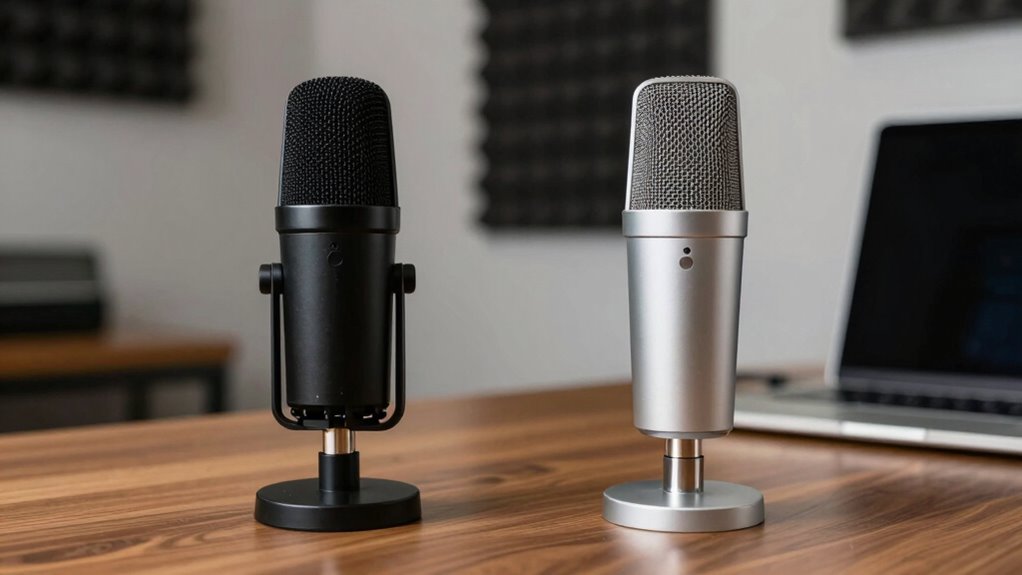
When it comes to sound and noise handling, the differences between microphone types become quite noticeable. Dynamic microphones excel at reducing background noise and providing better sound isolation, making them ideal for noisy environments. They tend to focus on sound sources close to the mic, minimizing ambient sounds. Condenser microphones, however, capture more detail and a broader sound range but are more sensitive to background noise, which can compromise clarity if your space isn’t sound-treated. Developing a methodical approach to selecting the right microphone ensures you meet your specific sound quality needs. Additionally, understanding the power requirements of each microphone type can influence your setup and overall performance.
When Should You Use a Dynamic Microphone at Home?
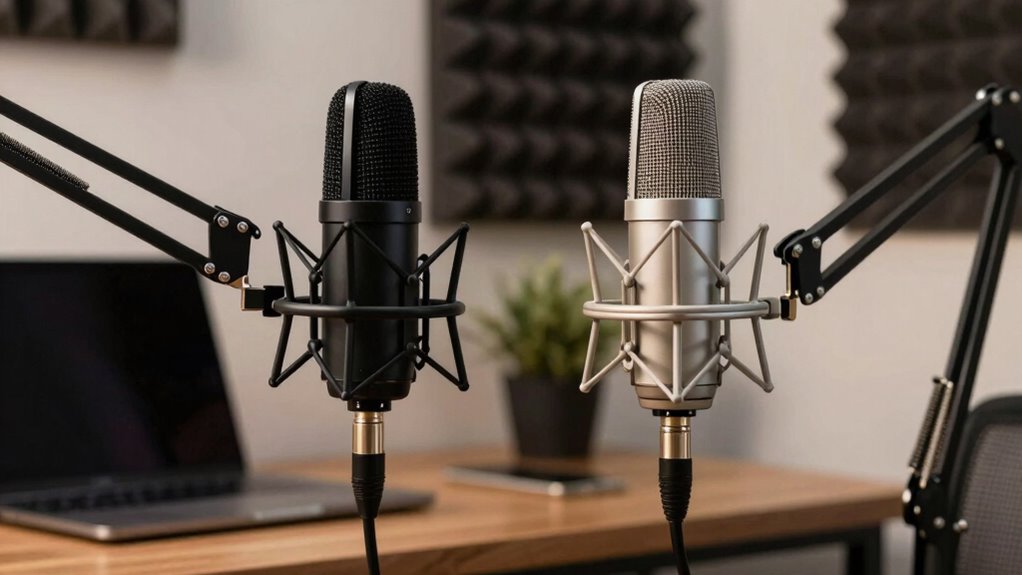
If your home environment is noisy or if you need a microphone that minimizes background sounds, a dynamic microphone is often the best choice. These mics are less sensitive to ambient noise, making them ideal for busy or echo-prone spaces. Plus, if you prefer wireless connectivity, many dynamic microphones offer reliable wireless options, freeing you from cables. When using a dynamic microphone, make certain you have the right microphone accessories, like a sturdy microphone stand and a pop filter, to improve sound quality. They’re also durable and easy to set up, making them perfect for casual or semi-professional home use. Use a dynamic microphone when you want focused audio and minimal background interference in your recordings or virtual meetings. Additionally, understanding content relevance and authority can help you choose the right microphone that best suits your needs. For example, selecting a microphone with the appropriate environmental impact of tissue paper can complement personal style preferences and enhance your overall presentation. Recognizing how regional flavors and chicory influence sound equipment choices can also subtly impact the ambiance of your setup. Incorporating privacy policies and cookie management can ensure your online activities remain secure while working or streaming from home.
Why Choose a Conender Microphone for Virtual Meetings and Recording?
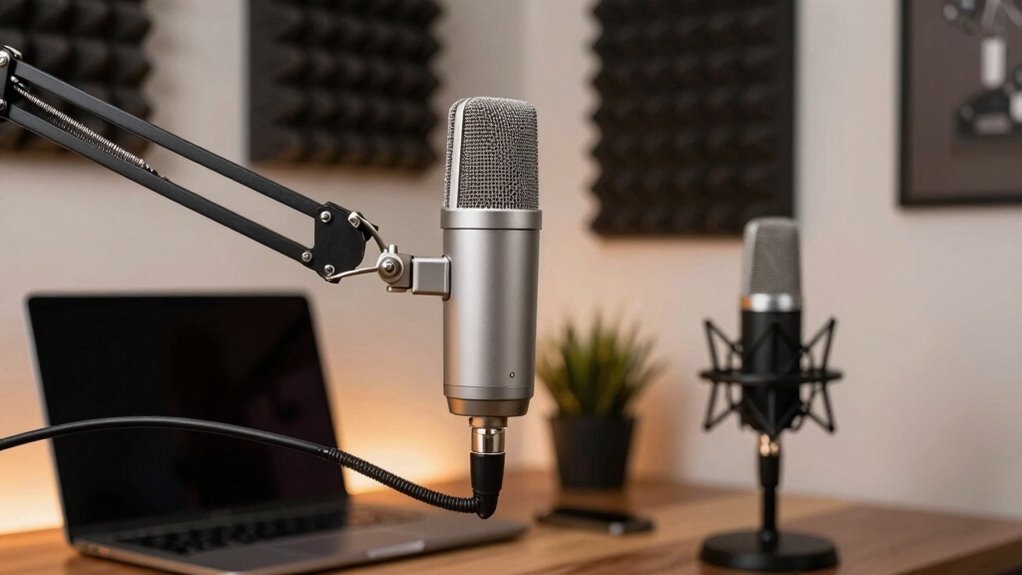
A condenser microphone offers superior sound clarity, making your voice crisp and clear during virtual meetings. Its sensitivity to details captures nuances that other microphones might miss, ensuring your recordings sound professional. Plus, they’re ideal for studio use, providing the high quality you need for both work and creative projects. Additionally, their ability to pick up subtle sound variations makes them well-suited for capturing voice nuances in various environments. Using the right microphone can also enhance audio quality, making your communication more effective and engaging.
Superior Sound Clarity
Condenser microphones are designed to deliver exceptional sound clarity, making them ideal for virtual meetings and recording sessions. Thanks to advanced microphone technology, they capture a broader frequency range, guaranteeing your voice sounds natural and detailed. Their superior sound transmission minimizes background noise and distortion, so your speech comes through crisp and clear. Unlike dynamic microphones, condensers excel at picking up subtle nuances and variations in your voice, providing a richer audio experience. This precision makes them perfect for professional virtual communication or recording high-quality content. When clarity matters, a condenser microphone guarantees your voice remains vibrant and intelligible, helping you connect effectively with your audience or collaborators. Additionally, their sensitivity makes them well-suited for audio quality, ensuring your recordings or calls are of the highest standard. The careful selection of microphone type can also influence the overall sound quality of your recordings or broadcasts. For those seeking a professional appearance, choosing the right microphone can also add to your overall presentation. Incorporating a condenser microphone can also align with your Stoic principles by fostering clarity and intentionality in your communication. Furthermore, selecting a microphone with appropriate sensitivity can help prevent capturing unwanted ambient noise, improving your overall audio fidelity.
Sensitive to Details
Ever wonder why condenser microphones are preferred for virtual meetings and recording? It’s because they’re highly sensitive to details, capturing subtle nuances in your voice that make your speech sound more natural and professional. This sensitivity means your microphone can pick up quieter sounds and delicate inflections, enhancing clarity during calls or recordings. To maintain this performance, regular microphone maintenance is essential—cleaning the mic and checking cables helps preserve sound quality. Additionally, using microphone accessories like pop filters and shock mounts can reduce unwanted noise and vibrations, ensuring your voice remains crisp and clear. This attention to detail makes condenser microphones the ideal choice when you want your audio to sound precise, expressive, and true to life. Understanding home safety considerations can also help you create a more comfortable and secure environment for recording or virtual meetings at home. Proper placement and soundproofing can further improve audio quality by minimizing background noise and echo.
Ideal for Studio Use
Because they deliver detailed and accurate sound reproduction, condenser microphones are ideal for studio use, especially when recording vocals or instruments. Their microphone technology captures subtle nuances, making them perfect for a professional studio environment. Condenser mics excel at picking up high frequencies and providing a clear, natural sound. This precision helps guarantee your recordings sound polished and true to life. In a studio setting, their sensitivity allows you to pick up even the smallest details, which is essential for music production, voiceovers, or virtual meetings that require high-quality audio. While they may be more delicate and require external power, their ability to deliver crisp, accurate sound makes them the top choice for anyone aiming for professional-grade recordings. Additionally, understanding the real and fictional tales of espionage can inspire a keen ear for detail, much like the precision needed in choosing the right microphone.
How to Decide Which Microphone Is Right for Your Home Office?
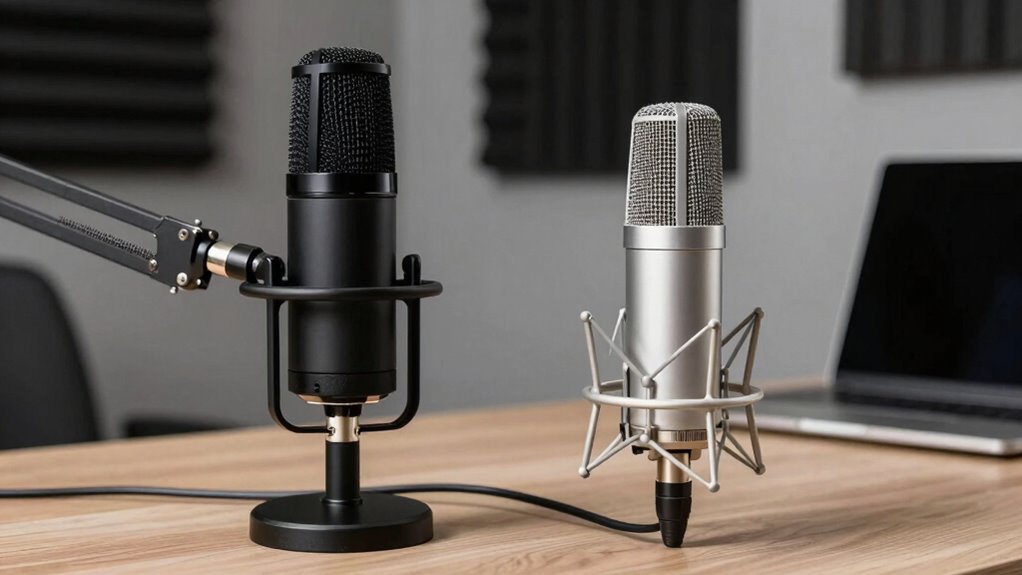
To choose the right microphone for your home office, you need to take into account your sound quality needs, budget, and space constraints. If you need clear audio for calls and recordings, prioritize quality; if you’re on a tight budget, look for affordable options. Also, make sure the microphone fits comfortably in your workspace without clutter. Considering the overall security and transparency of your digital setup can help ensure your communications remain protected. Additionally, understanding the acoustic environment of your space can significantly impact your microphone choice, as different types perform better in various settings.
Sound Quality Needs
Choosing the right microphone for your home office starts with understanding your sound quality needs. If you prioritize clear, professional audio for calls and recordings, a condenser microphone might be ideal due to its sensitivity and accuracy. For durability and consistent performance, consider microphones with sturdy build quality that can withstand daily use. The aesthetic design also matters if you want your setup to look polished or match your workspace decor. Think about whether you need crisp, detailed sound for voiceovers or just basic clarity for meetings. Your choice should align with the environment and the level of sound fidelity you require. Ultimately, matching your sound quality needs with the microphone’s capabilities guarantees you get the best audio experience for your home office.
Budget and Space
When selecting a microphone for your home office, your budget and available space play significant roles in narrowing down your options. If you have a tight budget, dynamic microphones often offer durability at a lower cost, making them a practical choice. They tend to be more rugged and withstand everyday mishaps, which is ideal for compact or cluttered spaces. Microphone aesthetics also matter; smaller or more discreet designs can blend seamlessly into your workspace. If space is limited, consider compact models that don’t require extensive setup. Condenser microphones, while excellent for sound quality, can be more expensive and delicate, making them less suitable if your budget or space is constrained. Choose a mic that balances your aesthetic preferences, durability needs, and available room. Additionally, understanding sound healing science can help you appreciate how certain microphones might better capture ambient or therapeutic sounds in your environment.
What Budget Microphone Should You Consider?
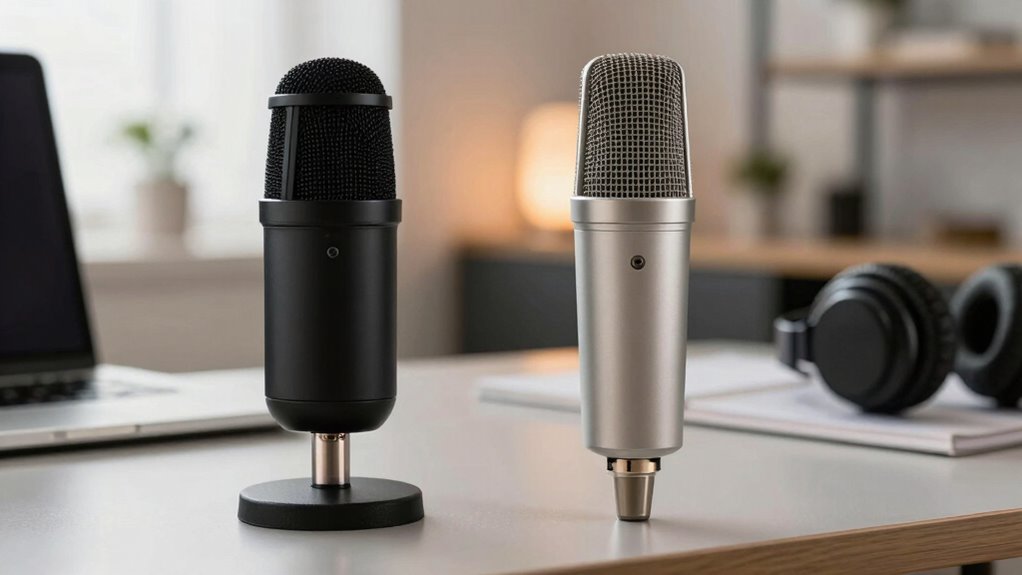
If you’re new to microphones or working within a tight budget, there’s a range of affordable options that still deliver decent sound quality. Entry level choices like the Samson Q2U, Audio-Technica ATR2100x, and Blue Snowball iCE are popular for home offices. These microphones come at a budget-friendly price but offer reliable performance for voice recordings, video calls, and streaming. While they may lack advanced features, they provide clear audio without breaking the bank. When selecting a budget microphone, focus on your main needs—whether it’s ease of use, compatibility, or sound quality. Affordable options are perfect for beginners or those who don’t want to invest heavily upfront but still want decent audio for daily tasks. Additionally, understanding the different microphone types can help you choose the best option for your specific needs, especially since microphone technology influences sound quality and application.
Tips for Setting Up Your Microphone for Clear Home Office Audio?
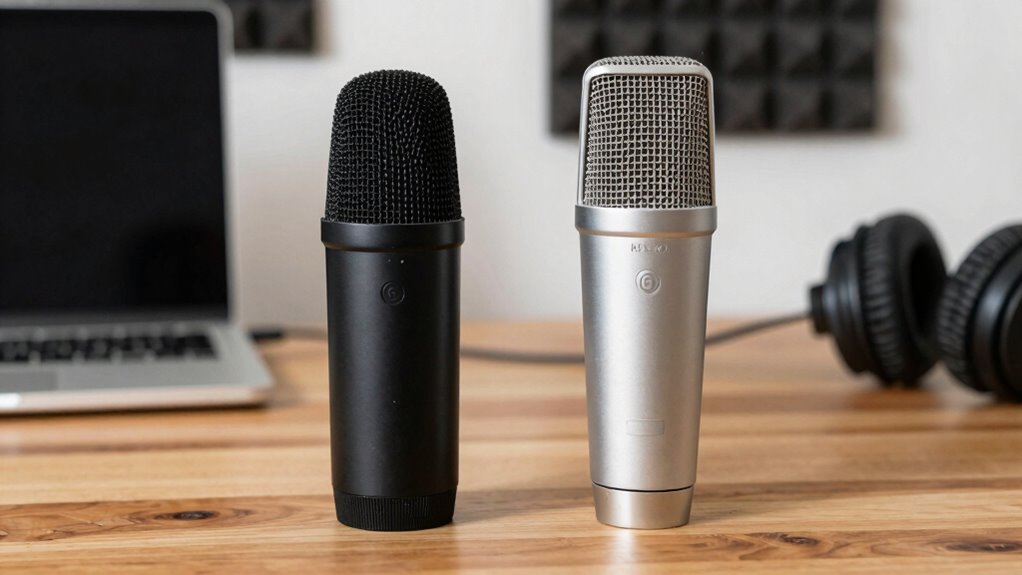
To achieve clear and professional-sounding audio in your home office, proper microphone setup is crucial. Focus on microphone placement—keep it close to your mouth but avoid popping sounds by using a pop filter. Make sure you’re speaking directly into the microphone, aiming for a consistent distance. Acoustic treatment also plays an essential role; add soft materials like foam panels or even blankets to reduce echo and background noise. Proper setup boosts clarity and confidence in your recordings or calls. Here’s a quick emotional guide:
| Feeling | Tip | Result |
|---|---|---|
| Confident | Place mic at mouth level | Clear, natural sound |
| Calm | Reduce background noise | Focused, professional tone |
| Inspired | Use acoustic panels | Warm, crisp audio |
| Motivated | Test and adjust settings | Perfect sound quality |
Frequently Asked Questions
Are USB Microphones Better Than XLR for Home Use?
USB microphones are generally better for home use because of their convenience—they plug directly into your computer without extra gear. However, XLR microphones offer greater versatility, allowing you to connect to professional audio equipment for higher quality sound. If you want simplicity and quick setup, go for USB. But if you’re aiming for professional-grade audio and flexibility, XLR is the better choice, even if it’s more complex.
How Do Microphone Polar Patterns Affect Sound Quality?
Polar pattern variations greatly influence sound quality by determining how your microphone captures sound from different directions. You can use specific patterns like cardioid for focused voice pickup or omnidirectional for capturing ambient room sounds. Understanding these sound capture techniques helps you minimize background noise and improve clarity. By choosing the right polar pattern, you guarantee your microphone picks up your voice clearly while reducing unwanted sounds, enhancing overall sound quality in your home office.
Can I Use a Dynamic Microphone for Podcasting?
Yes, you can use a dynamic microphone for podcasting, and it’s like having a trusty shield protecting your vocal clarity. Dynamic mics excel in noisy environments and are durable, making them perfect for a home studio setup. They focus on your voice, reducing background noise, ensuring your podcast sounds professional and clear. With the right placement, a dynamic microphone can deliver excellent sound quality for your recordings.
What Accessories Improve Microphone Performance at Home?
To improve your microphone performance at home, add accessories like a pop filter and shock mount. A pop filter reduces plosive sounds and protects your mic from saliva, ensuring clearer audio. A shock mount minimizes vibrations and handling noise, keeping your recordings clean. These accessories make a noticeable difference, especially when streaming, recording podcasts, or working from home, helping you achieve professional-sounding audio effortlessly.
How Do I Prevent Background Noise From Affecting Microphone Quality?
You can prevent background noise from affecting your microphone quality by using soundproofing techniques like adding foam panels or sealing gaps around your workspace. Many microphones now come with noise-canceling features, which actively reduce unwanted ambient sounds. Combining these methods guarantees clearer audio, making your voice stand out. It’s likely that a mix of physical barriers and advanced microphone tech delivers the best results in minimizing background noise.
Conclusion
Choosing between a dynamic and condenser microphone is like picking the right paintbrush for your art—each has its own strengths to bring your home office to life. Consider your needs, budget, and environment to find the perfect fit. With the right microphone, you’ll gain a clear, professional sound that transforms your space into a command center. Remember, your voice is your signature—make sure it’s heard loud and clear.