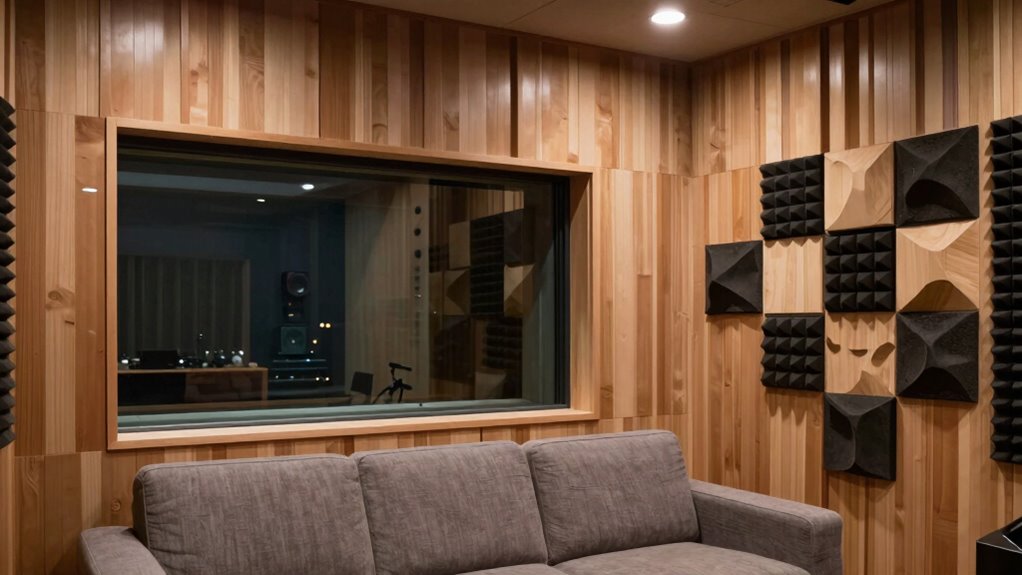

If your audio sounds “boxy,” it’s likely due to excessive sound reflection from hard surfaces like walls, floors, and windows, which cause echoes and muddiness. Small or rectangular rooms can amplify these issues, while soft furnishings like rugs and curtains help absorb sound and reduce reverberation. Proper acoustic treatment and strategic furniture placement can improve clarity. Keep exploring to discover how you can create a more balanced, professional sound environment effortlessly.

Get the latest gadgets delivered free with Prime
- Fast, free delivery on millions of items
- Prime Video, Amazon Music and more included
- Member-only deals all year
Key Takeaways
- Excessive sound reflection from hard surfaces causes echo and reverberation, making audio sound hollow or “boxy.”
- Room size and shape influence how sound waves reflect, focusing or dispersing sound to create boxy acoustics.
- Hard flooring, windows, and mirrors increase sound bounce, leading to muffled or muddy audio.
- Soft materials like carpets, curtains, and furniture absorb reflections, reducing echo and improving clarity.
- Proper acoustic treatment, including panels and diffusers, helps control reflections and creates balanced sound.
acoustic panels for room soundproofing
As an affiliate, we earn on qualifying purchases.
As an affiliate, we earn on qualifying purchases.
What Causes a ‘Boxy’ or Hollow Sound in Rooms?
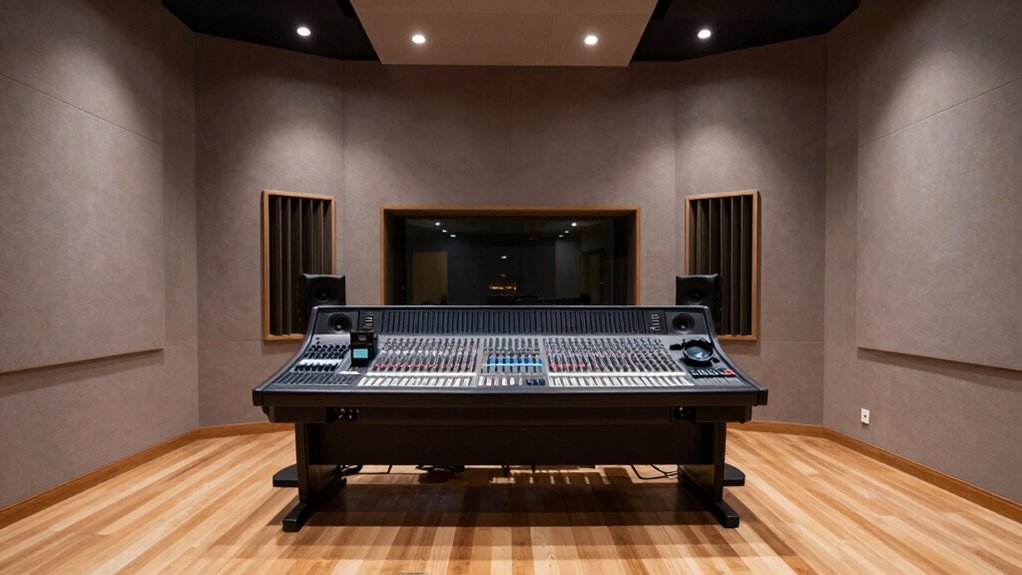
A ‘boxy’ or hollow sound in a room often results from poor acoustic design and the way sound bounces excessively between parallel walls, creating strong echoes that muddy clarity. Echo cancellation helps reduce this problem by minimizing repetitive reflections, making speech and music clearer. Additionally, sound diffusion plays a key role; by scattering sound waves in different directions, it prevents focused reflections that cause hollowness. Without proper diffusion, sound waves bounce in predictable patterns, reinforcing the boxy effect. Incorporating acoustic treatments inspired by principles used in audio spaces can further improve sound quality. These treatments often utilize sound diffusion techniques to break up reflections and distribute sound more evenly throughout the room. Properly managing room dimensions is also crucial, as the size and shape of a room influence how sound waves interact and either exacerbate or reduce echo. Combining echo cancellation techniques with effective sound diffusion creates a more balanced acoustic environment, reducing echoes and promoting even sound distribution. This approach helps your room sound more natural, lively, and true to the source.
sound diffusers for room acoustics
As an affiliate, we earn on qualifying purchases.
As an affiliate, we earn on qualifying purchases.
How Do Room Size and Shape Affect Your Audio Quality?
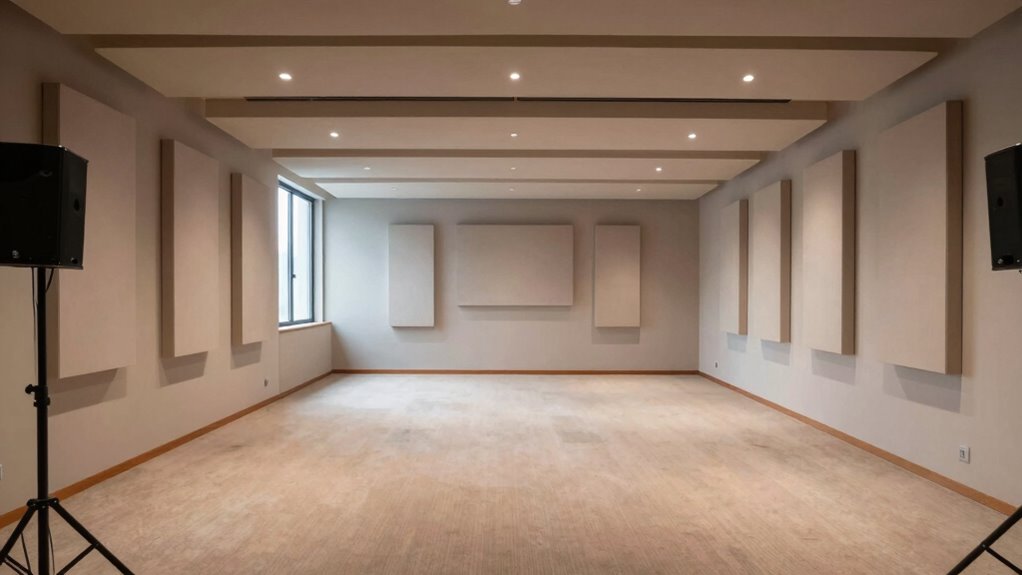
The size and shape of your room directly influence how sound waves behave, impacting overall audio quality. Larger rooms tend to create more sound reflection, which can lead to excessive echo or reverberation if not controlled. Smaller spaces might cause sound waves to bounce quickly, resulting in room resonance that magnifies certain frequencies, making audio sound boomy or boxy. Irregular shapes help disperse sound reflections, reducing problematic resonance, while rectangular rooms can promote focused reflections, emphasizing specific frequencies. The placement of walls and angles also plays a role in how sound reflects and interacts within the space. Understanding these effects allows you to identify potential issues and adjust your room’s shape or add acoustic treatments to improve clarity and achieve a balanced sound. Proper room drying and care can also prevent moisture buildup that might affect acoustic properties over time. Additionally, incorporating sound-absorbing materials can further enhance audio quality by minimizing unwanted reflections. Being aware of room size and shape is essential for creating an optimal listening environment that minimizes sound distortions and enhances clarity. For example, incorporating diffusers or absorbers can significantly reduce sound reflections, leading to a more natural and immersive listening experience.
sound absorption rugs and curtains
As an affiliate, we earn on qualifying purchases.
As an affiliate, we earn on qualifying purchases.
How Furniture and Soft Materials Absorb Sound?
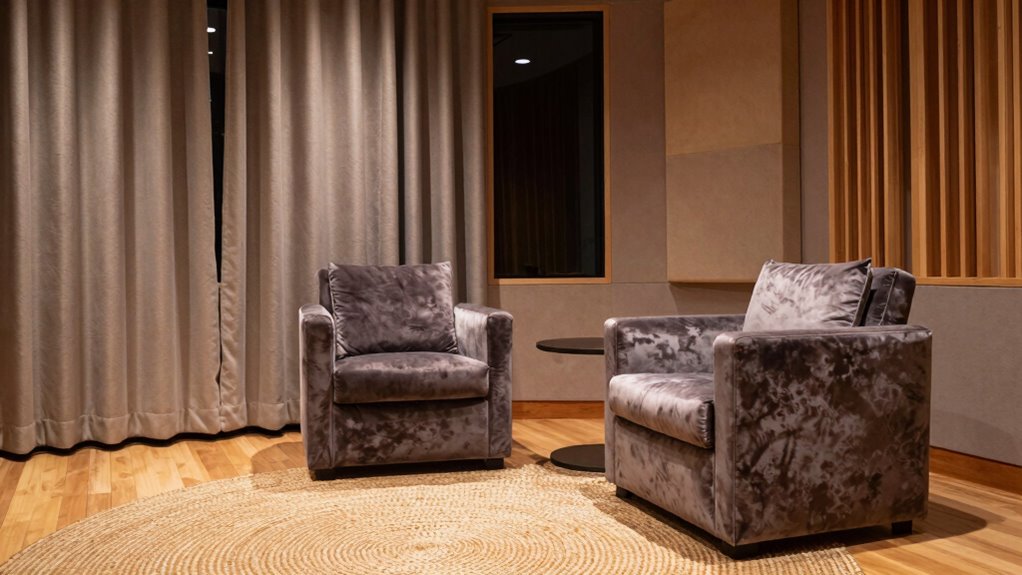
Furniture and soft materials play a crucial role in reducing sound reflections and controlling echo within a room. They achieve this through sound absorption, which diminishes the amount of sound bouncing off hard surfaces. Soft furnishings like upholstered chairs, sofas, curtains, and carpets are especially effective because they trap sound waves, preventing them from reflecting back into the space. When sound hits these materials, part of it is absorbed, reducing overall reverberation and creating a clearer, more natural sound. Incorporating indoor plant care techniques, such as placing plants strategically, can also contribute to sound absorption and improve room acoustics. Additionally, understanding the psychological impact of animal companionship can make your space feel more comforting and balanced, further enhancing acoustic harmony. Using decorative aviation-themed items can also subtly influence the ambiance and acoustic perception of a room. By strategically adding soft furnishings, you can considerably improve your room’s acoustics, making your space sound warmer and more balanced.
Including sound absorption principles can help you select the most effective materials and arrangements for optimal acoustic comfort.
echo cancellation devices for rooms
As an affiliate, we earn on qualifying purchases.
As an affiliate, we earn on qualifying purchases.
Easy Ways to Improve Your Room’s Acoustics
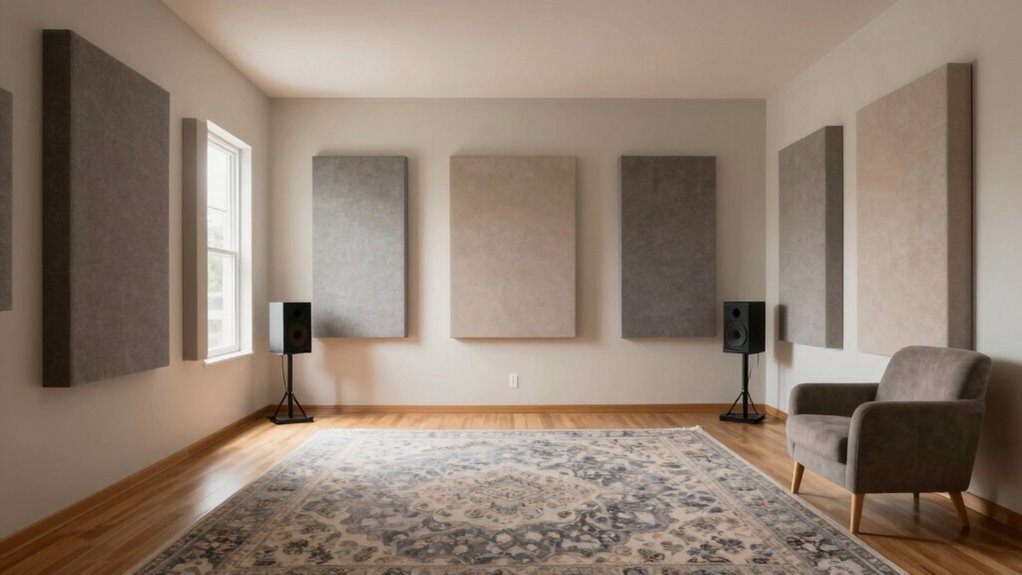
Adding soft furnishings like rugs, curtains, and upholstered furniture can make an immediate difference in your room’s sound quality. These items help absorb echo and reduce harsh reflections, creating a warmer, more balanced sound. For a simple upgrade, consider installing soundproof curtains; they not only block out noise from outside but also dampen internal sound reflections. Acoustic panels are another effective solution—they’re easy to mount on walls and target specific problem areas. Both soundproof curtains and acoustic panels improve clarity without major renovations. By combining soft furnishings with these treatments, you’ll notice a significant reduction in echo and a more natural, pleasing sound environment, making your space sound less “boxy” and more studio-quality. Incorporating sustainable textile care solutions can further enhance your room’s acoustics and create a more comfortable listening experience.
When Should You Use Acoustic Treatments or Soundproofing?
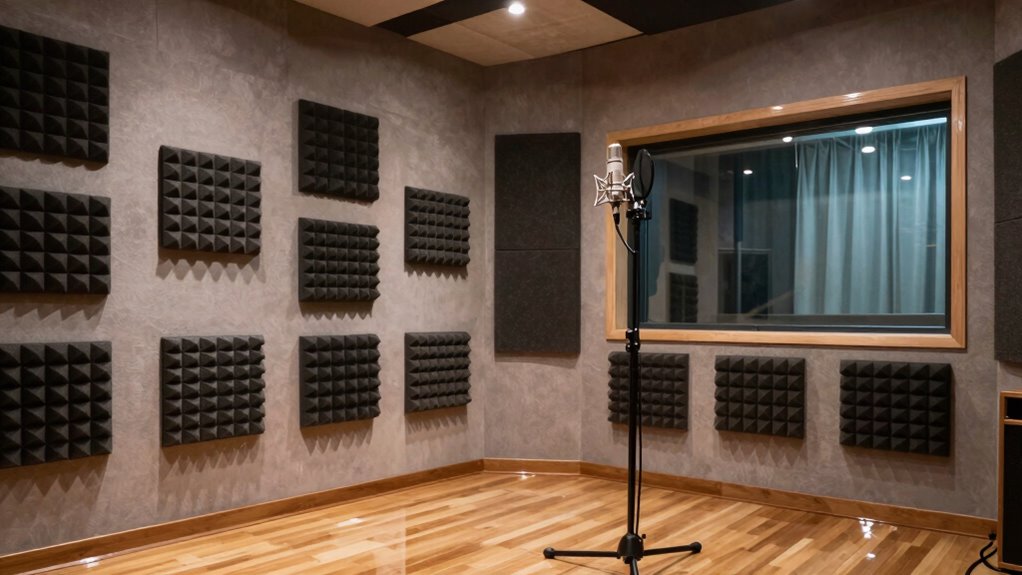
Wondering when to implement acoustic treatments or soundproofing? You should consider it when noise from outside disrupts your space or when your room’s sound quality feels dull or echoey. Soundproofing techniques help prevent sound from escaping or entering, making your space more private. Use acoustic treatment materials like foam panels, bass traps, or diffusers to reduce reflections and improve clarity inside the room. If you notice external noise interfering with recordings or listening, it’s time for soundproofing. If your room sounds muffled or too reverberant, acoustic treatments can help. Understanding measurement tools and their accuracy can also assist in assessing room acoustics and making informed decisions. Knowing when to apply these solutions guarantees you optimize your room for both sound quality and privacy, creating a more controlled and enjoyable environment.
Common Mistakes That Make Your Sound Echoey or Muffled

Many common mistakes can cause your room to sound echoey or muffled, undermining both audio clarity and overall comfort. For example, ignoring room surfaces, like bare walls or ceilings, allows sound to bounce and create echo. Using only hard materials makes sounds muffled or overly reflective. Not adding acoustic treatments like acoustic panels or soundproof curtains worsens the problem. These elements absorb or diffuse sound, improving clarity. Additionally, understanding how sound manipulation can influence room acoustics helps in designing an optimal listening environment. For instance, incorporating regional flavors of acoustic treatments can enhance sound absorption and diffusion. Properly assessing and addressing these factors is crucial for achieving acoustic harmony in any space. Recognizing how room surfaces impact sound quality is essential for creating a comfortable acoustic environment. Here’s a quick visualization:
| Surface Type | Effect on Sound | Recommended Solution |
|---|---|---|
| Bare walls/ceilings | Echo and reverberation | Acoustic panels |
| Windows and doors | Sound leakage and muffling | Soundproof curtains |
| Hard flooring | Excessive bounce | Carpets or rugs |
| Soft furnishings | Damping sound | Cushions, furniture |
Focusing on sound absorption techniques like textured wall coverings or specialized diffusers can significantly improve your room’s acoustic quality. Avoid these mistakes to achieve a clearer, more balanced sound.
How to Evaluate Your Room and Find the Best Acoustic Solutions
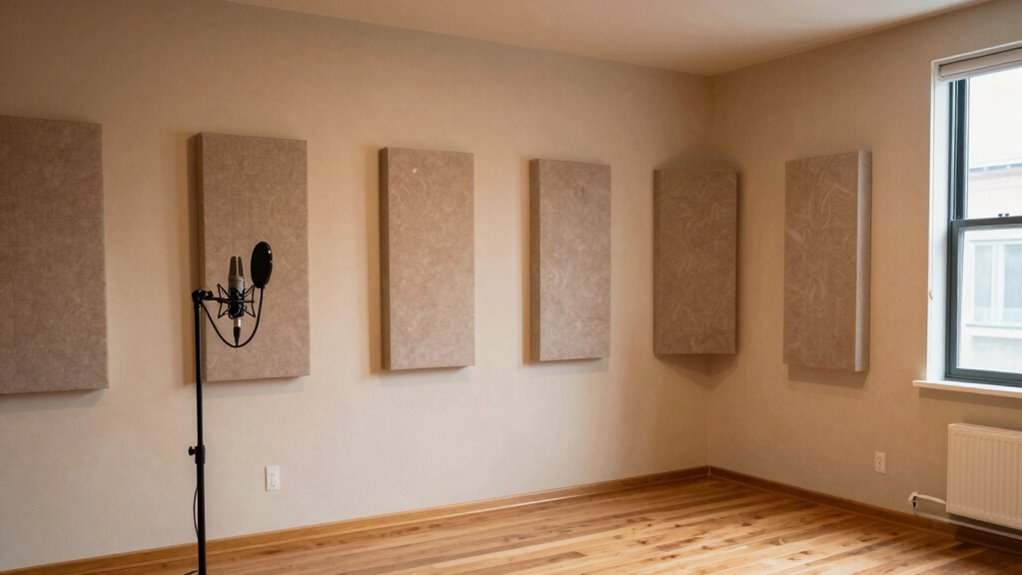
To effectively improve your room’s acoustics, start by evaluating the space’s specific sound characteristics. Listen closely for sound reflection issues—notice if sounds bounce excessively or create echoey spots. Use a mirror to identify reflective surfaces that cause unwanted reflections; if you see a reflection of your speakers, that’s a potential problem area. Pay attention to how sound diffuses across the room—poor diffusion can cause a “boxy” sound. To address this, consider acoustic diffusion panels that scatter sound waves evenly. Test different positions for your speakers and listening spots to identify where reflections and standing waves occur. By understanding these elements, you can choose targeted acoustic treatments that improve sound clarity and reduce muddiness, leading to a more balanced listening environment. Incorporating wall surfaces and finishes that absorb or diffuse sound can also significantly enhance your room’s acoustics.
Frequently Asked Questions
Can DIY Acoustic Treatments Be as Effective as Professional Solutions?
DIY acoustic treatments can be quite effective if you’re willing to put in the effort, but they usually can’t match the precision of professional solutions. You’ll save money and customize your setup, but professional treatments often use higher-quality materials and expert design to optimize sound. If you’re on a tight budget or enjoy DIY projects, DIY solutions work well, but for the best results, a professional comparison might be worth considering.
How Does Ceiling Height Influence Room Acoustics?
Higher ceilings typically improve room acoustics by reducing sound reflection issues that cause a boxy or muddy sound. When your ceiling height increases, sound disperses more freely, preventing echoes and dead spots. Conversely, low ceilings can intensify sound reflection, making audio feel confined or “boxed in.” Visualize a concert hall versus a small closet—ceiling height directly influences how sound travels and reflects, shaping your overall listening experience.
Do Window Coverings Impact Sound Quality?
Yes, window coverings impact sound quality by enhancing sound absorption and reflection control. Thick curtains or drapes absorb sound waves, reducing echo and making audio clearer. They also help control reflections that bounce off glass surfaces, which can cause boxy or muddy sound. By choosing the right window coverings, you can substantially improve your room’s acoustics, creating a more balanced and natural listening environment.
What’s the Best Way to Test Room Acoustics Without Equipment?
Think of your room as a musical instrument; you can test its acoustics by clapping loudly or snapping your fingers, listening for sound reflections and echoes. If echoes linger or reflections bounce around chaotically, it’s time for echo control adjustments. Move around and listen from different spots—if the sound changes drastically, your room’s acoustics need tuning. This simple method reveals how sound reflections shape your audio experience.
Can Outdoor Environments Cause Similar Acoustic Issues?
Outdoor environments can definitely cause similar acoustic issues. You’ll notice outdoor echoes bouncing off buildings, trees, and other surfaces, creating reverberations that distort sound clarity. Environmental noise from traffic, wind, or crowds can also interfere with your audio, making it sound muddy or boxy. To improve your outdoor sound, try choosing locations with fewer reflective surfaces and minimizing background noise, or use directional microphones to focus on your voice.
Conclusion
Now that you understand how your room’s shape, size, and furniture can turn your audio into a giant echo chamber or a muffled cave, it’s time to take action. Imagine your sound as a delicate dance, perfectly balanced—but without the right acoustics, it’s like trying to dance in a thunderstorm or a pillow fight. With a few simple tweaks, you’ll transform your space into a harmonious haven where every note shines clear and true.
Halloween Picks
halloween
As an affiliate, we earn on qualifying purchases.