
Sleep mode saves your session to RAM, allowing a quick start while using some battery power. Hibernate saves your session to the hard drive and fully powers off, conserving more energy but taking longer to wake up. Shut down turns off the device completely, using the least power but needing a full restart. Choosing the right mode depends on your needs, and understanding these differences helps you get the most from your device. Keep exploring for more tips and insights.

Get the latest gadgets delivered free with Prime
- Fast, free delivery on millions of items
- Prime Video, Amazon Music and more included
- Member-only deals all year
Key Takeaways
- Sleep mode uses minimal power by keeping session in RAM for quick resume but still drains some battery.
- Hibernate saves the session to the hard drive and fully powers off, conserving more battery but taking longer to wake.
- Shut down turns off the device completely, uses the least power, but requires a full restart to resume work.
- Sleep is ideal for short breaks; Hibernate suits long-term storage; Shut down is best for extended inactivity.
- Hibernate and shut down conserve battery more effectively than sleep, which is better for short-term use.
As an affiliate, we earn on qualifying purchases.
Understanding Sleep, Hibernate, and Shut Down Modes

When you’re ready to take a break from your computer, understanding sleep, hibernate, and shut down modes can help you choose the best option for your needs. Sleep mode quickly saves your session to RAM, allowing you to resume work almost instantly—this offers sleep benefits like convenience and speed. However, it consumes some battery power, which can be a disadvantage if you’re using a laptop on the go. Hibernate, on the other hand, saves your session to the hard drive and completely powers off, so it doesn’t drain your battery—though hibernate disadvantages include longer startup times and potential issues with resuming. Shut down turns off your device entirely, saving no power but requiring a full restart, which can be less convenient if you need quick access later. Additionally, choosing the right mode can depend on the contrast ratio of your device, as higher contrast ratios can improve the clarity of the display when resuming from sleep or hibernate. Understanding power management features is essential for optimizing your device’s battery life and performance. Being aware of how different modes impact battery consumption can help you extend your device’s operational time and maintain its overall health. For example, understanding how energy efficiency settings work can further enhance your device’s longevity. Moreover, selecting the appropriate mode based on your usage patterns can significantly influence the longevity of your device’s components.
external hard drive for hibernate
As an affiliate, we earn on qualifying purchases.
As an affiliate, we earn on qualifying purchases.
Which Power Mode Is Best for Your Usage?
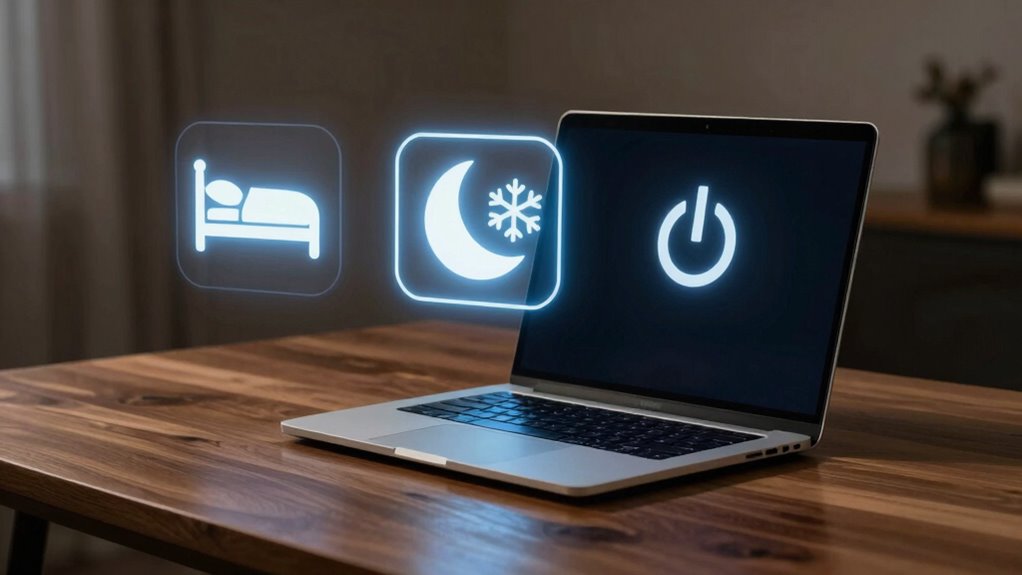
Choosing the right power mode depends on your priorities, whether it’s conserving battery, quickly accessing your device, or storing it long-term. If you want to save power, sleep mode is usually best; for quick startup, it’s ideal. For long-term storage, shutting down or hibernating can help protect your data and extend device life. Understanding the differences between these modes can help you make more informed decisions about your device’s power management features. Additionally, knowing how these modes interact with device energy efficiency protocols can optimize your device’s performance and longevity. A good understanding of these protocols can also aid in maintaining your device’s overall energy efficiency, especially during extended periods of inactivity. Incorporating natural cooling techniques in your device usage can further enhance efficiency. Being aware of battery health maintenance strategies can also contribute to prolonging your device’s optimal functioning during various power modes.
Battery Conservation Strategies
Selecting the right power mode can considerably extend your device’s battery life, especially during long periods without access to a charger. To conserve battery, consider how each mode impacts battery health and your charging habits. Sleep mode uses minimal power, ideal for short breaks, but Hibernate saves even more by shutting down completely. Shut down frequently if you’re not using your device for extended periods to preserve battery health. Use the table below to choose wisely:
| Mode | Best Use Case | Battery Impact |
|---|---|---|
| Sleep | Short breaks; quick resume | Moderate |
| Hibernate | Longer periods; conserving battery | Minimal |
| Shut Down | Extended inactivity; maximize battery preservation | None |
Being aware of battery health can help you make smarter decisions about power management and prolong your device’s lifespan. Choosing the right mode helps optimize performance and battery longevity.
Quick Access Needs
If you need quick access to your device, the right power mode can make a significant difference in how fast you can resume work. Sleep mode offers the quickest startup, allowing you to pick up right where you left off. Hibernate, while slightly slower, saves more battery health over time because it uses less power. Shut down takes the longest to start up but ensures maximum power efficiency and minimal battery drain when you’re not using your device for an extended period. For frequent short breaks, sleep mode is ideal. If you’re focused on preserving battery health during infrequent use, hibernate works well. Understanding your quick access needs helps you choose the best power mode, balancing convenience with battery preservation and efficiency. Additionally, selecting the appropriate mode can help prevent issues like battery drain and overheating, ensuring your device remains reliable over time.
Long-Term Storage Tips
When storing your device for an extended period, choosing the right power mode is vital to prevent battery drain and hardware issues. Hibernate is ideal for long-term storage, as it saves your session and completely powers off, preserving battery health. Shut down is suitable if you won’t use the device for months, minimizing power management concerns. Sleep mode, while convenient, drains the battery slowly over time, making it less suitable for long-term storage. To maximize battery health, make sure your device is charged to about 50% before storage. Store it in a cool, dry place to prevent hardware deterioration. Regularly check on the device if possible, and recharge it to maintain ideal power levels. Proper power management prolongs your device’s lifespan and keeps it ready for future use.
- Use Hibernate for long-term storage
- Avoid Sleep mode if unused for weeks
- Keep the battery around 50%
- Store in a cool, dry environment
- Periodically check and recharge as needed
power management software for Windows
As an affiliate, we earn on qualifying purchases.
As an affiliate, we earn on qualifying purchases.
How Sleep Mode Keeps Your Device Ready and Saves Battery
Sleep mode keeps your device ready to use almost instantly while substantially reducing power consumption. It achieves this by putting most hardware components into a low-power state, which boosts sleep efficiency. While your screen turns off, your RAM stays active, allowing your device to quickly resume your work or entertainment without delay. This quick wake-up time is a major advantage, especially if you need to jump back into tasks fast. Compared to hibernate, sleep mode uses more power but offers greater convenience for short breaks. The hibernate advantages include saving more battery over longer periods, but sleep mode strikes a balance, providing swift access while conserving energy. This makes sleep mode ideal for daily use when you plan to return to your device within a few hours.
As an affiliate, we earn on qualifying purchases.
When and Why to Use Hibernate Mode
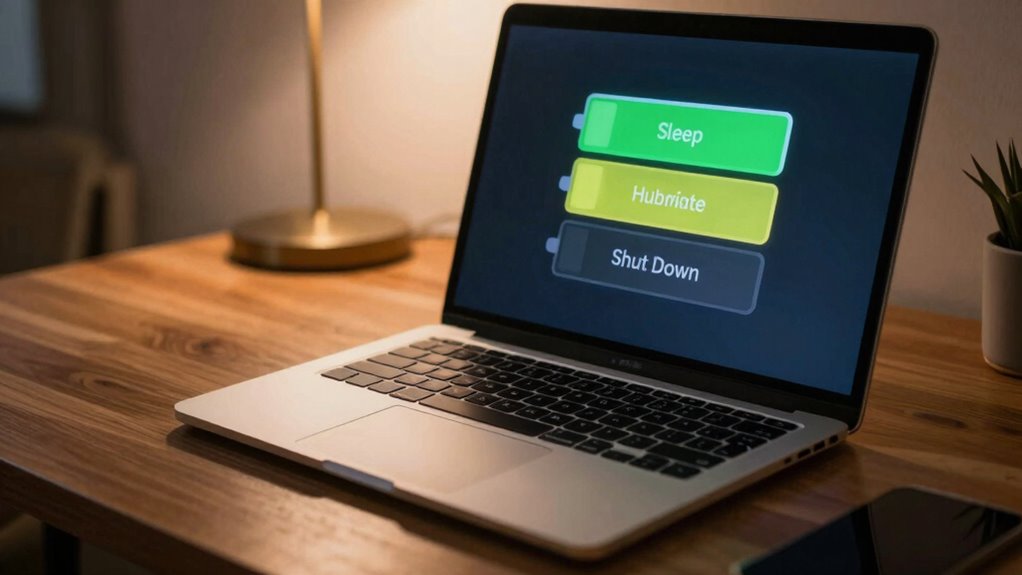
Hibernate mode is best suited for situations when you’ll be away from your device for an extended period and want to maximize battery life without losing your open files or applications. It saves your current session to the hard drive, then powers down completely. The main advantage of hibernate is its low power consumption, making it ideal for longer absences. Unlike sleep, which has limitations on how long it can keep your session active without draining the battery, hibernate ensures your work remains intact without battery drain. Use it when you won’t need your device for hours or days, such as during travel or long breaks. Additionally, understanding neural interfaces can help you explore future tech solutions for remote device management and energy efficiency. Properly managing your device’s power modes can also help prevent overheating and potential damage to internal components, which aligns with best practices for cable/network safety. Being aware of power management strategies can further enhance your device’s longevity and reliability. Incorporating efficient energy use techniques can also reduce overall power consumption and support sustainable device operation. Moreover, selecting the right power mode can contribute to device lifespan by minimizing unnecessary wear and tear on hardware components.
How Different Power Modes Affect Your Battery Life and Performance
Different power modes impact your battery life and how quickly your device gets back to work. Sleep mode uses less power but resumes faster, while hibernate conserves more energy but takes longer to wake up. Understanding these differences helps you choose the best setting for your needs. Additionally, enabling power-saving features can further extend your device’s battery life during extended use or when at a waterpark. Just like choosing the right performance parts for your car can optimize its efficiency, selecting the appropriate power mode ensures your device runs smoothly and lasts longer. Recognizing how battery health varies between modes can help you maintain your device’s overall longevity.
Power Consumption Levels
Understanding how each power mode impacts your device’s battery life is essential for maximizing efficiency. Sleep mode uses minimal energy, keeping your session active without draining your battery quickly. Hibernate consumes even less, saving your work to disk and shutting down almost completely. Shut down mode uses the least power but takes longer to resume. Using energy efficient hardware can further reduce power consumption, extending your battery life. Be mindful that frequent cycling between modes can affect battery health over time. Properly managing these modes guarantees your device runs efficiently without unnecessary energy drain. To optimize performance, choose the right mode based on your usage pattern. This approach helps preserve battery capacity and prolongs the lifespan of your device.
Speed of Resumption
When it comes to resuming your device from various power modes, the speed at which it wakes up directly affects your productivity. Sleep mode offers a quick wake-up because it keeps your RAM active, allowing for a fast sleep cycle. Hibernate, however, involves saving your session to the hard drive, which results in a longer hibernate duration before resumption. This means it takes more time to wake up, but it conserves more battery. Shut down completely, on the other hand, requires the longest startup time because your device has to initialize all components from scratch. If speed is your priority, sleep provides instant access, while hibernate balances power savings with moderate resumption speed. Your choice depends on how quickly you need to resume work versus conserving battery life. Incorporating power management techniques can further optimize your device’s performance and battery longevity.
Choosing the Right Power Mode for Your Needs
Are you unsure which power mode best suits your needs? Choosing the right setting depends on your workflow and device compatibility. If you’re doing remote work and need quick access, sleep mode is ideal. It keeps your session active while conserving battery. Hibernate is better if you’re taking a longer break, as it saves your work to disk and uses minimal power. Shutting down is best when you won’t use your device for a while, ensuring maximum battery life. Consider these factors:
Choosing the right power mode depends on your workflow, device compatibility, and how quickly you need to resume work.
- How often do you need to resume work quickly?
- Is your device compatible with fast startup features?
- Do you prefer conserving battery for long periods?
- Are you working remotely regularly?
- Do you need to preserve open applications and files?
- Exploring power management options can help optimize your device’s battery life and performance. Additionally, understanding energy efficiency practices can further extend your device’s usability between charges. Recognizing the importance of hardware components can also enhance your device’s overall power efficiency. Being aware of power settings can allow you to customize your device’s behavior for better energy conservation.
Setting Power Options Step-by-Step
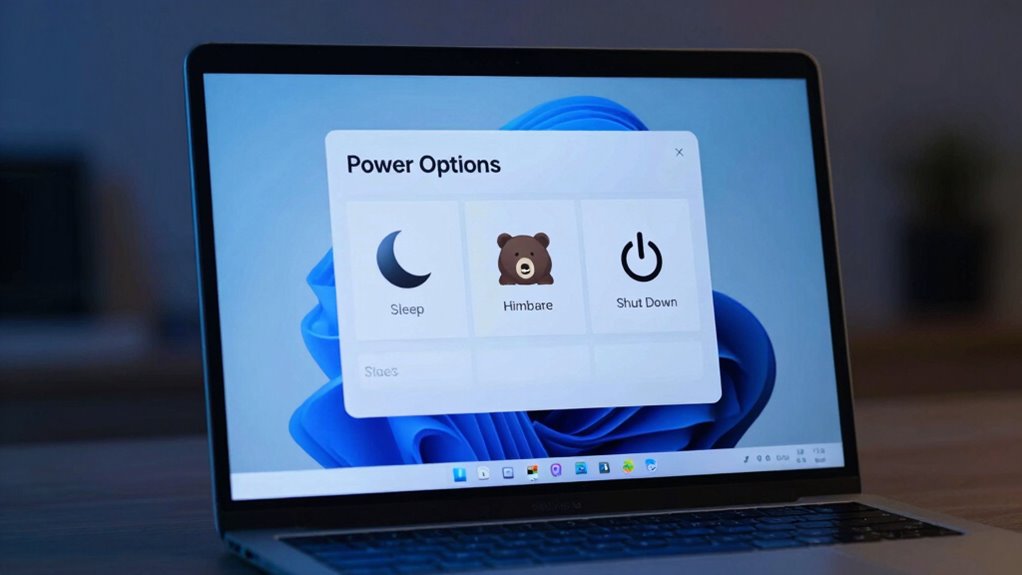
To set your power options effectively, start by opening the control panel on your device. Navigate to the “Power Options” or “System and Security” section, depending on your device’s interface. Confirm your device is compatible with the power plans you select; some older models may have limited options. Check for any pending software updates, as these can improve power management features and fix bugs. Once in the menu, you can customize your plan by adjusting when your screen turns off or when the device goes to sleep, hibernate, or shuts down. Save your changes to activate your preferred settings. Regularly updating your software ensures your power options function smoothly and efficiently, maximizing battery life and system performance.
Common Mistakes With Sleep, Hibernate, and Shut Down
Many users overuse Sleep Mode, thinking it’s always the best option, but this can cause issues over time. Forgetting to adjust Hibernate settings means you might miss out on saving power or data when needed. Shutting down improperly can lead to system errors or data loss, so it’s important to do it correctly.
Overusing Sleep Mode
Have you ever left your computer in sleep mode for days at a time? Overusing sleep mode can disrupt your device’s power management and extend your sleep cycle unnecessarily. Relying too much on sleep might seem convenient, but it can lead to issues like battery drain or system slowdown over time.
Consider these common mistakes:
- Leaving your computer in sleep mode for long periods instead of shutting down
- Ignoring the need for a full restart to refresh the system
- Forgetting that sleep mode still uses power, affecting battery life
- Not updating your power management settings for optimal use
- Relying solely on sleep mode, skipping proper shutdowns when needed
Using sleep mode sparingly helps maintain system health and prolongs battery life.
Forgetting Hibernate Settings
While avoiding prolonged sleep mode is helpful, overlooking your hibernate settings can lead to missed opportunities for better power management. Forgetting preferences related to Hibernate settings might cause your laptop to stay in full power mode longer than needed or not save energy when idle. Adjusting these settings ensures your device hibernates efficiently, conserving battery life.
| Hibernate Setting | Effect on Power Management |
|---|---|
| Enabled | Saves current session, reduces power |
| Disabled | No hibernate, continuous power use |
| Default | Based on manufacturer’s preset |
| Custom | Tailored to your usage habits |
Shutting Down Improperly
Shutting down your device improperly can lead to issues like data loss, system corruption, or hardware problems. Frequent abrupt shutdowns or force closures disrupt the normal power cycle, which can negatively impact your battery health over time. Avoid simply holding the power button unless necessary, as this can cause unintended damage. Instead, use the proper shutdown procedure.
- Force shutting down during updates can corrupt system files
- Repeated improper shutdowns can reduce battery lifespan
- Ignoring shutdown prompts may cause system instability
- Power cycling without proper shutdown can lead to hardware issues
- Always save your work before shutting down to prevent data loss
Being mindful of proper shutdown methods helps maintain your device’s performance and prolongs battery life.
Troubleshooting Power Mode and Performance Problems
When your device isn’t performing as expected or seems sluggish, troubleshooting power mode and performance issues can help identify the root cause. Start by reviewing your device customization settings—sometimes, power-saving options or background processes can slow performance. Confirm your software is up to date, as updates often fix bugs that impact power and speed. Check for any unnecessary programs running in the background, and disable or remove them if possible. Adjust power mode settings to balance performance and battery life, especially if you’re experiencing lag. If issues persist, consider resetting power plans to default or performing a clean restart. These steps can help improve responsiveness and resolve common power mode and performance problems.
When and How to Fully Shut Down Your Device for Maintenance
Regularly fully shutting down your device is essential for maintenance, especially when performing hardware checks, software updates, or troubleshooting persistent issues. A complete shutdown resets device components, improves power management, and ensures optimal performance. You should shut down your device when making major device customizations or installing critical updates that require a fresh start. To do it properly:
- Save all work before shutting down
- Use the operating system’s shutdown option, not just closing the lid
- Avoid interrupting the shutdown process
- Disconnect peripherals if necessary
- Perform shutdowns periodically, not just during problems
This practice helps clear temporary files and resets hardware settings, keeping your device running smoothly and prolonging its lifespan. Fully shutting down is a key part of effective device maintenance and power management.
Frequently Asked Questions
Can I Customize or Create My Own Power Modes?
Yes, you can customize your own power modes. In your system settings, look for options to create a Custom mode where you can tweak battery optimization settings like screen brightness, sleep timers, and background activity. This allows you to optimize your device’s power consumption based on your needs. By creating a custom power mode, you can extend battery life and guarantee your device conserves energy during specific activities or times.
How Do Power Modes Affect Software Updates or Installations?
Like a knight guarding a castle, your power modes protect your system’s health. When you choose sleep or hibernate, updates may pause to preserve battery, possibly delaying installation. Shutting down allows updates to install smoothly, ensuring update compatibility and peak performance. By understanding these effects, you can balance battery preservation with timely software updates, keeping your device secure and efficient without risking interrupted or failed installations.
Do Power Modes Impact Device Security or Data Protection?
Power modes can impact your device’s security and data protection by affecting data encryption and access controls. When you use sleep or hibernate, your data stays in memory or storage, potentially vulnerable to unauthorized access if someone gains physical access. Shutting down your device fully encrypts data and minimizes risks. Always choose the appropriate power mode, especially when leaving your device unattended, to guarantee your data remains protected from unauthorized access.
Are There Differences in Power Modes Across Different Operating Systems?
Yes, power modes vary across operating systems, affecting sleep mode customization and hibernate settings management. For instance, Windows offers detailed options for adjusting sleep and hibernate behaviors, while macOS emphasizes sleep mode with less customization. Linux distributions provide extensive control over power management, allowing you to tailor sleep and hibernate settings to your needs. These differences influence how efficiently your device conserves power and protects data during these modes.
How Do Power Modes Influence Device Temperature and Hardware Longevity?
Power modes directly impact your device’s temperature and hardware longevity. When you use sleep mode, it minimizes battery drain by reducing power, but some hardware stress occurs over time due to continuous small power draws. Hibernate conserves more energy, lowering hardware stress and temperature, which helps prolong hardware life. Shutting down completely eliminates battery drain and hardware stress, keeping your device cooler and extending its longevity.
Conclusion
Choosing the right power mode keeps your device running smoothly and saves battery life. Don’t let confusion hold you back—understanding when to sleep, hibernate, or shut down makes a real difference. Remember, taking a moment to fully shut down for maintenance can prevent bigger problems down the road. You deserve a device that performs reliably—so make these habits part of your routine and enjoy seamless, worry-free use every day.
Fall Picks
fall essentials
As an affiliate, we earn on qualifying purchases.