
📊 Full opportunity report: The Delegation Ladder: The Four Agentic Loops, and What Each One Lets You Stop Doing on ThorstenMeyerAI.com — validation score, market gap, and execution plan.

Get the latest gadgets delivered free with Prime
- Fast, free delivery on millions of items
- Prime Video, Amazon Music and more included
- Member-only deals all year
TL;DR
The article explains the four levels of agentic loops in AI engineering, from simple turn-based checks to fully autonomous workflows. Each rung allows relinquishing different degrees of control, affecting automation strategies.
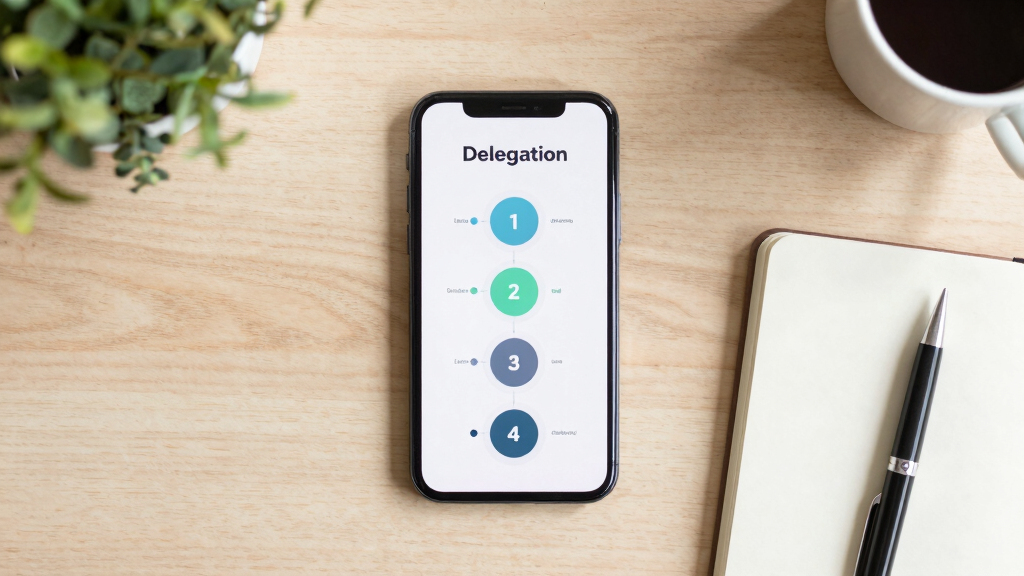
The Delegation Ladder categorizes four types of agentic loops in AI development, each representing a different level of control relinquished to AI systems. This framework, recently detailed by Anthropic’s Claude Code team, clarifies how organizations can design AI processes that balance automation with oversight. Understanding these loops is essential for building effective, reliable AI workflows that match operational needs and risk tolerances.
The first rung, Turn-based, involves the AI performing a cycle of work, including self-verification, with human oversight at each turn. This is the familiar prompt-response pattern, but with embedded verification steps that the AI can execute autonomously. The second rung, Goal-based, introduces a stop condition that the AI checks after each attempt, allowing it to iterate until the goal is met or a turn limit is reached. This reduces human intervention in completing specific objectives.
The third rung, Time-based, enables automation on a schedule or external trigger, where the AI system runs routines at set intervals or in response to events, such as monitoring pull requests or daily reports. This allows work to proceed continuously without manual prompting. The fourth and highest rung, Proactive, involves fully autonomous systems that initiate actions based on events or schedules, orchestrating complex workflows and multiple agents without human input. This level represents the most leverage but also demands the highest discipline and safeguards.
The delegation ladder: four agentic loops, and what each lets you stop doing
Strip the hype and a “loop” is simple — an agent repeating work until a stop condition is met. The useful lens isn’t the mechanics, it’s what you hand off. Four loop types = four rungs of delegation, from a tool you operate to a process that runs.
The whole framework reduces to one question about your own work: where am I the bottleneck, and which single piece can I hand off? Can you write the check? Is the goal concrete? Does the work arrive on a schedule? That answer picks your rung — and you climb one step at a time. The real skill isn’t operating a loop; it’s the judgment of what to delegate and how far — enough hands off to gain leverage, enough on the wheel that “runs without you” doesn’t become “runs away from you.”
Implications of the Four Agentic Loops for AI Deployment
This framework helps organizations determine how much control to delegate to AI systems, balancing efficiency with safety. By understanding the four rungs, developers can design workflows that are appropriately autonomous, reducing manual oversight while maintaining reliability. The highest levels enable continuous, proactive automation that can operate independently, but they require rigorous verification and governance to prevent errors or unintended consequences.
Adopting the correct loop level impacts operational costs, quality, and risk management. For example, moving from turn-based to goal-based loops can significantly reduce human workload, while deploying proactive systems can unlock 24/7 automation but must be carefully managed. As AI systems become more capable, the ladder offers a clear map for scaling control responsibly.
As an affiliate, we earn on qualifying purchases.
Evolution of AI Control Strategies and the Role of the Ladder
The concept of the Delegation Ladder builds on longstanding practices in AI and automation, where incremental control is handed over as systems prove reliable. Recent discussions, including those by Anthropic, emphasize that not all tasks require the highest level of autonomy; instead, the ladder helps match control levels to task complexity and risk.
Historically, AI systems have been used mainly in turn-based or simple automation roles. The ladder formalizes this progression, illustrating how organizations can gradually increase autonomy—moving from basic prompt-response cycles to fully autonomous workflows—by understanding and managing the specific capabilities and limitations at each rung.
“The Delegation Ladder provides a structured way to think about how much control we should delegate to AI at each stage of development.”
— Thorsten Meyer, AI researcher
As an affiliate, we earn on qualifying purchases.
Unresolved Questions About High-Level Autonomous Loops
It remains unclear how organizations will effectively implement and govern the highest rung—fully proactive, autonomous systems—especially regarding safety, verification, and oversight. The practical limits of automation and the potential risks of fully autonomous workflows are still being explored, with ongoing debate about best practices and safeguards.
AI monitoring and verification tools
As an affiliate, we earn on qualifying purchases.
As an affiliate, we earn on qualifying purchases.
Next Steps for Implementing and Testing the Agentic Loop Framework
Researchers and practitioners will likely focus on developing standards and tools to safely deploy higher-level loops, such as goal-based and proactive systems. Pilot projects and case studies will test the effectiveness and safety of these frameworks in real-world settings. Additionally, further refinement of verification techniques and governance models is expected to support broader adoption.
As an affiliate, we earn on qualifying purchases.
Key Questions
What is the main purpose of the Delegation Ladder?
The ladder provides a structured framework to categorize and understand different levels of control that can be delegated to AI systems, helping organizations design workflows that match operational needs and safety standards.
How does each rung differ in terms of control?
Turn-based involves human oversight at each step; goal-based automates stopping criteria; time-based schedules routines; proactive enables fully autonomous, event-driven workflows.
Why is the highest rung considered risky?
Fully autonomous systems can operate without human oversight, which raises concerns about safety, verification, and unintended behaviors. Proper safeguards and governance are essential at this level.
Can organizations move directly to the highest rung?
Most organizations are advised to progress gradually, ensuring control and safety at each level before deploying fully autonomous workflows.
What are the practical benefits of using the ladder?
The ladder helps optimize automation, reduce manual oversight, and improve reliability by matching control levels to specific tasks and risks.
Source: ThorstenMeyerAI.com
Evergreen bestsellers Picks
bestsellers
As an affiliate, we earn on qualifying purchases.