
TL;DR

Get the latest gadgets delivered free with Prime
- Fast, free delivery on millions of items
- Prime Video, Amazon Music and more included
- Member-only deals all year
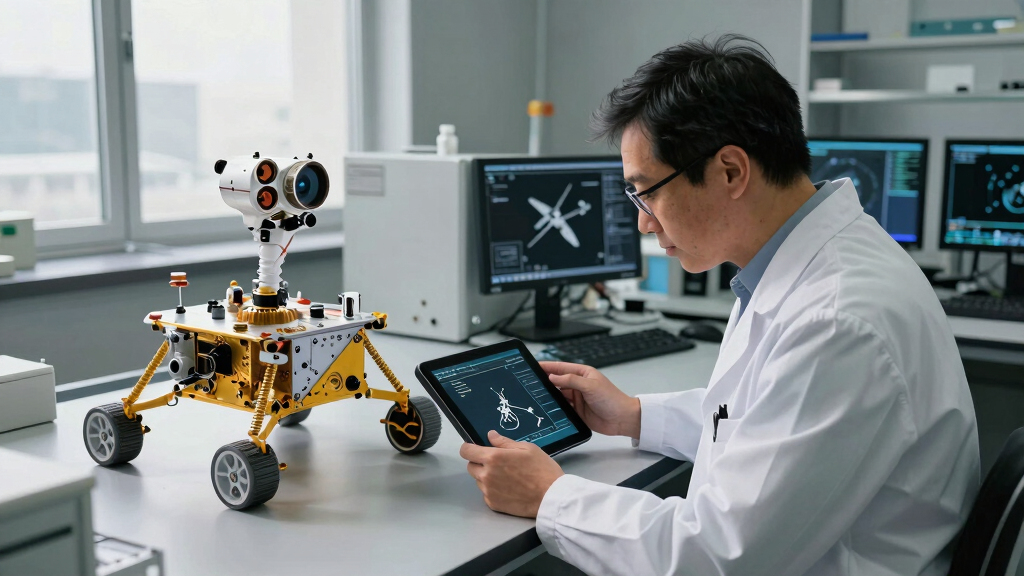
NASA’s Jet Propulsion Laboratory has kept the Curiosity rover operational on Mars for over 13 years through ongoing software updates and engineering adjustments. Despite wear and power limitations, it continues to perform scientific work, informing future rover designs.
NASA’s Jet Propulsion Laboratory (JPL) continues to operate the Curiosity rover on Mars after more than 13 years, making it one of the longest-running planetary science missions. Despite the harsh environment and aging hardware, JPL engineers have managed to keep the rover active and productive through continuous software updates and engineering interventions, demonstrating a remarkable level of technical resilience.
Curiosity, launched in 2011, has traveled nearly 37 kilometers, drilled into 42 rocks, and captured over 763,000 images. Its longevity is credited to careful engineering and ongoing software maintenance, including innovative fixes like repurposing memory and software to bypass hardware issues. The rover’s hardware, especially its wheels and power system, faces wear and degradation, but JPL engineers have adapted driving strategies and software controls to prolong its operational life.
One notable example involves a complex software workaround implemented after a processor anomaly on Sol 2172, where engineers repurposed the rover’s flight software memory to keep it operational despite hardware limitations. Alexandra Holloway, assistant team chief for engineering operations, highlighted that such efforts have allowed Curiosity to continue functioning, even as its power output diminishes due to aging radioisotope thermoelectric generators (RTGs).
Why Long-Term Rover Maintenance Matters
The ability to sustain Curiosity’s operations for over a decade provides critical insights into engineering durability in space robotics. It demonstrates that with careful software management and adaptive strategies, long-term planetary exploration missions can be extended beyond initial expectations, reducing costs and increasing scientific returns. This experience also informs the design and operation of newer missions like Perseverance, which benefits from lessons learned in maintaining Curiosity.
space robotics maintenance tools
As an affiliate, we earn on qualifying purchases.
As an affiliate, we earn on qualifying purchases.
Evolution of Mars Rover Engineering and Operations
Curiosity’s journey began with a skycrane landing in 2012, marking a milestone in planetary exploration. Over its mission, it has faced hardware challenges, including wheel wear and decreasing power, which are typical for long-duration space missions. JPL engineers have developed software patches and operational strategies to mitigate hardware issues, a process that has become a model for extending mission lifespans of robotic explorers on other planets.
Compared to newer rovers like Perseverance, which has more advanced onboard processing capabilities, Curiosity’s hardware is older but still functional thanks to continuous software updates. The mission’s success underscores the importance of adaptable engineering and software flexibility in space exploration.
“The longevity comes from a lot of ongoing work. It’s not just that Curiosity was built robustly; it’s also because we’re continuously putting in effort to ensure it can continue to have that lifespan.”
— Alexandra Holloway
As an affiliate, we earn on qualifying purchases.
Unresolved Challenges and Future Limitations
While software workarounds have extended Curiosity’s life, it is unclear how much longer the rover can operate before hardware failures become insurmountable. The degradation of wheels and decreasing power output from the RTG remain significant constraints, and future software or hardware solutions have not yet been announced.
space mission engineering software
As an affiliate, we earn on qualifying purchases.
As an affiliate, we earn on qualifying purchases.
Upcoming Steps for Curiosity and Future Missions
JPL plans to continue operating Curiosity as long as feasible, focusing on software updates and operational strategies to mitigate hardware wear. Meanwhile, lessons learned from Curiosity are informing the design of new rovers like Perseverance, which features more advanced onboard processing and durability features. Future missions may also explore deploying software patches remotely to extend mission lifespans further.
robotic hardware troubleshooting tools
As an affiliate, we earn on qualifying purchases.
As an affiliate, we earn on qualifying purchases.
Key Questions
How has JPL managed to keep Curiosity operational for over a decade?
Through continuous software updates, innovative problem-solving like repurposing memory, and adaptive driving strategies to compensate for hardware wear, JPL has extended Curiosity’s operational lifespan significantly.
What hardware issues does Curiosity face now?
The main challenges include wheel wear from traversing rough terrain and decreasing power output from its aging radioisotope thermoelectric generator (RTG).
Will Curiosity continue to operate in the future?
JPL intends to keep operating Curiosity as long as it remains functional and scientifically valuable, but hardware limitations may eventually end its mission.
How do lessons from Curiosity influence future Mars missions?
Experiences with software fixes and operational strategies inform the design of newer rovers like Perseverance, which incorporate more advanced hardware and autonomous capabilities.
What are the main differences between Curiosity and Perseverance?
Hardware-wise, both use similar processors, but Perseverance has additional processors for autonomous driving. It also has more advanced onboard systems designed for longer-distance travel and sample collection.
Source: Hacker News
Halloween Picks
halloween
As an affiliate, we earn on qualifying purchases.