
TL;DR

Get the latest gadgets delivered free with Prime
- Fast, free delivery on millions of items
- Prime Video, Amazon Music and more included
- Member-only deals all year
A hobbyist has developed a DIY optical motion capture system using 16 custom IR cameras, capable of processing 4 billion pixels per second. This project aims to match Hollywood-level MoCap precision for V-tubing and other applications.
A hobbyist has developed a DIY optical motion capture rig capable of processing 4 billion pixels per second using 16 custom IR cameras, a feat that rivals professional Hollywood systems and advances V-tubing technology.
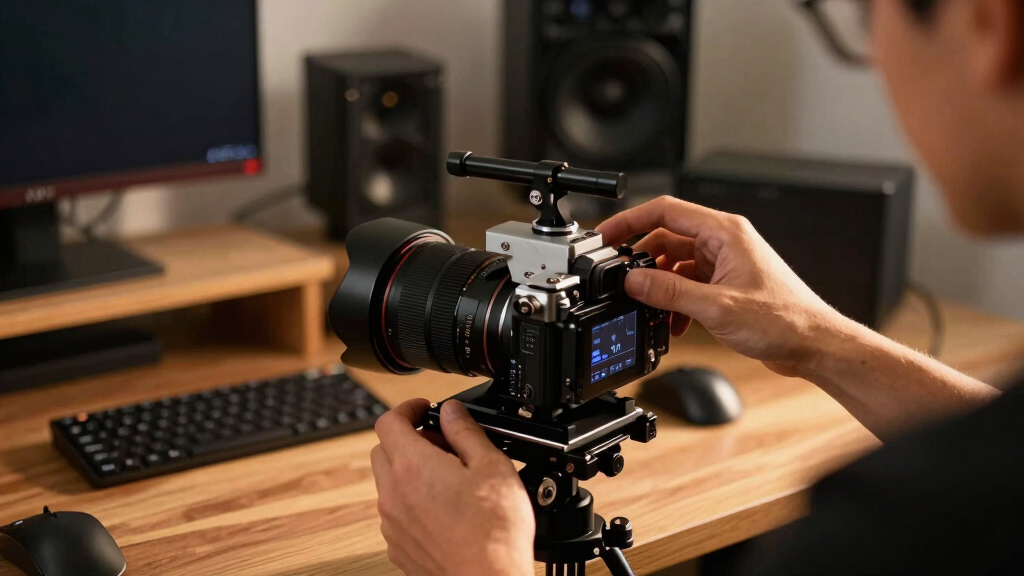
The project involves 16 custom-built IR cameras, each equipped with AR0234 MIPI sensors, M12 lenses, and IR filters, connected to Raspberry Pi compute modules. These cameras are synchronized with microcontrollers triggered via pulse-per-second signals to ensure precise timing. Each camera is paired with a high-power near-IR LED ring light pulsing at 160 W, allowing for high signal-to-noise ratio imaging, essential for accurate optical motion capture.
The maker, known as Dennis, created a custom image processing solution that is reported to be 300 times faster than standard OpenCV-based methods. This software optimization, along with the hardware setup, enables the system to handle an immense volume of pixel data—approximately four billion pixels per second—making it suitable for detailed, high-speed motion tracking. The entire setup is designed to achieve sub-millimeter precision, requiring fixed camera positioning and careful calibration.
The project is documented on GitHub, providing details on hardware design, synchronization methods, and software implementation. While primarily a proof of concept, it demonstrates the possibility of affordable, DIY optical MoCap systems capable of professional-level performance, opening new avenues for V-tubers and independent creators.
Potential Impact on DIY Motion Capture and V-Tubing
This project highlights how advanced optical motion capture technology can be achieved outside professional studios, potentially reducing costs and increasing accessibility for V-tubers, animators, and researchers. The ability to process such a high volume of pixel data with custom hardware and software showcases the potential for DIY systems to rival commercial solutions in terms of precision and speed. As motion capture becomes more affordable and customizable, it could lead to broader adoption in independent content creation and virtual production.
DIY IR motion capture camera kit
As an affiliate, we earn on qualifying purchases.
As an affiliate, we earn on qualifying purchases.
Advances in DIY Optical Motion Capture Technology
Optical MoCap systems are traditionally used in Hollywood and high-end animation studios, relying on expensive, fixed camera arrays and complex processing. Recent years have seen increased interest in DIY alternatives, often using IMU sensors for lower-cost solutions with less precision. This project represents a significant step forward, demonstrating that high-speed, high-precision optical MoCap is achievable with accessible components and custom engineering. The use of IR cameras and synchronization techniques aligns with industry standards but at a fraction of the cost.
The maker’s work builds on existing knowledge of IR-based MoCap, which improves signal quality and accuracy, and leverages modern single-board computers for processing. The achievement of processing 4 billion pixels per second marks a notable milestone in DIY motion capture, potentially influencing future developments in the field.
“This project demonstrates that high-speed, high-precision optical motion capture can be built with accessible hardware and custom software, challenging the notion that such systems are exclusively professional-grade.”
— an anonymous researcher
high precision optical motion capture system
As an affiliate, we earn on qualifying purchases.
As an affiliate, we earn on qualifying purchases.
Remaining Questions About System Scalability and Reliability
It is not yet clear how scalable this system is for larger setups or different use cases beyond testing. The long-term reliability, calibration ease, and practical deployment in real-world V-tubing scenarios remain to be tested. Additionally, the exact limits of the software’s processing speed and how it performs under continuous operation are still unknown.
As an affiliate, we earn on qualifying purchases.
Next Steps for DIY MoCap Development and Adoption
The creator plans to refine the system further, potentially adding more cameras and improving software stability. Community interest suggests that similar DIY projects could emerge, leveraging open-source hardware and software. Future developments may include user-friendly calibration tools, real-time feedback, and integration with existing V-tubing workflows, making high-precision motion capture more accessible for creators.
professional level V-tubing motion capture
As an affiliate, we earn on qualifying purchases.
As an affiliate, we earn on qualifying purchases.
Key Questions
How does this DIY system compare to commercial optical MoCap solutions?
While commercial systems often cost thousands to hundreds of thousands of dollars, this DIY setup achieves comparable data processing speeds and precision using accessible components and custom software, though it may require technical expertise to set up and calibrate.
Can this system be used for full-body motion capture?
In its current form, the system is primarily a proof of concept focused on high-speed pixel processing. Scaling it for full-body capture would require additional cameras, calibration, and software adjustments, which are potential future developments.
What are the safety considerations with high-power IR LEDs?
High-power near-IR LEDs can pose eye safety risks. Proper shielding, protective eyewear, and adherence to safety guidelines are essential when operating such lighting systems.
Is this project accessible to hobbyists without advanced engineering skills?
The project involves custom hardware and software development, which may be challenging for beginners. However, the open-source documentation and community support could help skilled hobbyists replicate or adapt the system.
What is the potential impact on V-tubing and virtual production?
This development could significantly lower the barrier to entry for high-precision motion capture, enabling independent creators and small studios to produce more realistic and responsive virtual avatars without expensive equipment.
Source: Hackaday
Fall Picks
fall essentials
As an affiliate, we earn on qualifying purchases.