
TL;DR

Get the latest gadgets delivered free with Prime
- Fast, free delivery on millions of items
- Prime Video, Amazon Music and more included
- Member-only deals all year
A hobbyist has developed and successfully booted MS-DOS on the Behringer DDX3216 using a DIY x86 BIOS built from scratch. This demonstrates the device’s hardware compatibility with traditional x86 systems and opens avenues for custom firmware development.
A hobbyist has successfully booted MS-DOS on the Behringer DDX3216 by developing a custom x86 BIOS from scratch, demonstrating the device’s hardware compatibility with legacy systems. This achievement highlights the potential for running custom or vintage software on modern audio equipment.
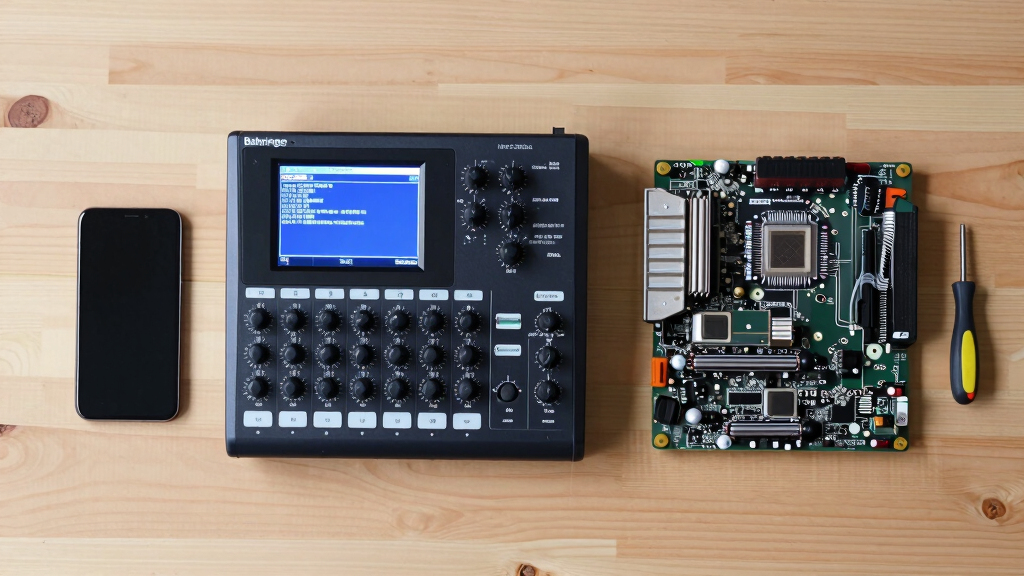
The Behringer DDX3216, a digital mixer, uses an AMD Elan SC300 386SX processor and associated hardware components that are compatible with x86 architecture. The user, known from hacker community sources, has reverse-engineered the hardware and implemented a custom BIOS, starting from the reset vector, to enable the device to boot MS-DOS 6.22 and FreeDOS 1.4.
This process involved understanding the device’s ROM layout, creating a reset vector in assembly language, and developing a minimal but functional BIOS to initialize hardware and load an operating system. The user reports successful booting of DOS, marking a significant milestone in repurposing audio hardware for legacy computing environments.
Implications of Running DOS on Behringer DDX3216
This development demonstrates that the hardware inside the DDX3216 is compatible with x86-based operating systems, broadening the device’s potential beyond its original purpose. It opens possibilities for hobbyists and engineers to run custom firmware, legacy software, or even experiment with hardware modifications, effectively turning the device into a vintage PC platform. This could influence approaches to hardware hacking, embedded systems, and vintage computing preservation.
As an affiliate, we earn on qualifying purchases.
Hardware and Software Background of the DDX3216
The DDX3216 features an AMD Elan SC300 386SX processor, 16MB of RAM, and standard x86-compatible components, which are not typically utilized in audio mixers. Historically, the device was designed for digital mixing and effects processing, not for running operating systems like MS-DOS. The discovery that it contains a real 386 processor prompted a hacker to explore its potential for running legacy software, leading to reverse-engineering efforts and custom BIOS development.
Previous efforts to find official BIOS support or compatible firmware for the SC300 chip failed, prompting the creator to build a BIOS from scratch based on x86 boot standards. The process involved detailed hardware analysis, assembly programming, and testing of boot sequences.
“Successfully booting DOS on the DDX3216 proves the hardware is fully compatible with x86 systems, and it opens a new realm for custom firmware on audio devices.”
— Hacker behind the project
legacy hardware compatibility testing tools
As an affiliate, we earn on qualifying purchases.
As an affiliate, we earn on qualifying purchases.
Remaining Technical Challenges and Limitations
While the user reports successful booting of MS-DOS, it is not yet clear whether all hardware components (such as audio interfaces, serial ports, or graphics) are fully functional under DOS. The stability, performance, and potential for running other legacy or modern software remain to be tested extensively. Additionally, the process of creating a fully compliant BIOS that can support more complex hardware initialization is ongoing.
As an affiliate, we earn on qualifying purchases.
Next Steps for Hardware and Software Exploration
The creator plans to refine the BIOS further, enabling more hardware features and stability. Testing with different operating systems, such as FreeDOS, and expanding support for peripherals are expected milestones. Sharing the BIOS source code and detailed documentation could foster community development, and further hardware modifications might explore turning the device into a vintage PC or embedded system platform.
As an affiliate, we earn on qualifying purchases.
Key Questions
Can the DDX3216 run other operating systems besides MS-DOS?
It is currently unconfirmed, but the hardware compatibility suggests potential for running other x86-compatible OSes, pending further BIOS development and hardware support testing.
What hardware modifications were necessary to boot DOS?
The main modification involved creating a custom BIOS that initializes the hardware and loads DOS from ROM, replacing the original firmware with a minimal, bootable environment.
Will this affect the device’s original functionality as an audio mixer?
It is unclear at this stage; the current focus is on booting DOS, and hardware support for audio functions under DOS has not been confirmed.
Is this approach applicable to other Behringer or similar audio devices?
Potentially, if the hardware architecture is similar and accessible, but each device would require custom reverse-engineering and BIOS development.
Source: Hacker News
Halloween Picks
halloween
As an affiliate, we earn on qualifying purchases.