
TL;DR

Get the latest gadgets delivered free with Prime
- Fast, free delivery on millions of items
- Prime Video, Amazon Music and more included
- Member-only deals all year
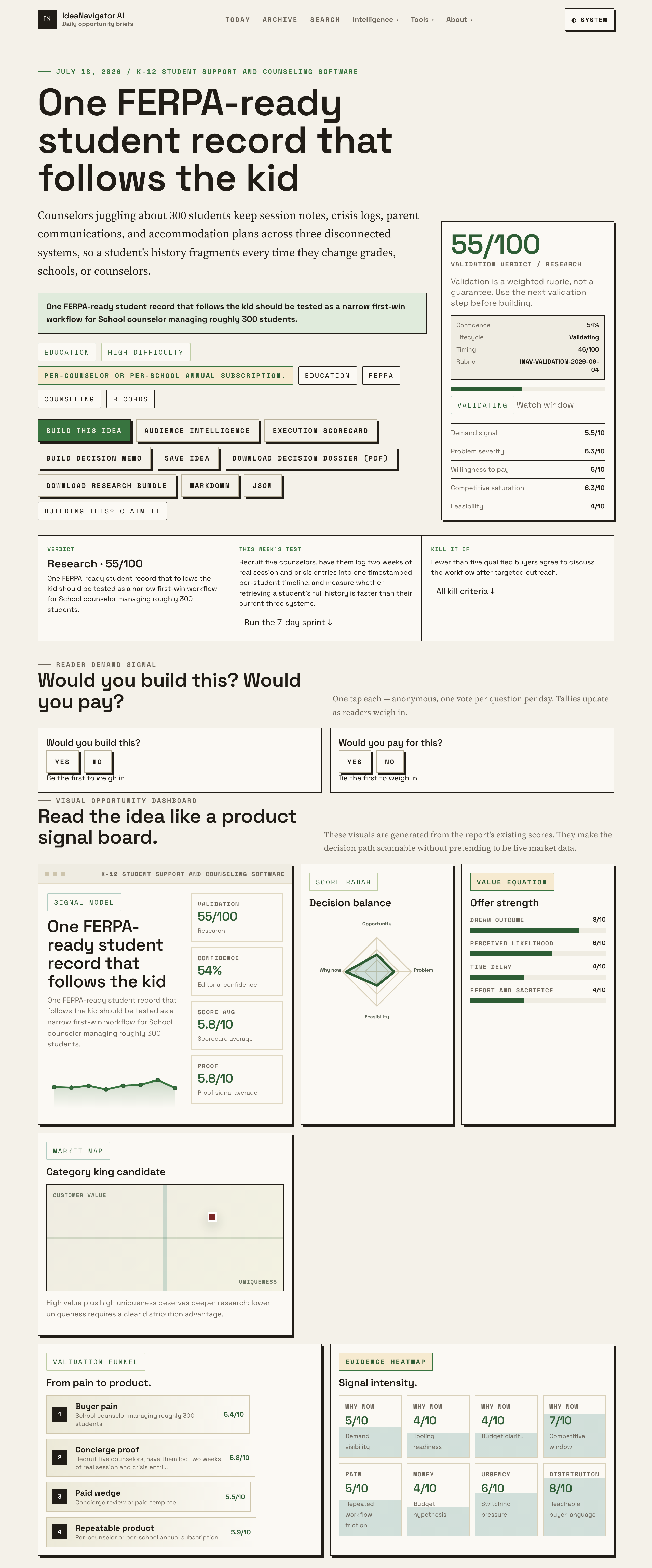
A new pilot program tests a single FERPA-ready student record system for school counselors, aiming to improve record management and compliance. The initiative addresses fragmentation and privacy concerns in K-12 student support.
A pilot program is testing a unified, FERPA-ready student record system designed to streamline counseling workflows and enhance privacy compliance for school counselors managing approximately 300 students. The initiative aims to address record fragmentation and improve audit readiness, responding to increasing scrutiny over student data privacy and mental health support.
The project involves creating a per-student timeline where counselors can log session notes, crisis entries, parent communications, and accommodation plans in a single, timestamped record. This record automatically maintains FERPA-compliant audit logs, ensuring privacy and security.
Currently, counselors manage student information across three disconnected systems, which complicates access, increases the risk of errors, and hampers quick retrieval of student histories. The new system consolidates these records into one interface, making it easier for counselors to review a student’s full support history efficiently.
The pilot will recruit five school counselors, who will log two weeks of real session and crisis data into the system. The goal is to measure whether accessing a complete student history becomes faster and more accurate compared to their current multi-system approach. The system is designed to be subscription-based, charging per counselor or per school annually.
Implications for Student Privacy and Counseling Efficiency
This development could significantly improve how student support data is managed, making it easier for counselors to access comprehensive histories while maintaining strict FERPA compliance. It addresses longstanding issues of data fragmentation and privacy risks, especially amid rising mental health caseloads and heightened FERPA scrutiny.
By providing a unified, audit-ready record, schools can reduce errors, improve record accuracy, and better protect student privacy. This approach also offers a scalable model that could influence broader adoption in K-12 education systems, potentially setting new standards for student data management.
FERPA compliance student record system
As an affiliate, we earn on qualifying purchases.
As an affiliate, we earn on qualifying purchases.
Background on Record Fragmentation in K-12 Counseling
School counselors traditionally manage student information across multiple disconnected systems, including session notes, crisis logs, and parent communications. This fragmentation complicates record retrieval, increases administrative burden, and raises privacy concerns, especially as mental health issues among students surge.
Recent FERPA enforcement has heightened the need for audit-ready, secure records that can demonstrate compliance during audits. The push for digital consolidation aligns with broader efforts to improve student data privacy and support mental health initiatives in schools.
The concept of a single, FERPA-compliant record has been discussed in education technology circles but has yet to be widely tested or adopted at scale. The current pilot aims to validate this approach as a practical solution for schools managing large caseloads.
“The goal is to create a seamless, audit-ready record that follows the student across their support journey, reducing administrative overhead and privacy risks.”
— an anonymous researcher
school counselor student data management software
As an affiliate, we earn on qualifying purchases.
As an affiliate, we earn on qualifying purchases.
Uncertainties About System Scalability and Adoption
It is not yet clear how well the system will scale across different school districts with varying IT infrastructure or how quickly schools will adopt this new approach. The pilot is limited to five counselors, and broader implementation may reveal unforeseen challenges related to integration, user training, or compliance enforcement.
Additionally, the long-term impact on privacy, data security, and administrative workflows remains to be fully assessed as the project progresses.
student record management system for schools
As an affiliate, we earn on qualifying purchases.
As an affiliate, we earn on qualifying purchases.
Next Steps for Pilot Testing and Broader Implementation
The pilot will run for at least two weeks, with data collection on retrieval speed and user feedback. If successful, plans include expanding to more schools and integrating feedback to refine the system. Schools and districts interested in adopting this model will be able to evaluate its benefits and challenges during the next phase.
Further research and development will focus on ensuring scalability, user-friendliness, and compliance robustness, aiming for a broader rollout within the next year.
K-12 student data privacy software
As an affiliate, we earn on qualifying purchases.
As an affiliate, we earn on qualifying purchases.
Key Questions
How does the new system improve FERPA compliance?
The system automatically timestamps and logs access and modifications, creating an audit trail that meets FERPA requirements for data security and access control.
Will this system replace existing student record systems?
The pilot is testing a supplementary, unified record that could eventually integrate with or replace parts of current systems, depending on user feedback and technical feasibility.
How will privacy be maintained with this new record system?
The system is designed to restrict access based on user roles, automatically log all interactions, and ensure that sensitive information is only accessible to authorized personnel.
What are the costs associated with implementing this system?
The model is based on a subscription fee per counselor or school annually, with pricing to be determined based on scale and features during broader rollout.
When could schools expect wider adoption if the pilot succeeds?
If successful, broader implementation could begin within the next year, with ongoing evaluations to address scalability and integration challenges.
Source: IdeaNavigator AI
Fall Picks
fall essentials
As an affiliate, we earn on qualifying purchases.