
TL;DR

Get the latest gadgets delivered free with Prime
- Fast, free delivery on millions of items
- Prime Video, Amazon Music and more included
- Member-only deals all year
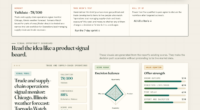
Thorsten Meyer AI’s new Control Series argues that recent 2026 AI deals and access decisions show AI is becoming a controlled resource rather than a neutral utility. The report identifies six chokepoints: power, compute, data, model access, distribution and capital.
Thorsten Meyer AI has published the opening installment of The Control Series, arguing that a series of 2026 developments show artificial intelligence is being shaped less like a neutral utility and more like a controlled resource governed by a small number of infrastructure chokepoints.
The piece identifies six points of control in the AI stack: power, compute, data, model access, distribution and capital. Its central claim is that recent events have made those control points visible, including reported large-scale compute rentals, government influence over model access, and data licensing tied to national or commercial restrictions.
According to the source material, the cited examples include SpaceX’s Memphis AI infrastructure buildout, xAI’s Colossus GPU cluster, Anthropic and Google compute arrangements, Ukraine’s use of combat data as a licensed AI training asset, and major financing flows inside the AI industry. The author frames these as signs that access to AI capacity can be gated, repriced, withdrawn or redirected by the entities that control scarce infrastructure.
The analysis is based on the author’s stated synthesis of public sourcing, including Anthropic statements, Axios, The Wall Street Journal, Reuters, CBS, TechCrunch, Semafor, Ukraine’s defense ministry, Perplexity Research, Challenger Gray and SpaceX securities filings from March through June 2026. Several figures in the source material are presented as approximate, including a roughly 2-gigawatt power footprint, about 555,000 GPUs, and about $26 billion a year in intra-industry compute financing.
The Six Chokepoints
For a decade AI was sold as a utility — abundant, neutral, always on. In 2026 it became a lever: scarce, controlled, revocable. Here are the six places power actually sits — and who started to squeeze.
Every layer is concentrating into fewer hands, and 2026 is the year the holders stopped treating their leverage as theoretical. A kill switch wasn’t discussed — it was pulled. The utility you’re allowed to forget about; the lever, you have to watch who’s holding. Optionality just became architecture.
AI Access Becomes Leverage
The argument matters because many companies, developers and governments have planned around AI as if access would be broadly available, stable and priced like cloud software. If the supply chain is controlled by a small group of power providers, chip owners, data holders, model labs, platforms and financiers, AI adoption becomes exposed to contract terms, permitting decisions, export policy, infrastructure shortages and competitive conflicts.
For readers who build on commercial AI systems, the practical issue is dependency. A product may rely on a model, but the real constraint may sit below it: electricity, GPUs, a data license, an app store, or a financing structure. The article’s core warning is that AI availability is no longer only a technical question. It is also a question of who can say yes, who can say no, and under what conditions.
high-performance GPU clusters for AI
As an affiliate, we earn on qualifying purchases.
As an affiliate, we earn on qualifying purchases.
Six Layers Of Control
The source material says the utility metaphor helped frame AI as abundant, neutral and always available. The new series argues that 2026 has challenged that framing by showing that AI capacity can be scarce, conditional and revocable.
At the power layer, the report points to large AI facilities that require gigawatt-scale energy and may move faster than conventional grid connections. At the compute layer, it cites large GPU clusters and arrangements in which leading AI firms rent capacity from other major industry players. At the data layer, it points to hard-to-replicate datasets, including Ukraine’s wartime drone and combat footage, as assets that can be licensed on terms set by their owners.
The remaining layers are model access, distribution and capital. The source material says model access can be affected by government and lab decisions, distribution can concentrate power in the applications and platforms that users actually touch, and capital can reinforce control when a small number of balance sheets and sovereign funds finance the infrastructure behind frontier AI.
“AI does not flow freely like a utility.”
— Thorsten Meyer AI, The Control Series
AI compute infrastructure hardware
As an affiliate, we earn on qualifying purchases.
As an affiliate, we earn on qualifying purchases.
Claims Still Need Corroboration
The source material presents a connected thesis, not a single official finding. Some details are described as approximate, and the article does not provide the full underlying contracts, regulatory records or technical documentation needed to independently verify every figure or clause from the excerpt alone.
It is also not yet clear how durable these chokepoints will be. New power projects, chip supply changes, open-weight models, regulatory action, antitrust scrutiny, or alternative distribution channels could change where leverage sits. The report treats 2026 as a turning point, but the long-term market structure remains unsettled.
As an affiliate, we earn on qualifying purchases.
Installments Will Test The Thesis
Thorsten Meyer AI says each chokepoint will receive its own later installment. Those pieces are expected to examine the evidence layer by layer, including who controls the resource, how that control is being used, and what it means for labs, startups, enterprises and governments that depend on AI systems.
The next test for the thesis will be whether future reporting confirms that these examples are isolated arrangements or part of a broader shift in AI infrastructure, where access depends less on model choice alone and more on control over the full stack beneath it.
As an affiliate, we earn on qualifying purchases.
Key Questions
What is the actual news development?
Thorsten Meyer AI has published the first part of The Control Series, laying out a six-part framework for where power is concentrating in the AI stack.
Is this breaking news?
No. This is an analysis piece based on developments and sourcing the author places mainly between March and June 2026.
What is confirmed from the source material?
The confirmed item for this article is the publication and thesis of the Thorsten Meyer AI piece. The infrastructure figures, deals and examples are attributed to the source material and its cited sourcing, with several numbers described as approximate.
Why does this matter for companies using AI?
If AI access depends on a small number of chokepoints, companies may face risks from pricing shifts, access limits, supplier conflicts, government rules and infrastructure shortages.
What remains uncertain?
It remains unclear whether the cited examples mark a lasting market structure or a temporary phase in a fast-moving infrastructure buildout.
Source: Thorsten Meyer AI
Halloween Picks
halloween
As an affiliate, we earn on qualifying purchases.