
TL;DR

Get the latest gadgets delivered free with Prime
- Fast, free delivery on millions of items
- Prime Video, Amazon Music and more included
- Member-only deals all year
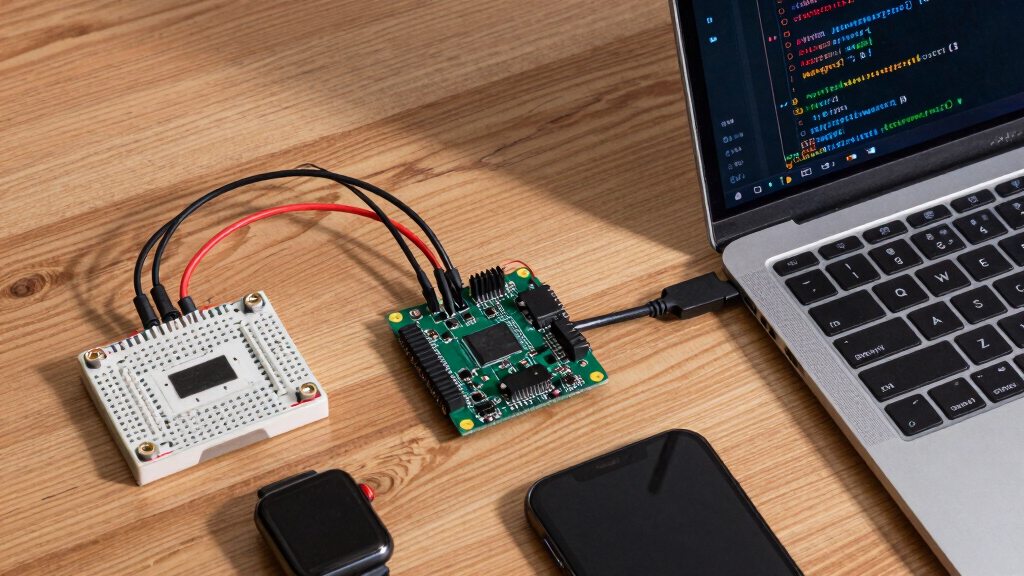
A developer has demonstrated that an 8-bit AVR microcontroller can host a simple website using serial communication protocols. While functional, this setup is limited and primarily a proof of concept. It highlights the potential and constraints of microcontroller-based networking.
An enthusiast has demonstrated that an 8-bit AVR microcontroller can serve a webpage using serial networking protocols, marking a notable technical achievement in microcontroller networking capabilities.
The project uses an AVR64DD32 microcontroller, a low-cost, low-power chip with 8 kB RAM and 64 kB flash memory, running at up to 24 MHz. The developer bypassed traditional Ethernet limitations by employing the Serial Line Internet Protocol (SLIP), enabling the microcontroller to communicate over serial connections with minimal external components. The setup involves a custom implementation of IP, with simplified TCP handling, allowing basic HTTP responses. The server responds with static content, suitable only for a single webpage, and does not support dynamic content or multiple URLs. Due to the microcontroller’s limited resources and network complexity, the system relies on a proxy setup via a Linux machine with a public IP, which forwards requests to the microcontroller. The project is primarily a proof of concept, illustrating that even very limited hardware can host simple web content, albeit with significant constraints and security considerations.
Why It Matters
This development highlights the potential for ultra-low-power, inexpensive microcontrollers to participate in basic network services, which could influence future IoT device design, remote sensor networks, or educational projects. It also underscores the limitations imposed by hardware constraints and the need for creative software solutions in embedded networking.
As an affiliate, we earn on qualifying purchases.
Background
Hosting a website traditionally requires significant processing power, memory, and network capabilities. While microcontrollers like the AVR series are common in embedded systems, their use as web servers has been limited to simple, local interfaces. This project builds on prior efforts to extend microcontroller networking, leveraging protocols like SLIP, which date back to early internet days, and adapting them for modern minimalistic web hosting. The endeavor reflects ongoing interest in low-power, embedded internet devices, with challenges including handling IP, TCP, and HTTP protocols within severe hardware constraints.
“Hosting a website on an AVR microcontroller is feasible for simple, static content, using serial protocols and custom IP implementation.”
— the project creator
“Implementing IP and TCP on an 8-bit microcontroller is a significant challenge, but this proof of concept shows it’s possible with simplified protocols.”
— an embedded systems expert
AVR microcontroller development board
As an affiliate, we earn on qualifying purchases.
As an affiliate, we earn on qualifying purchases.
What Remains Unclear
It remains unclear how scalable or secure such a setup could be for practical applications. The current implementation is a proof of concept with limited functionality, and real-world deployment would require addressing issues like security, reliability, and network compatibility.
serial communication protocol modules
As an affiliate, we earn on qualifying purchases.
As an affiliate, we earn on qualifying purchases.
What’s Next
Further development may include adding support for more complex web content, improving TCP robustness, and exploring integration with existing IoT ecosystems. Future projects might also aim to optimize power consumption and expand network protocols to support IPv6 or more secure connections.
As an affiliate, we earn on qualifying purchases.
Key Questions
Can an 8-bit microcontroller realistically host a website for everyday use?
While technically possible for static, simple pages, practical use is limited due to hardware constraints, security issues, and network complexity.
What are the main limitations of hosting a website on such hardware?
Memory and processing power are severely limited, restricting content complexity, dynamic features, and security measures.
Does this setup support modern web standards?
No, it only supports very basic HTTP responses and lacks features like HTTPS, dynamic content, or multiple URL handling.
Could this be used in real IoT applications?
Potentially for very simple sensor data or status pages, but not for complex or secure applications without significant modifications.
Halloween Picks
halloween
As an affiliate, we earn on qualifying purchases.