
TL;DR

Get the latest gadgets delivered free with Prime
- Fast, free delivery on millions of items
- Prime Video, Amazon Music and more included
- Member-only deals all year
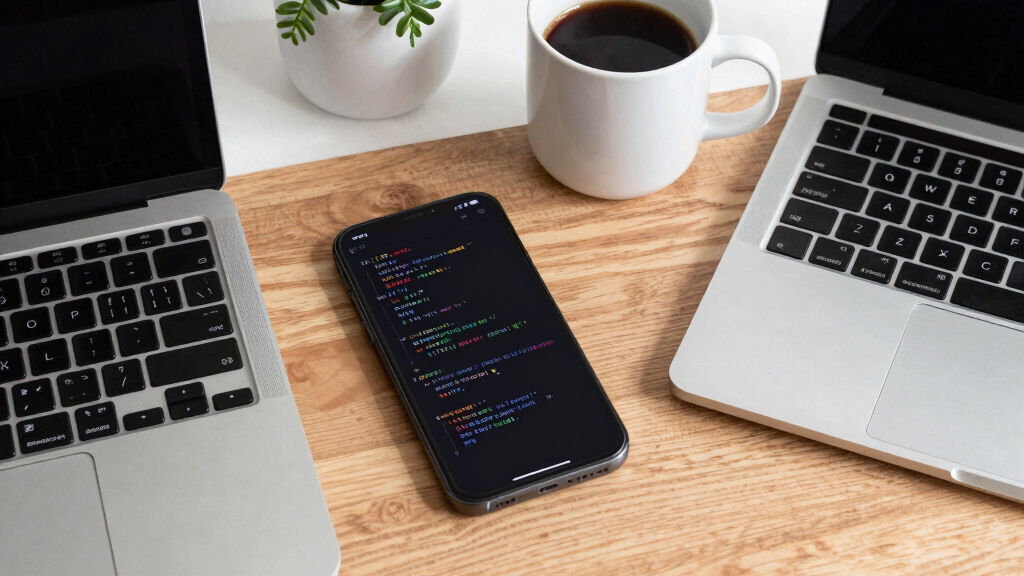
XS is a newly introduced programming language that provides a statically-linked binary containing all essential development tools. It runs unchanged across multiple platforms, including Linux, macOS, Windows, and embedded systems. The launch aims to make coding more accessible and portable.
XS is a new programming language that offers a single, statically-linked binary containing the compiler, language server, debugger, formatter, linter, test runner, profiler, and package manager, capable of running unchanged across multiple platforms including Linux, macOS, Windows, and embedded systems. The project aims to enable anyone to develop and run code anywhere, at any time.
The XS language is distributed as a compact 2.9MB binary, which includes support for various backends such as bytecode VM, JIT compiler, and transpilers to C and JavaScript. It is designed to be portable, with source code that functions identically on diverse operating systems and hardware architectures, including ARM and x86-64. Installation instructions are straightforward, with curl or PowerShell commands, and source code is hosted on GitHub, with release verification through SHA-256 checksums.
Benchmarks indicate that XS can execute a ‘hello world’ program in approximately 3 milliseconds on a Linux x86-64 machine, and its backend options support a range of development needs, from interpreted REPL to high-performance JIT compiled code. The project emphasizes minimal dependencies, with no runtime dependencies required beyond the static binary itself.
Why It Matters
This development matters because XS aims to simplify cross-platform programming, reducing setup complexity and dependency issues. Its all-in-one binary approach could streamline development workflows, especially for embedded systems and environments with limited resources. If widely adopted, it could influence how portable software is built and distributed, potentially impacting both hobbyist and professional programming communities.
portable programming language IDE
As an affiliate, we earn on qualifying purchases.
As an affiliate, we earn on qualifying purchases.
Background
Traditional programming languages often require multiple tools and dependencies to develop and run code across different platforms. XS emerges as an alternative by integrating these tools into a single binary, similar in concept to some embedded scripting languages but with broader system support. The project appears to be in early release stages, with ongoing development and community interest building around its unique portability and self-contained design.
“Our goal with XS is to make programming truly portable and accessible, enabling anyone to write and run code anywhere without worrying about dependencies.”
— XS project developer
“Having all development tools in one binary could revolutionize how we deploy software, especially in constrained environments.”
— Hacker News user
cross-platform development tools
As an affiliate, we earn on qualifying purchases.
As an affiliate, we earn on qualifying purchases.
What Remains Unclear
It remains unclear how mature XS is in terms of stability and feature completeness. Adoption rates and community support are still developing, and compatibility with existing ecosystems or libraries has not yet been fully demonstrated. Additionally, the long-term performance and security implications of using a single self-contained binary across diverse environments are still to be evaluated.
As an affiliate, we earn on qualifying purchases.
What’s Next
Next steps include broader testing by developers, gathering user feedback, and expanding platform support. The XS team is expected to release updates, improve documentation, and potentially build an ecosystem of libraries and tools around the language. Monitoring community adoption and real-world use cases will be critical to assessing its future impact.
self-contained programming binary
As an affiliate, we earn on qualifying purchases.
As an affiliate, we earn on qualifying purchases.
Key Questions
Is XS suitable for production use now?
XS is currently in early release, and while promising, it may not yet be ready for critical production environments. Users should evaluate its stability and compatibility based on their specific needs.
Can XS replace existing languages for cross-platform development?
While XS offers unique portability advantages, it remains to be seen whether it can fully replace established languages in complex projects. Its success will depend on community adoption and ecosystem growth.
What platforms does XS support?
XS supports Linux, macOS, Windows, iOS, Android, ESP32, Raspberry Pi, and WebAssembly, among others, with source code and binaries available for download.
How does XS compare in performance to other languages?
Benchmarks show that XS can execute programs in milliseconds, comparable to some native languages, but comprehensive performance comparisons are still ongoing.
Evergreen bestsellers Picks
bestsellers
As an affiliate, we earn on qualifying purchases.