TL;DR

Get the latest gadgets delivered free with Prime
- Fast, free delivery on millions of items
- Prime Video, Amazon Music and more included
- Member-only deals all year
SuperMatics says it is using AI models and agents to identify superconducting materials and develop ways to manufacture them as usable wire. The Berkeley company is discussing joint programs with global materials and technology firms and is scheduled to present its approach in Sunnyvale on Nov. 5, 2026; it has not announced a commercial wire or public performance results.
Berkeley-based SuperMatics says it is using AI models and agents to help turn superconducting-material discoveries into wire that can be manufactured, targeting a longstanding gap between laboratory findings and practical products. The company is due to present its approach at the Plug and Play Silicon Valley November Summit in Sunnyvale on Nov. 5, 2026, and says it is in talks with global materials and technology companies about joint development programs.
SuperMatics says its system predicts material properties, proposes synthesis recipes and simulates how a candidate material could perform as a finished wire or device. The company describes its models as multimodal and says they are built around physics, including a framework it calls Modulated Electron Lattice. It says experimental results are fed back into model training, including results that do not succeed.
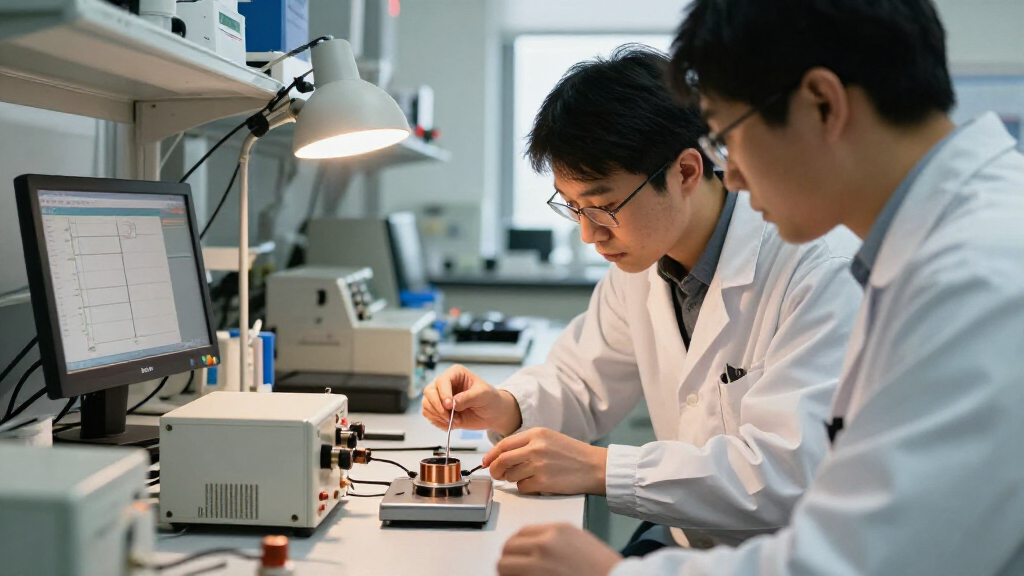
The startup says candidate materials are made and tested with researchers at UC Berkeley and Georgia Tech. It is also discussing joint programs focused on existing high-temperature superconductors while developing its own pipeline of materials. The source report does not identify prospective partners or provide details of any signed agreements.
SuperMatics’ stated goal is to address manufacturability, not simply to predict a higher superconducting temperature. The company says it is designing for wire production from the outset, but the announcement does not report a completed commercial product, manufacturing scale, wire performance measurements or cost figures.
From Lab Results to Power Hardware
Superconductors can carry electricity with zero electrical resistance under the conditions in which they operate. If a material can be made into durable, affordable wire, it could be relevant to applications such as data-center power delivery, quantum-computing systems and magnets for fusion research. The practical value, however, depends on more than a laboratory result: production methods, operating conditions, mechanical performance and cost all matter.
The distinction is important as electricity demand from data centers grows and advanced computing and fusion projects require substantial power infrastructure. The International Energy Agency expects data-center electricity use to more than double by 2030, according to the source report. The report also says Microsoft is exploring superconducting power delivery for data centers. Those developments provide a potential market context, but they do not establish that SuperMatics’ approach has been adopted by either Microsoft or any other named company.
AI-assisted materials work could help researchers search a large range of candidate compositions and synthesis conditions. Whether it can shorten development or reduce costs remains an open question. For now, the company’s announcement describes a research and development strategy, not demonstrated industrial deployment.
Products Worth Considering

LG UltraGear 32GX850A-B 32-inch 4K UHD Glossy OLED Gaming Monitor

DJI Osmo Mobile 7P Smartphone Gimbal Stabilizer with Mic Mini Transmitter, Infinity Black

Amazon Kindle Paperwhite Signature Edition, 32GB (2024), Metallic Black
As an affiliate, we earn on qualifying purchases.
The Wire-Manufacturing Bottleneck
The source report says scientists have discovered thousands of superconductors since the phenomenon was identified, while only a handful have been made into commercial wire. That gap reflects the difficulty of moving from a material that exhibits superconductivity in a particular experiment to one that can be produced consistently in a useful form.
SuperMatics argues that many teams still depend on trial and error because standard simulations cannot reliably predict high-temperature superconductivity at everyday pressures. The company says its approach combines prediction with synthesis planning and experimental feedback. These are company descriptions of its method; the report does not include independent validation of the models or a comparison with other materials-discovery approaches.
The report also points to a 2026 University of Houston research result that raised the ambient-pressure superconductivity record, the first such change since 1993, as stated in the source. A record temperature alone does not show whether a material can be made into useful wire. That distinction is central to SuperMatics’ manufacturing-focused pitch.
““Records make headlines, but wires change industries.””
— Davis Rens, SuperMatics co-founder and former quantum engineer at Rigetti Computing
Performance and Production Still Unreported
The announcement does not name a new superconductor discovered by SuperMatics or give measurements for a wire made using its system. It also provides no data on current-carrying capacity, operating temperature and pressure, durability, production yield or estimated price. Without those results, it is not possible to judge how close the approach is to a practical product.
Details of the company’s industry discussions are also limited: no partner names, signed joint-development agreements, budgets or schedules are provided. The source material does not describe independent testing of SuperMatics’ AI predictions or quantify whether the process has reduced discovery time compared with conventional research. The company’s presentation may provide additional information, but what it will disclose is not specified.
Summit Presentation and Partner Talks
SuperMatics is scheduled to present its approach at the Plug and Play Silicon Valley November Summit in Sunnyvale on Nov. 5, 2026. That presentation is the next public milestone identified in the source material. The company says talks with global materials and technology firms are continuing, but has not announced when those discussions might result in formal programs.
Evidence to watch for includes named collaborations, independently reported tests of candidate materials, wire-level performance data and details about production methods and costs. Until such information is available, the development is best understood as an AI-enabled research effort aimed at a recognized commercialization challenge, rather than confirmation that SuperMatics has produced market-ready superconducting wire.
Key Questions
What is SuperMatics announcing?
The Berkeley company says it is applying AI models and agents to predict superconducting-material properties, propose synthesis recipes and simulate potential wires or devices. It is scheduled to present the approach in Sunnyvale on Nov. 5, 2026.
Has SuperMatics announced a commercial superconductor wire?
No commercial wire is reported in the source material. It gives no product specifications, manufacturing scale, pricing or wire-performance measurements.
How does the company say its AI system works?
SuperMatics says its models use physics-based methods to predict properties and plan synthesis, with experimental results fed back into model training. The company says candidates are tested with researchers at UC Berkeley and Georgia Tech; independent validation details are not provided.
Why does making superconductors into wire matter?
Many potential applications, including power delivery and magnets, require material in a usable, producible form. A laboratory discovery or high-temperature record does not by itself show that a material can be made into durable, affordable wire.
Has SuperMatics named its industry partners?
No. The company says it is in talks with global materials and technology companies, but the source report does not name them or confirm signed joint-development agreements.
Source: thequantuminsider.com