
The best RTX 50-series graphics cards depend on your resolution, workload, and case—not just the GPU number. I rank the ASUS TUF Gaming RTX 5080 as the best overall choice here for buyers seeking high-end gaming performance with a robust cooler, while the ASUS Dual RTX 5060 Ti 16GB is a more practical pick for a smaller system and the NVIDIA RTX PRO 4000 Blackwell suits professional workflows that benefit from ECC memory. The main tradeoffs are GPU tier versus VRAM capacity, card size and cooling, and gaming-focused features versus workstation priorities. A 16GB RTX 5060 Ti can fit some workloads better than an 8GB model, but it does not become a faster GPU tier. Read on for the full breakdown and guidance on choosing the right card for your build.

Get the latest gadgets delivered free with Prime
- Fast, free delivery on millions of items
- Prime Video, Amazon Music and more included
- Member-only deals all year
Complete the kit



Key Takeaways
- The RTX 5080 cards lead this lineup for high-end gaming: the ASUS TUF is my overall choice for buyers who can accommodate a larger, more substantial card, while the ASUS Prime and PNY OC offer different cooler and build approaches.
- VRAM separates the RTX 5060 Ti options more than their names do: the PNY, ASUS Dual, and GIGABYTE Eagle models have 16GB, compared with the 8GB GIGABYTE Windforce and MSI Shadow 2X.
- Compactness and memory capacity do not always come together: the ASUS Dual and PNY dual-fan 16GB cards are worth considering when case space matters, but buyers still need to check card dimensions and airflow.
- The RTX 5070 Ti sits between the 5060 Ti and 5080 choices: MSI Ventus 3X and PNY’s triple-fan model offer a middle tier for buyers who want more GPU headroom than the 5060 Ti without choosing an RTX 5080.
- The RTX PRO 4000 Blackwell serves a different purpose from the gaming cards: its 24GB ECC memory points toward professional workloads, so gaming buyers should compare it with GeForce options rather than assume more memory means better gaming value.
| ASUS Prime GeForce RTX 5060 OC Edition 8GB GDDR7 Graphics Card | 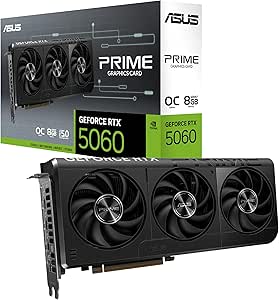 | Best Compact RTX 50-Series Pick | GPU: NVIDIA GeForce RTX 5060 | Memory: 8GB GDDR7 | Architecture: NVIDIA Blackwell | VIEW LATEST PRICE | See Our Full Breakdown |
| NVIDIA RTX PRO 4000 Blackwell Graphics Card (24GB GDDR7 ECC) |  | Best for Professional Workstations | GPU architecture: NVIDIA Blackwell | Memory: 24GB GDDR7 with ECC | Interface: PCIe 5.0 x16 | VIEW LATEST PRICE | See Our Full Breakdown |
| GIGABYTE GeForce RTX 5060 Ti WINDFORCE OC 8G Graphics Card |  | Best for Compact RTX 5060 Ti Builds | GPU: NVIDIA GeForce RTX 5060 Ti | Memory: 8GB GDDR7, 128-bit | GPU clock speed: 2587 MHz | VIEW LATEST PRICE | See Our Full Breakdown |
| MSI GeForce RTX 5060 Ti Shadow 2X OC 8GB Graphics Card |  | Best Dual-Fan Cooling Pick | GPU: NVIDIA GeForce RTX 5060 Ti | Memory: 8GB GDDR7 | GPU clock speed: 28 GHz listed | VIEW LATEST PRICE | See Our Full Breakdown |
| ASUS TUF Gaming GeForce RTX 5080 16GB GDDR7 OC Edition Graphics Card | 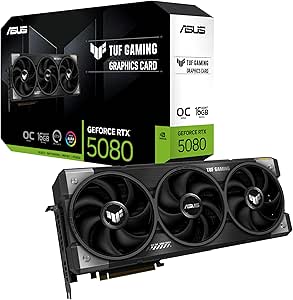 | Best Premium Gaming Performance | GPU: NVIDIA GeForce RTX 5080 | Memory: 16GB GDDR7 | Boost clock: 2730 MHz OC mode; 2700 MHz default mode | VIEW LATEST PRICE | See Our Full Breakdown |
| MSI GeForce RTX 5070 Ti 16G Ventus 3X OC Black Graphics Card |  | Best Balanced RTX 5070 Ti | GPU: NVIDIA GeForce RTX 5070 Ti | Architecture: NVIDIA Blackwell | Memory: 16GB GDDR7 | VIEW LATEST PRICE | See Our Full Breakdown |
| PNY NVIDIA GeForce RTX 5060 Ti 16GB OC Dual-Fan Graphics Card |  | Best Compact 16GB Pick | GPU: NVIDIA GeForce RTX 5060 Ti | Memory: 16GB GDDR7 | Memory bandwidth: 448 GB/s | VIEW LATEST PRICE | See Our Full Breakdown |
| ASUS Prime GeForce RTX 5080 16GB GDDR7 Graphics Card |  | Best for Compact RTX 5080 Builds | GPU: NVIDIA GeForce RTX 5080 | Memory: 16GB GDDR7 | Boost clock: 2617 MHz default; 2640 MHz OC mode | VIEW LATEST PRICE | See Our Full Breakdown |
| PNY NVIDIA GeForce RTX 5070 Ti OC Triple Fan Graphics Card |  | Best Overclocked RTX 5070 Ti | GPU: NVIDIA GeForce RTX 5070 Ti | Architecture: NVIDIA Blackwell | Memory: 16GB GDDR7 | VIEW LATEST PRICE | See Our Full Breakdown |
| ASUS Dual GeForce RTX 5060 Ti 16GB GDDR7 OC Edition Gaming Graphics Card |  | Best for Quiet, Space-Conscious Builds | GPU: NVIDIA GeForce RTX 5060 Ti | Memory: 16GB GDDR7 | OC-mode clock: 2632 MHz | VIEW LATEST PRICE | See Our Full Breakdown |
| GIGABYTE GeForce RTX 5060 Ti Eagle OC ICE 16G Graphics Card |  | Best for Memory-Heavy Builds | GPU: NVIDIA GeForce RTX 5060 Ti | Memory: 16GB GDDR7 | Memory interface: 128-bit | VIEW LATEST PRICE | See Our Full Breakdown |
| PNY NVIDIA GeForce RTX™ 5080 OC Triple-Fan Graphics Card |  | Best for Sustained High-Load Cooling | GPU family: NVIDIA GeForce RTX 5080 | Architecture: NVIDIA Blackwell | Cooling fans: 3 × 100mm axial fans | VIEW LATEST PRICE | See Our Full Breakdown |
| RTX 50-series graphics card | Memory | GPU | Interface | Video outputs |
|---|---|---|---|---|
| ASUS Prime GeForce RTX 5060 OC | 8GB GDDR7 | NVIDIA GeForce RTX 5060 | PCIe 5.0; PCI-Express x16 | 3 x DisplayPort 2.1b; 1 x HDMI 2.1b |
| NVIDIA RTX PRO 4000 Blackwell | 24GB GDDR7 with ECC | — | PCIe 5.0 x16 | 4 x DisplayPort 2.1b |
| GIGABYTE GeForce RTX 5060 Ti W | 8GB GDDR7, 128-bit | NVIDIA GeForce RTX 5060 Ti | PCI-Express x8 | — |
| MSI GeForce RTX 5060 Ti Shadow | 8GB GDDR7 | NVIDIA GeForce RTX 5060 Ti | — | 3 x DisplayPort 2.1a; 1 x HDMI 2.1b |
| ASUS TUF Gaming GeForce RTX 50 | 16GB GDDR7 | NVIDIA GeForce RTX 5080 | PCIe 5.0 x16 | 3 x DisplayPort 2.1a; 2 x HDMI 2.1b |
| MSI GeForce RTX 5070 Ti 16G Ve | 16GB GDDR7 | NVIDIA GeForce RTX 5070 Ti | — | 3 × DisplayPort 2.1a, 1 × HDMI 2.1b |
| PNY NVIDIA GeForce RTX 5060 Ti | 16GB GDDR7 | NVIDIA GeForce RTX 5060 Ti | PCI Express 5.0 x8 | — |
| ASUS Prime GeForce RTX 5080 16 | 16GB GDDR7 | NVIDIA GeForce RTX 5080 | PCI Express 5.0 x16 | 3 × DisplayPort 2.1a, 2 × HDMI 2.1b |
| PNY NVIDIA GeForce RTX 5070 Ti | 16GB GDDR7 | NVIDIA GeForce RTX 5070 Ti | PCIe 5.0 | HDMI, DisplayPort 2.1 |
| ASUS Dual GeForce RTX 5060 Ti | 16GB GDDR7 | NVIDIA GeForce RTX 5060 Ti | PCI Express x16; PCIe 5.0 | 3 × DisplayPort 2.1b, 1 × HDMI 2.1b |
| GIGABYTE GeForce RTX 5060 Ti E | 16GB GDDR7 | NVIDIA GeForce RTX 5060 Ti | PCIe 5.0 | — |
| PNY NVIDIA GeForce RTX™ 5080 O | — | — | — | — |
More Details on Our Top Picks
ASUS Prime GeForce RTX 5060 OC Edition 8GB GDDR7 Graphics Card
The ASUS Prime RTX 5060 is the most approachable fit here for a smaller gaming build: its 2.5-slot design is less demanding than the 3.6-slot ASUS TUF RTX 5080, while its three Axial-tech fans and dual BIOS give builders useful choices between quieter operation and performance. The 0dB mode can stop the fans during light use, which suits a PC that also handles everyday tasks. Blackwell features and DLSS 4 bring current RTX-generation capabilities, but this card sits below both RTX 5060 Ti options in the lineup. Its main compromise is 8GB of VRAM, which can constrain memory-heavy games and creative workloads. Choose it for a compact, entry-level RTX 50-series gaming system, not for demanding high-resolution use.
Pros:- 2.5-slot format is easier to fit than the ASUS TUF RTX 5080’s 3.6-slot cooler.
- Three Axial-tech fans with dual-ball bearings support cooling and long-term operation.
- 0dB mode and Quiet/Performance BIOS profiles allow noise and cooling preferences.
- Three DisplayPort 2.1b outputs plus HDMI 2.1b support modern display setups.
Cons:- 8GB of GDDR7 can limit performance in memory-intensive games and workloads.
- At 10.6 inches long and 2.5 slots thick, it still needs case clearance.
- The RTX 5060 sits below the RTX 5060 Ti models in this roundup for GPU tier.
Best for: Builders seeking a relatively compact RTX 50-series card for everyday gaming who value quiet idle operation and flexible fan profiles.
Not ideal for: Players targeting memory-heavy games or demanding high-resolution workloads, since the 8GB buffer is smaller than the 16GB on the RTX 5080.
- GPU:NVIDIA GeForce RTX 5060
- Memory:8GB GDDR7
- Architecture:NVIDIA Blackwell
- Clock speed:2595 MHz OC mode; 2565 MHz default mode
- Video outputs:3 x DisplayPort 2.1b; 1 x HDMI 2.1b
- Cooling and form factor:Three Axial-tech fans; 2.5-slot design
- Dimensions:10.6 x 4.7 inches
- Interface:PCIe 5.0; PCI-Express x16
Our verdict“Pick the ASUS Prime RTX 5060 for a quieter, space-conscious entry to the RTX 50 series, but choose a higher-tier card for more demanding gaming.”
NVIDIA RTX PRO 4000 Blackwell Graphics Card (24GB GDDR7 ECC)
The NVIDIA RTX PRO 4000 Blackwell is the specialist in this group, not a gaming-first substitute for the GeForce cards. Its 24GB of GDDR7 with ECC is aimed at large datasets, simulation, and rendering workloads where memory capacity and data integrity matter more than gaming-focused features. The single-slot, full-height design also suits dense workstations better than the broad ASUS TUF RTX 5080, and four DisplayPort 2.1b outputs make multi-monitor professional setups straightforward. For a gaming PC, though, this card is a poor fit: its professional focus may bring different driver and application support, and the supplied information does not position it as a GeForce gaming alternative. I’d shortlist it only when workstation memory capacity and compact expansion matter more than consumer gaming performance.
Pros:- 24GB of GDDR7 ECC memory supports large professional workloads and data integrity.
- Single-slot, full-height design can fit dense workstation chassis.
- Four DisplayPort 2.1b outputs support multi-monitor workstation setups.
- PCIe 5.0 x16 interface provides a current-generation connection.
Cons:- Professional positioning makes it a less suitable choice for gaming-focused systems than the GeForce models here.
- The single-slot design prioritizes workstation fit rather than the multi-fan cooling approach of the ASUS TUF RTX 5080.
- A PCIe 5.0-compatible motherboard is needed to access the listed interface generation.
Best for: Workstation users running memory-intensive AI, 3D rendering, or simulation tasks who need ECC memory and multiple DisplayPort outputs.
Not ideal for: Gaming-focused builders seeking a GeForce card for mainstream play, since this is specialized professional hardware with a different software focus.
- GPU architecture:NVIDIA Blackwell
- Memory:24GB GDDR7 with ECC
- Interface:PCIe 5.0 x16
- GPU clock speed:1230 MHz
- Memory clock speed:1750 MHz
- Video outputs:4 x DisplayPort 2.1b
- Form factor:Single slot, full height
- Maximum resolution:7680 x 4320
Our verdict“Choose the RTX PRO 4000 for ECC-equipped, memory-heavy workstation tasks, not as a gaming-oriented alternative to the GeForce cards.”
GIGABYTE GeForce RTX 5060 Ti WINDFORCE OC 8G Graphics Card
Gigabyte’s RTX 5060 Ti WINDFORCE OC 8G steps above the ASUS Prime RTX 5060 in GPU tier while keeping to a short, dual-fan layout. At 8.19 inches long, it is the most clearly compact choice among the GeForce models described here, making it a sensible match for cases where longer cards are awkward. Its 2587 MHz listed GPU clock and GDDR7 memory suit a midrange gaming build, while Blackwell and DLSS 4 provide the same generation of features as the Prime. The tradeoff is that the 8GB capacity matches the weaker RTX 5060 and falls well short of the 16GB ASUS TUF RTX 5080. The product data also lists a PCI-Express x8 interface, so buyers should verify their system fit rather than assume x16 connectivity.
Pros:- 8.19-inch length suits more compact cases than the 13.7-inch ASUS TUF RTX 5080.
- RTX 5060 Ti tier sits above the ASUS Prime RTX 5060 in the product lineup.
- Dual-fan WINDFORCE cooling fits a shorter card design.
- GDDR7 memory and Blackwell architecture support current RTX-generation features.
Cons:- 8GB of memory is less suited to workloads that require a larger VRAM buffer.
- The listed PCI-Express x8 interface may not match buyers expecting an x16 card.
- Two fans offer less cooling hardware than the triple-fan ASUS TUF RTX 5080.
Best for: Small-case builders who want an RTX 5060 Ti-class card and prefer a short, dual-fan design.
Not ideal for: Players with memory-intensive games or workloads, or buyers who want the larger 16GB buffer offered by the ASUS TUF RTX 5080.
- GPU:NVIDIA GeForce RTX 5060 Ti
- Memory:8GB GDDR7, 128-bit
- GPU clock speed:2587 MHz
- Memory clock speed:28000 MHz
- Cooling:Two-fan WINDFORCE cooling system
- Interface:PCI-Express x8
- Dimensions:8.19 x 4.72 inches
- Maximum resolution:7680 x 4320
Our verdict“Choose this Gigabyte RTX 5060 Ti when a short card matters more than VRAM capacity or a larger cooling system.”
MSI GeForce RTX 5060 Ti Shadow 2X OC 8GB Graphics Card
The MSI RTX 5060 Ti Shadow 2X OC gives buyers a conventional dual-fan RTX 5060 Ti design with cooling hardware described in more detail than the Gigabyte WINDFORCE card. Its TORX Fan 5.0 fans, nickel-plated copper baseplate, and square-core pipes are intended to move heat away from the GPU without requiring the larger triple-fan arrangement on the ASUS TUF RTX 5080. That makes the MSI a more modest fit for a typical desktop, though its listed 8.9-inch length and 5-inch width still call for a case-clearance check. Like the Gigabyte 8GB model, it has limited memory headroom compared with cards offering 16GB. The stated 28 GHz GPU clock is unusual, so I would verify the exact clock specification before comparing it against other cards.
Pros:- Dual TORX Fan 5.0 cooling keeps the design simpler than the ASUS TUF RTX 5080’s triple-fan cooler.
- Nickel-plated copper baseplate and square-core pipes are designed to manage GPU heat.
- Three DisplayPort 2.1a outputs and HDMI 2.1b support varied display connections.
- Listed dimensions of 8.9 x 5 inches are more manageable than the 13.7-inch ASUS TUF RTX 5080.
Cons:- 8GB of GDDR7 provides less memory capacity than the 16GB cards in the roundup.
- The listed 28 GHz GPU clock is unusual and should be checked against the manufacturer’s specification.
- Requires a desktop system with a PCI Express interface.
Best for: Desktop builders seeking an RTX 5060 Ti with a dual-fan cooler and dedicated heat-spreading hardware.
Not ideal for: Buyers prioritizing more than 8GB of VRAM or those who need a clearly specified clock speed for direct comparisons.
- GPU:NVIDIA GeForce RTX 5060 Ti
- Memory:8GB GDDR7
- GPU clock speed:28 GHz listed
- Memory clock speed:2565 MHz
- Cooling:Two TORX Fan 5.0 fans; nickel-plated copper baseplate; square-core pipes
- Video outputs:3 x DisplayPort 2.1a; 1 x HDMI 2.1b
- Dimensions:8.9 x 5 inches
- Maximum resolution:7680 x 4320
Our verdict“Pick the MSI Shadow 2X for a dual-fan RTX 5060 Ti with specified heat-spreading hardware, after confirming its listed clock information.”
ASUS TUF Gaming GeForce RTX 5080 16GB GDDR7 OC Edition Graphics Card
The ASUS TUF Gaming RTX 5080 OC is the premium gaming choice in this batch, pairing a higher-tier GPU with 16GB of GDDR7—double the capacity of the RTX 5060 and 8GB RTX 5060 Ti options. Its 2730 MHz OC-mode boost and three Axial-tech fans suit buyers building around demanding games, while the phase-change thermal pad and protective PCB coating add practical attention to sustained operation and component protection. Compared with the single-slot RTX PRO 4000, this is the clearly gaming-oriented option; compared with the smaller MSI Shadow 2X, it demands far more space and power. A 3.6-slot, 348 mm body, 850W PSU requirement, and 16-pin connector make it unsuitable for compact or modest systems. Check case clearance and power compatibility before choosing it.
Pros:- RTX 5080 GPU tier and 16GB GDDR7 provide substantially more headroom than the RTX 5060 and 8GB RTX 5060 Ti models.
- Three Axial-tech fans and a phase-change GPU thermal pad are designed for sustained cooling.
- Protective PCB coating and reinforced components add protection for the card.
- Includes three DisplayPort 2.1a and two HDMI 2.1b outputs.
Cons:- The 348 mm, 3.6-slot design needs substantial case clearance and slot spacing.
- Requires an 850W minimum power supply and a 16-pin 12V-2×6 connector.
- At 5 lb listed item weight, it may need the included GPU bracket for support.
Best for: Enthusiast gamers building a spacious desktop with an 850W power supply who want a higher-tier GPU and 16GB of memory.
Not ideal for: Small-case builders or owners of lower-wattage power supplies who cannot accommodate a 348 mm, 3.6-slot card and 16-pin power connector.
- GPU:NVIDIA GeForce RTX 5080
- Memory:16GB GDDR7
- Boost clock:2730 MHz OC mode; 2700 MHz default mode
- Cooling and form factor:Three Axial-tech fans; 3.6-slot design
- Interface:PCIe 5.0 x16
- Video outputs:3 x DisplayPort 2.1a; 2 x HDMI 2.1b
- Dimensions:13.7 x 5.7 inches; 348 mm length
- Power requirement:850W minimum; 16-pin 12V-2×6 connector
Our verdict“Choose the ASUS TUF RTX 5080 for a premium, 16GB gaming build only if your case and power supply can support its size and power needs.”
MSI GeForce RTX 5070 Ti 16G Ventus 3X OC Black Graphics Card
I’d choose the MSI Ventus 3X OC for a build that needs RTX 5070 Ti-class capability without the more elaborate cooling approach of the ASUS Prime RTX 5080. Its 16GB of GDDR7 and 256-bit memory interface suit demanding games and creative tasks, while the three-fan TORX design, nickel-plated copper baseplate, and square Core Pipes are built to move heat away under sustained load. The neutral enclosure also makes it easier to pair with varied build styles than a more distinctive card.
The tradeoff is physical fit: the listed 16 × 11-inch dimensions are unusually large, so I would verify the actual card and case clearances before buying. It also needs a compatible PCI Express slot. Compared with the PNY RTX 5070 Ti OC, this MSI has a lower listed core clock, but its documented cooling details make it a sensible pick for buyers who prioritize a straightforward thermal setup over the higher boost figure.
Pros:- 16GB GDDR7 with a 256-bit memory interface
- TORX Fan 5.0 triple-fan cooling design
- Nickel-plated copper baseplate and square Core Pipes support heat transfer
- Neutral enclosure can suit a range of desktop builds
Cons:- Listed dimensions are exceptionally large and may complicate case fit
- Requires a compatible desktop PCI Express interface
- Listed 2482 MHz core clock is below the PNY RTX 5070 Ti OC’s 2572 MHz boost specification
Best for: Gamers and creators who want an RTX 5070 Ti with 16GB of GDDR7, a neutral look, and a substantial triple-fan cooling system.
Not ideal for: Small-case builders or anyone unable to verify clearance for a card listed at 16 × 11 inches.
- GPU:NVIDIA GeForce RTX 5070 Ti
- Architecture:NVIDIA Blackwell
- Memory:16GB GDDR7
- Memory interface:256-bit
- Core clock:2482 MHz
- Cooling:TORX Fan 5.0, nickel-plated copper baseplate, square Core Pipes
- Video outputs:3 × DisplayPort 2.1a, 1 × HDMI 2.1b
- Dimensions:16 × 11 in (listed)
- Warranty:3 years
Our verdict“Choose the MSI Ventus 3X OC if you want a well-cooled RTX 5070 Ti with 16GB of memory and have ample room in your case.”
PNY NVIDIA GeForce RTX 5060 Ti 16GB OC Dual-Fan Graphics Card
The PNY RTX 5060 Ti makes the most sense when case space and memory capacity matter more than moving up to an RTX 5070 Ti or RTX 5080. Its 16GB of GDDR7 gives games, creative projects, and AI workloads more memory headroom than the 8GB RTX 5060 Ti models in this roundup. The dual-slot, 9.65-inch design is also easier to accommodate than the much larger PNY RTX 5070 Ti OC, and its single 8-pin connector avoids that card’s more involved adapter arrangement.
That compact format comes with a performance ceiling: this is an RTX 5060 Ti, not a higher-tier card for buyers chasing maximum rendering or gaming throughput. The 128-bit interface and PCIe 5.0 x8 connection are also worth noting for system planning. Its factory overclock and VelocityX controls provide tuning options, but buyers still need a 600W system power supply. I’d favor it over the ASUS Dual RTX 5060 Ti if compact dual-slot dimensions are the priority; the ASUS instead adds a 2.5-slot cooler and Dual BIOS.
Pros:- 16GB GDDR7 provides memory headroom for demanding applications
- Compact dual-slot design measures 9.65 × 4.72 inches
- Factory-overclocked boost clock listed at 2692 MHz
- VelocityX supports clock and fan tuning, monitoring, and saved profiles
Cons:- 600W recommended system power may rule out lower-capacity builds
- PCIe 5.0 x8 interface has fewer lanes than the x16 cards in this roundup
- Dual-fan cooling is less substantial than the triple-fan systems on the RTX 5070 Ti options
Best for: Small-form-factor PC builders who want an RTX 5060 Ti with 16GB of GDDR7 for gaming, creative applications, or AI workloads.
Not ideal for: Buyers seeking high-end RTX 5070 Ti or RTX 5080 performance, or those whose system cannot meet the 600W power recommendation.
- GPU:NVIDIA GeForce RTX 5060 Ti
- Memory:16GB GDDR7
- Memory bandwidth:448 GB/s
- Memory interface:128-bit
- Boost clock:2692 MHz
- Interface:PCI Express 5.0 x8
- Power:Single 8-pin connector; 600W recommended system power
- Cooling and design:Two fans, dense heatsink, vented metal backplate; dual-slot
- Dimensions:9.65 × 4.72 in
Our verdict“Pick the PNY RTX 5060 Ti if you need 16GB of graphics memory in a compact dual-slot card and do not need RTX 5070 Ti-class performance.”
ASUS Prime GeForce RTX 5080 16GB GDDR7 Graphics Card
Among these options, the ASUS Prime RTX 5080 is the clearest choice for buyers who want RTX 5080 performance in a relatively slim 2.5-slot card. Its 16GB of GDDR7, PCIe 5.0 x16 interface, and support for up to 7680 × 4320 resolution position it above the RTX 5060 Ti models for demanding games and graphics work. The three Axial-tech fans work with a vapor chamber and phase-change thermal pad, while Dual BIOS and 0dB technology let buyers choose between cooling behavior and quieter light-load operation.
Its 306 mm length still calls for careful case checks, and “SFF-Ready” does not guarantee a fit in every small chassis. The power requirement is also substantial: ASUS specifies at least 850W and a 16-pin 12V-2×6 connector. Compared with the ASUS TUF RTX 5080, this Prime model emphasizes a 2.5-slot profile; buyers with less restrictive case space may prefer to compare the TUF’s specific design before deciding.
Pros:- RTX 5080 GPU with 16GB GDDR7
- 2.5-slot profile is comparatively space-conscious for this GPU tier
- Vapor chamber and phase-change thermal pad support heat transfer
- Dual BIOS and 0dB technology provide profile flexibility and quieter light-load operation
Cons:- Requires an 850W minimum power supply and 16-pin 12V-2×6 connector
- 306 mm length and 2.5-slot thickness still require careful clearance checks
- A large, powerful card may be unnecessary for buyers whose workloads suit an RTX 5060 Ti
Best for: Small-form-factor enthusiasts with verified case clearance who want RTX 5080 capability and a choice of Quiet or Performance BIOS profiles.
Not ideal for: Builders with limited PSU capacity, no 16-pin 12V-2×6 connector, or a case that cannot fit a 306 mm card.
- GPU:NVIDIA GeForce RTX 5080
- Memory:16GB GDDR7
- Boost clock:2617 MHz default; 2640 MHz OC mode
- Interface:PCI Express 5.0 x16
- Cooling:Three Axial-tech fans, vapor chamber, phase-change GPU thermal pad
- Video outputs:3 × DisplayPort 2.1a, 2 × HDMI 2.1b
- Maximum resolution:7680 × 4320
- Dimensions and thickness:306 mm (12 in) long; 2.5 slots
- Power requirement:850W minimum; 16-pin 12V-2×6 connector
Our verdict“Choose the ASUS Prime RTX 5080 if you want high-end GPU capability in a 2.5-slot design and already have the case and power supply to support it.”
PNY NVIDIA GeForce RTX 5070 Ti OC Triple Fan Graphics Card
The PNY RTX 5070 Ti OC is the pick for buyers who want a factory-overclocked 5070 Ti and prefer a clearly specified boost clock. Its 2572 MHz boost figure is higher than the MSI Ventus 3X OC’s listed 2482 MHz core clock, although those clock labels are not directly equivalent performance measures. Both cards have 16GB of GDDR7 and a 256-bit memory bus; PNY adds a triple-fan cooler and support for DLSS 4 and fourth-generation ray tracing cores for compatible games.
The main cost of that design is fit and power planning. At 2.98 slots, it is less accommodating than the ASUS Prime RTX 5080’s 2.5-slot body, and the supplied power arrangement calls for a 16-pin-to-three-8-pin adapter setup. Its stated maximum resolution is 3840 × 2160, so buyers targeting higher-resolution displays should compare the output and workload needs carefully. I’d pick it over the MSI if the boost specification is the draw, not if compact dimensions are a priority.
Pros:- 16GB GDDR7 and 256-bit memory bus
- Listed 2572 MHz boost clock
- Triple-fan cooling for the overclocked card
- Supports DLSS 4 and fourth-generation ray tracing cores
Cons:- 2.98-slot footprint can limit case compatibility and slot spacing
- Power setup requires a 16-pin-to-three-8-pin adapter arrangement
- Listed maximum resolution is 3840 × 2160
Best for: Gamers and creators who want a factory-overclocked RTX 5070 Ti, 16GB of GDDR7, and triple-fan cooling in a roomy desktop.
Not ideal for: Small-case builders, multi-GPU planners, or anyone who wants to avoid the 16-pin-to-three-8-pin power adapter arrangement.
- GPU:NVIDIA GeForce RTX 5070 Ti
- Architecture:NVIDIA Blackwell
- Memory:16GB GDDR7
- Memory bus:256-bit
- Boost clock:2572 MHz
- Interface:PCIe 5.0
- Cooling and form factor:Triple fan; 2.98 slots
- Video outputs:HDMI, DisplayPort 2.1
- Power connector:One 16-pin to three 8-pin
Our verdict“Choose the PNY RTX 5070 Ti OC if you want its specified factory boost and triple-fan cooling and have room for its thick card and power cabling.”
ASUS Dual GeForce RTX 5060 Ti 16GB GDDR7 OC Edition Gaming Graphics Card
The ASUS Dual RTX 5060 Ti suits buyers who want 16GB of GDDR7 in a compact card with useful noise and tuning options. Its 2.5-slot design is thicker than the PNY RTX 5060 Ti’s dual-slot body, but the Axial-tech fans, 0dB technology, and Dual BIOS give this ASUS more ways to balance cooling and noise. The listed 2632 MHz OC-mode clock and 767 AI TOPS identify it as a factory-tuned Blackwell card; three DisplayPort 2.1b outputs also support multi-display setups.
It remains an RTX 5060 Ti, so buyers seeking the higher-tier performance of the ASUS Prime RTX 5080 should look elsewhere. The supplied data also does not list a recommended PSU wattage or power connector, so I would check ASUS’s full requirements against the system before buying. Compared with the PNY 16GB model, this one trades a slimmer dual-slot profile for Dual BIOS and quiet-operation features, making it a better match for builders who value those controls and can spare the extra slot thickness.
Pros:- 16GB GDDR7 and Blackwell architecture
- 2.5-slot design balances compact fit with cooling space
- Dual BIOS offers Quiet and Performance profiles
- 0dB technology and Axial-tech fans support quieter operation at light loads
Cons:- 2.5-slot thickness takes more space than the PNY RTX 5060 Ti’s dual-slot design
- RTX 5060 Ti tier is below the RTX 5070 Ti and RTX 5080 options for buyers seeking more GPU capability
- Power connector and recommended PSU wattage are not provided in the supplied specifications
Best for: Compact-PC builders who want an RTX 5060 Ti with 16GB of memory, two cooling profiles, and reduced fan noise during lighter gaming.
Not ideal for: Buyers who need the highest performance in this roundup, a true dual-slot card, or confirmed power requirements before checking the manufacturer’s full specifications.
- GPU:NVIDIA GeForce RTX 5060 Ti
- Memory:16GB GDDR7
- OC-mode clock:2632 MHz
- Default-mode clock:2602 MHz
- AI performance:767 AI TOPS
- Video outputs:3 × DisplayPort 2.1b, 1 × HDMI 2.1b
- Interface:PCI Express x16; PCIe 5.0
- Design and cooling:2.5 slots; two Axial-tech fans; 0dB technology; Dual BIOS
- Maximum resolution:7680 × 4320
Our verdict“Pick the ASUS Dual RTX 5060 Ti if you want 16GB in a compact build and value quiet and performance BIOS modes more than a thinner dual-slot profile.”
GIGABYTE GeForce RTX 5060 Ti Eagle OC ICE 16G Graphics Card
The Eagle OC ICE pairs the RTX 5060 Ti with 16GB of GDDR7, giving games and creative projects more memory headroom than the 8GB RTX 5060 Ti models in this roundup, such as the GIGABYTE WINDFORCE OC 8G. That can help when a workload uses large textures or assets, though memory capacity alone does not make it a higher-performance GPU tier. Its two-fan WINDFORCE cooler and 8.46-inch length suit buyers who want a relatively compact card, while PCIe 5.0 and DLSS 4 support bring current-generation features. The tradeoff is the 128-bit memory interface, and this remains a desktop card that needs a compatible PCIe graphics slot. I would choose it over an 8GB 5060 Ti for memory capacity, but buyers seeking a bigger performance step should compare it with the RTX 5080 options.
Pros:- 16GB of GDDR7 offers more memory capacity than the 8GB RTX 5060 Ti alternatives in this roundup.
- Two-fan WINDFORCE cooling fits a shorter 8.46-inch card design.
- Supports DLSS 4 and PCIe 5.0.
- Supports display resolutions up to 7680 × 4320.
Cons:- The 128-bit memory interface is narrower than buyers seeking a higher-bandwidth design may prefer.
- Its RTX 5060 Ti tier is a step below the RTX 5080 cards for buyers prioritizing greater GPU performance.
- Requires a desktop with a compatible PCIe graphics card interface.
Best for: PC builders who want an RTX 5060 Ti with 16GB of memory for texture-heavy games or creative workloads, especially in a more compact build.
Not ideal for: Buyers seeking high-end GPU performance or a wide memory interface; consider an RTX 5080 model instead, and confirm your case and motherboard support this desktop card.
- GPU:NVIDIA GeForce RTX 5060 Ti
- Memory:16GB GDDR7
- Memory interface:128-bit
- GPU clock speed:2617 MHz
- Memory clock speed:28000 MHz
- Interface:PCIe 5.0
- Cooling fans:2
- Dimensions:8.46 × 4.8 inches
- Warranty:3 years
Our verdict“Choose the Eagle OC ICE if 16GB of memory and a relatively short dual-fan design matter more than moving up to an RTX 5080.”
PNY NVIDIA GeForce RTX™ 5080 OC Triple-Fan Graphics Card
PNY’s RTX 5080 OC is the cooling-focused choice among this roundup’s high-end cards. Its triple 100mm fans, vapor chamber, dense heatsink, and ventilated aluminum backplate are designed to move heat away during demanding gaming or creative sessions. Stealth Mode stops the fans at low temperatures, while VelocityX gives owners control over clocks, fan curves, monitoring, and saved profiles. That level of cooling and tuning makes it a different proposition from the RTX 5060 Ti Eagle OC ICE, which is shorter and aimed at a more modest GPU tier. The tradeoff is a larger, more elaborate cooling setup that calls for checking case space and airflow; the supplied data does not give dimensions or power requirements. I’d shortlist this card for demanding workloads, but buyers should compare it with the ASUS RTX 5080 options on fit and their preferred cooling design.
Pros:- Triple 100mm axial fans are designed for increased airflow and reduced turbulence.
- Vapor chamber, dense heatsink, and open aluminum backplate support heat removal under demanding workloads.
- Stealth Mode stops the fans at low temperatures for silent operation.
- VelocityX supports clock and fan adjustments, live monitoring, and up to five saved profiles.
Cons:- The triple-fan cooling assembly may be a poor fit for compact cases; card dimensions are not provided.
- Power requirements are not provided, making it harder to check compatibility with an existing system.
- Buyers choosing among RTX 5080 cards will need to compare its fit and cooling design with the ASUS Prime and TUF models.
Best for: Gamers and creators building a well-ventilated desktop who want an RTX 5080 with substantial cooling and software controls for tuning.
Not ideal for: Small-case builders or buyers who need confirmed card dimensions and power requirements before purchasing; those details are not supplied here.
- GPU family:NVIDIA GeForce RTX 5080
- Architecture:NVIDIA Blackwell
- Cooling fans:3 × 100mm axial fans
- Cooling design:Vapor chamber, dense heatsink, and open aluminum backplate
- Fan mode:Stealth Mode stops fans at low temperatures
- Control software:PNY VelocityX
- Saved profiles:Up to 5
- Ray tracing cores:4th generation
- Tensor cores:5th generation
Our verdict“Pick PNY’s RTX 5080 OC if your case has room for its cooling assembly and you want software-based fan and clock controls for demanding workloads.”
How We Picked
I compared these 12 cards by the factors that change the buying decision: GPU tier, VRAM capacity, cooling layout, physical fit, and intended workload. I gave weight to whether a card’s configuration makes sense for its likely buyer—for example, 16GB RTX 5060 Ti models are a different proposition from 8GB versions, while a workstation-class RTX PRO card should be judged by professional needs rather than gaming alone. I also treated model-specific features such as dual- versus triple-fan designs as fit and cooling considerations, not proof of a particular performance result.
The order favors versatility and a clear match between hardware and buyer needs. The ASUS TUF RTX 5080 ranks first as a high-end gaming pick; lower GPU tiers follow where they serve more constrained builds or workloads, and the professional RTX PRO 4000 is placed by its specialized role rather than gaming performance. Among cards sharing a GPU tier, I separate them by memory configuration and cooler format, while avoiding claims that cannot be established from the listed specifications. Buyers should still check exact dimensions, power requirements, and system compatibility before choosing.
| RTX 50-series graphics card | GPU |
|---|---|
| ASUS Prime GeForce RTX 5060 OC | NVIDIA GeForce RTX 5060 |
| NVIDIA RTX PRO 4000 Blackwell | — |
| GIGABYTE GeForce RTX 5060 Ti W | NVIDIA GeForce RTX 5060 Ti |
| MSI GeForce RTX 5060 Ti Shadow | NVIDIA GeForce RTX 5060 Ti |
| ASUS TUF Gaming GeForce RTX 50 | NVIDIA GeForce RTX 5080 |
| MSI GeForce RTX 5070 Ti 16G Ve | NVIDIA GeForce RTX 5070 Ti |
| PNY NVIDIA GeForce RTX 5060 Ti | NVIDIA GeForce RTX 5060 Ti |
| ASUS Prime GeForce RTX 5080 16 | NVIDIA GeForce RTX 5080 |
| PNY NVIDIA GeForce RTX 5070 Ti | NVIDIA GeForce RTX 5070 Ti |
| ASUS Dual GeForce RTX 5060 Ti | NVIDIA GeForce RTX 5060 Ti |
| GIGABYTE GeForce RTX 5060 Ti E | NVIDIA GeForce RTX 5060 Ti |
| PNY NVIDIA GeForce RTX™ 5080 O | — |
Factors to Consider When Choosing Best RTX 50-series Graphics Cards
Choosing among RTX 50-series cards starts with the system and workload you already have, not the longest model name. These broader checks can help prevent paying for a tier you cannot use—or choosing a card that creates avoidable fit, memory, or power constraints.
Match the GPU Tier to Your Resolution and Workload
Decide what you want the card to do before comparing cooler branding or factory overclocks. Higher-tier GPUs are generally aimed at more demanding gaming and rendering workloads, but the actual benefit depends on your resolution, settings, and software. A 5060 Ti may be a sensible fit for a more modest system, while a 5070 Ti or 5080 is aimed at buyers seeking greater performance headroom. Avoid paying for a higher tier if your display, workload, or other system components will keep it underused. For professional applications, check software requirements and certification needs instead of relying on gaming performance assumptions.
Choose VRAM for the Work You Actually Do
Memory capacity can affect whether large textures, datasets, or creative projects fit comfortably, but it does not replace GPU processing power. The 8GB and 16GB RTX 5060 Ti cards in this roundup make that distinction especially visible: they share a GPU tier but offer different memory headroom. If you play at higher texture settings, work with large assets, or expect projects to grow, extra VRAM may be useful. For routine workloads that fit within a smaller memory budget, it may not justify a compromise elsewhere. Professional buyers should also distinguish ordinary GDDR memory from ECC memory, which serves a different reliability need.
Check Case Clearance and Airflow Before Choosing a Cooler
A triple-fan card can take up more space than a dual-fan design, and its length, height, and thickness all matter when fitting it into a case. Do not assume a model will fit just because the GPU tier is familiar; partner-card dimensions can differ substantially. Measure available clearance, account for nearby cables and drive cages, and check whether the card blocks expansion slots you need. Case airflow also affects how well a cooler can move heat away, so a larger heatsink is not a complete answer in a cramped or poorly ventilated build. Confirm the exact product dimensions from the manufacturer before ordering.
Plan for Power Delivery and the Rest of the PC
Before selecting a graphics card, compare its power requirements and connector needs with your power supply and case layout. A higher GPU tier can call for a more capable power supply, while an existing system may need additional headroom or a different cable arrangement. Check the manufacturer’s recommended power supply guidance for the exact model rather than applying one figure to every card in a tier. Also account for the CPU and display: an unbalanced system or a monitor that does not use the extra GPU headroom can reduce the practical benefit of an upgrade. Leave room for tidy cable routing, since tight bends or blocked intakes can complicate installation.
Pay More for a Need, Not Just a Model Name
Factory overclock labels, premium branding, and extra fans should not be treated as automatic reasons to choose one card over another. The useful question is whether a specific model’s size, cooling layout, memory, or workload support solves a problem you have. Paying for a higher GPU tier makes more sense when your games or applications can use its added headroom; paying for more VRAM makes more sense when your projects or settings need it. A professional card may be appropriate when ECC memory or workstation-focused requirements matter, but those features may not benefit a gaming-first build. Compare the full system fit and use case, not just the suffix printed on the box.
Frequently Asked Questions
Should I choose an 8GB or 16GB RTX 5060 Ti?
I would choose based on the workloads and settings you expect to use, not on the assumption that the 16GB model has a different GPU tier. The 16GB versions in this roundup give more memory headroom for large assets, demanding textures, and projects that may exceed an 8GB capacity. The 8GB GIGABYTE Windforce and MSI Shadow 2X may still suit buyers whose games and applications fit within that limit. Extra VRAM does not guarantee higher frame rates when the workload is not memory-limited. Check the requirements of the software and games you actually use before deciding.
Is an RTX 5070 Ti a better fit than an RTX 5080 for my build?
The RTX 5070 Ti is the middle ground in this roundup: it offers a step above the RTX 5060 Ti tier without moving to an RTX 5080 model. That can make it a better match when you want additional GPU headroom but do not need the top gaming tier represented here. An RTX 5080 makes more sense when your resolution, settings, or workload can use the extra capability and your system can support the card. Compare exact power needs, dimensions, and your display before choosing. If those factors point to a more modest card, a higher tier may add little practical value for your setup.
Will a dual-fan RTX 5060 Ti fit in a small PC case?
A dual-fan design can be easier to fit than a larger triple-fan card, but the fan count alone does not confirm compatibility. Card length, height, thickness, power connectors, and the location of case obstructions all affect installation. Check the dimensions for the exact ASUS Dual or PNY model and compare them with your case’s GPU clearance. Also consider airflow: a compact case may have limited space to bring cool air to the card. If the fit is close, verify cable clearance and whether the card blocks slots or other components you need.
Should I buy the RTX PRO 4000 Blackwell for gaming because it has 24GB of memory?
Not on memory capacity alone. The RTX PRO 4000 Blackwell is a workstation-oriented card with 24GB of GDDR7 ECC memory, which points to professional workloads where memory reliability and application needs matter. GeForce cards in this roundup are the more direct comparison for gaming-focused builds. More VRAM does not automatically mean faster gaming performance, and a professional card’s strengths may not match what a gaming buyer needs. Check the software support and workload requirements that make ECC or a workstation GPU valuable before choosing it.
What should I check before upgrading from an older graphics card?
Start with the exact card’s dimensions, power requirements, and connector layout, then compare them with your case and power supply. Check that your case has enough clearance and airflow, and that the card will not obstruct other components or expansion slots. Think about the rest of the system as well: your CPU, monitor resolution, and workload affect how much of the new GPU’s capability you can use. If the card’s VRAM is a reason for upgrading, confirm that your games or applications can benefit from the added capacity. A compatibility check before purchase is easier than discovering a fit or power problem during installation.
Conclusion
For the broadest high-end gaming fit in this group, I recommend the ASUS TUF Gaming RTX 5080 as best overall, provided your case and power supply can handle it. For a more restrained build, my best value-oriented choice is the ASUS Dual RTX 5060 Ti 16GB: it pairs the lower GPU tier with more VRAM than the 8GB alternatives and a dual-fan format. The best premium option is the PNY RTX 5080 OC Triple-Fan for buyers who want an alternative 5080 partner-card design, while the best choice for beginners is the ASUS Prime RTX 5060 OC for a straightforward entry into the lineup—after checking that 8GB suits the workload. Choose the NVIDIA RTX PRO 4000 Blackwell for professional work where 24GB ECC memory matters, not as a default gaming upgrade. If you want a middle tier, compare the MSI and PNY RTX 5070 Ti cards against your case clearance and power needs; the right pick is the one that fits both your workload and your system.