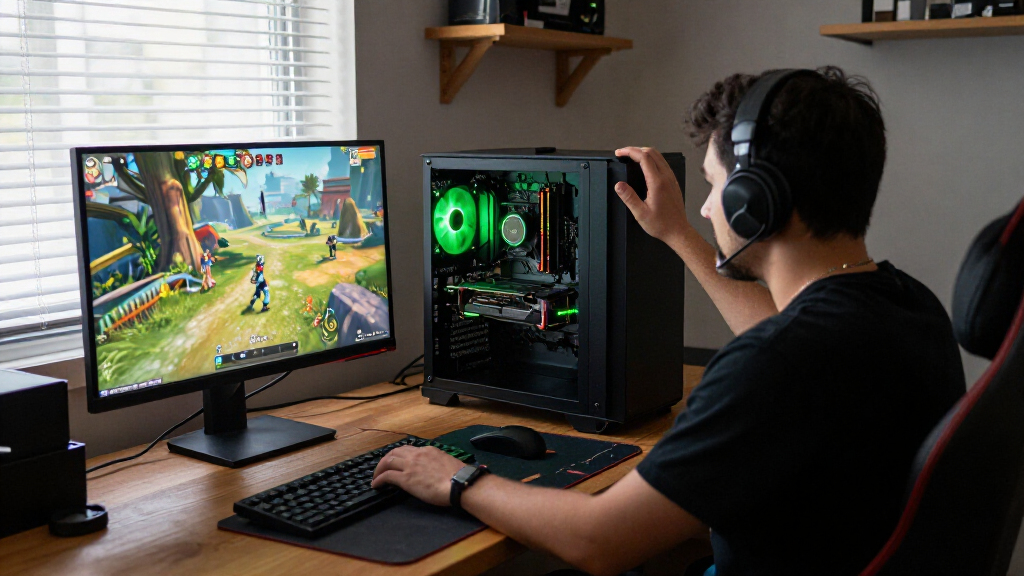
The best Nvidia GeForce graphics cards balance the performance you need with a sensible fit for your games, display, and PC. I’d put the ASUS TUF Gaming RTX 5070 Ti OC at the top for its 16GB of GDDR7 and strong high-end positioning; the ASUS Prime RTX 5070 is a more restrained option, while the ASUS ROG Astral RTX 5090 OC targets buyers who want the highest performance tier represented here. The main tradeoffs are graphics speed versus power and cooling demands, and newer features versus older cards that may still suit a lower-cost build. Memory capacity also matters for demanding games and creative workloads, but more VRAM alone does not make a card faster. Read on for the full comparison, ranking logic, and advice on choosing a GPU that matches your system.

Get the latest gadgets delivered free with Prime
- Fast, free delivery on millions of items
- Prime Video, Amazon Music and more included
- Member-only deals all year
Complete the kit



Key Takeaways
- The RTX 5070 Ti 16GB models lead the balanced high-end choices: ASUS TUF and PNY offer the same GPU tier and memory capacity, so cooler design, card dimensions, and system fit can guide the choice.
- The RTX 5090 is the performance-first pick, not the sensible default: its 32GB of GDDR7 suits demanding workloads, but its premium position and substantial power and cooling needs make it excessive for many gaming PCs.
- The RTX 5070 and RTX 5060 Ti 16GB fill different roles: the 5070 favors a higher performance tier, while the 5060 Ti’s 16GB capacity can appeal to memory-heavy workloads without moving to a larger card class.
- Older GPUs are not interchangeable bargains: the RTX 3060’s 12GB, RTX 3070 Ti’s 8GB, and RTX 3090’s 24GB serve different needs, and age, power use, and memory demands all affect their appeal.
- Model fit matters alongside the GPU name: a compact dual-fan RTX 5060 Ti may suit a smaller case better than a triple-fan card, while an RTX 3050 6GB is aimed at basic entry-level use rather than demanding gaming.
| ASUS TUF Gaming GeForce RTX 4080 SUPER OC Edition Graphics Card |  | Best for High-End 4K Gaming | GPU: NVIDIA GeForce RTX 4080 SUPER | Memory: 16 GB GDDR6X | Clock speed: 2640 MHz OC mode; 2610 MHz default mode | VIEW LATEST PRICE | See Our Full Breakdown |
| ASUS TUF Gaming GeForce RTX 5060 OC Edition Graphics Card, 8GB GDDR7 |  | Best for Durable Mainstream Builds | GPU: NVIDIA GeForce RTX 5060 | Memory: 8 GB GDDR7 | Clock speed: 2640 MHz default; 2677 MHz OC mode | VIEW LATEST PRICE | See Our Full Breakdown |
| ASUS TUF Gaming GeForce RTX 5070 Ti OC 16GB GDDR7 Graphics Card |  | Best for Blackwell Memory Headroom | GPU and architecture: NVIDIA GeForce RTX 5070 Ti; Blackwell | Memory: 16 GB GDDR7 | Boost clock: 2610 MHz OC mode; 2588 MHz default mode | VIEW LATEST PRICE | See Our Full Breakdown |
| GeForce RTX 4070 Super 12GB GDDR6X Graphics Card – Titanium/Black |  | Best for Balanced Ada Lovelace Gaming | GPU: NVIDIA GeForce RTX 4070 SUPER | Architecture: Ada Lovelace | Memory: 12 GB GDDR6X | VIEW LATEST PRICE | See Our Full Breakdown |
| NVIDIA GeForce RTX 4080 16GB GDDR6X Graphics Card |  | Best for a Straightforward 16GB RTX 4080 Build | GPU: NVIDIA GeForce RTX 4080 | Memory: 16 GB GDDR6X | CUDA cores: 9,728 | VIEW LATEST PRICE | See Our Full Breakdown |
| ASUS ROG Astral GeForce RTX 5090 OC Edition 32GB GDDR7 Graphics Card |  | Best for Maximum Performance | GPU: NVIDIA GeForce RTX 5090 | Memory: 32GB GDDR7 | GPU clock speed: 2580 MHz | VIEW LATEST PRICE | See Our Full Breakdown |
| GIGABYTE GeForce RTX 3060 Gaming OC 12G (Rev. 2.0) Graphics Card |  | Best for 12GB on an Older GPU Tier | GPU: NVIDIA GeForce RTX 3060 | Memory: 12GB GDDR6 | Memory interface: 192-bit | VIEW LATEST PRICE | See Our Full Breakdown |
| MSI GeForce RTX 3050 Ventus 2X 6G OC Graphics Card |  | Best for Entry-Level Builds | GPU: NVIDIA GeForce RTX 3050 | Architecture: Ampere | Memory: 6GB GDDR6 | VIEW LATEST PRICE | See Our Full Breakdown |
| ASUS Prime GeForce RTX 5070 12GB GDDR7 OC Edition Graphics Card |  | Best Balanced Midrange Pick | GPU: NVIDIA GeForce RTX 5070 | Memory: 12GB GDDR7 | GPU clock speed: 2587 MHz OC mode; 2557 MHz default mode | VIEW LATEST PRICE | See Our Full Breakdown |
| ASUS Dual GeForce RTX 5060 Ti 16GB GDDR7 OC Edition Graphics Card |  | Best Compact Pick with 16GB Memory | GPU: NVIDIA GeForce RTX 5060 Ti | Memory: 16GB GDDR7 | GPU clock speed: 2632 MHz OC mode; 2602 MHz default mode | VIEW LATEST PRICE | See Our Full Breakdown |
| NVIDIA GeForce RTX 3090 Founders Edition Graphics Card |  | Best for High-Memory Workloads | Chipset: NVIDIA GeForce RTX 3090 | Architecture: Ampere | Memory: 24 GB GDDR6X | VIEW LATEST PRICE | See Our Full Breakdown |
| NVIDIA GeForce RTX 3070 Ti Founders Edition 8GB GDDR6X Graphics Card |  | Best for Existing PCIe 4.0 Builds | Model: GeForce RTX 3070 Ti Founders Edition | Graphics memory: 8 GB GDDR6X | GPU clock speed: 1770 MHz | VIEW LATEST PRICE | See Our Full Breakdown |
| NVIDIA GeForce RTX 3080 Founders Edition Graphics Card |  | Best Ampere Gaming Balance | GPU: NVIDIA GeForce RTX 3080 | Architecture: Ampere | Video memory: 10 GB GDDR6X | VIEW LATEST PRICE | See Our Full Breakdown |
| PNY GeForce RTX 5070 Ti OC Triple Fan Graphics Card, 16GB GDDR7 |  | Best for New-Generation Gaming and Creation | GPU: NVIDIA GeForce RTX 5070 Ti | Architecture: NVIDIA Blackwell | Memory: 16 GB GDDR7 | VIEW LATEST PRICE | See Our Full Breakdown |
| PNY NVIDIA GeForce RTX 5060 Ti 16GB OC Dual-Fan Graphics Card |  | Best Compact 16GB Option | GPU: NVIDIA GeForce RTX 5060 Ti | Memory: 16 GB GDDR7 | Memory bandwidth: 448 GB/s | VIEW LATEST PRICE | See Our Full Breakdown |
| Nvidia GeForce graphics card | Memory | Interface | GPU | Video outputs |
|---|---|---|---|---|
| ASUS TUF Gaming GeForce RTX 40 | 16 GB GDDR6X | PCIe 4.0; PCI-Express x16 | NVIDIA GeForce RTX 4080 SUPER | HDMI 2.1a; DisplayPort 1.4a |
| ASUS TUF Gaming GeForce RTX 50 | 8 GB GDDR7 | PCIe 5.0; PCI-Express x16 | NVIDIA GeForce RTX 5060 | 3 × DisplayPort 2.1b; 1 × HDMI 2.1b |
| ASUS TUF Gaming GeForce RTX 50 | 16 GB GDDR7 | PCIe 5.0; PCI-Express x16 | — | 3 × DisplayPort 2.1a; 2 × HDMI 2.1b |
| GeForce RTX 4070 Super 12GB GD | 12 GB GDDR6X | PCI; PCI Express | NVIDIA GeForce RTX 4070 SUPER | DisplayPort; HDMI |
| NVIDIA GeForce RTX 4080 16GB G | 16 GB GDDR6X | PCI Express 4.0; compatible with PCI Express 3.0 | NVIDIA GeForce RTX 4080 | DisplayPort; HDMI |
| ASUS ROG Astral GeForce RTX 50 | 32GB GDDR7 | PCI Express x16, PCIe 5.0 | NVIDIA GeForce RTX 5090 | 2 × HDMI 2.1b, 3 × DisplayPort 2.1a |
| GIGABYTE GeForce RTX 3060 Gami | 12GB GDDR6 | PCI Express x16 | NVIDIA GeForce RTX 3060 | 2 × HDMI 2.1, 2 × DisplayPort 1.4 |
| MSI GeForce RTX 3050 Ventus 2X | 6GB GDDR6 | — | NVIDIA GeForce RTX 3050 | — |
| ASUS Prime GeForce RTX 5070 12 | 12GB GDDR7 | PCI Express x16, PCIe 5.0 | NVIDIA GeForce RTX 5070 | — |
| ASUS Dual GeForce RTX 5060 Ti | 16GB GDDR7 | PCIe 5.0, PCI Express x16 | NVIDIA GeForce RTX 5060 Ti | 3 × DisplayPort 2.1b, HDMI 2.1b |
| NVIDIA GeForce RTX 3090 Founde | 24 GB GDDR6X | — | — | — |
| NVIDIA GeForce RTX 3070 Ti Fou | — | PCI Express 4.0 | — | — |
| NVIDIA GeForce RTX 3080 Founde | — | PCI Express 4.0; compatible with PCI Express 3.0 | NVIDIA GeForce RTX 3080 | HDMI, DisplayPort |
| PNY GeForce RTX 5070 Ti OC Tri | 16 GB GDDR7 | PCIe 5.0, PCI-Express x16 | NVIDIA GeForce RTX 5070 Ti | DisplayPort 2.1, HDMI |
| PNY NVIDIA GeForce RTX 5060 Ti | 16 GB GDDR7 | PCI Express x8, PCIe 5.0 | NVIDIA GeForce RTX 5060 Ti | — |
More Details on Our Top Picks
ASUS TUF Gaming GeForce RTX 4080 SUPER OC Edition Graphics Card
The RTX 4080 SUPER pairs 16 GB of GDDR6X with DLSS 3 and ray tracing, making this ASUS card a strong fit for demanding games and high-resolution creative work. Its three Axial-tech fans and two selectable clock modes add cooling capacity and a modest factory overclock, while HDMI 2.1a and DisplayPort 1.4a cover current display setups. Compared with the standard NVIDIA GeForce RTX 4080 in this lineup, this SUPER edition offers a higher listed OC-mode clock, though both have 16 GB of GDDR6X. The tradeoff is physical: at 6.6 pounds, it calls for a roomy case and secure support, and it needs a PCIe x16 desktop slot. Choose it over the RTX 4070 SUPER when higher-end performance and memory headroom matter more than a smaller, less demanding build.
Pros:- 16 GB of GDDR6X provides memory headroom for demanding games and creative projects.
- DLSS 3 and ray tracing support modern rendering features.
- Three Axial-tech fans are designed to increase airflow.
- HDMI 2.1a and DisplayPort 1.4a provide flexible display connections.
Cons:- At 6.6 pounds, it is unusually heavy and may need additional card support.
- The large triple-fan design can challenge smaller desktop cases.
- Requires a desktop with a PCI-Express x16 interface.
Best for: PC builders targeting demanding 4K gaming or GPU-heavy creative workloads who have a spacious case and a suitable PCIe x16 system.
Not ideal for: Compact-case builders or anyone seeking a lighter, less demanding card; its 6.6-pound, triple-fan design needs room and support.
- GPU:NVIDIA GeForce RTX 4080 SUPER
- Memory:16 GB GDDR6X
- Clock speed:2640 MHz OC mode; 2610 MHz default mode
- Interface:PCIe 4.0; PCI-Express x16
- Video outputs:HDMI 2.1a; DisplayPort 1.4a
- Cooling:Three Axial-tech fans
- Maximum resolution:7680 × 4320 pixels
- Weight:6.6 pounds
- Warranty:3 years
Our verdict“Choose this ASUS RTX 4080 SUPER for high-end gaming and 16 GB memory capacity if your case can accommodate its weight and size.”
ASUS TUF Gaming GeForce RTX 5060 OC Edition Graphics Card, 8GB GDDR7
This TUF RTX 5060 is the lineup’s mainstream Blackwell-era option, with 8 GB of GDDR7, DLSS 4 support, and a listed 2677 MHz OC-mode clock. Its protective PCB coating and reinforced GPU support are practical extras for builders who value card durability, while three Axial-tech fans and a large fin array are designed to manage heat. Compared with the ASUS TUF RTX 5070 Ti OC, it is a more modest choice, with half the listed memory and less demanding hardware requirements; it is better suited to buyers who do not need that card’s higher-end positioning. The catch is that this is not a compact model: its 3.1-slot design takes up substantial case space despite its lighter 2.5-pound weight. Its 8 GB capacity may also be limiting for memory-heavy workloads.
Pros:- 8 GB of GDDR7 and DLSS 4 support bring current-generation features to a mainstream card.
- Three Axial-tech fans and a large fin array are designed to support airflow.
- Protective PCB coating helps guard against moisture, dust, and debris.
- DisplayPort 2.1b and HDMI 2.1b provide modern display connectivity.
Cons:- The 3.1-slot design needs substantial room inside a desktop case.
- 8 GB of memory offers less headroom than the 16 GB RTX 5070 Ti and RTX 4080 SUPER options.
- A triple-fan cooling assembly is larger than many buyers need for a mainstream build.
Best for: Mainstream gaming PC builders who want DLSS 4 support, current display connections, and added physical protection in a roomy case.
Not ideal for: Compact-PC builders or buyers running memory-intensive games and creative applications who need more than 8 GB of graphics memory.
- GPU:NVIDIA GeForce RTX 5060
- Memory:8 GB GDDR7
- Clock speed:2640 MHz default; 2677 MHz OC mode
- AI performance:785 AI TOPS
- Interface:PCIe 5.0; PCI-Express x16
- Video outputs:3 × DisplayPort 2.1b; 1 × HDMI 2.1b
- Cooling and slot design:Three Axial-tech fans; 3.1 slots
- Dimensions:11.9 × 5.3 inches
- Warranty:3 years
Our verdict“Pick this RTX 5060 for a feature-current mainstream desktop if you have case room and do not need 16 GB of graphics memory.”
ASUS TUF Gaming GeForce RTX 5070 Ti OC 16GB GDDR7 Graphics Card
For buyers who want a current-generation GPU with room for demanding games and GPU workloads, this TUF RTX 5070 Ti combines Blackwell architecture, DLSS 4, and 16 GB of GDDR7. Its phase-change GPU thermal pad and three Axial-tech fans are designed to manage sustained heat, while reinforced construction and a protective PCB coating add durability. Compared with the ASUS TUF RTX 5060, it offers twice the listed memory and a higher-tier GPU, but asks for a much more capable system: ASUS specifies an 850W minimum power supply with a 16-pin 12V-2×6 connector. The 3.125-slot, 13-inch card also demands substantial case space. It makes more sense than the RTX 4080 SUPER for buyers prioritizing GDDR7 and newer platform features, but those who do not need 16 GB can avoid its power and fit requirements with a smaller option.
Pros:- 16 GB of GDDR7 provides capacity for demanding games and GPU workloads.
- Blackwell architecture and DLSS 4 support newer NVIDIA features.
- Phase-change GPU thermal pad and three Axial-tech fans are designed for cooling under load.
- Protective PCB coating and reinforced construction add durability features.
Cons:- Requires a minimum 850W power supply and a 16-pin 12V-2×6 connector.
- Its 3.125-slot, 13-inch design takes substantial case space.
- The demanding power and fit requirements make it a poor match for modest or compact systems.
Best for: Enthusiast builders seeking a Blackwell GPU with 16 GB of GDDR7 for demanding gaming or graphics workloads and who have an 850W PSU and large case.
Not ideal for: Small-form-factor builders or owners without an 850W power supply and 16-pin 12V-2×6 connector.
- GPU and architecture:NVIDIA GeForce RTX 5070 Ti; Blackwell
- Memory:16 GB GDDR7
- Boost clock:2610 MHz OC mode; 2588 MHz default mode
- Interface:PCIe 5.0; PCI-Express x16
- Video outputs:3 × DisplayPort 2.1a; 2 × HDMI 2.1b
- Cooling and slot design:Three Axial-tech fans; phase-change GPU thermal pad; 3.125 slots
- Power requirement:Minimum 850W PSU with 16-pin 12V-2×6 connector
- Dimensions and weight:13 × 5.5 inches; 3.6 pounds
- Warranty:3 years
Our verdict“Choose this RTX 5070 Ti if you want 16 GB of GDDR7 and Blackwell features and already have the power supply and case to support it.”
GeForce RTX 4070 Super 12GB GDDR6X Graphics Card – Titanium/Black
This RTX 4070 SUPER is a balanced Ada Lovelace choice for buyers who want ray tracing and DLSS 3 without stepping up to the 16 GB cards in this group. Its 12 GB of GDDR6X and stated 2.48 GHz clock give it a useful middle position: more memory than the ASUS TUF RTX 5060, but less than the RTX 5070 Ti and RTX 4080 models. That balance suits gaming and content creation without automatically demanding the higher-end memory capacity of those alternatives. The product information lists DisplayPort and HDMI, though it does not specify their versions or the card’s dimensions, so buyers should verify exact fit and connections for their setup. It also flags power draw and cooling needs, making this less attractive for compact builds or systems with limited PSU capacity.
Pros:- Ada Lovelace architecture supports efficient gaming and content creation.
- DLSS 3 and real-time ray tracing support modern rendering features.
- 12 GB of GDDR6X sits between the 8 GB RTX 5060 and 16 GB cards in this roundup.
- DisplayPort and HDMI provide multiple display connection types.
Cons:- 12 GB offers less memory headroom than the RTX 5070 Ti and RTX 4080 options.
- The product information warns of high power draw and a need for adequate cooling.
- Exact port versions and card dimensions are not specified in the supplied details.
Best for: Gamers and creators seeking an Ada Lovelace card with DLSS 3, ray tracing, and 12 GB of memory for a conventional desktop build.
Not ideal for: Buyers who need 16 GB of graphics memory, or compact-system owners who cannot accommodate the stated power and cooling needs.
- GPU:NVIDIA GeForce RTX 4070 SUPER
- Architecture:Ada Lovelace
- Memory:12 GB GDDR6X
- GPU clock speed:2.48 GHz
- Memory clock speed:21 GHz
- Video outputs:DisplayPort; HDMI
- Interface:PCI; PCI Express
- Maximum resolution:7680 × 4320 pixels
- GPU series:NVIDIA RTX 40 Series
Our verdict“Choose the RTX 4070 SUPER for a middle-ground Ada Lovelace build with 12 GB of memory, but look to a 16 GB card for greater capacity headroom.”
NVIDIA GeForce RTX 4080 16GB GDDR6X Graphics Card
This NVIDIA RTX 4080 offers 16 GB of GDDR6X, 9,728 CUDA cores, and a 2.51 GHz boost clock, with dedicated ray-tracing cores and support for DirectX 12 Ultimate and Vulkan RT. Its stated 3840 × 2160 maximum resolution makes the product details more specifically oriented around 4K output than the 8K maximum listed for the ASUS TUF RTX 4080 SUPER. That ASUS model also lists three fans and an OC mode, while this card uses two fans and lists a lower boost clock than the ASUS SUPER’s OC mode. The NVIDIA card’s stated PCIe 3.0 compatibility may appeal to owners of older compatible systems, but buyers should confirm physical fit and power needs before upgrading. With fewer listed cooling fans and no specific output versions provided, it is a less fully detailed choice than the ASUS variant.
Pros:- 16 GB of GDDR6X supports memory-intensive games and creative work.
- 9,728 CUDA cores and a 2.51 GHz boost clock are specified.
- Dedicated ray-tracing cores and DirectX 12 Ultimate support modern rendering APIs.
- Listed as compatible with PCI Express 4.0 and PCI Express 3.0 systems.
Cons:- Its two-fan cooling design uses fewer fans than the three-fan ASUS TUF RTX 4080 SUPER.
- The listed maximum resolution is 3840 × 2160, below the 8K maximum specified for the ASUS RTX 4080 SUPER.
- The supplied details do not identify specific HDMI or DisplayPort versions.
Best for: Desktop builders seeking an RTX 4080 with 16 GB of GDDR6X, dedicated ray tracing cores, and stated PCIe 3.0 compatibility.
Not ideal for: Buyers who want a triple-fan cooler, specified modern port versions, or an explicitly listed 8K maximum resolution.
- GPU:NVIDIA GeForce RTX 4080
- Memory:16 GB GDDR6X
- CUDA cores:9,728
- Boost clock:2.51 GHz
- Interface:PCI Express 4.0; compatible with PCI Express 3.0
- Video outputs:DisplayPort; HDMI
- Cooling:Two fans
- Maximum resolution:3840 × 2160
- APIs:Microsoft DirectX 12 Ultimate; Vulkan RT
Our verdict“Pick this RTX 4080 if you want its specified 16 GB memory and PCIe 3.0 compatibility, but favor the ASUS RTX 4080 SUPER for a three-fan design and higher listed OC clock.”
ASUS ROG Astral GeForce RTX 5090 OC Edition 32GB GDDR7 Graphics Card
The RTX 5090 makes this the performance-first choice in this group, while its 32GB of GDDR7 gives demanding games and creative workloads more memory headroom than the 12GB options such as the ASUS Prime RTX 5070. A four-fan cooler, vapor chamber, and phase-change thermal pad are built to manage heat under sustained load; GPU Guard and reinforced mounting address the strain a card this large can put on a system. That capacity comes with a major fit tradeoff: the 3.8-slot cooler and 14.08-inch length demand a spacious case and careful clearance checks. Compared with the smaller ASUS Dual RTX 5060 Ti, this is for buyers who want a much higher tier of hardware, not a compact or modestly equipped upgrade.
Pros:- 32GB of GDDR7 provides ample graphics memory for demanding workloads.
- Four-fan cooling pairs with a vapor chamber and phase-change thermal pad.
- GPU Guard and sturdy mounting design support card stability.
- Five display outputs include HDMI 2.1b and DisplayPort 2.1a.
Cons:- The 3.8-slot cooler takes up substantial expansion-card space.
- Its 14.08-inch length may rule it out for many cases.
- A performance-focused design is excessive for buyers who only need an entry-level or compact card.
Best for: Enthusiasts building a spacious high-end desktop for demanding gaming, GPU-heavy creative work, or workloads that benefit from 32GB of graphics memory.
Not ideal for: Small-case builders and buyers seeking a straightforward midrange upgrade; its 3.8-slot cooler and long body need substantial room.
- GPU:NVIDIA GeForce RTX 5090
- Memory:32GB GDDR7
- GPU clock speed:2580 MHz
- Cooling:Four fans, vapor chamber, milled heat spreader, phase-change GPU thermal pad
- Slot design:3.8-slot
- Interface:PCI Express x16, PCIe 5.0
- Video outputs:2 × HDMI 2.1b, 3 × DisplayPort 2.1a
- Dimensions:14.08 × 5.88 inches
Our verdict“Choose the ROG Astral RTX 5090 if you want the most memory and highest-tier GPU in this batch and have room for its unusually large cooler.”
GIGABYTE GeForce RTX 3060 Gaming OC 12G (Rev. 2.0) Graphics Card
This GIGABYTE card’s defining advantage is 12GB of GDDR6 on an RTX 3060, giving it more memory capacity than the 6GB MSI RTX 3050 Ventus 2X. That can suit games and creative projects that benefit from extra VRAM, though memory capacity alone does not make it equivalent to newer GPUs such as the ASUS Prime RTX 5070. Its WINDFORCE 3X cooler uses three alternate-spinning fans, and the metal backplate adds support to a card measuring 11.1 inches. The fit is less friendly than the compact MSI, and this revision is a Limited Hash Rate model, a relevant distinction for buyers who specifically want mining performance. I’d shortlist it for a budget-conscious desktop that values VRAM, not for someone prioritizing newer-generation features.
Pros:- 12GB of GDDR6 offers twice the memory capacity of the MSI RTX 3050 6GB.
- WINDFORCE 3X cooling uses three alternate-spinning fans.
- HDMI 2.1 and DisplayPort 1.4 outputs support a range of displays.
- Metal backplate and RGB Fusion 2.0 lighting are included.
Cons:- The 11.1-inch card may not fit compact cases.
- Limited Hash Rate status is a drawback for buyers seeking mining use.
- Its RTX 3060 GPU is an older tier than the RTX 5070 and RTX 5060 Ti options in this batch.
Best for: PC builders seeking an RTX 3060-class card with 12GB of memory for gaming or creative tasks and who have room for a full-length triple-fan design.
Not ideal for: Small-case builders, buyers seeking a newer GPU generation, or anyone specifically looking for a card without the Limited Hash Rate designation.
- GPU:NVIDIA GeForce RTX 3060
- Memory:12GB GDDR6
- Memory interface:192-bit
- Core clock:1837 MHz
- Cooling:WINDFORCE 3X with alternate-spinning fans
- Video outputs:2 × HDMI 2.1, 2 × DisplayPort 1.4
- Interface:PCI Express x16
- Dimensions:11.1 × 4.6 inches
Our verdict“Pick this GIGABYTE RTX 3060 if 12GB of memory matters more to your build than newer-generation features or compact dimensions.”
MSI GeForce RTX 3050 Ventus 2X 6G OC Graphics Card
The MSI Ventus 2X is the simplest entry point among these five: its RTX 3050 GPU and compact 7.4-inch body make it easier to place in a modest desktop than the 11.1-inch GIGABYTE RTX 3060. It includes dedicated ray-tracing and Tensor cores, so buyers get those RTX capabilities in a lower-tier card, but the 6GB of GDDR6 and narrow 96-bit memory interface limit its headroom compared with the 12GB RTX 3060 or 16GB ASUS Dual RTX 5060 Ti. The dual-fan cooler and three video outputs suit a basic gaming or display setup; the listed maximum resolution does not mean every demanding game will run smoothly at that resolution. Choose it for a smaller, entry-level build, not for high-resolution gaming ambitions.
Pros:- Short 7.4-inch dimensions suit more compact desktop cases.
- Dedicated ray-tracing and AI Tensor cores provide RTX features.
- Dual-fan cooling keeps the design straightforward.
- Three outputs include one DisplayPort 1.4a and two HDMI 2.1a.
Cons:- 6GB of GDDR6 provides less memory headroom than the RTX 3060 and RTX 5060 Ti options.
- The 96-bit memory interface is narrower than the GIGABYTE RTX 3060’s 192-bit interface.
- Requires a desktop with a PCI Express x16 slot.
Best for: First-time PC builders or users upgrading a compact desktop for lighter gaming and everyday graphics tasks who want an RTX card in a short form factor.
Not ideal for: Buyers planning demanding modern games, memory-intensive creative work, or sustained high-resolution gaming; 6GB of VRAM and a 96-bit interface leave less headroom than the other cards here.
- GPU:NVIDIA GeForce RTX 3050
- Architecture:Ampere
- Memory:6GB GDDR6
- Memory interface:96-bit
- Boost clock:1492 MHz
- Cooling:Two fans
- Outputs:1 × DisplayPort 1.4a, 2 × HDMI 2.1a
- Dimensions:7.4 × 4.3 inches
Our verdict“Choose the MSI RTX 3050 Ventus 2X for a compact, entry-level RTX build, but step up to the RTX 3060 or RTX 5060 Ti if memory headroom matters.”
ASUS Prime GeForce RTX 5070 12GB GDDR7 OC Edition Graphics Card
The ASUS Prime RTX 5070 is the balanced choice here: its 12GB of GDDR7 and factory overclock put it above the entry-level RTX 3050 and RTX 3060 in this lineup, while its 2.5-slot cooler is far less imposing than the 3.8-slot RTX 5090. Three Axial-tech fans and a phase-change thermal pad handle cooling, and a Dual BIOS switch lets buyers choose Quiet or Performance behavior. Its 12-inch length means “smaller build” is relative: it occupies more than two slots and still needs case clearance. The 12GB capacity also trails the 16GB ASUS Dual RTX 5060 Ti for buyers who prioritize memory over the RTX 5070 tier. This suits a mainstream gaming build that wants a newer-generation GPU without moving to flagship-sized hardware.
Pros:- 12GB of GDDR7 and a factory overclock make it a strong midrange configuration.
- Three Axial-tech fans and a phase-change thermal pad support cooling.
- Dual BIOS provides Quiet and Performance profiles.
- 0dB technology supports quieter operation during light gaming.
Cons:- The 12-inch length and 2.5-slot thickness limit case compatibility.
- Its 12GB memory capacity is below the ASUS Dual RTX 5060 Ti’s 16GB.
- Requires a desktop with a PCI Express x16 interface.
Best for: Mainstream gaming PC builders who want an RTX 5070 with 12GB of GDDR7, three-fan cooling, and selectable noise or performance profiles.
Not ideal for: Builders with very short or two-slot-only cases, or buyers who want 16GB of memory and prefer the ASUS Dual RTX 5060 Ti’s larger capacity.
- GPU:NVIDIA GeForce RTX 5070
- Memory:12GB GDDR7
- GPU clock speed:2587 MHz OC mode; 2557 MHz default mode
- AI performance:1005 AI TOPS
- Interface:PCI Express x16, PCIe 5.0
- Cooling:Three Axial-tech fans
- Slot design:2.5-slot
- Dimensions:12 × 5 inches
Our verdict“Choose the ASUS Prime RTX 5070 for a balanced newer-generation card if its 12GB memory and 2.5-slot fit meet your build’s needs.”
ASUS Dual GeForce RTX 5060 Ti 16GB GDDR7 OC Edition Graphics Card
The ASUS Dual RTX 5060 Ti stands out for combining 16GB of GDDR7 with a relatively short 9-inch, two-fan design. That gives it more listed memory than the 12GB ASUS Prime RTX 5070, even though the Prime is a higher GPU tier; buyers should weigh memory capacity against GPU class rather than treating VRAM alone as a performance ranking. Its 2.5-slot form is smaller than the RTX 5090’s cooler, but it still extends beyond two expansion slots, so it is not a true low-profile option. Blackwell architecture and DLSS 4 add newer-generation features, while the Dual BIOS and 0dB mode offer quieter operation at light loads. For a compact build that needs memory headroom, it is a more practical fit than the flagship, with less GPU headroom in return.
Pros:- 16GB of GDDR7 provides more memory capacity than the 12GB ASUS Prime RTX 5070.
- 9-inch length is shorter than the Prime RTX 5070 and GIGABYTE RTX 3060.
- Blackwell architecture and DLSS 4 support newer-generation features.
- Dual BIOS and 0dB technology support quieter operation at light loads.
Cons:- The 2.5-slot design does not fit cases limited to two expansion slots.
- Its two-fan cooler is less substantial than the three-fan ASUS Prime RTX 5070 cooler.
- Requires a compatible desktop PCI Express x16 slot.
Best for: Small-form-factor PC builders who want a newer-generation GPU, 16GB of graphics memory, and a card shorter than the ASUS Prime RTX 5070.
Not ideal for: Owners of slim or two-slot-only cases, and enthusiasts seeking the highest GPU tier in this batch; the 2.5-slot cooler still needs extra clearance and the RTX 5090 is a much higher-tier option.
- GPU:NVIDIA GeForce RTX 5060 Ti
- Memory:16GB GDDR7
- GPU clock speed:2632 MHz OC mode; 2602 MHz default mode
- AI performance:767 AI TOPS
- Interface:PCIe 5.0, PCI Express x16
- Video outputs:3 × DisplayPort 2.1b, HDMI 2.1b
- Cooling:Two Axial-tech fans
- Dimensions:9 × 4.7 inches
Our verdict“Pick the ASUS Dual RTX 5060 Ti if you need a relatively short card with 16GB of GDDR7, but check for 2.5-slot clearance before buying.”
NVIDIA GeForce RTX 3090 Founders Edition Graphics Card
The RTX 3090 Founders Edition earns this role through its 24 GB of GDDR6X memory, the largest capacity among these five cards. That headroom is useful for memory-heavy creative projects and AI workloads, while its Ampere RT and Tensor Cores also support ray tracing and AI features. Compared with the newer PNY RTX 5070 Ti OC, the 3090 offers more memory, but the 5070 Ti brings Blackwell architecture, GDDR7, and DLSS 4. This is a better fit when memory capacity takes priority over newer-generation features. Its three DisplayPort outputs plus HDMI 2.1 offer flexible display connections, but the 12.3 × 5.4-inch body needs case clearance, and the supplied details don’t specify its power requirements. I’d skip it for a compact build or anyone seeking the newest GeForce architecture.
Pros:- 24 GB of GDDR6X memory suits memory-intensive creative and AI workloads.
- Ampere RT Cores and Tensor Cores support ray tracing and AI workloads.
- Three DisplayPort 1.4a outputs and one HDMI 2.1 output offer multiple display connections.
- Supports resolutions up to 7680 × 4320.
Cons:- The 12.3 × 5.4-inch dimensions require substantial case clearance.
- Uses an older Ampere generation than the RTX 5070 Ti’s Blackwell architecture.
- Power requirements are not provided in the listed product specifications.
Best for: Creative professionals and AI hobbyists whose projects benefit from 24 GB of graphics memory and who have a spacious desktop case.
Not ideal for: Small-form-factor builders or buyers who prioritize newer Blackwell features such as DLSS 4 over higher memory capacity.
- Chipset:NVIDIA GeForce RTX 3090
- Architecture:Ampere
- Memory:24 GB GDDR6X
- Memory interface:384-bit
- Outputs:3 × DisplayPort 1.4a, 1 × HDMI 2.1
- Maximum resolution:7680 × 4320
- Cooling fans:3
- Dimensions:12.3 × 5.4 in
- Warranty:3 years
Our verdict“Choose the RTX 3090 if 24 GB of memory matters more to your workloads than newer-generation features or compact dimensions.”
NVIDIA GeForce RTX 3070 Ti Founders Edition 8GB GDDR6X Graphics Card
The RTX 3070 Ti Founders Edition is a fit for buyers choosing among these cards who want a PCI Express 4.0 Ampere option and don’t need a large memory pool. Its 8 GB of GDDR6X is less generous than the RTX 3080’s 10 GB and far below the RTX 3090’s 24 GB, so memory-intensive games and creative projects have less room to work. The listed 1770 MHz GPU clock and three-fan cooling describe a desktop card, but the product data gives only HDMI as its video output, a limitation for multi-monitor plans. Its claimed 8K maximum resolution is a display capability, not a promise of smooth 8K gaming. At 14.17 × 6.69 inches, it is also the least appealing choice here for a tight case; check fit and the two 8-pin power connectors before buying.
Pros:- 8 GB of GDDR6X memory and a listed 1770 MHz GPU clock.
- PCI Express 4.0 interface for compatible desktop systems.
- Three-fan cooling design.
- Listed maximum resolution of 7680 × 4320.
Cons:- 8 GB of memory is less than the RTX 3080’s 10 GB and the RTX 3090’s 24 GB.
- The listed 14.17 × 6.69-inch dimensions may rule out many cases.
- Requires two PCIe 8-pin power connectors, and the supplied output specification lists HDMI only.
Best for: Desktop owners with a compatible PCIe 4.0 system who want an Ampere card for gaming and have space for a large, two-connector GPU.
Not ideal for: Buyers running memory-heavy games or creative applications, or builders with compact cases and multi-monitor setups that need more than the listed HDMI output.
- Model:GeForce RTX 3070 Ti Founders Edition
- Graphics memory:8 GB GDDR6X
- GPU clock speed:1770 MHz
- Memory clock speed:1920 MHz
- Interface:PCI Express 4.0
- Video output:HDMI
- Number of fans:3
- Maximum resolution:7680 × 4320
- Dimensions:14.17 × 6.69 in
Our verdict“Pick this card for a roomy PCIe 4.0 desktop if 8 GB of memory and the listed HDMI output meet your needs.”
NVIDIA GeForce RTX 3080 Founders Edition Graphics Card
The RTX 3080 Founders Edition is the middle ground between the RTX 3070 Ti’s 8 GB and the RTX 3090’s 24 GB: it supplies 10 GB of GDDR6X without leaning as heavily on memory capacity as the 3090. Its Ampere GPU, 1710 MHz boost clock, and 320-bit bus make it a straightforward choice for a desktop gaming build that also needs HDMI and DisplayPort connections. PCIe 4.0 support with compatibility for PCIe 3.0 gives it flexibility across systems. Compared with the newer PNY RTX 5070 Ti OC, though, this card uses an older architecture and has less memory than that model’s 16 GB. The 12 × 6-inch card also calls for a case check; its 8K output support does not mean demanding games will run smoothly at that resolution.
Pros:- 10 GB of GDDR6X memory with a 320-bit memory bus.
- HDMI and DisplayPort outputs support different display setups.
- Compatible with PCI Express 4.0 and PCI Express 3.0.
- Three-fan cooling and a listed 1710 MHz boost clock.
Cons:- 10 GB is less memory than the 16 GB PNY RTX 5070 Ti and 24 GB RTX 3090.
- The 12 × 6-inch dimensions may not fit smaller desktop cases.
- Uses Ampere rather than the newer Blackwell architecture in the RTX 5070 Ti.
Best for: Desktop gamers who want an Ampere-generation card with more memory than the RTX 3070 Ti and standard HDMI and DisplayPort outputs.
Not ideal for: Buyers who need 16 GB or more of graphics memory, want Blackwell and DLSS 4 features, or have limited case space.
- GPU:NVIDIA GeForce RTX 3080
- Architecture:Ampere
- Video memory:10 GB GDDR6X
- Memory bus:320-bit
- Boost clock:1710 MHz
- Interface:PCI Express 4.0; compatible with PCI Express 3.0
- Video outputs:HDMI, DisplayPort
- Cooling fans:3
- Dimensions:12 × 6 in
Our verdict“Choose the RTX 3080 if you want an Ampere gaming card with more memory than the 3070 Ti but don’t need the 3090’s larger capacity.”
PNY GeForce RTX 5070 Ti OC Triple Fan Graphics Card, 16GB GDDR7
This PNY RTX 5070 Ti OC is the most feature-forward option in this batch for buyers who want Blackwell, DLSS 4, and 16 GB of GDDR7 in one card. Those features give it a newer platform for gaming, ray tracing, and AI-assisted creative work than the Ampere RTX 3080 and RTX 3090. It also supports NVIDIA Studio, adding appeal for people who split their desktop time between games and creative applications. The contrast with the PNY RTX 5060 Ti 16GB OC is its higher-tier GPU positioning; both have 16 GB, but the 5070 Ti uses a 256-bit interface and a three-fan design. That larger cooling setup occupies nearly three slots, and the included 16-pin-to-three-8-pin cable makes power-cable planning part of the build. Its listed maximum resolution is 3840 × 2160.
Pros:- Blackwell architecture with DLSS 4, ray tracing, and AI-enhanced rendering support.
- 16 GB of GDDR7 memory and a 256-bit memory interface.
- NVIDIA Studio support suits creative application workflows.
- Three-fan cooling design.
Cons:- Nearly three-slot thickness needs substantial case expansion space.
- Uses a 16-pin power connector and includes a 16-pin-to-three-8-pin adapter cable.
- Listed maximum resolution is 3840 × 2160, below the 8K output claims of the Ampere models here.
Best for: Gamers and creative users building a modern desktop who want Blackwell features, 16 GB of GDDR7, and NVIDIA Studio support.
Not ideal for: Small-case builders, or buyers who prefer a simpler power connection than the 16-pin connector and included adapter cable.
- GPU:NVIDIA GeForce RTX 5070 Ti
- Architecture:NVIDIA Blackwell
- Memory:16 GB GDDR7
- Memory interface:256-bit
- Boost clock:2572 MHz
- Interface:PCIe 5.0, PCI-Express x16
- Video outputs:DisplayPort 2.1, HDMI
- Slot size:2.98 slots
- Maximum resolution:3840 × 2160
Our verdict“Choose the RTX 5070 Ti OC for a newer gaming and creative platform if your case and power setup can accommodate its large cooler and 16-pin connection.”
PNY NVIDIA GeForce RTX 5060 Ti 16GB OC Dual-Fan Graphics Card
The PNY RTX 5060 Ti 16GB OC stands apart from the larger cards here by combining 16 GB of GDDR7 with a compact, two-slot, dual-fan design. That makes it a better fit for a smaller desktop than the nearly three-slot RTX 5070 Ti OC, while still giving memory-heavy games and creative workloads more capacity than the RTX 3080 or RTX 3070 Ti. Its Blackwell architecture, factory overclock, and VelocityX software add tuning options; the listed 2692 MHz boost clock is part of that out-of-the-box setup. The tradeoff is a 128-bit memory interface and PCIe x8 connection, unlike the 5070 Ti’s 256-bit interface and x16 link. It also needs a 600W system power supply and one 8-pin connector, so check the whole build rather than relying on its compact footprint alone.
Pros:- 16 GB of GDDR7 in a compact, two-slot form factor.
- Dual-fan cooling, dense heatsink, and vented metal backplate.
- Factory overclock with a listed 2692 MHz boost clock.
- VelocityX supports clock and fan tuning, monitoring, and saved profiles.
Cons:- The 128-bit memory interface is narrower than the RTX 5070 Ti’s 256-bit interface.
- Uses a PCI Express x8 connection rather than the RTX 5070 Ti’s x16 link.
- Requires a recommended 600W system power supply and a single 8-pin connector.
Best for: Small-desktop owners and creators who want a compact Blackwell card with 16 GB of memory for gaming, creative work, or AI tasks.
Not ideal for: Buyers who want the wider 256-bit interface and x16 connection of the RTX 5070 Ti, or whose power supply falls below the listed 600W recommendation.
- GPU:NVIDIA GeForce RTX 5060 Ti
- Memory:16 GB GDDR7
- Memory bandwidth:448 GB/s
- Memory interface:128-bit
- Boost clock:2692 MHz
- Interface:PCI Express x8, PCIe 5.0
- Cooling:Dual-fan
- Form factor:2-slot, compact
- Power:Single 8-pin connector; 600W recommended system power
Our verdict“Pick the RTX 5060 Ti 16GB OC if compact dimensions and generous memory matter more than the wider interface and x16 link of the RTX 5070 Ti.”
How We Picked
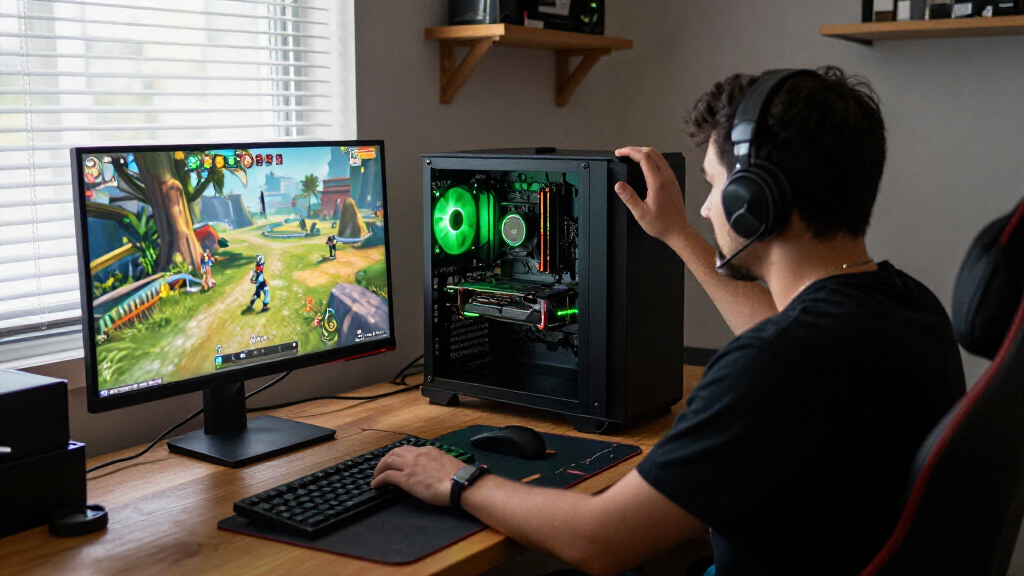
I ranked these cards by how well their GPU tier, memory capacity, cooling design, and likely system demands align with a distinct buyer need. I gave the strongest overall position to a current high-end option with 16GB of memory, while treating the RTX 5090 as a specialist premium choice rather than the default recommendation. I also weighed whether a card’s capacity and form factor make sense for its intended use, since a smaller GPU or larger memory pool can matter more than peak performance for some builds.
The lineup includes different generations, board partners, and performance classes, so I did not treat model names or factory overclocks as a guarantee of equal real-world results. Cards with similar GPU tiers are separated by their cooler layout, size, and practical fit; older models are ranked for the buyers who may still have a reason to choose them, not simply because their specifications remain capable. I avoid price-based claims here: the order reflects buyer fit, versatility, and tradeoffs rather than a changing market price.
| Nvidia GeForce graphics card | Cooling |
|---|---|
| ASUS TUF Gaming GeForce RTX 40 | Three Axial-tech fans |
| ASUS TUF Gaming GeForce RTX 50 | — |
| ASUS TUF Gaming GeForce RTX 50 | — |
| GeForce RTX 4070 Super 12GB GD | — |
| NVIDIA GeForce RTX 4080 16GB G | Two fans |
| ASUS ROG Astral GeForce RTX 50 | Four fans, vapor chamber, milled heat spreader, phase-change GPU thermal pad |
| GIGABYTE GeForce RTX 3060 Gami | WINDFORCE 3X with alternate-spinning fans |
| MSI GeForce RTX 3050 Ventus 2X | Two fans |
| ASUS Prime GeForce RTX 5070 12 | Three Axial-tech fans |
| ASUS Dual GeForce RTX 5060 Ti | Two Axial-tech fans |
| NVIDIA GeForce RTX 3090 Founde | — |
| NVIDIA GeForce RTX 3070 Ti Fou | — |
| NVIDIA GeForce RTX 3080 Founde | — |
| PNY GeForce RTX 5070 Ti OC Tri | — |
| PNY NVIDIA GeForce RTX 5060 Ti | Dual-fan |
Factors to Consider When Choosing Best Nvidia GeForce Graphics Cards
Choosing among these GeForce cards is easier when you start with your PC and workload instead of the model number. I’d narrow the field by checking display resolution, case clearance, power capacity, and the kind of games or applications you run, then compare performance tier and memory.
Match the GPU Tier to Your Display
Decide what resolution and refresh rate you want to drive before choosing a card. A GPU that is comfortable at 1080p may struggle to deliver the same high frame rates at 4K, while a premium model can be underused on a basic display. Think about the games you play, too: visually demanding single-player titles place different demands on a GPU than competitive games where high frame rates matter most. Avoid buying solely for a future monitor unless that upgrade is planned and your system can support it. The RTX 5070 Ti and RTX 5090 sit above entry-level options, but the more powerful card is only useful if your display and workloads can take advantage of it. I’d treat resolution and desired frame rate as a paired target, not separate spec-sheet goals.
Treat VRAM as Workload Capacity, Not a Speed Rating
Video memory can affect how well a card handles high-resolution textures, large creative projects, and some newer games, but extra capacity does not automatically improve performance. Compare the RTX 3070 Ti’s 8GB with the RTX 3090’s 24GB and RTX 5070 Ti models’ 16GB: those figures describe capacity, not a direct speed ranking across generations. For gaming, consider the resolution and texture settings you actually use. For editing, rendering, or other GPU-heavy work, check the memory needs of your software and project sizes. A card with more VRAM may be a better fit for a particular task even when it is not the fastest option for every game. Don’t pay for capacity you cannot use, but don’t dismiss it when your workload regularly fills memory.
Check Case Clearance and Cooling Before Ordering
Graphics cards vary considerably in length, thickness, and cooler design, even when they use the same GPU. Measure the case’s available card length and account for room around the power connectors, not just the metal bracket opening. Triple-fan models such as the PNY RTX 5070 Ti can need more space than a dual-fan design like the ASUS Dual RTX 5060 Ti. A larger cooler can help manage heat, but it can also block expansion slots or crowd nearby components. Check case airflow and whether your build has unobstructed intake, especially for a high-performance card. The common mistake is choosing by GPU tier first and discovering that the card cannot fit or cool properly.
Plan for Power and the Rest of the PC
A high-end GPU puts demands on more than the power supply’s advertised wattage. Check the card maker’s power guidance, connector requirements, and the condition and capacity of your existing unit before upgrading. Also consider whether your processor can keep pace with the games and resolution you target; a stronger GPU may bring little benefit in a CPU-limited setup. The RTX 5090 and RTX 4080-class cards call for more attention to power and cooling than entry-level choices. Older cards can also be demanding, so generation alone does not tell you what your system needs. Planning the whole build helps avoid spending on a GPU that your current PC cannot support well.
Compare Board Designs, Not Just GPU Names
ASUS, PNY, MSI, and Gigabyte models can share a GPU family while differing in cooler size, fan layout, factory settings, and physical dimensions. Those differences are most relevant when you have a compact case, specific noise preferences, or limited airflow. An OC label identifies a factory-tuned model, but it should not be treated as a guarantee of a large performance gap over another card using the same GPU. When two models share a tier, prioritize fit, cooling design, warranty terms, and connector layout over a small naming difference. For example, the two RTX 5070 Ti options in this roundup should be compared as board designs around the same GPU class, not as entirely different performance categories. That approach keeps you from paying attention to branding while missing the practical differences.
Weigh Newer Features Against Older-Generation Fit
Newer GeForce generations bring newer architectures and memory types, but an older card can still fit a build with modest requirements or a specific workload. The RTX 3060’s 12GB may appeal to a buyer who values memory capacity in a less demanding tier, while the RTX 3080 and RTX 3090 represent older high-performance options with their own power and cooling considerations. Check software support and the features your games or applications use rather than assuming every generation behaves the same. Used or older stock also calls for extra care: verify condition, warranty coverage, and return terms before committing. A newer GPU is not automatically the right choice if its performance tier, size, or system demands do not match your setup. Choose based on the job the card must do, then use generation as one part of that decision.
Frequently Asked Questions
Should I choose an RTX 5070 Ti or an RTX 5070 for a gaming PC?
I’d choose between them based on the performance headroom you want and how demanding your display and games are. The RTX 5070 Ti models in this roundup have 16GB of GDDR7, while the ASUS Prime RTX 5070 has 12GB, so the Ti also offers more memory capacity for demanding settings and workloads. The RTX 5070 can be the more balanced fit if you do not need the higher tier. Before deciding, check your power supply, case clearance, and the resolution you actually play at. The larger card class is a poor fit if the rest of the build cannot support it.
Is 16GB of VRAM worth prioritizing over a faster GPU?
It depends on whether your games or applications use that memory capacity. Larger textures, high-resolution play, and some creative workflows can benefit from more VRAM, but capacity does not replace GPU processing power. The RTX 5060 Ti 16GB and RTX 5070 12GB illustrate the choice: one has more memory, while the other sits in a higher GPU tier. Check the requirements of the software and settings you use, rather than treating a single memory number as a complete performance measure. If your workload does not approach the lower capacity, a faster GPU tier may matter more.
Can an older RTX 30-series card still make sense in 2027?
Yes, if its performance, condition, and system demands fit your needs. The RTX 3060 12GB, RTX 3070 Ti 8GB, RTX 3080, and RTX 3090 differ in memory and performance class, so age alone does not settle the choice. An older card may suit a build that does not need the latest features or highest performance tier, but check power consumption, cooling, software support, and warranty status. For used cards, ask about operating history and confirm a return option where possible. Compare the complete system fit rather than assuming a newer model is automatically better for every buyer.
How do I know whether a graphics card will fit in my case?
Look up the exact card’s length, thickness, and slot count, then compare those measurements with your case’s GPU clearance. Leave room for power cables and airflow rather than measuring only the open space behind the case. A triple-fan card may take up more space than a dual-fan alternative built around a similar GPU. Check whether the card would block other expansion slots or sit close to a radiator or front fan. If your case is compact, a smaller model can be the better choice even when a larger cooler appears more capable.
Is the RTX 5090 a sensible choice if I mainly play games?
It can make sense if you want the highest performance tier in this roundup, play at demanding settings, or also run workloads that benefit from its 32GB of GDDR7. For a typical gaming build, though, its performance and system demands may be more than the display or games can use. You will need to check power supply capacity, cooling, case clearance, and processor balance before choosing it. The RTX 5070 Ti or RTX 5070 may be a more proportionate fit for many gaming setups. Pick the RTX 5090 for a clear need for its class, not just because it is the largest number in the lineup.
Conclusion
For the broadest mix of high-end gaming capability and 16GB of memory, I’d choose the ASUS TUF Gaming RTX 5070 Ti OC as the best overall option; the PNY RTX 5070 Ti OC is a close alternative if its triple-fan design better suits your build. The ASUS Prime RTX 5070 is my pick for a more measured performance tier, while the ASUS ROG Astral RTX 5090 OC is the premium choice for buyers with demanding workloads, ample case space, and a system built to support it. For beginners or a basic entry-level build, the MSI RTX 3050 Ventus 2X 6G OC is the simplest tier to target, though buyers should keep expectations modest. If memory capacity is the priority, compare the RTX 5060 Ti 16GB models; if an older card suits your build, weigh the RTX 3060, RTX 3080, or RTX 3090 by workload, power needs, and condition. The right choice is the one that fits your display, case, and actual use—not simply the most powerful GPU you can name.