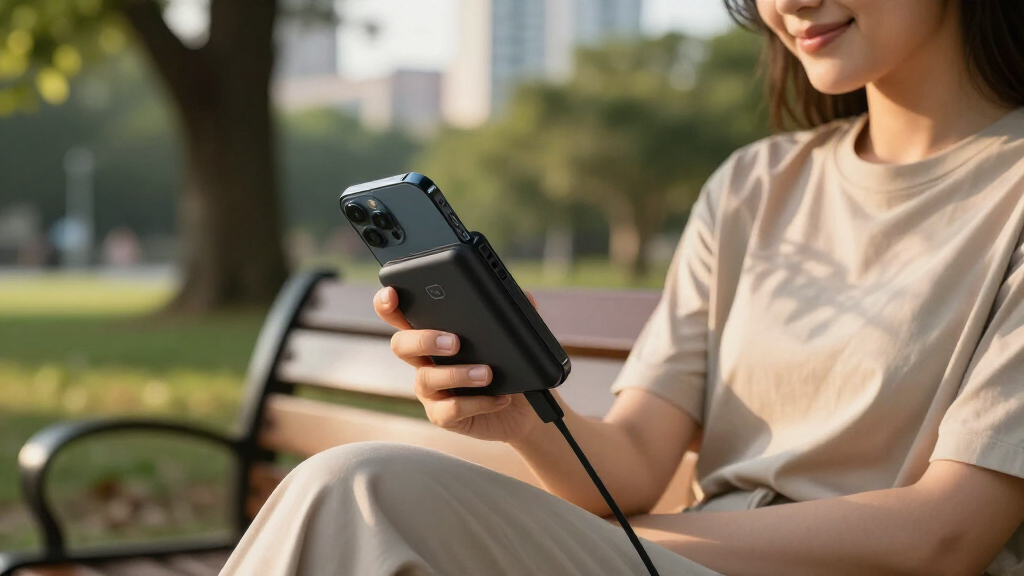

Portable charging banks range from slim 10000mAh travel cubes to 60000mAh monsters that can charge a laptop twice, and the right pick depends almost entirely on how much capacity you realistically carry versus how fast you need it to recharge. For most buyers, the JUOVI 65W 20000mAh hits the sweet spot: enough power for a phone-plus-laptop day with 65W output that actually charges a MacBook, all in a carry-on-friendly size. If you want maximum simplicity, the OHOVIV 50000mAh with four built-in cables eliminates cable clutter entirely, while the INIU 10000mAh 45W is the pick for pocketability at a budget price. The main tradeoff in this category is simple: bigger capacity means heavier weight and slower recharging, so paying for 50000mAh you never drain is wasted money and sore shoulders. Keep reading for the full breakdown of all 15 models.

Get the latest gadgets delivered free with Prime
- Fast, free delivery on millions of items
- Prime Video, Amazon Music and more included
- Member-only deals all year
Complete the kit



Key Takeaways
- 20000mAh models with 45W-90W output dominated the top rankings because they balance airline-legal capacity, laptop charging, and reasonable weight better than any other category in this lineup.
- 50000mAh+ banks (OHOVIV, ZZI, YILANS) are weekend-camping tools, not everyday carries — they can take 8+ hours to recharge themselves and weigh over a pound and a half.
- Built-in cables were the biggest convenience differentiator: models like the VRURC 20000mAh and CFIAI 15000mAh scored well for travelers who hate packing cords, but they charge slower than dedicated-cable rivals.
- Two nearly identical INIU 10000mAh 45W chargers made the list because nothing else this small can fast-charge a phone and still fit in a jeans pocket — the slim Miady 2-pack is cheaper but slower.
- The 10000mAh bank with a built-in wall plug is the only true ‘grab and forget’ option here, since it recharges itself directly from an outlet without carrying a separate adapter.
| JUOVI Power Bank 65W 20000mAh Portable Charger |  | Best Overall | Capacity: 20000mAh | Max Output: 65W PD 3.0 | Ports: 2 USB-C, 2 USB-A | VIEW LATEST PRICE | See Our Full Breakdown |
| OHOVIV Portable Charger Power Bank 50000mAh with 4 Built-in Cables |  | Best for Group Travel | Capacity: 50000mAh | Max Output: 22.5W (PD, QC4.0) | Ports: 3 external plus 4 built-in cables | VIEW LATEST PRICE | See Our Full Breakdown |
| OHOVIV Portable Charger Power Bank 50000mAh, PD 22.5W Battery Pack |  | Best Emergency Backup Power | Capacity: 50000mAh | Max Output: 22.5W (PD, QC) | Ports: 2 USB-A, 1 USB-C | VIEW LATEST PRICE | See Our Full Breakdown |
| 50000mAh Portable Charger with Built-in Cables and Fast Charging |  | Best Compact High-Capacity Pick | Capacity: 50000mAh | Max Output: 22.5W | Built-in Cables: Micro-B, USB-A, Type-C, Lightning | VIEW LATEST PRICE | See Our Full Breakdown |
| JUOVI Portable Charger 90W Laptop Power Bank 20000mAh |  | Best Premium Pick for Laptop Users | Capacity: 20000mAh | Max Output: 90W | Ports: 2 USB-C, 2 USB-A | VIEW LATEST PRICE | See Our Full Breakdown |
| JUOVI 65W Portable Laptop Power Bank 20000mAh |  | Best for Laptop Users | Capacity: 20000mAh | Max Output: 65W | Ports: 2 USB-A, 2 USB-C | VIEW LATEST PRICE | See Our Full Breakdown |
| INIU 10000mAh 45W Fast Charging Portable Charger |  | Best Compact Pick | Capacity: 10,000mAh | Max Output: 45W | Size: 40% smaller and 36% lighter than conventional chargers | VIEW LATEST PRICE | See Our Full Breakdown |
| VRURC Portable Charger 20000mAh with Built-in Cables |  | Best Cable-Free Convenience | Capacity: 20000mAh | Charging Speed: 22.5W fast charging | Thickness: 19mm | VIEW LATEST PRICE | See Our Full Breakdown |
| ZZI Portable Charger Power Bank 60000mAh |  | Best for Emergencies and Off-Grid Use | Capacity: 60000mAh | Output: 22.5W PD | Dimensions: 5.8 × 2.9 × 1.1 inches | VIEW LATEST PRICE | See Our Full Breakdown |
| CFIAI Portable Charger 15000mAh Slim Power Bank with Built-in Cables |  | Best Balanced Everyday Carry | Capacity: 15000mAh | Dimensions: 5.90 × 2.69 × 0.7 inches | Weight: 0.5 lb | VIEW LATEST PRICE | See Our Full Breakdown |
| INIU 10000mAh 45W Fast Charging Portable Charger |  | Best Travel Pick | Capacity: 10,000mAh | Wattage: 45W | Size: 40% smaller and 36% lighter than conventional chargers | VIEW LATEST PRICE | See Our Full Breakdown |
| SOARAISE Solar Power Bank 48000mAh Wireless Portable Charger with 4 Cables |  | Best for Off-Grid Adventures | Capacity: 48000mAh | Solar Panels: 4 high-efficiency panels | Ports: 2 USB-A, 1 USB-C (input/output) | VIEW LATEST PRICE | See Our Full Breakdown |
| 10000mAh Portable Charger Power Bank with Built-in Cables & Wall Plug |  | Best All-in-One Convenience | Capacity: 10,000mAh | Input: Type-C | Output Ports: 5 | VIEW LATEST PRICE | See Our Full Breakdown |
| YILANS Portable Charger 50000mAh with Built-in 4 Cables |  | Best for Group Travel | Capacity: 50000mAh | Input Ports: 2 | Output Ports: 6 | VIEW LATEST PRICE | See Our Full Breakdown |
| Miady 2-Pack Portable Charger, Slim 10000mAh Power Bank |  | Best Value for Backup Power | Capacity: 10,000mAh per unit | Number of Units: 2 | Dimensions: 5.5 x 2.6 x 0.6 inches | VIEW LATEST PRICE | See Our Full Breakdown |
| portable charging bank | Capacity | Ports |
|---|---|---|
| JUOVI Power Bank 65W 20000mAh | 20000mAh | 2 USB-C, 2 USB-A |
| OHOVIV Portable Charger Power | 50000mAh | 3 external plus 4 built-in cables |
| OHOVIV Portable Charger Power | 50000mAh | 2 USB-A, 1 USB-C |
| 50000mAh Portable Charger with | 50000mAh | 3 (Micro-B input, Type-C input/output, USB-A output) |
| JUOVI Portable Charger 90W Lap | 20000mAh | 2 USB-C, 2 USB-A |
| JUOVI 65W Portable Laptop Powe | 20000mAh | 2 USB-A, 2 USB-C |
| INIU 10000mAh 45W Fast Chargin | 10,000mAh | — |
| VRURC Portable Charger 20000mA | 20000mAh | — |
| ZZI Portable Charger Power Ban | 60000mAh | Type-C, iOS, Micro USB |
| CFIAI Portable Charger 15000mA | 15000mAh | USB-A, Type-C, Micro |
| INIU 10000mAh 45W Fast Chargin | 10,000mAh | — |
| SOARAISE Solar Power Bank 4800 | 48000mAh | 2 USB-A, 1 USB-C (input/output) |
| 10000mAh Portable Charger Powe | 10,000mAh | — |
| YILANS Portable Charger 50000m | 50000mAh | — |
| Miady 2-Pack Portable Charger | 10,000mAh per unit | 2 USB-A, 1 USB-C |
More Details on Our Top Picks
JUOVI Power Bank 65W 20000mAh Portable Charger
This model earns the top spot because it balances power, capacity, and travel practicality better than anything else in this lineup. The 65W PD 3.0 output is enough to charge a laptop at a reasonable pace — something the 22.5W OHOVIV models simply cannot do — while the 20000mAh capacity keeps it under airline limits, unlike the 50000mAh banks that stay grounded. Compared with its sibling, the JUOVI 90W model, it gives up some charging speed but is the more sensible pick for phones and tablets-first buyers who only occasionally top up a laptop. The digital display showing exact remaining percentage is more useful than the four-dot indicators common on cheaper banks.
The tradeoff is weight: at this capacity with four ports, it is noticeably heavier than slim 10000mAh options like the INIU 45W. If you rarely charge laptops, that extra heft buys capability you will not use.
Pros:- 65W PD 3.0 output can charge laptops, not just phones
- Four ports let you charge up to four devices at once
- Digital display shows precise remaining power instead of vague dots
- 20000mAh capacity stays within airline carry-on limits
Cons:- Noticeably heavier than slim 10000mAh competitors
- Only devices supporting PD 3.0 get the full fast-charging benefit
Best for: Travelers and remote workers who want one bank that handles a laptop, phone, and tablet on multi-day trips without breaking airline rules
Not ideal for: Minimalists who only need occasional phone top-ups — a 10000mAh slim bank like the INIU is half the weight and half the price
- Capacity:20000mAh
- Max Output:65W PD 3.0
- Ports:2 USB-C, 2 USB-A
- Simultaneous Devices:Up to 4
- Display:Digital battery percentage
- Charging Modes:High-power, Trickle Mode
- In the Box:USB-C to USB-C cable, user manual
Our verdict“The most versatile all-around pick — buy it if you want one power bank that covers every device you own without sacrificing flight approval.”
OHOVIV Portable Charger Power Bank 50000mAh with 4 Built-in Cables
Where most banks in this roundup serve one person, this one is built to serve a crowd. The 50000mAh capacity delivers roughly ten full smartphone charges, and the four built-in cables mean nobody in the group needs to remember theirs — a genuine convenience the JUOVI 65W, which ships with a single cable, cannot match. Its 390g weight is remarkably low for this capacity: the cable-free OHOVIV 50000mAh sibling (B0F43Z98VS) weighs 613g, so this version is the smarter carry if built-in cables fit your devices.
The compromises are real, though. At 22.5W maximum output, it cannot meaningfully charge a laptop the way the JUOVI models can. And because a 50000mAh battery exceeds the 100Wh airline limit, this is a road-trip and campsite bank, not a carry-on companion. No wall charger is included, so budget for a decent one.
Pros:- Roughly ten full smartphone charges per fill-up
- Four built-in cables eliminate the need to pack extras
- Lighter than competing 50000mAh models at 390g
- Charges up to six devices simultaneously
Cons:- 22.5W output cannot charge laptops effectively
- No wall charger included, so it needs an additional purchase to recharge quickly
Best for: Families and group travelers on road trips or camping who need to keep many phones and tablets alive for days without outlets
Not ideal for: Frequent flyers — the 50000mAh capacity exceeds airline battery limits and cannot be carried on
- Capacity:50000mAh
- Max Output:22.5W (PD, QC4.0)
- Ports:3 external plus 4 built-in cables
- Weight:390 g
- Dimensions:5.82 x 1.18 x 2.83 inches
- Battery Type:Lithium Polymer
- Airline Approved:No
Our verdict“The group-trip workhorse — buy it when many devices and many days away from outlets are the problem, and skip it if you fly often.”
OHOVIV Portable Charger Power Bank 50000mAh, PD 22.5W Battery Pack
This is the bank you toss in an emergency kit and forget about until the power goes out. Compared with the built-in-cable OHOVIV 50000mAh, it drops the integrated cords — which means less to break over years of storage — and keeps the massive 50000mAh reserve that matters most in an outage. The LED display makes it easy to check stored charge at a glance, a small but meaningful detail for something that sits in a drawer most of the year.
At 613g, it is the heaviest option here, and its three ports are fewer than you might expect from a bank this size, so it is poorly suited as a daily-carry companion. The 22.5W ceiling also puts laptop charging out of reach — for that, the JUOVI 65W or 90W makes far more sense. This pick makes the most sense for stationary preparedness rather than portability.
Pros:- Massive reserve capacity for multi-day outages
- LED display shows remaining charge at a glance
- Charges three devices simultaneously
- PD and QC fast-charge support for phones and tablets
Cons:- Heaviest option in the lineup at 613g
- Not permitted on airplanes due to capacity
- Fewer ports than similar 50000mAh competitors
Best for: Households building an emergency or power-outage kit who want days of reserve phone power in one place
Not ideal for: Daily commuters and flyers — it is the heaviest bank in this lineup and cannot travel by air
- Capacity:50000mAh
- Max Output:22.5W (PD, QC)
- Ports:2 USB-A, 1 USB-C
- Dimensions:13.4 x 7 x 3.4 cm
- Weight:613 g
- Display:LED digital
- Airline Approved:No
Our verdict“A preparedness purchase, not an everyday carry — ideal for the emergency drawer, wrong choice for your work bag.”
50000mAh Portable Charger with Built-in Cables and Fast Charging
This model proves that huge capacity does not have to mean a brick in your bag. At 4.4 x 2.8 x 1.2 inches and 0.75 lb, it is the most pocket-friendly 50000mAh option in this roundup — considerably easier to carry than the 613g OHOVIV emergency-style bank. The four built-in cables covering Lightning, USB-C, Micro-B, and USB-A give it broader device coverage than the JUOVI 65W, making it a strong fit for mixed-device households where one person has an iPhone and another an Android.
The tradeoffs mirror its category. The 22.5W ceiling rules out laptop charging, the 50000mAh capacity bans it from flights, and fixed built-in cables mean a damaged cable damages the bank. If you want flight-safe laptop power, the JUOVI 90W is the better spend despite its smaller capacity.
Pros:- Most compact 50000mAh design in the roundup at 0.75 lb
- Built-in Lightning, USB-C, Micro-B, and USB-A cables cover nearly every device
- LED display for clear battery-status checks
- Charges multiple devices simultaneously
Cons:- Built-in cables cannot be swapped out if damaged or if you need a different length
- Overkill capacity for light users who only top up a phone occasionally
Best for: Mixed-device travelers on road trips who want one compact bank with every cable type already attached
Not ideal for: Laptop users and air travelers — the wattage is too low for computers and the capacity exceeds airline rules
- Capacity:50000mAh
- Max Output:22.5W
- Built-in Cables:Micro-B, USB-A, Type-C, Lightning
- Ports:3 (Micro-B input, Type-C input/output, USB-A output)
- Dimensions:4.4 x 2.8 x 1.2 inches
- Weight:0.75 lb (340 g)
- Display:LED digital
Our verdict“The best choice when you want maximum stored power in minimum space — just do not expect it to charge a laptop or board a plane.”
JUOVI Portable Charger 90W Laptop Power Bank 20000mAh
For buyers whose primary device is a laptop, this is the strongest charging bank in the batch. The 90W output approaches full-speed wall-adapter territory, letting larger machines like 14- and 16-inch laptops charge nearly as fast as when plugged in — a clear step above the JUOVI 65W, which charges bigger laptops at a crawl. It retains the same four-port layout and airline-approved capacity, so it works as a genuine flight-day companion, unlike every 50000mAh option here.
What holds it back from Best Overall is capacity versus demand: 20000mAh drains quickly at 90W, so you may get only one full laptop charge plus a phone top-up before the bank itself needs recharging. It is also on the heavy side for a 20000mAh unit. Compared with the OHOVIV built-in-cable model, you give up the convenience of attached cables for raw charging muscle.
Pros:- 90W output charges large laptops at near wall-adapter speed
- Four ports for simultaneous multi-device charging
- Airline-approved capacity for carry-on travel
- Broad fast-charging protocol support across devices
Cons:- 20000mAh drains fast when charging laptops at high wattage
- Heavier than typical 20000mAh banks due to high-power internals
Best for: Laptop-first travelers who need near-wall-speed charging on the go and must stay within airline battery limits
Not ideal for: Buyers charging only phones and tablets — the 90W headroom is wasted capability, and the cheaper JUOVI 65W covers those needs equally well
- Capacity:20000mAh
- Max Output:90W
- Ports:2 USB-C, 2 USB-A
- Compatibility:Laptops, smartphones, tablets
- Safety Features:Overvoltage, overload, overheating, overcurrent, short circuit protection
- Airline Approved:Yes
Our verdict“The pick for laptop owners who refuse to compromise on charging speed — everyone else should save money with the 65W version.”
JUOVI 65W Portable Laptop Power Bank 20000mAh
Most power banks in this roundup treat laptops as an afterthought, but this JUOVI model puts 65W output at the center of its design. That wattage is the difference between trickle-charging a MacBook over three hours and restoring meaningful battery in under one. Compared with the ZZI 60000mAh, which has far more capacity but only 22.5W output, this unit prioritizes speed over volume — a sensible trade for anyone carrying a laptop rather than five phones. The four-port layout means a phone and tablet can top up alongside the main device. The catch: 20000mAh shrinks quickly when feeding a power-hungry laptop, often delivering a single full charge plus a phone refill. It is also noticeably heavier than slimmer picks like the INIU 10000mAh, so bag space is part of the price.
Pros:- 65W output is fast enough to genuinely charge laptops, not just maintain them
- Four ports allow simultaneous charging of a laptop, phone, and tablet
- Airline-approved capacity makes it viable for business travel
- Multi-protection safety suite covers overheating and short circuits
Cons:- 20000mAh may only deliver one laptop charge before needing a recharge itself
- Bulkier and heavier than compact 10000mAh alternatives
- Requires the right cables to hit full 65W speeds
Best for: Laptop-toting commuters and students who need real charging speed, not just raw capacity
Not ideal for: People who only carry a phone — the laptop-grade wattage adds bulk and cost they will never use
- Capacity:20000mAh
- Max Output:65W
- Ports:2 USB-A, 2 USB-C
- Compatibility:MacBook, Dell, ThinkPad, iPhone, Android
- Protection:Overvoltage, overload, overheating, overcurrent, short circuit
- Airline Status:Approved for air travel
Our verdict“Buy this if a laptop is your primary device and you value charging speed over maximum capacity.”
INIU 10000mAh 45W Fast Charging Portable Charger
Where the JUOVI 65W asks you to carry laptop-class weight, this INIU strips everything down to what a phone-and-tablet traveler actually needs. At 40% smaller and 36% lighter than conventional chargers, it disappears into a jacket pocket — something no 20000mAh or 60000mAh option in this lineup can claim. The 45W output is a genuine surprise at this size, outpacing the VRURC 20000mAh’s 22.5W for single-phone charging speed. The detachable braided cable is a smart touch: replace it if it frays instead of retiring the whole bank, unlike the fixed connectors on the CFIAI 15000mAh. The honest tradeoff is capacity. 10000mAh means roughly two phone charges and nothing left for tablets on long days, and multi-device households will find the single-cable setup limiting.
Pros:- Exceptionally small and light for everyday pocket or purse carry
- 45W output charges phones faster than many larger banks in this roundup
- Detachable braided cable is replaceable and durable
- TSA-compliant for carry-on travel
Cons:- 10000mAh capacity limits it to about two phone charges
- Only one cable included, so multi-device charging needs extra accessories
Best for: Minimalist travelers and daily commuters who want fast phone charging without pocket bulge
Not ideal for: Power users or multi-device families — the capacity runs dry after roughly two phone charges
- Capacity:10,000mAh
- Max Output:45W
- Size:40% smaller and 36% lighter than conventional chargers
- Included Cable:Detachable braided USB-C, 0.4ft
- Travel Status:TSA-compliant, flight safe
Our verdict“This is the pick for anyone who values portability and speed over total capacity.”
VRURC Portable Charger 20000mAh with Built-in Cables
This model’s pitch is simple: stop carrying a cable nest. With built-in Type-C, phone, Micro USB, and USB-A connectors plus two extra ports, it covers most households without a single accessory — a broader built-in selection than the CFIAI 15000mAh, which only integrates iOS and Type-C. The 20000mAh capacity doubles the runtime of the INIU 10000mAh, while the 19mm profile keeps it slimmer than you would expect from this class. Speed is where compromise lives: 22.5W is half of what the INIU delivers, so a big phone charges noticeably slower here. The built-in strap is a thoughtful carry touch, but fixed connectors have a lifespan of their own — if one breaks, the feature set shrinks permanently. Compared with the ZZI 60000mAh, you trade endurance for portability and everyday practicality.
Pros:- Four built-in connector types cover phones, tablets, and older devices without extra cables
- 20000mAh capacity supports multiple device charges per fill
- 19mm slim profile with built-in carry strap
- Safety-protected fast charging for daily reliability
Cons:- 22.5W output is slower than comparably sized fast-charging rivals
- Fixed connectors can wear out and cannot be upgraded
- Heavier than compact 10000mAh picks like the INIU
Best for: Households with mixed devices who want one bank that charges everything with zero extra cables
Not ideal for: Speed-focused buyers — 22.5W lags well behind the 45W and 65W options in this roundup
- Capacity:20000mAh
- Charging Speed:22.5W fast charging
- Thickness:19mm
- Built-in Connectors:Type-C, Phone, Micro USB, USB Type-A
- Extra Ports:1 USB port, 1 Type-C port
- Design:Slim body with built-in carrying strap
Our verdict“Choose this if connector variety and grab-and-go simplicity matter more than maximum charging speed.”
ZZI Portable Charger Power Bank 60000mAh
Sometimes capacity is the whole point, and 60000mAh is roughly six phone charges or a weekend of mixed-device use — triple the endurance of the JUOVI 20000mAh and far beyond anything else here. The LED display showing exact remaining charge is genuinely useful at this scale, because guessing a bank this size is frustrating. Five simultaneous device ports make it a basecamp hub for camping trips, power outages, or group travel. The compromises are serious ones. It cannot fly — airline limits bar anything near this capacity — and despite the compact-for-its-class dimensions, it is a bag-dedicated item, not a pocket one. Charging output is also capped at 22.5W, so it is slower per device than both the JUOVI and INIU picks. This is the roundup’s specialist: unmatched endurance, poor travel flexibility.
Pros:- 60000mAh capacity delivers multiple days of device power without recharging
- Charges up to five devices at once for group or family use
- LED display shows real-time battery status
- Five-layer safety protection against overcharge and short circuits
Cons:- Not permitted on airplanes due to capacity limits
- Bulky and heavy compared with every 10000–20000mAh option here
- 22.5W output is slow relative to its enormous capacity, so refilling it takes a long time
Best for: Campers, emergency-preparedness planners, and households preparing for outages who need multi-day power
Not ideal for: Frequent flyers — the 60000mAh capacity exceeds airline limits and will be confiscated at security
- Capacity:60000mAh
- Output:22.5W PD
- Dimensions:5.8 × 2.9 × 1.1 inches
- Ports:Type-C, iOS, Micro USB
- Simultaneous Devices:Up to 5
- Display:Smart LED battery readout
- Safety:Overcharge, overcurrent, overdischarge, overvoltage, short-circuit protection
- Airline Status:Not permitted on flights
Our verdict“Buy this for off-grid endurance and emergency storage; skip it entirely if you ever fly with your gear.”
CFIAI Portable Charger 15000mAh Slim Power Bank with Built-in Cables
This CFIAI lands in the sweet spot between the INIU’s portability and the VRURC’s endurance. 15000mAh covers roughly three phone charges while the half-pound, 0.7-inch body stays pocket-friendly — a middle path neither extreme option offers. The built-in iOS and Type-C cables cover the two most common device families, and the digital display showing exact percentage beats the vague four-dot indicators on many rivals. Compared with the VRURC, you get fewer built-in connector types but a lighter frame; compared with the INIU, you sacrifice some compactness for 50% more capacity. Two drawbacks deserve attention: no wall adapter is included, so budget for one or reuse an existing charger, and the touch-button display takes getting used to. Charging speeds vary by port, topping out at 22.5W — adequate, not exciting.
Pros:- 15000mAh balances capacity and portability better than most picks here
- Built-in iOS and Type-C cables eliminate cord clutter
- Half-pound, 0.7-inch profile fits pockets comfortably
- Digital display shows exact remaining percentage
Cons:- No wall adapter or charger included in the box
- Touch-button display can feel unintuitive compared with automatic indicators
- Output tops out at 22.5W, slower than the INIU or JUOVI options
Best for: Everyday carriers who want iPhone-and-Android household coverage in one slim, cable-free package
Not ideal for: Laptop owners or buyers in USB-C-only households who would find the varied port speeds limiting
- Capacity:15000mAh
- Dimensions:5.90 × 2.69 × 0.7 inches
- Weight:0.5 lb
- Built-in Cables:iOS, Type-C
- Ports:USB-A, Type-C, Micro
- Fast Charging:22.5W PD, 20W iOS, 18W USB-C, 15W USB-A
- Display:Digital battery percentage readout
Our verdict“A sensible middle-ground pick for anyone torn between compact 10000mAh banks and bulkier 20000mAh models.”
INIU 10000mAh 45W Fast Charging Portable Charger
Most 10,000mAh banks force you to choose between speed and portability, but this INIU model refuses that tradeoff. At 40% smaller and 36% lighter than conventional chargers, it slips into a jacket pocket while still delivering 45W of output — enough to fast-charge a tablet or even top up a small USB-C laptop in a pinch. The detachable braided USB-C cable is a smarter solution than the built-in cords on the YILANS 50000mAh, because it can be replaced if it frays. Where it falls short is endurance: compared with the SOARAISE 48000mAh, one full tank covers roughly a fifth of the device charges, so multi-day travelers off-grid should look elsewhere.
Pros:- 45W output is fast enough for tablets and small laptops
- Genuinely compact and lightweight for pocket or bag carry
- TSA-compliant, so it clears airport security without hassle
- Detachable braided cable survives wear and can be swapped out
Cons:- 10,000mAh capacity means only 1-2 full phone charges
- No wireless charging, unlike the SOARAISE or the built-in-cable competitor
Best for: Frequent flyers and city travelers who want maximum charging speed in a carry-on-friendly package
Not ideal for: Campers or long-haul travelers who need several days of power between outlets — the capacity runs out fast
- Capacity:10,000mAh
- Wattage:45W
- Size:40% smaller and 36% lighter than conventional chargers
- Cable:Detachable braided USB-C cable
- Safety:TSA-compliant, flight safe
- Charging Port:USB-C
Our verdict“Buy this if you value speed and packability over raw capacity — it’s the best grab-and-go charger for flights and daily commutes.”
SOARAISE Solar Power Bank 48000mAh Wireless Portable Charger with 4 Cables
When the whole point of your power bank is surviving days away from an outlet, solar becomes more than a gimmick. The SOARAISE pairs a 48000mAh reservoir with four folding solar panels, so sunlight partially offsets the drain while you hike or camp. Add wireless charging, four built-in cables, and the ability to feed up to seven devices at once, and it covers a whole campsite in a way the INIU 45W simply cannot. The cost is weight — this is a backpack device, not a pocket one — and solar output is a supplement, not a primary charging method. Compared with the YILANS 50000mAh, you give up a little capacity and speed but gain true independence from the grid.
Pros:- Four high-efficiency solar panels recharge the bank without an outlet
- 48000mAh capacity powers a group or a multi-day trip
- Wireless charging plus four built-in cables cover nearly any device
- Charges up to seven devices simultaneously
Cons:- Heavy and bulky compared with pocket-sized 10,000mAh options
- Solar charging is slow and weather-dependent
- Higher price than comparable non-solar high-capacity banks
Best for: Campers, hikers, and emergency-preparedness buyers who spend extended time away from outlets
Not ideal for: Commuters and everyday carriers — the bulk and weight make it impractical for a purse or briefcase
- Capacity:48000mAh
- Solar Panels:4 high-efficiency panels
- Ports:2 USB-A, 1 USB-C (input/output)
- Wireless Charging:Yes
- Cables Included:4 (USB-C, Phone, USB-A, Micro)
- Simultaneous Devices:Up to 7
Our verdict“This makes the most sense for outdoor adventurers who need off-grid recharging — everyone else should stick with a lighter plug-in bank.”
10000mAh Portable Charger Power Bank with Built-in Cables & Wall Plug
This charger’s pitch is simple: everything you need is in the bank itself. Built-in Lightning and USB-C cables, a foldable wall plug for recharging without a separate adapter, 15W wireless charging, and an LED battery display — it’s a complete kit at just 260g. Unlike the INIU 45W, which needs its cable carried separately, or the Miady 2-Pack, which ships without Lightning at all, this one covers mixed iPhone/Android households with zero accessories. The compromises are real, though. The 22.5W wired output trails INIU’s 45W for tablets, the magnets may weaken with age, and it won’t wirelessly charge an Apple Watch. At 10,000mAh, it’s also a one- or two-phone bank, not a weekend solution.
Pros:- Built-in Lightning and USB-C cables eliminate tangled cords
- Foldable wall plug recharges the bank without a separate adapter
- Fast wireless (15W) and wired (22.5W) charging options
- Smart LED display shows exact remaining battery
Cons:- Magnetic attachment may weaken over time
- 10,000mAh capacity limits it to 1-2 device charges
- No Apple Watch wireless charging support
Best for: Travelers and busy professionals who want one self-contained charger with no cables or adapters to forget
Not ideal for: Apple Watch owners and anyone needing multi-day capacity or laptop-level charging speeds
- Capacity:10,000mAh
- Input:Type-C
- Output Ports:5
- Wireless Charging Power:15W
- Wired Fast Charging Power:22.5W
- Dimensions:2.87 x 1.25 x 3.22 inches
- Weight:260g
Our verdict“Choose this if you keep losing cables and want a single do-everything bank — skip it if capacity or watch charging is a priority.”
YILANS Portable Charger 50000mAh with Built-in 4 Cables
If your problem is too many devices and not enough outlets, capacity is king, and the YILANS 50000mAh delivers roughly five full phone charges per tank. Four built-in cables — Type-C, iOS, Micro, and USB-A — mean nobody in the family needs to bring their own, and with six simultaneous outputs and QC3.0/4.0 fast charging, one bank can run an entire row of airplane seats. Compared with the SOARAISE 48000mAh, it charges faster over wires but drops solar recharging entirely, so it’s for trips that end near a wall outlet. And while 503g isn’t brutal for a bag, it’s double the SOARAISE-style bulk you’d accept for a pocket model like the INIU. This is a shared-resource charger, not a personal one.
Pros:- 50000mAh capacity delivers roughly five phone charges per refill
- Four built-in cables cover Type-C, iOS, Micro, and USB-A devices
- Charges up to six devices simultaneously
- QC3.0/4.0 fast charging keeps wait times short
Cons:- 503g weight makes it impractical for everyday pocket carry
- Long-term durability is not well documented
- Slow to fully recharge such a large battery
Best for: Families and group travelers who need to charge many devices at once from a single bank
Not ideal for: Minimalist carry and laptop users — 503g is heavy for daily pocket use, and there’s no solar or laptop-grade wattage
- Capacity:50000mAh
- Input Ports:2
- Output Ports:6
- Fast Charging Technology:QC3.0/4.0
- Built-in Cables:4 (Type-C, iOS, Micro, USB-A)
- Weight:503g
Our verdict“This pick makes the most sense for a family or group sharing one high-capacity bank — solo minimalists should buy smaller.”
Miady 2-Pack Portable Charger, Slim 10000mAh Power Bank
Sometimes the smartest buy isn’t one great charger but two adequate ones. The Miady 2-Pack gives you a pair of slim 10,000mAh banks at a per-unit price that undercuts the INIU 45W considerably — keep one in the car, one in a backpack, or hand the second to a kid. Each unit offers dual USB-A plus bidirectional USB-C and charges three devices at once, which is respectable flexibility for the money. The tradeoffs are basic: no cables included (no Lightning, in particular), no wireless charging like the built-in-cable 10000mAh bank offers, and modest output suited to phones rather than tablets or laptops. As insurance rather than a daily workhorse, though, the two-for-one math is hard to argue with.
Pros:- Two separate banks for the price of one typical charger
- Slim, lightweight design (7.68 oz) fits pockets and gloveboxes
- Charges up to 3 devices simultaneously per unit
- USB-C bidirectional charging simplifies recharging the banks
Cons:- No cables included, so Lightning users must supply their own
- 10,000mAh per unit is insufficient for tablets or laptops
- Lower output speeds compared with 45W competitors
Best for: Budget-minded households and commuters who want backup power stashed in multiple bags or shared between two people
Not ideal for: Power users who need fast charging, wireless pads, or laptop support — these are basic phone chargers
- Capacity:10,000mAh per unit
- Number of Units:2
- Dimensions:5.5 x 2.6 x 0.6 inches
- Weight:7.68 oz per unit
- Ports:2 USB-A, 1 USB-C
- Compatibility:Phones, tablets, laptops
- Simultaneous Devices:Up to 3 per unit
Our verdict“Buy this if you want affordable, distributed backup power for two people or two bags — skip it if one high-performance bank fits your life better.”
How We Picked
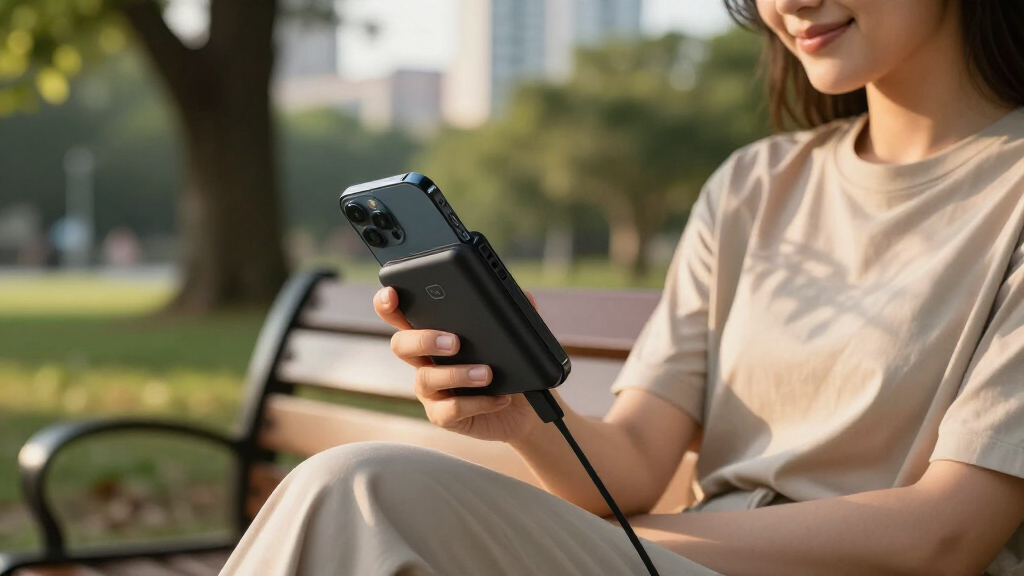
I evaluated these 15 portable charging banks against five buyer-focused criteria. Real-world capacity came first: a bank is only as good as the usable charge it delivers, so I prioritized models whose claimed mAh translated into actual phone and laptop recharges rather than marketing math. Charging speed mattered next — both output wattage (anything under 20W feels slow in 2026) and how quickly the bank itself refills. Portability weighed size, heft, and airline compliance, since 20000mAh is the practical ceiling for carry-on travel in most regions.
From there, I scored convenience features — built-in cables, wall plugs, wireless charging, and port variety — but only when they didn’t compromise speed or reliability. Finally, value tied it together: two banks at the same price can differ enormously in wattage and build quality. That’s why the ranking favors 20000mAh 45W-90W models at the top, slotting the giant 50000mAh+ banks into specific use cases rather than overall picks, and reserving the slim 10000mAh units for pocket-carry scenarios where they genuinely win.
Factors to Consider When Choosing Portable Charging Banks
The 15 banks above are sorted picks, but choosing between them — or any power bank — goes faster when you know which mistakes to avoid. These are the factors that actually change how happy you’ll be six months after buying.
Capacity vs. Weight: The Tradeoff Most Buyers Get Wrong
The most common mistake is buying maximum capacity ‘just in case.’ A 50000mAh bank like the ZZI or YILANS weighs well over a pound and a half, takes most of a day to recharge itself, and most people never drain half of it — meanwhile it lives in your bag every single day. A 20000mAh bank delivers roughly four phone charges at a third of the weight, which covers flights, festivals, and long workdays for nearly everyone. Only step up to 40000mAh+ if you’re off-grid camping or charging for a group, and even then, consider whether two smaller banks would serve you better than one brick. The counterintuitive truth: the bank you actually carry beats the bank you leave at home because it’s too heavy.
Wattage: Why 20W Is the Floor and 65W Is the Sweet Spot
Output wattage determines what the bank can actually charge, not just how fast. A 22.5W bank fast-charges phones but will barely tickle a laptop; 45W handles Chromebooks and smaller laptops; 65W and above is where full-size laptop charging becomes realistic, which is why the JUOVI 65W and 90W models rank so highly for hybrid workers. Also check input wattage — how fast the bank itself recharges. A giant 50000mAh bank with slow input can take eight or more hours to refill, meaning it’s dead weight every morning if you forget to plug it in overnight. Cheap banks sometimes advertise high output on one port only, with total output dropping when you use multiple ports, so read the fine print before assuming every port delivers full speed.
Built-In Cables and Wall Plugs: Convenience With Catches
Built-in cables sound like a pure win until you notice the tradeoffs: they add bulk, they can’t be replaced if they fray, and they often cap charging speed below what a quality separate cable supports. That said, for travelers and anyone who constantly forgets cords, a bank like the VRURC or CFIAI removes a genuine daily annoyance. The wall-plug model is the smartest version of this idea — it eliminates both the cable and the charging adapter, so the bank refills itself from any outlet. If you go the built-in route, verify the cable types match your devices now and for the next couple of years, since a permanently attached Lightning or micro-USB connector becomes a liability when you switch phones. Households with mixed devices should favor banks with four cable types like the SOARAISE or OHOVIV.
Battery Health, Safety Certifications, and What Cheap Banks Skip
Every bank in this category uses lithium cells, but quality varies enormously, and a power bank is a device you press against your pocket all day. Look for UL certification or equivalent safety listings, overcharge protection, and temperature management — features reputable brands like INIU publish prominently and no-name sellers omit entirely. Airline rules also matter: most carriers cap banks at 100Wh (roughly 27000mAh), which is why the 20000mAh picks here are the safe ceiling for frequent flyers, while 50000mAh banks must stay grounded. Cheap multi-packs like the Miady twins are fine as secondary banks scattered across bags and gloveboxes, but I wouldn’t rely on ultra-budget cells as a primary daily charger for an expensive phone.
Matching the Bank to Your Actual Day
Before buying, audit one honest week of your charging behavior. If you top up your phone from 40% to 80% twice a day, a slim 10000mAh bank is genuinely all you need, and anything bigger is wasted weight. If you work from cafes and your laptop battery dies by 3pm, you need 65W output and should ignore capacity claims below 20000mAh. Group trips and emergencies justify the big 50000mAh tier — one bank charging four people’s phones beats four banks everyone forgot. And if you’re buying for an elderly parent or a teenager, prioritize the models with built-in cables and obvious operation over raw specs, because the best power bank is the one that gets used correctly without a manual.
Price Tiers: When Paying More Actually Helps
Portable charging banks cluster into three price bands, and knowing what each buys prevents overspending. Under $25 gets you reliable 10000-15000mAh phone charging — perfectly adequate for light users, as the Miady 2-pack proves. The $25-50 band is where the best value lives: 20000mAh, 45W-65W output, and multi-port charging that covers laptops. Above $50 you’re paying for extreme capacity, solar input, wireless pads, or high-wattage laptop charging like the JUOVI 90W — worthwhile only if you have a specific need for those features. Avoid the mid-price trap: some 30000mAh banks cost the same as better 20000mAh 65W models while charging slower and weighing more. Ports matter too — two USB-C ports beat one USB-C plus two legacy USB-A in 2026, since modern households are increasingly USB-C only.
Frequently Asked Questions
Can I take a 50000mAh power bank on a plane?
In most cases, no. Airlines and the FAA generally cap lithium power banks at 100 watt-hours, which works out to roughly 27000mAh, and anything above 160Wh is prohibited outright even in checked bags. That means the OHOVIV, ZZI, and YILANS 50000mAh banks in this roundup are ground-only companions — fine for road trips and camping, not flights. For air travel, the 20000mAh models like the JUOVI 65W or VRURC are the practical ceiling and fly without issue in most regions. If you fly frequently and need serious capacity, carrying two 20000mAh banks is a legal workaround that one 50000mAh brick can’t offer. Always check your specific carrier’s rules, as enforcement varies by airline and country.
Is a higher mAh rating always better?
No, and this misconception drives more bad purchases than any other in the category. A 50000mAh bank delivers maybe ten phone charges, but most people need three or four per day, so the extra capacity translates into dead weight you carry constantly. Larger banks also take far longer to recharge themselves — sometimes eight hours or more on standard input — so they’re frequently half-empty exactly when you need them. Meanwhile, a 20000mAh bank refills overnight and covers nearly every realistic day. Capacity only wins when you’re charging multiple people, running a laptop away from outlets, or going off-grid for days. Buy the capacity you’ll actually drain, not the biggest number on the listing.
Are built-in cables worth choosing over regular ports?
It depends entirely on how often you lose or forget cables. If that describes you, a bank with built-in cables like the VRURC or the 10000mAh wall-plug model removes a genuine daily friction point and can genuinely change your charging habits. The catches: built-in cables sometimes charge slower than a good standalone cable, they can’t be swapped if the connector wears out or you change phone ecosystems, and they make the bank itself bulkier. If you already carry a quality braided USB-C cable everywhere, you’re paying a real penalty for convenience you don’t need. The smartest compromise in this lineup is a bank with built-in cables plus a standard USB-C port, so you get emergency convenience without giving up full-speed charging.
What wattage do I need to charge a laptop?
For most modern laptops, 45W is the entry point and 65W is the comfortable standard. A 45W bank like the INIU models will charge a MacBook Air, Chromebook, or ultrabook, though slowly and sometimes only when the laptop is asleep or lightly used. Full-size MacBook Pros and gaming laptops typically want 65W-100W, which is where the JUOVI 65W and 90W banks stand out from the rest of this lineup. Below 45W, most laptops either won’t charge at all or will only slow their battery drain while plugged in. Check your laptop’s charger label — if it says 60W or 65W, match that number in your bank, and note that the bank must support PD (Power Delivery) over USB-C, not just generic USB output.
Is a solar power bank like the SOARAISE actually useful?
Honestly, only as a backup feature, not a primary charging method. The small solar panel on banks like the SOARAISE generates a trickle of power — realistically a few percent per hour in direct sunlight — which means fully recharging a 48000mAh bank by sun alone would take days of ideal conditions. Where solar earns its place is emergency scenarios: keeping a bank alive during multi-day camping, power outages, or backpacking trips where any input is better than none. If you’re buying primarily for solar, temper expectations hard and treat the panel as a battery-preserving feature rather than a charger. For everyone else, a bigger capacity non-solar bank at the same price will serve you better 95% of the time.
Conclusion
After comparing all 15, the right choice maps cleanly to buyer type. For best overall, the JUOVI 65W 20000mAh wins on balance: airline-legal capacity, genuine laptop charging, and a weight you won’t resent carrying daily, with the JUOVI 90W as the step-up for power-hungry laptops. The best value pick is the INIU 10000mAh 45W — rarely does a bank this cheap and this small fast-charge a phone this quickly — with the Miady 2-pack as the budget option for stocking multiple bags. For beginners and cable-losers, the VRURC 20000mAh with built-in cables or the wall-plug 10000mAh model remove every excuse to run out of power. Specific needs round it out: the OHOVIV 50000mAh with four cables for group travel and emergencies, the SOARAISE solar bank for off-grid adventures, and the CFIAI slim 15000mAh for everyday bag carry. Whatever you choose, match the capacity to your real routine — the best portable charging bank is the one that’s charged and with you when you need it.
Halloween Picks
halloween
As an affiliate, we earn on qualifying purchases.