
The best portable power station overall in this roundup is the EcoFlow DELTA 3 Max, with 2048Wh of LFP capacity for buyers who need a capable balance of stored energy and output. For longer outages, the EcoFlow DELTA Pro and Jackery HomePower 3600 Plus offer much larger batteries, while compact picks such as the BLUETTI Elite 30 V2 suit lighter loads and easier transport. The main tradeoff is straightforward: more capacity and power usually mean a larger, heavier unit, while small stations cannot run demanding appliances for long. Solar bundles can simplify charging, but the panel’s output and your available sunlight affect how useful they are. Read on for the full breakdown and guidance on matching a station to your actual loads.

Get the latest gadgets delivered free with Prime
- Fast, free delivery on millions of items
- Prime Video, Amazon Music and more included
- Member-only deals all year
Complete the kit


Key Takeaways
- The EcoFlow DELTA 3 Max is the strongest middle ground: its 2048Wh capacity sits between the 1024Wh class and the much larger 3,584–3,600Wh options, making it a versatile starting point for backup planning.
- Big batteries serve a different job than compact stations: the DELTA Pro and HomePower 3600 Plus are better suited to longer outage coverage, while the 89.6–296Wh models are for small devices and short trips.
- Solar bundles trade flexibility for a ready-made setup: the DELTA 3 Max bundle, Jackery Solar Generator 1000 v2, and Explorer 300 package include panels, but bundled panel wattage still limits how quickly they can replenish energy.
- Capacity and output are separate checks: a 2048Wh battery can store substantial energy, but buyers still need to match the station’s AC output to the devices they plan to run at the same time.
- LFP models appear across several size classes: battery chemistry is one factor in long-term ownership, but the right choice still depends on usable capacity, output, weight, charging options, and the intended duty cycle.
| EF ECOFLOW DELTA 3 Max Portable Power Station, 2048Wh LFP Battery |  | Best Overall | Battery capacity: 2,048Wh | Battery type: LiFePO4 (LFP) | Output: 2,400W | VIEW LATEST PRICE | See Our Full Breakdown |
| EF ECOFLOW DELTA Pro Portable Power Station, 3600Wh, 3600W AC Output | 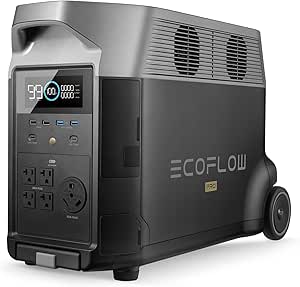 | Best for Expandable Home Backup | Battery capacity: 3,600Wh | AC output: 3,600W | Expandable capacity: Up to 25kWh with compatible equipment | VIEW LATEST PRICE | See Our Full Breakdown |
| EF ECOFLOW DELTA 3 MAX Portable Power Station with 220W Solar Panel, 2048Wh |  | Best Solar Bundle | Battery capacity: 2,048Wh | Battery type: LiFePO4 | Standard output: 2,400W | VIEW LATEST PRICE | See Our Full Breakdown |
| Jackery HomePower 3600 Plus Portable Power Station, 3584Wh |  | Best for Easier Heavy-Duty Transport | Battery capacity: 3,584Wh | AC output: 3,600W | Parallel output: 7,200W | VIEW LATEST PRICE | See Our Full Breakdown |
| EcoFlow DELTA 3 Classic Portable Power Station, 1024Wh, 1800W |  | Best Compact Home-Backup Pick | Battery capacity: 1,024Wh | Battery chemistry: LiFePO4 | Output power: 1,800W | VIEW LATEST PRICE | See Our Full Breakdown |
| OUKITEL BP2000 Portable Power Station, 2048Wh, 2200W Output |  | Best for Expandable Home Backup | Battery capacity: 2,048Wh | Surge output: 4,400W | Battery chemistry: LiFePO4 | VIEW LATEST PRICE | See Our Full Breakdown |
| Jackery Solar Generator 1000 v2 with 200W Solar Panel |  | Best Portable Solar Bundle | Battery capacity: 1,070Wh | AC output: 1,500W | Surge peak: 3,000W | VIEW LATEST PRICE | See Our Full Breakdown |
| EcoFlow DELTA 3 Portable Power Station, 1024Wh, 1800W |  | Best for Fast Recharging | Battery capacity: 1,024Wh | AC output: 1,800W | Surge output: 3,600W | VIEW LATEST PRICE | See Our Full Breakdown |
| MARBERO 296Wh Portable Power Station, 300W with 350W Peak Output |  | Best Lightweight Essentials Station | Battery capacity: 296Wh | Continuous output: 300W | Peak output: 350W | VIEW LATEST PRICE | See Our Full Breakdown |
| Anker SOLIX C1000 Gen 2 Portable Power Station |  | Best High-Output Compact Station | Battery capacity: 1,024Wh | Battery type: LiFePO4 | Output wattage: 2,000W | VIEW LATEST PRICE | See Our Full Breakdown |
| Daran Portable Power Station, 89.6Wh LiFePO4 Battery, 100W Output |  | Best Compact LiFePO4 Pick | Battery capacity: 89.6Wh | Battery type: LiFePO4 | Battery cycles: 3,500+ | VIEW LATEST PRICE | See Our Full Breakdown |
| Jackery Explorer 300 Portable Power Station with 40W Solar Panel, 292Wh |  | Best Solar Starter Bundle | Battery capacity: 292Wh | Battery chemistry: LiFePO4 | Peak surge output: 600W | VIEW LATEST PRICE | See Our Full Breakdown |
| BLUETTI Elite 30 V2 Portable Power Station, 288Wh, 600W |  | Best for Fast AC Recharging | Battery capacity: 288Wh | Continuous output: 600W | Power Lifting Mode: Up to 1,500W | VIEW LATEST PRICE | See Our Full Breakdown |
| Jackery Explorer 1000 v2 Portable Power Station, 1070Wh, 1500W |  | Best for Extended Portable Backup | Battery capacity: 1,070Wh | Battery type: LiFePO4 | AC output: 1,500W | VIEW LATEST PRICE | See Our Full Breakdown |
| HOWEASY 88Wh Portable Power Station, 120W (240W Peak) |  | Best Lightweight Budget-Style Backup | Battery capacity: 88Wh | AC output: 120W continuous; 240W peak | USB-C output: 18W | VIEW LATEST PRICE | See Our Full Breakdown |
| portable power station | Battery capacity | Weight |
|---|---|---|
| EF ECOFLOW DELTA 3 Max Portabl | 2,048Wh | — |
| EF ECOFLOW DELTA Pro Portable | 3,600Wh | 99 lbs |
| EF ECOFLOW DELTA 3 MAX Portabl | 2,048Wh | — |
| Jackery HomePower 3600 Plus Po | 3,584Wh | 77.2 lbs |
| EcoFlow DELTA 3 Classic Portab | 1,024Wh | 26.7 lbs |
| OUKITEL BP2000 Portable Power | 2,048Wh | 51.8 lb |
| Jackery Solar Generator 1000 v | 1,070Wh | 23.8 lb |
| EcoFlow DELTA 3 Portable Power | 1,024Wh | 12.5kg |
| MARBERO 296Wh Portable Power S | 296Wh | 5.7 lb |
| Anker SOLIX C1000 Gen 2 Portab | 1,024Wh | 11.3kg |
| Daran Portable Power Station | 89.6Wh | 2.54 lb |
| Jackery Explorer 300 Portable | 292Wh | 12.9 lb |
| BLUETTI Elite 30 V2 Portable P | 288Wh | 9.5 lb |
| Jackery Explorer 1000 v2 Porta | 1,070Wh | 23.8 lb |
| HOWEASY 88Wh Portable Power St | 88Wh | 2.3 lb |
More Details on Our Top Picks
EF ECOFLOW DELTA 3 Max Portable Power Station, 2048Wh LFP Battery
The DELTA 3 Max balances substantial capacity with a quicker-to-manage size than the much larger DELTA Pro. Its 2,048Wh LFP battery and 2,400W output suit home backup for essential appliances or power for a campsite, while X-Boost up to 3,400W can support compatible higher-demand devices. AC charging reaches 80% in about 1.13 hours, useful when an outage warning or departure leaves little time to recharge. App monitoring and a 10ms transfer time add control and backup convenience. The tradeoff is that its solar panel is sold separately, unlike the solar bundle version in this roundup. Its listed 10-hour runtime is also only a guide; actual use depends on the devices connected.
Pros:- 2,048Wh LFP battery offers more reserve than the 1,024Wh DELTA 3 Classic
- Reaches 80% charge in about 1.13 hours using the stated charging method
- X-Boost supports compatible appliances with higher power demands
- App controls provide energy monitoring and charging schedules
Cons:- Solar panel is not included
- The 10-hour runtime figure varies with the connected load
- X-Boost output is a mode-specific maximum, not the standard 2,400W output
Best for: Households seeking a mid-size backup station with fast AC charging, app controls, and enough capacity for several essential devices
Not ideal for: Buyers who want solar charging equipment included or need expandable, multi-day capacity like the DELTA Pro
- Battery capacity:2,048Wh
- Battery type:LiFePO4 (LFP)
- Output:2,400W
- X-Boost output:Up to 3,400W for compatible appliances
- Charging time:0–80% in about 1.13 hours
- Transfer time:10ms
- Outlets:3
- Dimensions:9.4 × 12 × 19.44 inches
- Warranty:5 years
Our verdict“Choose the DELTA 3 Max for a strong balance of capacity, output, and fast recharging, but pick the DELTA Pro if expandable long-duration backup matters more.”
EF ECOFLOW DELTA Pro Portable Power Station, 3600Wh, 3600W AC Output
When capacity and expansion matter more than easy lifting, the DELTA Pro leads this group. Its 3,600Wh battery and 3,600W AC output provide a larger starting reserve than the 2,048Wh DELTA 3 Max, and compatible extra batteries or Smart Generators can raise capacity to 25kWh. Fifteen output options and five charging methods make it adaptable to home backup setups, including solar and EV-station charging. Wi-Fi and Bluetooth app control let owners monitor and adjust settings remotely. The main compromise is portability: at 99 pounds, it is difficult to move casually, particularly compared with the wheeled Jackery HomePower 3600 Plus. Expansion also requires separate compatible equipment, so its maximum capacity is not available from the base unit alone.
Pros:- 3,600Wh capacity and 3,600W AC output provide a substantial base for backup
- Expandable to 25kWh with compatible extra batteries or Smart Generators
- Five charging methods include wall, solar, EV station, Smart Generator, and car outlet
- Fifteen output options and Wi-Fi/Bluetooth app control support varied setups
Cons:- Weighs 99 pounds, making it difficult to move without planning
- Reaching maximum capacity requires compatible add-on equipment
- Charging time varies by power source and configuration
Best for: Homeowners planning extended backup who can keep a heavy station in a set location and may add compatible batteries or a Smart Generator
Not ideal for: Campers or anyone who regularly needs to carry a power station by hand; its 99-pound weight makes frequent transport impractical
- Battery capacity:3,600Wh
- AC output:3,600W
- Expandable capacity:Up to 25kWh with compatible equipment
- X-Boost output:Up to 4,500W
- Output ports:15 total
- Charging methods:EV station, solar, wall outlet, Smart Generator, or car outlet
- Weight:99 lbs
- Dimensions:25 × 11.2 × 16.4 inches
- App control:Wi-Fi and Bluetooth
Our verdict“Choose the DELTA Pro for a stationary or semi-permanent backup setup that can grow over time, not for frequent hand-carried trips.”
EF ECOFLOW DELTA 3 MAX Portable Power Station with 220W Solar Panel, 2048Wh
This DELTA 3 Max bundle has the same 2,048Wh capacity and 2,400W standard output as the standalone version, but it adds a 220W bifacial solar panel. That makes it the more straightforward choice for buyers who want solar equipment in the box rather than sourcing a compatible panel separately. It also charges to 80% in about 1.13 hours and has a transfer time under 10ms, features shared with the non-bundle DELTA 3 Max. Compared with the smaller DELTA 3 Classic, this model offers twice the battery capacity, though it is less convenient to carry than a compact station. Solar input is still limited by the included panel’s output and conditions, and the 3,400W X-Boost figure applies only in its supported mode.
Pros:- Includes a 220W bifacial solar panel, unlike the standalone DELTA 3 Max
- 2,048Wh LFP battery provides twice the capacity of the DELTA 3 Classic
- Reaches 80% charge in about 1.13 hours
- Under-10ms transfer time and app controls support backup monitoring
Cons:- The included 220W panel may recharge more slowly than higher-output solar setups
- The station’s size is less convenient to carry than smaller-capacity options
- X-Boost’s 3,400W figure is mode-specific rather than its standard output
Best for: Campers and backup buyers who want a high-capacity station with a solar panel included for recharging away from an outlet
Not ideal for: Buyers who already own suitable solar panels or prioritize lower weight and a smaller footprint over 2,048Wh capacity
- Battery capacity:2,048Wh
- Battery type:LiFePO4
- Standard output:2,400W
- X-Boost output:Up to 3,400W
- Included solar panel:220W bifacial
- Recharge time:0–80% in about 1.13 hours
- Transfer time:Less than 10ms
- Dimensions:19.5 × 9.4 × 12 inches
- Service:5 years
Our verdict“Pick this bundle over the standalone DELTA 3 Max if you want a solar panel included and are willing to trade a more compact setup for higher capacity.”
Jackery HomePower 3600 Plus Portable Power Station, 3584Wh
The HomePower 3600 Plus pairs a near-DELTA-Pro-sized battery with a design that is easier to roll between storage and use. Its 3,584Wh capacity and 3,600W output put it in the same broad backup class as the EcoFlow DELTA Pro, while wheels and a telescopic handle help offset its 77.2-pound weight. Multiple charging routes include hybrid AC+DC, solar, and a gas generator; the stated hybrid recharge time is two hours. LFP cells are rated for 6,000 cycles, and the unit is specified to operate down to -4°F. It can also expand, with parallel operation supporting higher output. The tradeoffs are that lifting it remains difficult, only two outlets are listed, and solar panels are optional.
Pros:- 3,584Wh capacity and 3,600W output suit substantial backup loads
- Wheels and telescopic handle ease movement compared with the 99-pound DELTA Pro
- Supports hybrid AC+DC, AC, solar, and gas-generator charging
- LFP cells are rated for 6,000 cycles and operation down to -4°F
Cons:- At 77.2 pounds, it remains difficult to lift into a vehicle
- Only two outlets are listed
- Solar panel is optional
Best for: Homeowners who need high-capacity backup and expect to roll the station across a garage, patio, or level campsite
Not ideal for: Buyers who need a lightweight carry-in station, many listed outlets, or a solar panel included
- Battery capacity:3,584Wh
- AC output:3,600W
- Parallel output:7,200W
- Expandable capacity:Up to 21kWh per unit or 43kWh with multiple units
- Battery type and cycle life:LFP; 6,000 cycles
- Charging options:Hybrid AC+DC, AC, solar, or gas generator
- Weight:77.2 lbs
- Operating temperature:Down to -4°F
- Warranty:5 years
Our verdict“Choose the HomePower 3600 Plus if you want large-capacity backup that can be rolled around, but not if you need a light or outlet-rich portable station.”
EcoFlow DELTA 3 Classic Portable Power Station, 1024Wh, 1800W
For buyers who value manageable weight over extended runtime, the DELTA 3 Classic is the most portable option here: it weighs 26.7 pounds while delivering 1,800W of output. Its 1,024Wh LFP battery is half the capacity of the DELTA 3 Max, so it suits shorter outages, camping, and essential electronics better than prolonged household backup. Fast AC charging takes the battery from empty to 80% in 45 minutes, and under-10ms UPS switchover helps keep compatible devices powered during an interruption. Six outlets and a 100W USB-C port add flexibility. Solar recharging is supported but the panel is not included. Buyers planning to expand later should note that this model does not work with the specified DELTA 2 or DELTA 3 Series smart extra batteries.
Pros:- 26.7-pound weight is easier to transport than the larger DELTA 3 Max
- 1,800W output with 3,600W surge capacity supports a range of devices
- AC charging reaches 80% in 45 minutes
- Six outlets, 100W USB-C, and under-10ms UPS switchover add practical flexibility
Cons:- 1,024Wh capacity offers less runtime than the 2,048Wh DELTA 3 Max
- Solar panel is not included
- Not compatible with DELTA 2 or DELTA 3 Series smart extra batteries
Best for: Campers and apartment dwellers who want a sub-30-pound station for essential devices, short outages, and quick AC recharging
Not ideal for: Households needing multi-day backup or a battery they can expand with the specified DELTA 2 or DELTA 3 Series smart extra batteries
- Battery capacity:1,024Wh
- Battery chemistry:LiFePO4
- Output power:1,800W
- Surge power:3,600W
- X-Boost output:Up to 2,600W
- AC charging:0–80% in 45 minutes
- Solar recharging:About 2.5 hours with a 500W solar panel
- Weight:26.7 lbs
- Outlets:6
Our verdict“Choose the DELTA 3 Classic for a lighter, fast-charging station for shorter backup needs; step up to the DELTA 3 Max for substantially more stored energy.”
OUKITEL BP2000 Portable Power Station, 2048Wh, 2200W Output
The OUKITEL BP2000 prioritizes reserve capacity over easy carrying: its 2,048Wh battery and 2,200W rated output can support a broader mix of household loads than the smaller Jackery Solar Generator 1000 v2. Its expandability to approximately 16kWh is the bigger differentiator for buyers building a backup setup that may grow over time. LiFePO4 chemistry, a rating of about 4,000 charge cycles, and a UPS transfer time under 10ms add practical value for frequent use and sensitive equipment. The tradeoff is portability: at 51.8 pounds, it is much less convenient to move than the EcoFlow DELTA 3. Solar panels are also sold separately, and its two-year warranty is shorter than the five-year coverage listed for several competing stations.
Pros:- 2,048Wh capacity and 2,200W rated output suit more demanding backup loads than smaller 1kWh-class stations
- Expandable to approximately 16kWh with compatible batteries
- LiFePO4 battery is rated for approximately 4,000 charge cycles
- Wide selection of AC, USB, DC, car, and aviation outputs
Cons:- At 51.8 pounds, it is cumbersome for frequent carrying
- Solar panels are sold separately
- Two-year warranty is shorter than the five-year coverage listed for several competitors
Best for: Homeowners who want a high-capacity portable backup station with room to expand and enough output for multiple household devices
Not ideal for: Campers or travelers who need to lift their power station often, or buyers who want a solar panel included
- Battery capacity:2,048Wh
- Surge output:4,400W
- Battery chemistry:LiFePO4
- Battery cycle life:Approximately 4,000 cycles
- Maximum expandable capacity:Approximately 16kWh
- Maximum solar input:1,000W
- UPS transfer time:Less than 10ms
- Weight:51.8 lb
Our verdict“Choose the BP2000 if expandable home backup matters more than a light, easy-to-carry design.”
Jackery Solar Generator 1000 v2 with 200W Solar Panel
The Jackery Solar Generator 1000 v2 is a practical middle ground for buyers who want meaningful appliance output without carrying a full-size backup unit. At 23.8 pounds, it is easier to take camping than the 51.8-pound OUKITEL BP2000, and this bundle includes a 200W solar panel, so solar charging does not require a separate panel purchase. Its 1,070Wh battery and 1,500W AC output cover many travel and outage essentials, while two 100W USB-C ports can serve laptops and other demanding devices. The limitation is reserve capacity: the BP2000 holds nearly twice as much energy, and the Jackery’s solar panel is rated to reach 80% charge in about six hours. Its one-hour AC recharge also depends on enabling emergency charging in the app.
Pros:- Included 200W solar panel makes this a ready-to-use solar bundle
- 23.8-pound weight is easier to transport than the OUKITEL BP2000
- 1,500W AC output and 3,000W surge peak support a range of smaller appliances
- LiFePO4 battery is rated to retain over 70% capacity after 4,000 cycles
Cons:- 1,070Wh capacity offers less reserve than the 2,048Wh OUKITEL BP2000
- One-hour full charging requires app-enabled emergency charging; standard charging takes about 1.7 hours
- The 200W panel is listed to reach 80% charge in approximately six hours
Best for: Campers and road-trip travelers who want a manageable-weight station with a solar panel included for recharging away from outlets
Not ideal for: Buyers planning extended home outages or frequent use of high-wattage appliances who need more battery capacity or output
- Battery capacity:1,070Wh
- AC output:1,500W
- Surge peak:3,000W
- Battery type:LiFePO4
- Included solar panel:200W
- Weight:23.8 lb
- Emergency AC charging:Full charge in 1 hour with the app-enabled mode
- Standard AC charging:Approximately 1.7 hours for a full charge
- Warranty:5 years
Our verdict“Pick this bundle for portable camping power and included solar charging, not for long-duration home backup.”
EcoFlow DELTA 3 Portable Power Station, 1024Wh, 1800W
The EcoFlow DELTA 3 suits buyers who value quick turnaround between uses. Its stated 56-minute full recharge and 30-minute charge to 80% can be useful when an outage or trip leaves little time to replenish the battery. Against the Jackery Solar Generator 1000 v2, it offers more AC output—1,800W versus 1,500W—while keeping to a similar 1kWh capacity class. The 13 outlets, IP65 rating, and expansion to 5kWh add flexibility for mixed-use setups. Those gains come with a catch: expansion depends on compatible EcoFlow batteries, and its 1,024Wh base capacity is far below the OUKITEL BP2000’s 2,048Wh. The 12.5kg weight also makes it less appealing for buyers prioritizing lighter carry-in camping gear.
Pros:- Stated full recharge time of 56 minutes and 80% charge in 30 minutes
- 1,800W AC output exceeds the Jackery Solar Generator 1000 v2’s 1,500W
- IP65-rated battery pack is described as splash-, dust-, and oil-proof
- Expandable to 5kWh with compatible EcoFlow batteries
Cons:- Expansion requires compatible EcoFlow battery packs
- Base capacity is only 1,024Wh, half that of the OUKITEL BP2000
- At 12.5kg, it is less convenient to carry than lighter compact stations
Best for: Campers, RV users, and outage-prepared households that need fast AC recharging, multiple outputs, and the option to add compatible battery capacity
Not ideal for: Buyers seeking a low-weight station for frequent carrying or a large base battery without purchasing expansion packs
- Battery capacity:1,024Wh
- AC output:1,800W
- Surge output:3,600W
- Battery chemistry:LiFePO4
- Maximum solar input:500W
- Maximum AC input:1,500W
- Stated full recharge time:56 minutes
- Expandable capacity:Up to 5kWh with compatible EcoFlow batteries
- Weight:12.5kg
Our verdict“Choose the DELTA 3 if rapid recharging and expandable capacity matter more than the largest battery or the lightest carry.”
MARBERO 296Wh Portable Power Station, 300W with 350W Peak Output
The MARBERO 296Wh is the compact pick for buyers who need phone, tablet, light, or other modest device power—not a substitute for a household backup station. At 5.7 pounds, it is much easier to pack and carry than the 23.8-pound Jackery Solar Generator 1000 v2, and its AC, USB, USB-C, and DC outputs make it useful across a mix of small devices. A built-in flashlight with SOS mode adds a practical camping and emergency feature. The tradeoff is its 300W continuous AC limit: it cannot handle many appliances the Jackery or EcoFlow DELTA 3 can run. Battery capacity is also a fraction of those larger units, and the listed AC recharge time is seven to eight hours. Solar charging needs a separately purchased compatible panel.
Pros:- 5.7-pound weight is easier to pack than larger 1kWh-class stations
- AC, USB, USB-C, and DC outputs support several types of small devices
- Can recharge from an AC outlet, compatible solar panel, or car outlet
- Built-in flashlight includes steady and SOS modes
Cons:- 300W continuous AC output rules out many appliances supported by the EcoFlow DELTA 3
- 296Wh capacity provides far less reserve than the Jackery Solar Generator 1000 v2
- AC recharge takes approximately seven to eight hours, and the solar panel is sold separately
Best for: Day campers, car campers, and emergency-kit owners powering phones, lights, and other low-wattage devices
Not ideal for: RV users or households needing to run refrigerators, kitchen appliances, or other devices above its 300W continuous output
- Battery capacity:296Wh
- Continuous output:300W
- Peak output:350W
- AC outlets:2
- USB outputs:2 standard USB ports and 1 QC3.0 USB port
- USB-C output:1 QC3.0 port
- Recharging methods:AC outlet, compatible solar panel, or car outlet
- AC recharge time:Approximately 7–8 hours
- Weight:5.7 lb
Our verdict“Choose the MARBERO for lightweight power for small electronics and lights, not for appliance backup.”
Anker SOLIX C1000 Gen 2 Portable Power Station
The Anker SOLIX C1000 Gen 2 puts unusually high output in a 1,024Wh portable station: its 2,000W rating exceeds the EcoFlow DELTA 3’s 1,800W and the Jackery Solar Generator 1000 v2’s 1,500W. That extra headroom can broaden the range of compatible appliances, while the under-10ms UPS switchover is useful for equipment that needs near-continuous power. A 49-minute AC recharge and support for 600W solar input help limit downtime. Capacity remains in the 1kWh class, though, so the 2,048Wh OUKITEL BP2000 is a better fit when longer runtime matters more than portability. The solar input is capped at 600W, and the listing gives conflicting outlet counts: it says 10 ports but specifies nine total power outlets.
Pros:- 2,000W output is higher than the EcoFlow DELTA 3 and Jackery Solar Generator 1000 v2
- AC recharge is listed at 49 minutes when charging at 1,600W
- Under-10ms UPS switchover can help keep compatible essential equipment powered
- LiFePO4 battery is rated to retain at least 80% capacity after 4,000 cycles
Cons:- 1,024Wh capacity provides less reserve than the OUKITEL BP2000
- Solar input is limited to 600W and a maximum of 60V
- The description states 10 ports, while the specs list nine total power outlets
Best for: RV users and outage-ready households seeking high AC output, fast recharging, and UPS switching in a mid-capacity station
Not ideal for: Buyers who need extended runtime from a large battery, or those who require a clearly stated outlet count before purchase
- Battery capacity:1,024Wh
- Battery type:LiFePO4
- Output wattage:2,000W
- Peak output:3,000W
- AC recharge time:49 minutes at 1,600W
- Solar input:600W, 60V maximum
- UPS switchover:Under 10ms
- Battery cycle life:At least 80% capacity after 4,000 cycles
- Weight:11.3kg
Our verdict“Pick the SOLIX C1000 Gen 2 for high output and fast recharging in a 1kWh-class station, not for long-duration backup.”
Daran Portable Power Station, 89.6Wh LiFePO4 Battery, 100W Output
At just 2.54 pounds, this Daran is a small backup for phones, cameras, lights, and other gear that draws no more than 100W. Its LiFePO4 battery rated for 3,500+ cycles gives it a longer-life emphasis than the HOWEASY 88Wh, whose listed cycle life is over 1,500. Seven ports and AC, USB-C, car, or optional solar charging also make it flexible for its size. The tradeoff is limited headroom: its 100W output rules out many appliances, and its 89.6Wh capacity is best for topping up smaller devices rather than powering them for long stretches. Unlike the Jackery Explorer 300, it prioritizes low weight over runtime and output. The fanless design and SOS light add practical value for quiet, compact emergency kits.
Pros:- Lightweight 2.54-pound design with an ergonomic handle
- LiFePO4 battery rated for 3,500+ cycles
- Seven output ports and several charging methods
- Fanless operation and built-in SOS flashlight
Cons:- 100W maximum output limits the devices it can run
- Solar panel and cable are not included
Best for: Campers and commuters building a lightweight kit for phones, cameras, lights, and other devices under 100W
Not ideal for: Buyers who need to run appliances above 100W or keep several devices powered for extended periods
- Battery capacity:89.6Wh
- Battery type:LiFePO4
- Battery cycles:3,500+
- Maximum output:100W
- AC outlets:2
- USB-C ports:2 (45W and 15W)
- Total output ports:7
- Weight:2.54 lb
- Charging methods:AC, USB-C PD, car, and optional solar
Our verdict“Choose the Daran for a quiet, light backup for small electronics, but pick the Jackery Explorer 300 if you need substantially more capacity and output.”
Jackery Explorer 300 Portable Power Station with 40W Solar Panel, 292Wh
The Explorer 300 is a practical step up from pocket-sized stations: its 292Wh capacity and 300W rated output can serve a wider mix of camping electronics and small devices than the Daran or HOWEASY. The included 40W solar panel means buyers can start with solar charging without sourcing a separate panel, though reaching 80% takes about 7.5 hours in the stated conditions. Its LiFePO4 battery is rated for over 4,000 cycles to 70% capacity, giving it a longer cycle-life claim than the Daran. The compromise is portability: at 12.9 pounds, it is much heavier than either compact option, and its 600W peak does not make it suitable for sustained high-draw appliances. I’d choose it over the BLUETTI Elite 30 V2 for the bundled panel, but the BLUETTI offers more continuous output and much faster stated AC charging.
Pros:- 292Wh capacity and 300W rated output exceed the compact 88–89.6Wh options
- Includes a 40W solar panel and charging cables
- LiFePO4 battery rated for over 4,000 cycles to 70% capacity
- AC, USB-C, USB-A, and car outputs cover common portable electronics
Cons:- Included 40W panel takes about 7.5 hours to reach 80% charge
- At 12.9 pounds, it is less convenient to carry than the smaller stations
- 300W rated output limits use with higher-draw appliances
Best for: Campers and road-trippers who want a mid-sized station with a solar panel included for slow daytime recharging
Not ideal for: Buyers who prioritize a very light carry, fast solar replenishment, or enough capacity for extended appliance use
- Battery capacity:292Wh
- Battery chemistry:LiFePO4
- Peak surge output:600W
- AC outlets:2
- USB-C port:1 (100W PD)
- Included solar panel:40W
- Solar charging time:Approximately 7.5 hours to 80% with the included panel
- Weight:12.9 lb
Our verdict“Pick the Explorer 300 if an included solar panel matters more than fast recharging or minimum carry weight.”
BLUETTI Elite 30 V2 Portable Power Station, 288Wh, 600W
The Elite 30 V2 packs 600W of continuous output into a 9.5-pound body, making it a stronger match for short bursts of moderate-power use than the Explorer 300, which is rated at 300W. Its standout advantage is fast AC recharging: the stated time is 45 minutes to 80% and 70 minutes to full. A UPS function with a switching time of 10ms or less can also help keep connected equipment running through brief outages. These capabilities do not change its basic size class, however: 288Wh limits runtime, especially for appliances, and the 1,500W Power Lifting Mode should not be confused with its 600W continuous rating. Compared with the Jackery Explorer 1000 v2, it is far easier to carry but holds much less energy. I’d favor it for quick-turnaround backup, not long-duration power.
Pros:- 600W continuous output in a 9.5-pound unit
- Stated AC recharge reaches 80% in 45 minutes
- UPS switches over in 10ms or less
- Supports AC, solar, car, lead-acid battery, and generator charging
Cons:- 288Wh capacity can mean short runtimes for high-power devices
- Power Lifting Mode does not replace the 600W continuous rating
- Solar panel is not listed among the included components
Best for: Remote workers and weekend campers who need a compact station with quick AC recharging and UPS support for sensitive connected equipment
Not ideal for: Buyers seeking long runtimes for appliances or a larger reserve for multi-day outages
- Battery capacity:288Wh
- Continuous output:600W
- Power Lifting Mode:Up to 1,500W
- AC recharge time:0–80% in 45 minutes; 0–100% in 70 minutes
- UPS switching time:10ms or less
- Total power outlets:9
- Charging modes:8
- Weight:9.5 lb
- Dimensions:9.8 × 7 × 6.6 in
Our verdict“Choose the Elite 30 V2 for quick recharging and UPS support in a small package, not for extended appliance power.”
Jackery Explorer 1000 v2 Portable Power Station, 1070Wh, 1500W
With 1,070Wh of capacity and 1,500W AC output, the Explorer 1000 v2 is the clear choice here for buyers who need more than a short electronics top-up. It has much more energy and appliance headroom than the Explorer 300 or BLUETTI Elite 30 V2, while its 23.8-pound weight and foldable handle keep it portable for car camping and home backup. The three pure sine wave AC outlets and USB-C ports rated up to 100W support several kinds of gear at once. Jackery states a one-hour recharge with emergency charging enabled; the default is 1.7 hours, so the fastest figure depends on changing the app setting. Solar is a more restrictive tradeoff: panels are sold separately, and only Jackery panels are compatible. This is the lineup’s strongest portable capacity pick, but not a lightweight carry or open-ended solar setup.
Pros:- 1,070Wh capacity and 1,500W AC output provide far more reserve than the smaller stations
- Three pure sine wave AC outlets plus USB and DC outputs
- Emergency charging mode can reach a stated one-hour charge time
- Foldable handle and 23.8-pound weight support transport between locations
Cons:- One-hour charging requires enabling emergency charging in the app
- Solar panel is not included and charging is compatible only with Jackery panels
- Heavier and bulkier than the 288–292Wh alternatives
Best for: Car campers and households who want substantial portable backup for multiple devices and moderate-power appliances
Not ideal for: Hikers, buyers seeking the lightest option, or solar users who want to choose panels across brands
- Battery capacity:1,070Wh
- Battery type:LiFePO4
- AC output:1,500W
- Surge peak:3,000W
- AC outlets:3 pure sine wave
- USB-C output:Up to 100W
- Charging time:1 hour with emergency charging enabled; 1.7 hours default
- Battery lifespan:Over 70% capacity after 4,000 charge cycles
- Weight:23.8 lb
Our verdict“Choose the Explorer 1000 v2 when you need considerably more runtime and appliance output than a compact station can provide.”
HOWEASY 88Wh Portable Power Station, 120W (240W Peak)
The HOWEASY is the lightest station in this five-product group at 2.3 pounds, with 88Wh of capacity and eight ports for small electronics. Its 120W continuous AC output gives it a slight output advantage over the Daran’s 100W limit, though neither is built for appliances that draw heavily. The hidden handle and three-mode LED light suit a car kit or compact emergency bag, and wall, car, and compatible solar charging provide useful flexibility. Its main compromise is battery longevity: the listed cycle life is over 1,500, compared with the Daran’s 3,500+ cycles, and the solar panel is sold separately. The Explorer 300 is a more capable choice for longer trips, but it weighs 12.9 pounds. I’d pick HOWEASY when minimizing carry weight matters more than capacity, output, or a higher cycle-life rating.
Pros:- Lightweight 2.3-pound design with a space-saving hidden handle
- Eight output ports for charging several small devices
- 120W continuous AC output, slightly above the Daran’s 100W limit
- Can recharge from AC, car, or a compatible solar panel
Cons:- 88Wh capacity limits runtime for connected devices
- 120W continuous output is unsuitable for many higher-draw appliances
- Solar panel is not included and listed cycle life is over 1,500 cycles
Best for: Drivers and campers who want a very light backup for phones, lights, and other low-draw devices
Not ideal for: Buyers who need sustained output above 120W, longer runtimes, or a battery rated for more than 1,500 cycles
- Battery capacity:88Wh
- AC output:120W continuous; 240W peak
- USB-C output:18W
- DC output:12V/10A
- Output ports:8
- Cycle life:More than 1,500 cycles
- Recharging methods:AC outlet, compatible 15V–24V solar panel, or 12V/24V car socket
- Weight:2.3 lb
- LED light modes:Steady, flash, and SOS
Our verdict“Choose the HOWEASY for the lightest carry and basic device charging, but step up to the Daran for a higher listed cycle life.”
How We Picked
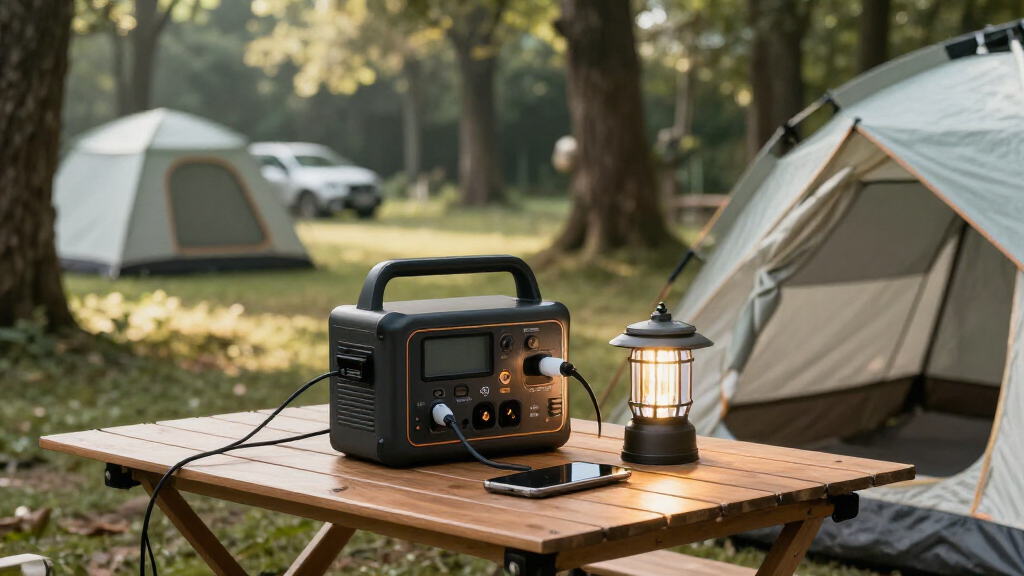
I ranked these portable power stations by how well their capacity, AC output, and portability fit the use cases buyers are most likely to have: home backup, road trips, camping, and charging small electronics. Larger stations place higher when their added capacity and output justify the extra size; compact units earn their place when low-weight, modest-power use is the priority. I also considered battery chemistry, solar-panel availability, charging flexibility, and whether a bundled panel makes the setup more practical or simply adds equipment a buyer may not need.
The ranking favors versatility and useful power over a single headline specification. Models with 1024–2048Wh capacities generally land in the middle because they can serve more than one role, while the highest-capacity picks are aimed at buyers who need longer runtime and the smallest stations are placed for low-draw use. Within similar capacity bands, I distinguish products by output, included solar gear, and intended convenience. I do not treat a bundle as automatically better: buyers should compare its panel and station against the cost and flexibility of assembling a system separately.
Factors to Consider When Choosing Portable Power Stations
Before choosing a station, I would start with the devices you need to power and how long you need them to run. A higher capacity number does not tell the whole story: output limits, conversion losses, recharge access, and the weight you can manage all shape real-world usefulness. These checks can prevent paying for a large system when a compact one fits—or buying a small unit that cannot handle your essential loads.
Match AC Output to Your Appliances
List the appliances you expect to run and check both their normal wattage and any startup surge. A refrigerator or pump may briefly draw more power when its motor starts, while a laptop or light has a steadier, lower demand. Add the wattage of devices you may use at the same time, then compare that total with the station’s rated AC output. Peak output figures can help with short surges, but they are not a substitute for the continuous rating. A common mistake is choosing by battery capacity alone and discovering the unit cannot start or run a key appliance. If your needs are mostly phones and small electronics, paying for high AC output may add bulk without adding much practical value.
Estimate Runtime From Energy Use, Not Battery Size Alone
Capacity in watt-hours gives a useful starting point, but it is not the exact amount of energy delivered to every device. Inverter losses and the station’s own operating draw reduce what is available through AC outlets, while DC and USB loads may have different conversion losses. Estimate each device’s watts multiplied by its hours of use, then leave room for inefficiency and changing conditions. For an outage plan, separate essentials such as communications and refrigeration from optional loads like entertainment or cooking appliances. This makes it easier to decide whether a 1024Wh, 2048Wh, or roughly 3600Wh class is appropriate. Avoid assuming that a larger battery will automatically cover several days without checking the total daily energy demand.
Account for Weight, Size, and Where You Will Use It
A station that stays in one room can be chosen differently from one that moves between a car, campsite, and home. Large-capacity models can reduce recharge interruptions, but their size and weight can make frequent carrying inconvenient. For a portable setup, think about the full load: the station, cables, and any solar panels you plan to bring. If you expect to move it alone, check the product’s physical dimensions and carrying design before prioritizing capacity. Small stations are easier to pack but are best kept to modest loads and shorter runtimes. The right balance depends on whether portability means occasional relocation or carrying the system over a distance.
Choose a Charging Plan for Your Likely Conditions
Consider where the station will recharge: a wall outlet, a vehicle, solar panels, or some combination. A solar bundle may be convenient, but panel wattage is only one part of the calculation; sunlight, shade, season, and panel placement all affect daily harvest. Buyers who rely on solar should check supported solar input and connector compatibility before adding panels. For home backup, wall charging can be the most predictable way to refill between outages, while solar offers more independence when the grid stays down. Do not assume a small bundled panel will quickly refill a large battery. If you already own compatible panels, confirm that the station accepts their voltage and connector before choosing a bundle.
Weigh Battery Chemistry Against Ownership Needs
Battery chemistry matters most when you expect frequent cycling or plan to keep the station for years. LFP batteries are common in this lineup and are often selected for their cycle-life characteristics, though chemistry alone cannot tell you how long a particular unit will serve. Check the manufacturer’s stated cycle information, warranty terms, and recommended storage conditions rather than relying on chemistry as a complete durability guarantee. A station used only during occasional outages may not need the same priorities as one used daily for off-grid work. Also consider storage: charge level and temperature guidance can affect battery health while the unit sits unused. A larger battery is not automatically the better long-term purchase if it will be difficult to store, move, or recharge.
Treat Solar Bundles and Expandability as System Choices
A bundle reduces the effort of pairing a station with a panel, but it may limit your choice of panel size or configuration. Compare the included panel’s rating with the station’s solar input limit and your expected daily energy use. If you need faster replenishment, a compatible larger panel may matter more than having a panel included in the box. Buyers should also check whether the station supports additional batteries or other expansion options before assuming the system can grow later. That feature is useful only if the extra components are available and practical for your setup. Choose a bundle for convenience when its parts match your needs; choose the station alone when flexibility matters more.
Frequently Asked Questions
How large a portable power station do I need for a refrigerator during an outage?
Start with the refrigerator’s running wattage and its daily energy use, then account for the brief startup surge when the compressor turns on. The station must meet the appliance’s startup and continuous output needs, while its capacity determines how long it can run before recharging. Refrigerator duty cycles vary with temperature, how often the door opens, and the appliance itself, so a simple wattage-times-hours estimate is only a planning guide. A 1024Wh model may cover a shorter period or a limited set of essentials, while a 2048Wh or larger station offers more stored energy. For multi-day backup, plan a way to recharge and avoid adding high-draw appliances to the same estimate without checking the total load.
Can a portable power station run a window air conditioner or electric heater?
It depends on the appliance’s running wattage, startup demand, and how long you want it to operate. Heaters often draw substantial power continuously, so even a large battery can drain quickly; air conditioners also have compressor startup demands that may exceed a station’s output. Check the appliance label or manual and compare its requirements with both the station’s continuous and surge ratings. Then estimate energy use over the intended runtime, not just whether the station can start the device. For climate control, a station may be more practical for short periods or lower-wattage equipment than for sustained whole-room heating or cooling. If this is a primary need, size the system around measured appliance consumption and a realistic recharge plan.
Is a solar-panel bundle worth choosing over the power station by itself?
A bundle is useful when the included panel is compatible and its output fits your expected charging routine. It can save time pairing components, but a small panel may take a long time to refill a high-capacity station, especially in cloudy weather or partial shade. Compare the panel’s rated output with the station’s solar input limit and consider how many hours of strong sun your location typically gets. If you already own compatible panels, buying the station alone may avoid redundant equipment. Also check cable and connector requirements before relying on a panel you have not used with that station. The best choice is the one that meets your recharge needs, not simply the one that includes a panel.
Should I choose a 2048Wh station or a 3600Wh-class model?
Choose based on the amount of energy you expect to use between recharge opportunities and how much size you are willing to manage. A 2048Wh station can suit a mix of household essentials, travel, and moderate backup needs without stepping up to the largest class. A 3600Wh-class model gives more stored energy for longer outages or heavier daily use, but it is a larger commitment to move, store, and recharge. Neither capacity guarantees a specific runtime because appliance draw and inverter losses vary. If your load list is short and you can recharge regularly, 2048Wh may be enough. If you need longer coverage and have a realistic charging plan, the larger class may better match the job.
Can a compact 300Wh-class station replace a 1000Wh or larger model?
Usually not for the same workloads: a compact station is better suited to phones, laptops, lights, and other modest loads, while a 1000Wh-class unit can support more energy use or longer runtimes. Output limits also matter, so a small station may not run an appliance even if its capacity seems adequate on paper. A compact model makes sense when you value easier transport and your devices draw little power. For refrigeration, power tools, or several devices used for long periods, a larger station is more capable. Some buyers may use a compact unit as a separate travel charger and keep a larger station at home rather than expecting one device to cover every situation.
Conclusion
For the broadest mix of backup and travel use, I would start with the EcoFlow DELTA 3 Max as the best overall pick: its 2048Wh capacity puts it between the compact and high-capacity groups. The best premium choice for buyers who prioritize extended stored energy is the EcoFlow DELTA Pro, with the Jackery HomePower 3600 Plus as another large-capacity alternative. For value-minded buyers seeking a middle-size station, compare the EcoFlow DELTA 3 Classic and standard DELTA 3 against the OUKITEL BP2000 and Anker SOLIX C1000 Gen 2 based on output, capacity, and charging needs. A first-time buyer with modest loads may find the Jackery Explorer 300 bundle easier to size for short trips, while the MARBERO, BLUETTI Elite 30 V2, Daran, and HOWEASY models suit lighter, smaller-device use. Choose the DELTA 3 Max bundle or Jackery Solar Generator 1000 v2 if having a panel included fits your plans; otherwise, prioritize the station’s capacity and output first.