
Among the best Radeon graphics cards here, I name the ASRock Radeon RX 9070 Challenger 16GB my best overall pick for its strong current-generation position and 16GB of memory. The ASRock RX 9060 XT Challenger Pro 16GB is a compelling lower-tier alternative, while the ASRock RX 9070 XT Steel Legend Dark suits buyers seeking more performance headroom. The lineup also includes older high-end cards, entry-level models, and a compact RX 550, so the right choice depends on resolution, case fit, and how much performance you need. Memory capacity and card dimensions matter alongside GPU tier, especially if you plan to keep the card for several years. Read on for the full breakdown and advice matched to different builds.

Get the latest gadgets delivered free with Prime
- Fast, free delivery on millions of items
- Prime Video, Amazon Music and more included
- Member-only deals all year
Complete the kit



Key Takeaways
- The RX 9070 models lead this roundup: the ASRock RX 9070 Challenger is my balanced overall recommendation, while ASUS Prime and RX 9070 XT cards are alternatives for different performance and cooler preferences.
- 16GB is a recurring strength among newer choices: the RX 9060 XT and RX 9070 families offer more memory headroom than the 8GB RX 7600 cards.
- The RX 9060 XT gives buyers a distinct middle ground: its 16GB configurations sit below the RX 9070 tier without dropping to the 8GB entry-level options.
- Older high-end cards are not automatic bargains: the RX 7900 XT and RX 6950 XT remain powerful options, but buyers should weigh generation, system requirements, and availability against newer models.
- The RX 550 and RX 580 fill different low-end needs: they may suit modest or legacy systems, but they are not substitutes for the newer cards in demanding gaming builds.
| Sapphire AMD Radeon RX 7900 XT Graphics Card, 20GB GDDR6 |  | Best for High-Resolution Gaming | GPU: AMD Radeon RX 7900 XT | Memory: 20GB GDDR6 | Memory interface: 320-bit | VIEW LATEST PRICE | See Our Full Breakdown |
| ASRock Radeon RX 7600 Challenger 8GB OC Graphics Card |  | Best for Mainstream Builds | GPU: AMD Radeon RX 7600 | Architecture: RDNA 3 | Memory: 8GB GDDR6 | VIEW LATEST PRICE | See Our Full Breakdown |
| ASRock Radeon RX 9060 XT Challenger Pro 16GB OC Graphics Card |  | Best for 1440p and Creative Work | GPU: AMD Radeon RX 9060 XT | Architecture: RDNA 4 | Memory: 16GB GDDR6 | VIEW LATEST PRICE | See Our Full Breakdown |
| ASRock Radeon RX 9070 Challenger 16GB OC Graphics Card |  | Best for Higher-Tier RDNA 4 Gaming | GPU: AMD Radeon RX 9070 | Architecture: AMD RDNA 4 | Compute units: 56 | VIEW LATEST PRICE | See Our Full Breakdown |
| ASUS Prime Radeon RX 9070 OC Edition 16GB GDDR6 Graphics Card |  | Best for DisplayPort-Heavy Setups | GPU: AMD Radeon RX 9070 | Memory: 16GB GDDR6 | Boost clock: Up to 2610 MHz | VIEW LATEST PRICE | See Our Full Breakdown |
| ASRock Radeon RX 9070 XT Steel Legend Dark 16GB Graphics Card |  | Best for Robust Cooling | GPU: AMD Radeon RX 9070 XT | Architecture: AMD RDNA 4 | Memory: 16GB GDDR6, 256-bit | VIEW LATEST PRICE | See Our Full Breakdown |
| AMD Radeon RX 6950 XT 16GB GDDR6 Graphics Card |  | Best for Existing High-Wattage Builds | GPU: AMD Radeon RX 6950 XT | Memory: 16GB GDDR6, 256-bit | Memory speed: Up to 18 Gbps | VIEW LATEST PRICE | See Our Full Breakdown |
| ASUS Dual Radeon RX 9060 XT 16GB GDDR6 Graphics Card |  | Best Compact 16GB Pick | GPU: AMD Radeon RX 9060 XT | Memory: 16GB GDDR6 | Boost clock: Up to 3250 MHz (OC mode); up to 3230 MHz (Default mode) | VIEW LATEST PRICE | See Our Full Breakdown |
| ASRock Radeon RX 7600 Challenger Pro OC 8GB Graphics Card |  | Best Entry-Level Multi-Display Pick | GPU and architecture: AMD Radeon RX 7600; AMD RDNA 3 | Memory: 8GB GDDR6, 128-bit | Boost clock: Up to 2695 MHz | VIEW LATEST PRICE | See Our Full Breakdown |
| ASUS Prime Radeon RX 9070 XT 16GB GDDR6 OC Edition Graphics Card |  | Best Overall | GPU: AMD Radeon RX 9070 XT | Memory: 16GB GDDR6 | Boost clock: Up to 3030 MHz (OC mode); up to 3010 MHz (Default mode) | VIEW LATEST PRICE | See Our Full Breakdown |
| XFX Speedster SWFT210 AMD Radeon RX 7600 Graphics Card, 8GB GDDR6 |  | Best Mainstream 1080p Pick | Chipset: AMD Radeon RX 7600 | Architecture: AMD RDNA 3 | Memory: 8GB GDDR6 | VIEW LATEST PRICE | See Our Full Breakdown |
| MAXSUN AMD Radeon RX 550 4GB GDDR5 ITX Computer PC Gaming Video Graphics Card GPU |  | Best for Compact, Light-Duty Builds | Chipset: AMD Radeon RX 550 | Memory: 4GB GDDR5 | GPU boost clock: Up to 1183 MHz | VIEW LATEST PRICE | See Our Full Breakdown |
| MOUGOL AMD Radeon RX 580 8GB GDDR5 Graphics Card |  | Best Legacy-System Upgrade | Graphics processor: AMD Radeon RX 580 2048SP | Video memory: 8GB GDDR5 | Memory bus: 256-bit | VIEW LATEST PRICE | See Our Full Breakdown |
| XFX Swift AMD Radeon RX 9060 XT OC White Gaming Graphics Card, 16GB GDDR6 | 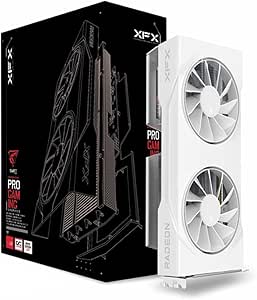 | Best for High-Memory Gaming Builds | GPU: AMD Radeon RX 9060 XT | Memory: 16GB GDDR6 | Game clock: Up to 2780 MHz | VIEW LATEST PRICE | See Our Full Breakdown |
| ASRock Radeon RX 7700 XT Challenger 12GB OC Graphics Card |  | Best for 12GB Gaming Builds | GPU: AMD Radeon RX 7700 XT | Architecture: AMD RDNA 3 | Memory: 12GB GDDR6 | VIEW LATEST PRICE | See Our Full Breakdown |
| Radeon graphics card | Memory | Video outputs | Cooling | Boost clock |
|---|---|---|---|---|
| Sapphire AMD Radeon RX 7900 XT | 20GB GDDR6 | 1 × HDMI, 2 × DisplayPort, 1 × USB-C | 3 fans | — |
| ASRock Radeon RX 7600 Challeng | 8GB GDDR6 | 3 × DisplayPort 1.4a, 1 × HDMI 2.1 | Dual fans with 0dB low-load operation | Up to 2695 MHz |
| ASRock Radeon RX 9060 XT Chall | 16GB GDDR6 | 2 × DisplayPort 2.1a, 1 × HDMI 2.1b | Triple fan with 0dB operation at low loads | Up to 3290 MHz |
| ASRock Radeon RX 9070 Challeng | 16GB GDDR6, 256-bit bus | — | Triple fan with 0dB silent mode | Up to 2,520 MHz |
| ASUS Prime Radeon RX 9070 OC E | 16GB GDDR6 | 1 × HDMI 2.1b, 3 × DisplayPort 2.1a | Axial Tech fans and phase change GPU thermal pad | Up to 2610 MHz |
| ASRock Radeon RX 9070 XT Steel | 16GB GDDR6, 256-bit | 3x DisplayPort 2.1a, 1x HDMI 2.1b | Triple fan with Ultra-fit Heatpipes and Air Deflecting Fin design | Up to 2970 MHz |
| AMD Radeon RX 6950 XT 16GB GDD | 16GB GDDR6, 256-bit | — | — | Up to 2310 MHz |
| ASUS Dual Radeon RX 9060 XT 16 | 16GB GDDR6 | 2x DisplayPort 2.1a, 1x HDMI 2.1b | 2 Axial-tech fans with 0dB technology and dual ball bearings | Up to 3250 MHz (OC mode); up to 3230 MHz (Default mode) |
| ASRock Radeon RX 7600 Challeng | 8GB GDDR6, 128-bit | 3x DisplayPort 1.4a with DSC, 1x HDMI 2.1 | Triple fan with 0dB silent mode | Up to 2695 MHz |
| ASUS Prime Radeon RX 9070 XT 1 | 16GB GDDR6 | 3x DisplayPort 2.1a, 1x HDMI 2.1b | 3 Axial-tech fans with phase-change GPU thermal pad | Up to 3030 MHz (OC mode); up to 3010 MHz (Default mode) |
| XFX Speedster SWFT210 AMD Rade | 8GB GDDR6 | DisplayPort, HDMI | Dual-fan | Up to 2655 MHz |
| MAXSUN AMD Radeon RX 550 4GB G | 4GB GDDR5 | — | Single 9 cm fan | — |
| MOUGOL AMD Radeon RX 580 8GB G | — | HDMI, DisplayPort, DVI | — | — |
| XFX Swift AMD Radeon RX 9060 X | 16GB GDDR6 | HDMI, 2 × DisplayPort | Three fans | Up to 3320 MHz |
| ASRock Radeon RX 7700 XT Chall | 12GB GDDR6 | 3 × DisplayPort, 1 × HDMI 2.1 | — | Up to 2584 MHz |
More Details on Our Top Picks
Sapphire AMD Radeon RX 7900 XT Graphics Card, 20GB GDDR6
I’d shortlist the Sapphire Radeon RX 7900 XT for a gaming PC where memory capacity and broad display support matter more than a compact build. Its 20GB of GDDR6 gives it more memory headroom than the 16GB ASRock RX 9070 Challenger and the 8GB RX 7600 Challenger, which can better suit high-resolution games and demanding creative workloads. HDMI, DisplayPort, and USB-C outputs also give it a useful mix for multi-display setups.
The tradeoff is its three-slot, 14.5-inch frame: buyers need to check both case clearance and airflow. The RX 9070 cards use newer RDNA 4 architecture, while this model is based on RDNA 3, so memory capacity alone should not determine a choice between them. I’d pick the RX 7900 XT for its generous VRAM and output selection, but favor a smaller card if space is tight.
Pros:- 20GB of GDDR6 provides more memory capacity than the listed 16GB and 8GB cards.
- HDMI, two DisplayPort outputs, and USB-C support varied display setups.
- Three fans provide active cooling across a large card.
- Supports a maximum display resolution of 7680 × 4320.
Cons:- The 14.5-inch length and three-slot width demand substantial case clearance.
- Uses RDNA 3, while the RX 9060 XT and RX 9070 options in this roundup use newer RDNA 4 architecture.
- Requires a compatible desktop PCIe x16 slot.
Best for: PC builders who want 20GB of graphics memory for high-resolution gaming or graphics-heavy work and have a roomy ATX case.
Not ideal for: Small-form-factor builders or anyone whose case cannot fit a 14.5-inch, three-slot card.
- GPU:AMD Radeon RX 7900 XT
- Memory:20GB GDDR6
- Memory interface:320-bit
- Interface:PCI Express 4.0, PCIe x16
- Form factor:3-slot, ATX
- Video outputs:1 × HDMI, 2 × DisplayPort, 1 × USB-C
- Dimensions:14.5 × 7.75 in
- Cooling:3 fans
- Warranty:2 years
Our verdict“Choose this Sapphire if you want 20GB of memory and versatile video outputs in a spacious desktop, not a compact case.”
ASRock Radeon RX 7600 Challenger 8GB OC Graphics Card
The ASRock Radeon RX 7600 Challenger is the straightforward pick for a mainstream gaming PC that needs a current Radeon card without the power demands of the RX 9070 models. Its 8GB of GDDR6 and factory boost up to 2695 MHz make it a more modest option than the 16GB RX 9060 XT Challenger Pro, so I’d steer it toward buyers focused on standard-resolution gaming rather than large textures or heavier creative projects. The compact two-slot width is also easier to accommodate than the Sapphire RX 7900 XT’s three-slot build.
ASRock’s 0dB low-load mode can stop the fans when the card is not under substantial load, and three DisplayPort outputs plus HDMI support a multi-monitor desk. Its PCIe 4.0 x8 interface and 128-bit memory bus reflect its more entry-level position in this lineup. Check the 269.2 mm length and provide the required 8-pin connector; the recommended PSU is 550W.
Pros:- Factory-overclocked boost clock reaches up to 2695 MHz.
- 0dB cooling mode can stop the fans under low load.
- Two-slot design is less bulky than the RX 7900 XT.
- Three DisplayPort outputs and HDMI support up to four displays.
Cons:- 8GB of memory is less capacious than the 16GB RX 9060 XT and RX 9070 options.
- Requires one 8-pin power connector and a recommended 550W PSU.
- Its 269.2 mm length still needs to fit the case.
Best for: Mainstream PC builders seeking a two-slot Radeon card for everyday gaming and multi-monitor use, with a 550W-recommended power supply.
Not ideal for: Gamers targeting demanding high-resolution workloads or buyers who want more memory headroom than 8GB.
- GPU:AMD Radeon RX 7600
- Architecture:RDNA 3
- Memory:8GB GDDR6
- Boost clock:Up to 2695 MHz
- Interface:PCIe 4.0 x8
- Power:1 × 8-pin; 550W recommended PSU
- Cooling:Dual fans with 0dB low-load operation
- Video outputs:3 × DisplayPort 1.4a, 1 × HDMI 2.1
- Dimensions:269.2 × 131.8 × 40.3 mm
Our verdict“Pick the RX 7600 Challenger for a more modest, two-slot Radeon build, but choose a 16GB model for greater memory headroom.”
ASRock Radeon RX 9060 XT Challenger Pro 16GB OC Graphics Card
I’d place the ASRock Radeon RX 9060 XT Challenger Pro between the 8GB RX 7600 Challenger and the higher-tier RX 9070 cards for buyers who want more memory without moving to the RX 7900 XT’s larger 20GB configuration. Its 16GB of GDDR6 is a practical fit for modern games and content-creation tasks that use substantial graphics memory. RDNA 4 and PCIe 5.0 x16 also distinguish it from the RX 7600’s RDNA 3, PCIe 4.0 x8 setup.
The triple-fan cooler includes 0dB operation at low loads, while DisplayPort 2.1a and HDMI 2.1b provide newer display connections than the RX 7600 Challenger’s listed outputs. This is still a 2.5-slot card measuring 290 mm long, so it is not a compact alternative. Its 550W recommended PSU and single 8-pin connector are less demanding on paper than the RX 9070 Challenger’s 700W recommendation and two connectors.
Pros:- 16GB of GDDR6 offers twice the listed memory capacity of the RX 7600 Challenger.
- RDNA 4 architecture and PCIe 5.0 x16 distinguish it from the RX 7600’s older platform features.
- Triple-fan cooling includes 0dB operation at low loads.
- DisplayPort 2.1a and HDMI 2.1b support up to three displays.
Cons:- Its 290 mm length and 2.5-slot width require case-clearance checks.
- A 550W recommended PSU and single 8-pin connector are still required.
- It has a 128-bit memory bus, narrower than the RX 9070 Challenger’s 256-bit bus.
Best for: 1440p-focused gamers and creators who want a 16GB RDNA 4 card, modern display outputs, and a single 8-pin power connection.
Not ideal for: Small-case builders or buyers who prefer a shorter, narrower card than this 290 mm, 2.5-slot design.
- GPU:AMD Radeon RX 9060 XT
- Architecture:RDNA 4
- Memory:16GB GDDR6
- Memory bus:128-bit
- Boost clock:Up to 3290 MHz
- Interface:PCIe 5.0 x16
- Cooling:Triple fan with 0dB operation at low loads
- Power:Single 8-pin; 550W recommended PSU
- Video outputs:2 × DisplayPort 2.1a, 1 × HDMI 2.1b
Our verdict“Choose the RX 9060 XT Challenger Pro for 16GB capacity and newer display connections without the RX 9070 Challenger’s listed power requirements.”
ASRock Radeon RX 9070 Challenger 16GB OC Graphics Card
The ASRock Radeon RX 9070 Challenger is the stronger fit for buyers who want a higher-tier RDNA 4 option with 16GB of memory and a wider bus than the RX 9060 XT Challenger Pro. Its 256-bit memory interface, 56 compute units, and factory overclock set it apart on specifications from the RX 9060 XT’s 128-bit bus. That makes this the more ambitious choice for demanding gaming workloads, while the RX 9060 XT is the more restrained option for buyers whose priorities are 16GB capacity and a single power connector.
ASRock pairs three fans with a 0dB silent mode, but the 2.5-slot, 290 mm card needs room in the case. Power planning is a bigger commitment here: it calls for two 8-pin connectors and a recommended 700W PSU, compared with the 550W recommendation for the RX 9060 XT. I’d choose it when the rest of the system can support that requirement, not simply for its clock figures.
Pros:- 16GB of GDDR6 paired with a 256-bit memory bus.
- RDNA 4 GPU includes 56 compute units and 3,584 stream processors.
- Triple-fan cooling includes a 0dB silent mode.
- Factory overclocked boost clock reaches up to 2,520 MHz.
Cons:- Requires two 8-pin power connectors and a recommended 700W PSU.
- The 290 mm length and 2.5-slot width call for a case-fit check.
- Compared with the RX 9060 XT Challenger Pro, its listed power requirement is higher.
Best for: Gamers building a higher-tier RDNA 4 system who have a 700W-recommended PSU, two available 8-pin connectors, and room for a 2.5-slot card.
Not ideal for: Builders with lower-capacity power supplies, only one available 8-pin connector, or limited case clearance.
- GPU:AMD Radeon RX 9070
- Architecture:AMD RDNA 4
- Compute units:56
- Memory:16GB GDDR6, 256-bit bus
- Boost clock:Up to 2,520 MHz
- Interface:PCIe 5.0, PCI-Express x16
- Power:2 × 8-pin; 700W recommended PSU
- Cooling:Triple fan with 0dB silent mode
- Dimensions:290 × 123 × 51 mm
Our verdict“Pick the RX 9070 Challenger for a higher-tier RDNA 4 build with adequate power and case space; choose the RX 9060 XT for a less demanding setup.”
ASUS Prime Radeon RX 9070 OC Edition 16GB GDDR6 Graphics Card
The ASUS Prime Radeon RX 9070 OC Edition shares the RX 9070 GPU and 16GB memory capacity of the ASRock RX 9070 Challenger, but its listed outputs make it a particularly clear choice for a DisplayPort-heavy desk: it has three DisplayPort 2.1a ports plus HDMI 2.1b. Its boost clock reaches 2610 MHz, compared with up to 2520 MHz on the ASRock Challenger, though clock figures alone do not establish which card will perform better in a given system.
ASUS lists Axial Tech fans, a phase change thermal pad, and dual ball bearings as part of its cooling design. The source data has a conflict over card thickness: it lists a 2.5-slot design in one place and a 5-slot design in another. That ambiguity makes fit harder to confirm than for the ASRock RX 9070, whose 2.5-slot width is specified consistently. I’d verify the physical dimensions with the seller before choosing this model.
Pros:- Three DisplayPort 2.1a outputs suit DisplayPort-heavy multi-monitor setups.
- 16GB of GDDR6 matches the memory capacity of the ASRock RX 9070 Challenger.
- Axial Tech fans and a phase change thermal pad are specified for cooling.
- Dual ball bearings are specified for the fan design.
Cons:- The source gives conflicting slot-width details: 2.5 slots and 5 slots.
- The provided data does not specify a recommended PSU or power connector requirements.
- The 1,000 g weight and uncertain thickness make fit planning less straightforward than for the ASRock RX 9070.
Best for: Multi-monitor builders who need several DisplayPort connections and are willing to confirm the card’s physical fit before buying.
Not ideal for: Builders who need unambiguous slot-clearance information or are choosing between the ASUS and ASRock RX 9070 on fit alone.
- GPU:AMD Radeon RX 9070
- Memory:16GB GDDR6
- Boost clock:Up to 2610 MHz
- Game clock:Up to 2140 MHz
- Interface:PCIe 5.0
- Video outputs:1 × HDMI 2.1b, 3 × DisplayPort 2.1a
- Cooling:Axial Tech fans and phase change GPU thermal pad
- Design:Conflicting listed thickness: 2.5-slot and 5-slot
- Weight:1000 g
Our verdict“Choose this ASUS for its three DisplayPort outputs if the card’s actual slot width is confirmed; otherwise, the ASRock RX 9070 has clearer fit specifications.”
ASRock Radeon RX 9070 XT Steel Legend Dark 16GB Graphics Card
The RX 9070 XT pairs RDNA 4 with 16GB of GDDR6, making it a strong fit for demanding gaming and content creation without stepping up to a card with more memory, such as the Sapphire RX 7900 XT’s 20GB. Its triple-fan cooler, heatpipes, and airflow-focused fins are aimed at keeping temperatures in check, while the metal frame and backplate add structural support. Compared with the ASUS Prime RX 9070 XT, this Steel Legend Dark is thicker at 2.9 slots, so its cooling design comes at a cost in case clearance. It also needs two 8-pin power connectors. DisplayPort 2.1a and HDMI 2.1b provide flexible display connections, but check your case dimensions before choosing this larger card.
Pros:- 16GB GDDR6 memory on a 256-bit bus
- Triple-fan cooling with heatpipes and airflow-focused fins
- Metal frame and backplate add structural support
- DisplayPort 2.1a and HDMI 2.1b support modern display setups
Cons:- 2.9-slot thickness can restrict case compatibility
- Requires two 8-pin power connectors
- Not compatible with every built-in or prebuilt system
Best for: Gamers and creators building a roomy desktop who want an RX 9070 XT with a substantial triple-fan cooling system and current display outputs.
Not ideal for: Small-form-factor builders or owners of prebuilt systems with limited clearance, since the 2.9-slot card is nearly 12 inches long and requires two 8-pin connectors.
- GPU:AMD Radeon RX 9070 XT
- Architecture:AMD RDNA 4
- Memory:16GB GDDR6, 256-bit
- Boost clock:Up to 2970 MHz
- Video outputs:3x DisplayPort 2.1a, 1x HDMI 2.1b
- Cooling:Triple fan with Ultra-fit Heatpipes and Air Deflecting Fin design
- Power connectors:2x 8-pin
- Dimensions and slot design:11.73 x 5.16 x 2.28 inches; 2.9-slot
Our verdict“Choose the Steel Legend Dark if your case has room for its thick cooler and you want an RX 9070 XT built around substantial airflow.”
AMD Radeon RX 6950 XT 16GB GDDR6 Graphics Card
The RX 6950 XT is the legacy high-end choice here: it combines 16GB of GDDR6 with support for displays up to 4K and AMD features such as FreeSync and FidelityFX Super Resolution. That makes it a candidate for buyers upgrading a desktop that already has the power supply and space for a substantial card. Compared with the newer RX 9070 XT models in this roundup, its listed specs show an older generation and fewer details about display connectivity; the product data lists HDMI as its video output. The single-fan configuration is another compromise, and the recommended 850W PSU narrows the pool of suitable systems. I’d favor it over a newer card only when the existing build and the specific card configuration make sense together.
Pros:- 16GB GDDR6 memory with a 256-bit bus
- Supports resolutions up to 3840 × 2160
- Supports FreeSync, FidelityFX Super Resolution, and Radeon Anti-Lag
- PCI Express x16 interface
Cons:- Recommended 850W power supply limits compatibility with lower-wattage systems
- Single-fan configuration offers less cooling redundancy than the triple-fan RX 9070 XT options
- Product data lists HDMI but does not specify a broader set of video outputs
Best for: Desktop owners with an existing 850W power supply who want a 16GB Radeon card for 4K-capable gaming and AMD display features.
Not ideal for: Builders seeking a current-generation Radeon, multiple listed display outputs, or a quieter multi-fan cooling arrangement.
- GPU:AMD Radeon RX 6950 XT
- Memory:16GB GDDR6, 256-bit
- Memory speed:Up to 18 Gbps
- Boost clock:Up to 2310 MHz
- Maximum resolution:3840 × 2160
- Video output:HDMI
- Recommended PSU:850W
- Number of fans:1
Our verdict“Consider the RX 6950 XT for a compatible high-wattage desktop, but compare its older platform and single-fan design against the newer RX 9070 XT cards.”
ASUS Dual Radeon RX 9060 XT 16GB GDDR6 Graphics Card
For a build that needs 16GB of memory but cannot accommodate a larger triple-fan card, this ASUS Dual RX 9060 XT offers a practical middle ground. Its 2.5-slot, dual-fan design is more compact than the ASRock RX 9070 XT Steel Legend Dark, though it still needs room for a full-size graphics card. The 0dB feature can stop the fans during light workloads, and a Dual BIOS switch lets buyers choose Quiet or Performance profiles. Those features give it more flexibility for noise-conscious builds than the RX 7600 Challenger Pro, which has 8GB of memory. The tradeoff is that this is an RX 9060 XT rather than an RX 9070 XT, so buyers prioritizing the higher-tier GPU should compare it with the ASUS Prime RX 9070 XT instead.
Pros:- 16GB GDDR6 memory
- 2.5-slot design is slimmer than the Steel Legend Dark
- 0dB operation can reduce fan noise during light workloads
- Dual BIOS provides Quiet and Performance profiles
Cons:- Still requires 2.5 slots and sufficient airflow around two fans
- RX 9060 XT tier is a step below the RX 9070 XT options in this roundup
Best for: PC builders who want 16GB of VRAM and quieter light-use operation in a less bulky card than the 2.9-slot RX 9070 XT Steel Legend Dark.
Not ideal for: Buyers prioritizing an RX 9070 XT-class GPU, or compact-case owners who cannot spare 2.5 slots and adequate fan clearance.
- GPU:AMD Radeon RX 9060 XT
- Memory:16GB GDDR6
- Boost clock:Up to 3250 MHz (OC mode); up to 3230 MHz (Default mode)
- Video outputs:2x DisplayPort 2.1a, 1x HDMI 2.1b
- Cooling:2 Axial-tech fans with 0dB technology and dual ball bearings
- Interface:PCIe 5.0 x16
- Form factor:2.5-slot
- Dimensions and weight:8 x 4.7 inches; 1.3 pounds
Our verdict“Pick this ASUS Dual when 16GB memory and a quieter, slimmer design matter more than stepping up to an RX 9070 XT.”
ASRock Radeon RX 7600 Challenger Pro OC 8GB Graphics Card
The RX 7600 Challenger Pro OC is the straightforward choice for a lower-tier Radeon build that needs several monitors, rather than the 16GB capacity offered by the ASUS Dual RX 9060 XT. Its 8GB of GDDR6 and 128-bit memory interface make it a more limited fit for buyers targeting demanding games or extensive graphics workloads, but the card supports up to four displays through three DisplayPort connections and HDMI. The triple-fan cooler with 0dB mode can keep fans quiet at low temperatures, and its single 8-pin connector is simpler than the dual connectors on the RX 9070 XT Steel Legend Dark. Still, its 303 mm length and 2.5-slot width call for a careful case check; a single power connector does not make it a small card.
Pros:- Triple-fan cooling with 0dB silent mode
- Supports up to four displays
- Single 8-pin power connector
- Metal backplate
Cons:- 8GB of memory is less capacity than the 16GB ASUS Dual RX 9060 XT
- 303 mm length and 2.5-slot width can rule out smaller cases
- PCI Express 4.0 x8 interface is narrower than the x16 interfaces listed for the RX 9070 XT cards
Best for: Budget-conscious desktop builders who want a Radeon card for mainstream gaming and a multi-monitor setup of up to four displays.
Not ideal for: Players seeking 16GB of VRAM, a higher-tier GPU, or a short card for a compact case.
- GPU and architecture:AMD Radeon RX 7600; AMD RDNA 3
- Memory:8GB GDDR6, 128-bit
- Boost clock:Up to 2695 MHz
- Game clock:2280 MHz
- Interface:PCI Express 4.0 x8
- Video outputs:3x DisplayPort 1.4a with DSC, 1x HDMI 2.1
- Cooling:Triple fan with 0dB silent mode
- Power and dimensions:Single 8-pin; 303 x 131 x 45 mm; 2.5 slots
Our verdict“Choose the RX 7600 Challenger Pro OC for an entry-level multi-monitor system if its 8GB memory and long, 2.5-slot body fit your needs.”
ASUS Prime Radeon RX 9070 XT 16GB GDDR6 OC Edition Graphics Card
The ASUS Prime RX 9070 XT earns the lead here by pairing the roundup’s high-tier RX 9070 XT GPU with a more manageable 2.5-slot design than the 2.9-slot ASRock Steel Legend Dark. It keeps the same 16GB GDDR6 capacity and adds three Axial-tech fans, a phase-change thermal pad, and dual BIOS profiles, giving buyers options for balancing cooling and noise. Its listed boost clock reaches 3030 MHz in OC mode, while the Steel Legend Dark lists up to 2970 MHz; clock figures alone do not settle performance, but they distinguish the supplied configurations. The catch is length: at 12.3 inches, this is still a substantial card. Check case clearance before buying, and compare it with the ASUS Dual RX 9060 XT if a smaller, lower-tier GPU is a better fit.
Pros:- RX 9070 XT GPU with 16GB GDDR6
- 2.5-slot design is slimmer than the Steel Legend Dark
- Three Axial-tech fans and phase-change GPU thermal pad
- Dual BIOS profiles and 0dB technology support cooling and noise control
Cons:- 12.3-inch length can limit case compatibility
- Still occupies 2.5 slots, so it is not suited to every compact build
Best for: Gamers who want an RX 9070 XT with 16GB of memory, three-fan cooling, dual BIOS profiles, and a thinner body than the Steel Legend Dark.
Not ideal for: Small-case builders without 12.3 inches of GPU clearance or buyers who prefer a shorter, lower-tier option such as the ASUS Dual RX 9060 XT.
- GPU:AMD Radeon RX 9070 XT
- Memory:16GB GDDR6
- Boost clock:Up to 3030 MHz (OC mode); up to 3010 MHz (Default mode)
- Game clock:Up to 2480 MHz (OC mode); up to 2460 MHz (Default mode)
- Video outputs:3x DisplayPort 2.1a, 1x HDMI 2.1b
- Cooling:3 Axial-tech fans with phase-change GPU thermal pad
- Interface and form factor:PCIe 5.0 x16; 2.5-slot
- Dimensions and warranty:12.3 x 5.1 inches; 3 years
Our verdict“Choose the ASUS Prime RX 9070 XT if you want a high-tier Radeon with 16GB memory and a slimmer three-fan design, provided your case fits its length.”
XFX Speedster SWFT210 AMD Radeon RX 7600 Graphics Card, 8GB GDDR6
The XFX Speedster SWFT210 RX 7600 is the practical step-up for a desktop gamer who wants a current Radeon card for 1080p without moving to the larger, more memory-rich options in this group. Its 8GB of GDDR6 and boost clock up to 2655 MHz give it a more modern gaming focus than the MAXSUN RX 550 or MOUGOL RX 580, while the dual-fan cooler is a sensible fit for sustained play. The HDMI and DisplayPort outputs cover common monitor setups. The main compromise is memory capacity: the RX 9060 XT’s 16GB offers more headroom for demanding games and higher-resolution textures. This RX 7600 also needs a desktop with a PCIe x16 slot, and its 8GB buffer makes it a less appealing choice for buyers prioritizing long-term 4K use.
Pros:- 8GB of GDDR6 suits a mainstream gaming build.
- Dual-fan cooling is designed for gaming workloads.
- Boost clock reaches up to 2655 MHz.
- HDMI and DisplayPort support common monitor connections.
Cons:- 8GB of memory offers less headroom than the RX 9060 XT’s 16GB.
- Requires a desktop with a PCI Express x16 interface.
Best for: Desktop gamers seeking a straightforward Radeon upgrade for 1080p play, with dual-fan cooling and modern display connections.
Not ideal for: Buyers targeting demanding 4K gaming or extra memory headroom; the RX 9060 XT’s 16GB is a better fit for that goal.
- Chipset:AMD Radeon RX 7600
- Architecture:AMD RDNA 3
- Memory:8GB GDDR6
- Boost clock:Up to 2655 MHz
- Memory clock speed:18 GHz
- Cooling:Dual-fan
- Video outputs:DisplayPort, HDMI
- Interface:PCI Express x16
Our verdict“Choose the XFX RX 7600 for a current, mainstream Radeon gaming build, but favor a 16GB model if higher-resolution play is the priority.”
MAXSUN AMD Radeon RX 550 4GB GDDR5 ITX Computer PC Gaming Video Graphics Card GPU
The MAXSUN RX 550 ITX is the entry-level, space-conscious choice here, not a peer to the faster gaming cards in this roundup. Its 4GB of GDDR5, single 9 cm fan, and short 7.28-inch length suit a compact desktop aimed at display output, video playback, light editing, or older and less demanding games. It also offers DVI-D, HDMI, and DisplayPort connections, a useful spread for a multi-monitor workstation. By comparison, the XFX RX 7600 has a far stronger gaming brief and twice the memory, while the MOUGOL RX 580 offers 8GB for more demanding legacy games. The RX 550’s low-tier performance is the central tradeoff: buyers seeking modern gaming performance should skip it, and the listed output details vary between the product description and specs.
Pros:- Compact 7.28-inch card length can suit smaller desktop cases.
- 4GB of GDDR5 supports basic graphics workloads.
- Single 9 cm fan keeps the cooling design simple.
- Product details list DVI-D, HDMI, and DisplayPort connectivity.
Cons:- Entry-level RX 550 performance is a poor match for demanding modern games.
- 4GB of GDDR5 provides less memory capacity than the MOUGOL RX 580 or XFX RX 7600.
- Listed video-output details conflict: the description names DVI-D, HDMI, and DisplayPort, while the specs list HDMI and VGA.
Best for: Small-desktop owners building a light-duty workstation for video playback, basic editing, display output, or less demanding games.
Not ideal for: Gamers who want current, demanding 1080p performance; the RX 550 is an entry-level card with 4GB of older GDDR5 memory.
- Chipset:AMD Radeon RX 550
- Memory:4GB GDDR5
- GPU boost clock:Up to 1183 MHz
- Memory speed:6000 MHz
- Stream processors:512
- Cooling:Single 9 cm fan
- Interface:PCI Express x16 3.0
- Listed maximum display resolution:7680 × 4320
Our verdict“Pick the MAXSUN RX 550 for a compact, light-duty desktop, not for a gaming system expected to handle demanding titles.”
MOUGOL AMD Radeon RX 580 8GB GDDR5 Graphics Card
The MOUGOL RX 580 2048SP makes the most sense as an upgrade for an older desktop that needs more graphics capability without aiming for the performance tier of the newer RX 7600 or RX 7700 XT. Its 8GB GDDR5 memory, 256-bit bus, and HDMI, DisplayPort, and DVI connections provide useful flexibility for older monitors and multi-display setups. Dual fans and heat pipes are a more substantial cooling arrangement than the MAXSUN RX 550’s single fan. However, the RX 580’s PCIe 3.0 interface and entry-to-midrange positioning mark it as an older-generation option, not the best foundation for a new high-performance gaming PC. Its one-year warranty is also shorter than the XFX RX 7600’s stated three years.
Pros:- 8GB GDDR5 and a 256-bit memory bus.
- HDMI, DisplayPort, and DVI support varied displays, including older monitors.
- Dual fans, heat pipes, and fan control support cooling under load.
- Supports DirectX 12, Vulkan, and OpenGL 4.6.
Cons:- PCIe 3.0 and older RX 580 architecture make it less suited to a new high-performance build.
- Entry-to-midrange gaming positioning falls below the newer XFX RX 7600.
- One-year warranty is shorter than the XFX RX 7600’s stated three-year warranty.
Best for: Owners of older desktop PCs seeking an 8GB Radeon replacement with legacy display connections for light-to-moderate gaming and everyday creative work.
Not ideal for: Builders planning a new high-performance gaming PC or seeking newer architecture and more headroom than this RX 580 2048SP offers.
- Graphics processor:AMD Radeon RX 580 2048SP
- Video memory:8GB GDDR5
- Memory bus:256-bit
- Core clock:1206 MHz
- Memory clock:8 GHz
- Interface:PCIe 3.0 x16
- Video outputs:HDMI, DisplayPort, DVI
- Dimensions:240 × 135 × 45 mm
Our verdict“Choose the MOUGOL RX 580 for an older desktop needing broad display compatibility and 8GB of graphics memory, rather than for a new high-end build.”
XFX Swift AMD Radeon RX 9060 XT OC White Gaming Graphics Card, 16GB GDDR6
The XFX Swift RX 9060 XT OC is the memory-forward pick in this batch, pairing 16GB of GDDR6 with a three-fan cooler and boost clock up to 3320 MHz. That larger memory pool gives it a clear advantage over the XFX RX 7600’s 8GB when games or creative workloads call for more texture and asset capacity. It also brings a white finish for buyers coordinating a light-colored build, plus HDMI and two DisplayPort outputs. The ASRock RX 7700 XT Challenger is a competing higher-tier Radeon option with 12GB and a metal backplate; this XFX offers more listed memory, while the supplied data does not establish a direct performance ranking between them. Check the card’s 10.63-inch length against the case before buying.
Pros:- 16GB GDDR6 provides more memory capacity than the XFX RX 7600’s 8GB.
- Three-fan cooling design.
- White finish suits coordinated light-colored PC builds.
- HDMI and two DisplayPort outputs support multiple monitor connections.
Cons:- 10.63-inch length requires a case-clearance check.
- Requires a desktop with a PCI Express x16 interface.
- The provided product details do not state a warranty or power requirement.
Best for: Builders seeking a 16GB Radeon card for gaming and graphics workloads, especially those assembling a white-themed desktop with room for a full-size card.
Not ideal for: Compact-case builders or anyone whose main need is simply a basic 1080p upgrade; its three-fan, 10.63-inch design may be more card than the system can accommodate.
- GPU:AMD Radeon RX 9060 XT
- Memory:16GB GDDR6
- Game clock:Up to 2780 MHz
- Boost clock:Up to 3320 MHz
- Memory clock speed:20 GHz
- Cooling:Three fans
- Video outputs:HDMI, 2 × DisplayPort
- Dimensions:10.63 × 4.88 in (L × W)
Our verdict“Choose the XFX RX 9060 XT OC White when 16GB of memory and its white triple-fan design fit your build, after checking case clearance.”
ASRock Radeon RX 7700 XT Challenger 12GB OC Graphics Card
The ASRock RX 7700 XT Challenger is the more feature-detailed choice for buyers who want a newer RDNA 3 card with 12GB GDDR6, rather than the XFX RX 7600’s 8GB. Its 54 compute units, 48MB Infinity Cache, and 192-bit memory bus describe a more capable class of card, while the three DisplayPort outputs and HDMI 2.1 suit a multi-monitor or newer-TV setup. The metal backplate adds rigidity, and the 0dB cooling mode lets the fans stop during light workloads. Compared with the XFX RX 9060 XT OC White, it has 4GB less memory; the supplied specifications do not establish which performs better overall. Plan around its two 8-pin power connectors and 266 mm length, especially in a prebuilt system.
Pros:- 12GB GDDR6 with a 192-bit bus and 48MB Infinity Cache.
- 0dB mode stops the dual fans at low temperatures.
- Three DisplayPort outputs and one HDMI 2.1 port.
- Metal backplate adds rigidity to the card.
Cons:- Requires two 8-pin power connectors, which may not be available in prebuilt systems.
- 12GB is less memory than the XFX RX 9060 XT OC White’s 16GB.
- Its 266 × 130 × 51 mm dimensions and power needs call for case and system checks.
Best for: Desktop gamers building around a 12GB RDNA 3 card who want HDMI 2.1, several DisplayPort connections, and fan-stop cooling at low temperatures.
Not ideal for: Owners of compact or prebuilt PCs with limited power-supply capacity, two-8-pin connector availability, or restricted card clearance.
- GPU:AMD Radeon RX 7700 XT
- Architecture:AMD RDNA 3
- Memory:12GB GDDR6
- Compute units:54
- Game clock:2226 MHz
- Boost clock:Up to 2584 MHz
- Video outputs:3 × DisplayPort, 1 × HDMI 2.1
- Power connectors:2 × 8-pin
- Dimensions:266 × 130 × 51 mm
Our verdict“Pick the ASRock RX 7700 XT Challenger for a well-equipped 12GB desktop gaming build, provided your case and power supply can support it.”
How We Picked
I ranked these cards by their fit for current PC buyers, weighing GPU performance tier, memory capacity, and generation against the needs implied by each model. I gave the strongest overall position to a newer card with 16GB of memory and a broad gaming role, then placed higher-tier and alternate-board options nearby for buyers who prioritize more headroom or a particular design. The 16GB RX 9060 XT cards rank as appealing middle-tier choices; the RX 7700 XT and RX 7600 cards address narrower performance and system needs.
I also considered board dimensions, cooling design, and practical compatibility, since a card that does not fit a case or suit its power supply is the wrong choice regardless of its GPU tier. Older enthusiast models and low-end legacy cards rank according to their specific use cases rather than being treated as direct equivalents to current options. Product names alone do not establish exact performance, thermals, or power draw, so buyers should confirm those details for the exact card and their PC before purchase.
Factors to Consider When Choosing Best Radeon Graphics Cards
Choosing among Radeon cards is easier when I start with the build and games, then narrow down the GPU tier. These factors help avoid paying for performance your system cannot use or choosing a card that creates a fit or memory limitation.
Match the GPU tier to your display
Start with your monitor resolution and refresh target rather than picking the highest-numbered card you can fit into your budget. Higher resolutions and demanding games generally call for more GPU headroom, while a modest 1080p setup may not benefit from a premium card as much as a display upgrade would. The RX 9070 and RX 9070 XT options sit above entry-level RX 7600 cards in this lineup, but the right tier depends on the games and settings you use. A common mistake is to buy for one unusually demanding game while ignoring the rest of your library. Check benchmarks for the specific games and resolution you care about before choosing between adjacent tiers.
Treat VRAM as headroom, not a performance guarantee
Memory capacity can affect how comfortably a card handles high-resolution textures and newer workloads, but it does not tell the whole performance story. This roundup contrasts several 16GB models, including RX 9060 XT and RX 9070 cards, with 8GB RX 7600 choices and older cards with different memory capacities. More VRAM can be useful for keeping a system longer, yet a higher-capacity card is not automatically faster if its GPU tier is lower. Avoid choosing on memory alone; compare the card’s overall tier and check the demands of your preferred games. If your use includes creative software, confirm its memory requirements separately.
Check case clearance and the full system fit
Graphics cards with the same GPU can differ in length, thickness, cooling, and power connections, so the product name is not enough to confirm compatibility. Measure available case space and check whether nearby expansion slots or front-mounted components restrict the card. Then compare the exact model’s power requirements and connector layout with your power supply. A compact card such as the RX 550 ITX model addresses a different fit problem than larger gaming cards, but its small size does not make it a replacement for a higher-performance GPU. Leave room for airflow rather than selecting a card that only just fits on paper.
Compare board designs within the same GPU family
ASRock, ASUS, XFX, and other board partners may sell cards based on the same Radeon GPU, but their designs can vary in cooler size, dimensions, and factory settings. Those differences matter most if your case has tight clearance, your system needs quieter cooling, or you want a specific build aesthetic. Do not assume that an OC label alone means a large real-world gain over another card using the same GPU. Compare the exact board specifications and independent thermal and noise testing when available. If two models suit your build equally well, choose based on the feature that matters to you rather than the branding.
Weigh older high-end cards against newer options
The RX 7900 XT and RX 6950 XT represent older high-end choices in a roundup that also includes newer RX 9000-series cards. A previous-generation GPU can still suit a buyer whose games and system align with its capabilities, but model age changes the comparison: generation, power demands, warranty status, and remaining availability all deserve attention. Do not infer that an older flagship is automatically a better buy than a newer midrange model. Check current performance comparisons and the exact card’s condition and support before deciding. This is especially relevant when considering cards sold by third parties or from an older stock run.
Set expectations for entry-level and legacy cards
The RX 7600, RX 580, and RX 550 do not serve the same kind of buyer, even though each may appear in a search for Radeon graphics cards. An RX 7600 can suit a more modest gaming build, while older RX 580 or RX 550 cards may make sense for a legacy PC, basic display output, or a constrained system. Avoid buying an older low-end model expecting it to deliver the same experience as the newer 16GB options. Confirm operating-system support, connector needs, and the performance of the games you intend to run. For a new gaming PC, compare the total system plan rather than choosing a card solely because it fits a narrow budget.
Frequently Asked Questions
Which Radeon card in this roundup is the safest all-around choice?
I rank the ASRock Radeon RX 9070 Challenger 16GB as the best overall because it pairs a current-generation tier with 16GB of memory and avoids being limited to a niche role. Buyers who want more performance headroom can compare it with the RX 9070 XT models, while those seeking a lower tier can look at the RX 9060 XT options. The best fit still depends on your monitor, case, and power supply. Check the exact card specifications and game benchmarks before committing.
Should I choose an RX 9060 XT with 16GB or an RX 7600 with 8GB?
I would choose between them based on the performance tier and expected workload, not memory capacity alone. The RX 9060 XT 16GB models are positioned as newer middle-tier options with more memory headroom, while the RX 7600 cards serve a more entry-level role. An 8GB card may be adequate for a modest gaming setup, but demanding games and higher texture settings can make memory limits more relevant. Check benchmarks at your resolution and confirm that the 16GB card fits your case and power supply.
Is an older RX 7900 XT or RX 6950 XT a better choice than a newer RX 9070?
Neither age nor a flagship label alone answers that question. The RX 7900 XT and RX 6950 XT are older high-end options, while the RX 9070 belongs to a newer generation; their relative performance depends on the games and settings you use. Compare current benchmarks, power requirements, card condition, and support for the specific listing. If you want a straightforward current-generation choice, the RX 9070 is the clearest fit in this roundup. If considering an older card, verify the full system requirements and seller terms.
Can I put any of these Radeon cards in a small PC case?
No; size varies by exact board model, even when two cards use the same GPU. The MAXSUN RX 550 ITX is specifically presented as a compact option, but it serves a much lower-performance role than the larger gaming cards. Measure card length, height, and thickness against your case, and check room for power connectors and airflow. Also confirm that your power supply can support the card. Do not assume a compact model will meet the gaming needs of a larger GPU tier.
Is an 8GB Radeon card still a sensible choice for a new gaming PC?
It can be sensible for a more modest build, but the answer depends on your resolution, game library, and expectations for future upgrades. This roundup’s RX 7600 cards offer an 8GB option, while several newer RX 9060 XT and RX 9070 models provide 16GB. More memory can give extra room for high-resolution assets, but it does not replace GPU performance or guarantee a longer useful life. Check recent benchmarks for the games you play and decide whether the RX 7600’s tier meets your target settings. If you want greater memory headroom, compare the 16GB models instead.
Conclusion
For most buyers, I recommend the ASRock RX 9070 Challenger 16GB as the best overall Radeon in this roundup. The RX 9060 XT 16GB models are my value-minded picks for buyers who want a newer middle tier, while the RX 9070 XT cards suit shoppers seeking more performance headroom and a premium-class option. Beginners building a modest gaming PC should compare the RX 7600 models, after checking their 8GB capacity against their games and resolution. For a compact or older system, the RX 550 ITX may fit a specific space or display need; the RX 580 and older high-end cards make more sense when their performance and condition suit a particular build. Before choosing, confirm dimensions, power requirements, and benchmarks for your own games.