
To improve voice clarity on any speaker system, start by positioning your speakers at ear level and forming an equilateral triangle with the listening area. Use acoustic treatments like foam panels to reduce echo and background noise, and keep microphones close to the mouth if recording. Fine-tune EQ settings to boost midrange frequencies and cut muddiness, while ensuring cables are secure and of high quality. If you’re interested in discovering more tips, you’ll find essential strategies to optimize your sound even further.

Get the latest gadgets delivered free — and shop member deals
- Fast, free delivery on millions of items
- Access to Prime Big Deal Days deals on October 6–7
- Prime Video, Amazon Music and more included
Key Takeaways
- Position speakers and microphones to optimize direct sound and reduce reflections for clearer voice reproduction.
- Use acoustic treatments like foam panels and diffusers to minimize room echo and improve sound clarity.
- Adjust equalizer settings to boost midrange frequencies (1-3 kHz) and reduce muddiness or harsh sibilance.
- Employ proper cabling with high-quality, shielded cables to prevent interference and maintain audio integrity.
- Regularly evaluate and fine-tune speaker placement, room acoustics, and audio settings for consistent voice clarity.
As an affiliate, we earn on qualifying purchases.
Why Voice Clarity Matters for Your Listening Experience
Have you ever struggled to understand someone because their voice was unclear? That’s often due to poor voice modulation or low speech intelligibility. When a speaker’s voice isn’t clear, it’s harder to catch every word, leading to frustration and miscommunication. Clear voice clarity enhances how well you can follow conversations, whether it’s a movie, a podcast, or a speech. Good voice modulation emphasizes important words and maintains natural flow, making speech more engaging. Without it, voices can sound flat or muffled, diminishing the overall listening experience. Improving voice clarity isn’t just about volume; it’s about ensuring every word is heard with precision. When speech intelligibility improves, your listening becomes more enjoyable, less tiring, and more effective. Just as a well-tuned engine relies on the right balance of components, clear speech depends on proper voice modulation and sound quality. Enhancing sound quality can significantly impact how well speech is perceived, especially in different speaker systems or environments. Additionally, understanding how measurement tools influence sound accuracy can help optimize audio setups for clearer speech reproduction. A focus on audio calibration is essential for achieving the best possible clarity across various devices. Moreover, employing proper sound calibration techniques can help align sound output with human hearing sensitivity, further improving speech clarity.
acoustic foam panels for soundproofing
As an affiliate, we earn on qualifying purchases.
As an affiliate, we earn on qualifying purchases.
How to Position Your Speakers for Clearer Dialogue
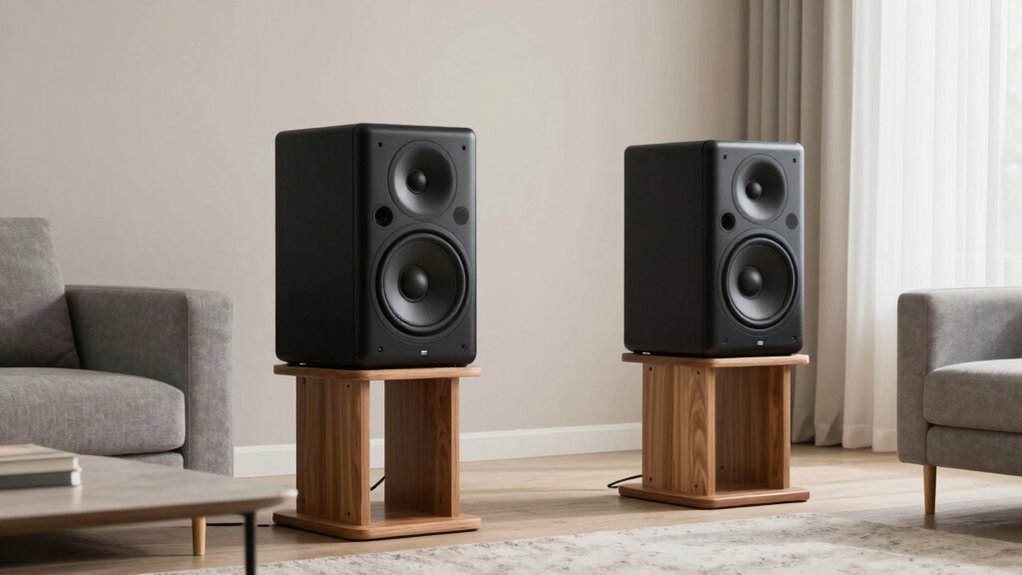
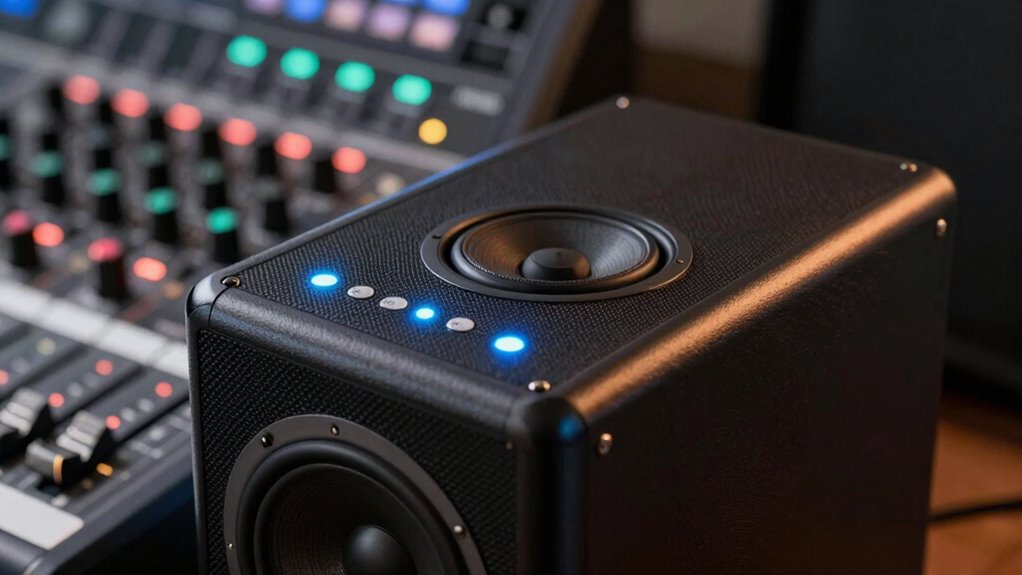
Proper speaker placement plays a crucial role in enhancing dialogue clarity. Position your speakers so they form an equilateral triangle with your listening position, aiming the tweeters toward your ears. This setup guarantees direct sound delivery, reducing reflections that muddy speech. Keep speakers at ear level for ideal clarity. Consider speaker aesthetics; choose models that blend with your room decor without blocking sound paths. Acoustic treatments, like diffusers or absorbers, can help manage reflections and reverberations, boosting speech intelligibility. Avoid placing speakers too close to walls or corners, which can cause bass booms and muddle dialogue. Instead, find a balanced spot that minimizes acoustic interference. Proper positioning, combined with thoughtful speaker aesthetics and acoustic treatments, makes dialogue clearer and more natural. Additionally, incorporating natural light into your space can create a calming environment that enhances overall listening experience. For optimal results, understanding speaker technology can help you select the best equipment for your setup. Adjusting speaker placement based on room acoustics can further optimize sound clarity and reduce unwanted echoes. Paying attention to sound reflection and absorption can make a significant difference in clarity. Moreover, experimenting with speaker positioning can help tailor the soundfield to your specific room and preferences.
high quality shielded audio cables
As an affiliate, we earn on qualifying purchases.
As an affiliate, we earn on qualifying purchases.
How to Evaluate Your Speaker Setup for Speech Quality
To improve your speech quality, start by evaluating where your speakers are placed to guarantee ideal sound distribution. Next, analyze the audio clarity by listening carefully and making adjustments as needed. This will help you identify any issues and fine-tune your setup for clearer voice projection. Additionally, consider the acoustics of the room and the type of speaker system to optimize sound quality further. Proper speaker placement and configuration can significantly enhance speech intelligibility and overall audio performance. Incorporating sound safety practices ensures that the system operates effectively without causing discomfort or damage. Being aware of home soundproofing tips can also help minimize external noise interference, further improving speech clarity. Adjusting your airless paint spraying tips and gear setup for quieter operation can contribute to a clearer environment for speech.
Assess Speaker Placement
Wondering if your speaker placement is hindering your speech clarity? Start by evaluating how your speakers are positioned relative to your listening area. Avoid placing them too close to walls or corners, as this can cause unwanted reflections and distortions. Pay attention to speaker aesthetics too; a cluttered setup can lead to uneven sound distribution. Experiment with angling your speakers slightly towards your listening position for better clarity. Consider acoustic treatments like foam panels or diffusers to minimize echo and improve sound quality. Proper placement ensures your voice is crisp and intelligible, making communication clearer. Remember, small adjustments in positioning can markedly enhance speech clarity without requiring major equipment changes. speaker placement is crucial in achieving optimal sound quality and clarity, similar to how curated luxury lifestyle products enhance overall ambiance. Additionally, understanding the acoustic environment of your space can help in making more informed adjustments for improved speech clarity. Regularly inspecting and maintaining your speaker setup can further prevent issues caused by water damage or environmental factors that may degrade sound performance over time.
Analyze Audio Clarity
How can you determine if your speaker setup is delivering clear speech? Start by listening closely to speech sounds, paying attention to speech intelligibility—how easily you understand spoken words. Notice if the voice sounds natural and if voice modulation is smooth, without muffling or distortions. Use a variety of recordings or voice samples to evaluate consistency across different content. Adjust your speaker placement if some words or sounds are unclear. Consider testing at different volume levels to identify any issues with clarity or voice modulation. If speech remains muffled or hard to decipher, it indicates the need for further adjustments. Analyzing audio clarity helps you fine-tune your system, ensuring every spoken word is crisp, clear, and easy to understand.
voice clarity equalizer settings
As an affiliate, we earn on qualifying purchases.
As an affiliate, we earn on qualifying purchases.
How to Fine-Tune EQ Settings to Make Voices Stand Out
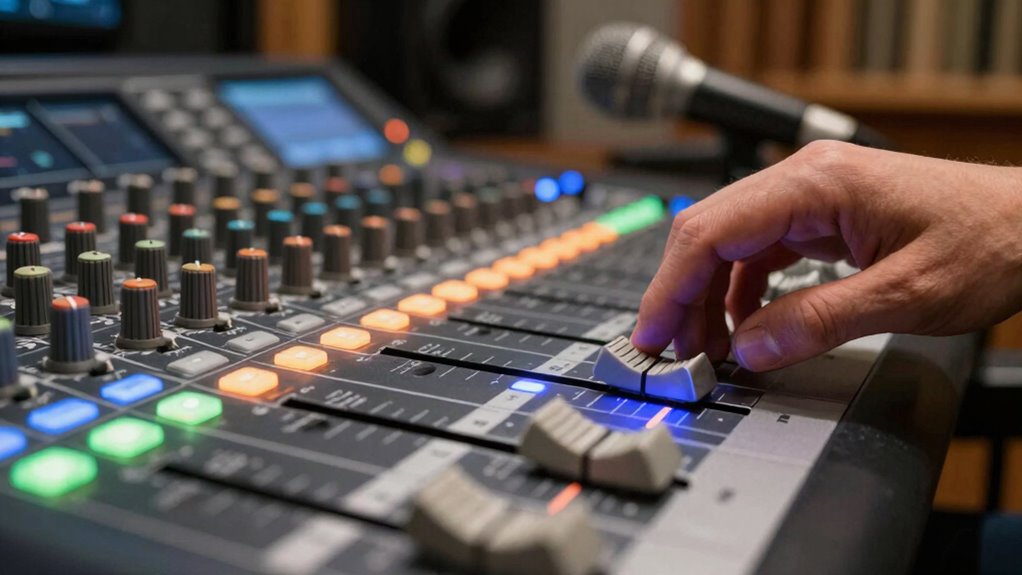
Fine-tuning your EQ settings is essential for making voices stand out clearly in a mix. Start with EQ adjustment by boosting midrange frequencies around 1-3 kHz, where most vocal presence resides. Be careful not to overdo it, as too much boost can cause harshness. Focus on frequency balancing by cutting low frequencies below 100 Hz, which often add muddiness, and reducing high frequencies above 8 kHz if there’s harsh sibilance. Use a narrow Q to target problem areas precisely. Listen carefully as you tweak, ensuring the voice remains natural and clear. Small adjustments go a long way, so take your time to find the right setting that makes the voice crisp, present, and easy to understand within the overall sound. Additionally, understanding how vocal clarity and frequency ranges impact vocal clarity can help you make more informed adjustments. Recognizing the importance of proper equalization techniques can help you achieve a more polished and professional vocal sound. Incorporating accurate frequency balancing can further enhance the overall tonal quality of the voice in your mix. Paying close attention to the overall tonal balance can help ensure the voice sits well within the full sound spectrum without overshadowing or being overshadowed by other elements.
How to Minimize Background Noise for Better Voice Clarity
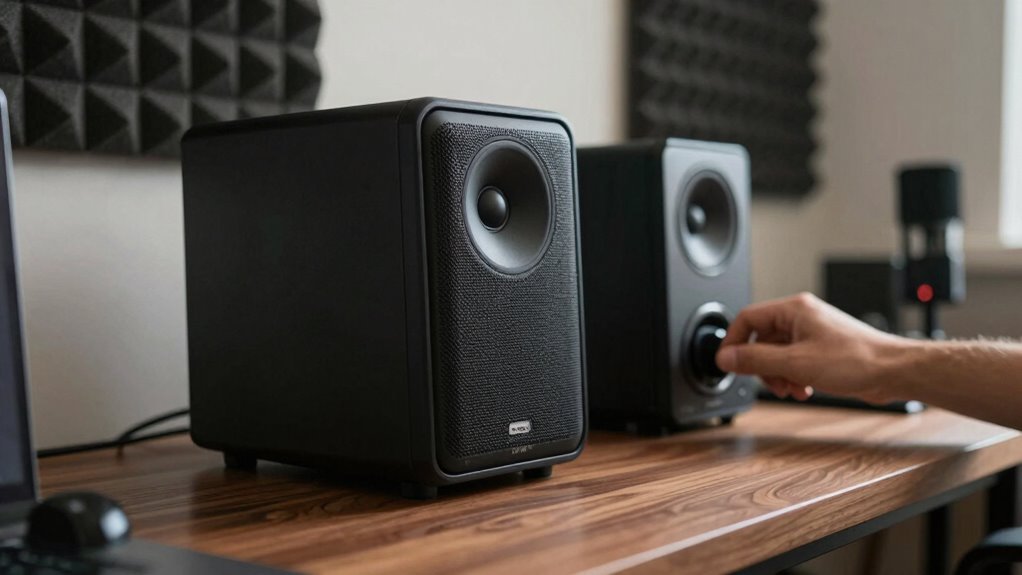
To reduce background noise, start by using sound-absorbing materials like foam panels or carpets in your recording space. Make sure you position your microphone close to your mouth and away from noise sources to capture clearer sound. These simple steps can considerably improve your voice clarity by minimizing unwanted sound. Additionally, controlling indoor air quality by reducing dust and pollutants can help prevent microphone and equipment issues that may affect sound quality, such as microplastics in dust.
Use Sound Absorbing Materials
Background noise can considerably diminish voice clarity, making it harder for your message to come across clearly. To combat this, use sound absorbing materials like acoustic panels, which absorb sound waves and reduce echo. These panels are easy to install on walls and help minimize reverberation, improving overall clarity. Additionally, soundproof curtains can block outside noise and prevent sound leakage, creating a quieter environment. Combining acoustic panels with soundproof curtains helps create a focused space where your voice stands out. Make sure to place panels strategically around the room, especially near noise sources, for maximum effect. Using these sound absorbing materials effectively reduces background noise, ensuring your voice remains clear and easily understood.
Position Microphone Properly
Have you ever noticed how a poorly positioned microphone can pick up unwanted noise and make your voice hard to hear? Proper microphone placement is essential for clear voice capture. To minimize background noise, keep the mic close to your mouth, aiming slightly above or below to avoid plosive sounds. Use acoustic treatment, like foam panels, to reduce room echo and ambient noise. Avoid pointing the mic at noise sources like fans or open windows. Maintain a consistent distance for steady sound quality. Also, consider using a directional microphone to focus on your voice and reject unwanted sounds. Proper positioning combined with good acoustic treatment guarantees your voice remains clear and free from distracting background noise.
How to Use Audio Enhancers and Processing Tools Effectively
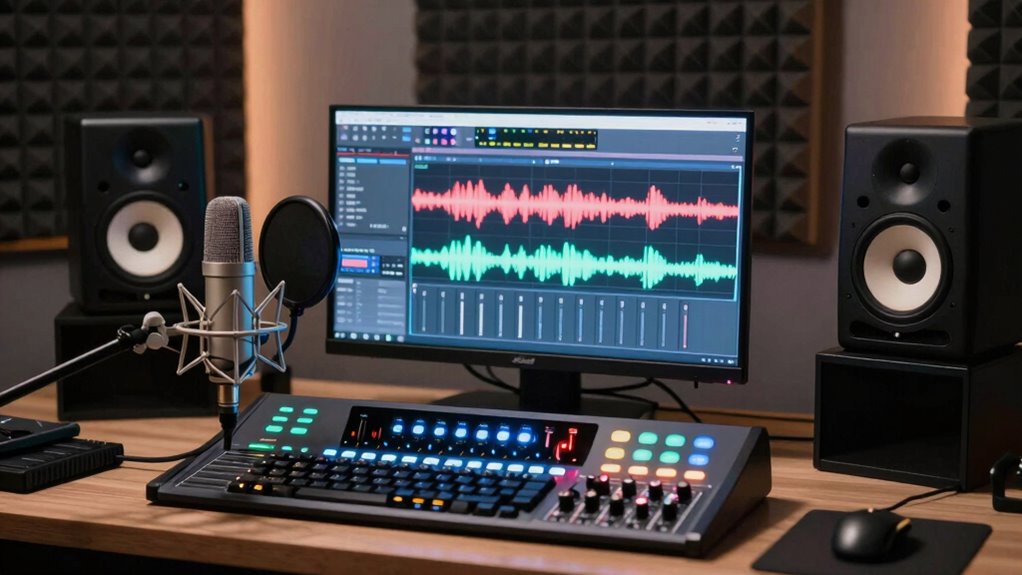
Using audio enhancers and processing tools effectively can make a significant difference in improving voice clarity. Start with audio compression to control dynamic range, ensuring softer sounds are audible without overwhelming louder parts. Frequency balancing is essential for clarity; boost midrange frequencies where speech intelligibility resides, while reducing muddiness in the low end.
| Tool | Purpose |
|---|---|
| Compression | Smooths out volume differences for consistent voice levels |
| Equalizer | Adjusts frequency response to enhance clarity |
| Noise Gate | Eliminates background noise during pauses |
| De-Esser | Reduces harsh sibilant sounds |
What Cables and Connections Help Deliver Clearer Voice Sound
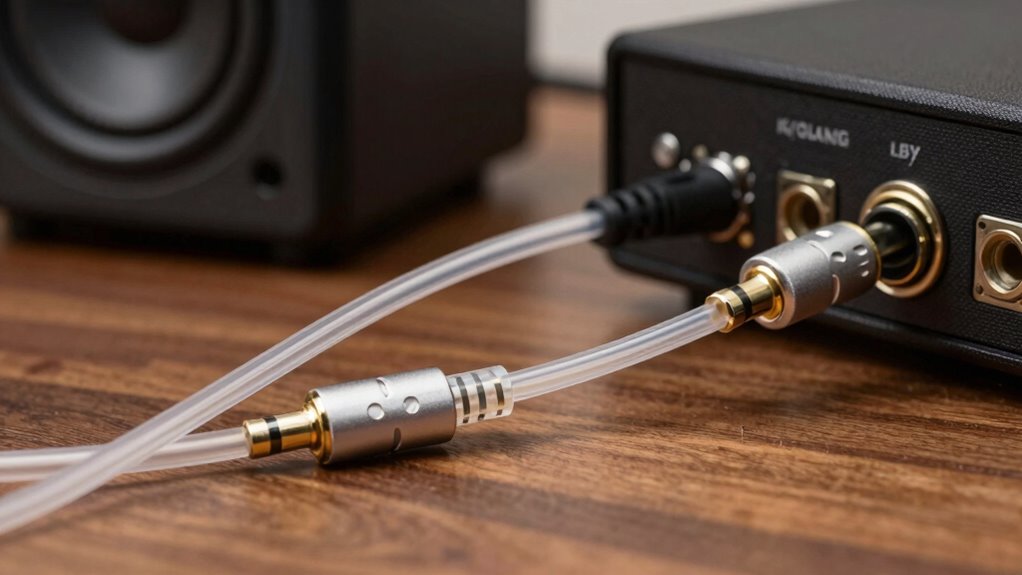
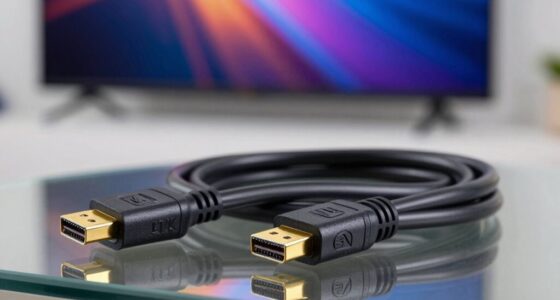
Are your cables and connections truly optimized for clear voice transmission? Choosing the right cable types and guaranteeing high connection quality make a big difference. Low-quality or incompatible cables can introduce noise or weaken sound clarity. To get the best voice sound, consider these:
- Use shielded, high-quality XLR or balanced audio cables for reduced interference
- Opt for gold-plated connectors to improve connection quality and durability
- Avoid overly long cables, which can cause signal loss
- Connect directly without unnecessary adapters or splitters
- Regularly inspect and replace worn or damaged cables for maximum sound integrity
Investing in good cable types and maintaining connection quality ensures your voice sounds crisp and clear, making your speaker system perform at its best.
Troubleshooting Common Voice Clarity Issues and When to Upgrade
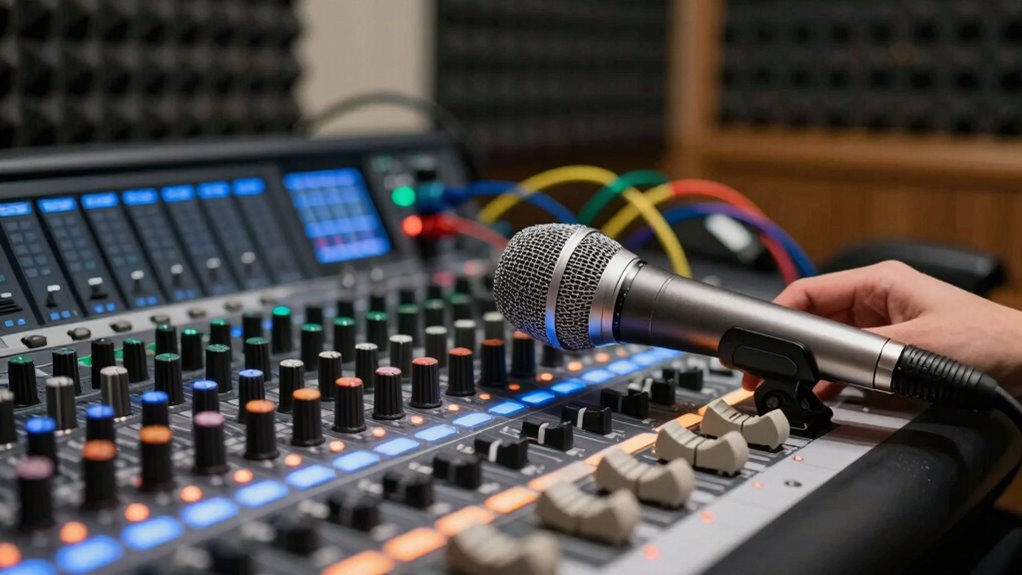
Noticing muffled or inconsistent voice clarity often signals underlying issues that can be addressed quickly. Voice distortion may result from poor speaker calibration or misaligned settings, so start by checking and adjusting your system’s calibration. Sometimes, the problem lies in loose connections or faulty cables, making it worth inspecting all connections carefully. If these tweaks don’t improve clarity, consider whether your speaker system is outdated or underpowered for your needs. Upgrading might be necessary if calibration issues persist or if clarity remains compromised, especially with high-quality voice content. Recognizing when to upgrade helps avoid ongoing frustration, ensuring you enjoy crisp, clear voice sound. Often, a combination of troubleshooting and timely upgrades enhances overall voice clarity effectively.
Frequently Asked Questions
How Does Room Acoustics Impact Voice Clarity on Speakers?
Room acoustics considerably impact voice clarity on speakers by influencing sound reflections and absorption. When reflections bounce off walls and surfaces, they can cause muddiness and echo, making voices harder to understand. Sound absorption materials help reduce these reflections, creating a clearer audio environment. You should optimize your room by adding absorptive elements like curtains or panels, which minimize echo and enhance voice intelligibility, ensuring clearer communication through your speakers.
What Are the Best Microphones for Capturing Clear Voice Audio?
Think of microphones as your voice’s best friends—choosing the right one makes all the difference. For crystal-clear audio quality, you want condenser microphones, which excel in capturing detailed vocals, or dynamic microphones for durability and focused sound. Lavalier mics are great for mobility. Your choice depends on your environment and needs, but selecting the right microphone type guarantees your voice comes through loud and clear, every time.
Can Speaker Placement Affect Voice Intelligibility in a Large Room?
Yes, speaker placement considerably impacts voice intelligibility in a large room. You should position speakers at an appropriate height, ideally at ear level, to project sound clearly. Avoid placing speakers near sources of background noise or reflective surfaces, as these can muddle the audio. Proper placement guarantees the voice reaches the entire room evenly, reducing echo and improving clarity, making it easier for your audience to understand every word.
How Do Different Speaker Types Influence Speech Clarity?
Like a modern-day oracle, different speaker types influence speech clarity considerably. Horn speakers, for instance, direct sound more precisely, enhancing intelligibility, while cone speakers offer a broader sound dispersion. You should focus on speaker calibration and audio equalization tailored to each type. Proper calibration ensures the speaker’s strengths are maximized for clarity, so your voice comes through crisp and clear, regardless of the system you use.
What Frequency Ranges Are Most Important for Clear Voice Reproduction?
The most important frequency ranges for clear voice reproduction are between 300 Hz and 3 kHz. Focus on the frequency response that captures your vocal range, especially the midrange where speech intelligibility resides. If your speaker effectively reproduces these frequencies, your voice will sound clearer and more natural. Ensuring your system emphasizes this range helps your voice stand out, making conversations easier to understand.
Conclusion
Remember, clear voice sound isn’t just about equipment—it’s about how you optimize and maintain your setup. By positioning speakers correctly, fine-tuning your settings, and minimizing noise, you can transform your listening experience. Don’t forget, “A stitch in time saves nine”—address issues early to keep your audio crystal clear. With a little effort, you’ll enjoy speech with the clarity and detail that truly brings your audio to life.
Fall Picks
fall essentials
As an affiliate, we earn on qualifying purchases.