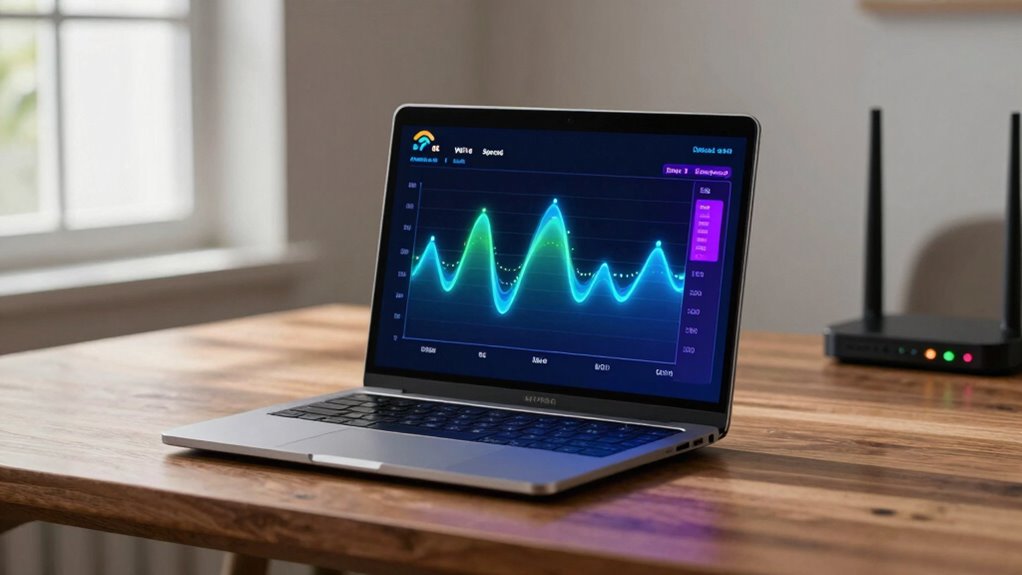
Wi-Fi 6 offers faster speeds and better device capacity than previous versions, while Wi-Fi 6E adds the 6 GHz band to reduce interference and boost performance for demanding tasks like VR or 4K streaming. Wi-Fi 7 aims for even higher data rates and lower latency, future-proofing your setup. Your device compatibility varies, and upgrading depends on your needs. Keep exploring to find out how each standard can improve your wireless experience.
Key Takeaways
- Wi-Fi 6 offers faster speeds and better efficiency than previous standards, mainly improving household device performance.
- Wi-Fi 6E expands into the 6 GHz band, reducing interference, and supporting higher bandwidth for demanding tasks.
- Wi-Fi 7 aims for even higher data rates and lower latency, suitable for future-proof, high-performance setups.
- Compatibility depends on device hardware and firmware; Wi-Fi 6 and 6E are backward compatible, while 7 may require new hardware.
- Upgrading depends on device support and use case needs; Wi-Fi 6E and 7 are beneficial for high-bandwidth applications like gaming and streaming.

TP-Link AX1800 WiFi 6 Router (Archer AX21) – Dual Band Wireless Internet, Gigabit, Easy Mesh, Works with Alexa – A Certified for Humans Device, Free Expert Support
DUAL-BAND WIFI 6 ROUTER: Wi-Fi 6(802.11ax) technology achieves faster speeds, greater capacity and reduced network congestion compared to…
As an affiliate, we earn on qualifying purchases.
As an affiliate, we earn on qualifying purchases.
What Are the Main Differences Between Wi-Fi 6, 6E, and 7?
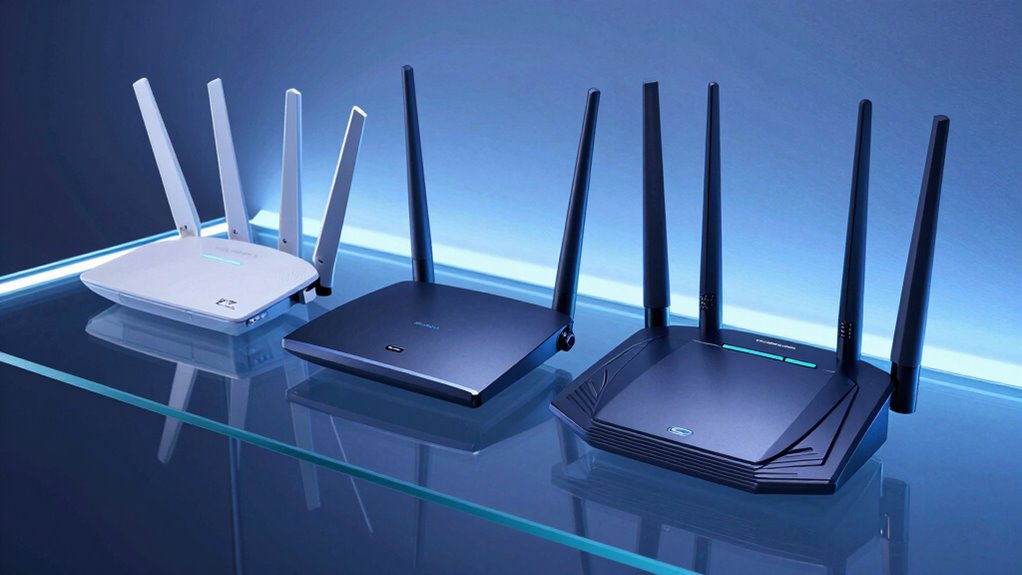
What are the main differences between Wi-Fi 6, 6E, and 7? These standards mark the evolution of wireless innovations shaping the future of connectivity. Wi-Fi 6 introduces improved speeds, capacity, and efficiency over previous versions, accommodating more devices simultaneously. Wi-Fi 6E builds on this by expanding into the 6 GHz band, reducing interference and boosting performance even further. Wi-Fi 7 aims to push boundaries with higher data rates and lower latency, supporting more demanding applications. As each generation advances, they reflect the ongoing push for faster, more reliable wireless connectivity. Understanding these differences helps you grasp how wireless innovations are shaping the future of connectivity, ensuring your devices stay ahead in an increasingly connected world. Additionally, advancements like high refresh rates in related display technologies demonstrate the broader trend toward higher performance standards across digital entertainment and communications.

Arris Surfboard Wi-Fi 6E Access Point | W6U | Dedicated 6 GHz Band for Compatible Devices | 2.5 Gbps Port | Works with Any Wi-Fi Device | Upgrade Your Network to Wi-Fi 6E
Adapt with the future of Home Networking: The ARRIS SURFboard mAX Wi-Fi 6E Access Point allows customers to…
As an affiliate, we earn on qualifying purchases.
As an affiliate, we earn on qualifying purchases.
How Do Wi-Fi 6, 6E, and 7 Compare in Speed, Range, and Capacity?
While all three Wi-Fi standards aim to enhance your wireless experience, they differ considerably in speed, range, and capacity. Wi-Fi 6 offers faster speeds than previous versions, but Wi-Fi 6E and 7 push even further, supporting higher data rates especially for multiple devices. In terms of coverage, Wi-Fi 6 generally performs better than 6E and 7, which focus on higher capacity and speed over shorter distances. Capacity increases with each generation, allowing more devices to connect simultaneously without slowing down. Network security improves with each version, making connections safer. However, higher speeds and capacity often lead to increased device energy consumption, which you should consider for battery-powered gadgets. Overall, each standard balances speed, range, and capacity differently to suit various needs. Understanding these differences can help optimize your home network setup.

TP-Link Tri-Band BE11000 Wi-Fi 7 Gaming Router Archer GE650 | 6-Stream 11 Gbps supports 320MHz | 2×5G + 3×2.5G Ports USB 3.0 | Game Acceleration, Dedicated Gaming Port & Panel, RGB Lighting|HomeShield
𝐁𝐥𝐚𝐳𝐢𝐧𝐠-𝐅𝐚𝐬𝐭 𝐁𝐄𝟏𝟏𝟎𝟎𝟎 𝐓𝐫𝐢-𝐁𝐚𝐧𝐝 𝐖𝐢-𝐅𝐢 𝟕 – Achieve up to 5764 Mbps (6 GHz), up to 4320 Mbps (5…
As an affiliate, we earn on qualifying purchases.
As an affiliate, we earn on qualifying purchases.
Which Devices and Use Cases Are Best for Each Wi-Fi Standard?
Are you wondering which Wi-Fi standard suits your devices and specific needs? Each standard offers different strengths for various use cases. Wi-Fi 6 is ideal for households with multiple devices, optimizing use case scenarios like streaming, gaming, and smart home gadgets. Wi-Fi 6E, with its expanded spectrum, is best for high-bandwidth tasks like virtual reality or 4K streaming, especially if you have newer devices. Wi-Fi 7 aims to enhance device compatibility and boost overall speed, making it suitable for future-proof setups and demanding applications. The right choice depends on your device compatibility and digital concepts and use case optimization needs. To choose effectively, it’s helpful to understand the spectrum capacity and how it impacts performance across different Wi-Fi standards. Here’s a quick comparison:
| Wi-Fi Standard | Best for |
|---|---|
| Wi-Fi 6 | Multiple devices, streaming, gaming |
| Wi-Fi 6E | High-bandwidth tasks, VR, 4K streaming |
| Wi-Fi 7 | Future-proofing, demanding applications |

TP-Link Deco X55 AX3000 WiFi 6 Mesh System – Covers up to 6500 Sq.Ft, Replaces Wireless Router and Extender, 3 Gigabit Ports per Unit, Supports Ethernet Backhaul, Deco X55(3-Pack)
Wi-Fi 6 Mesh Wi-Fi – Next-gen Wi-Fi 6 AX3000 whole home mesh system to eliminate weak Wi-Fi for…
As an affiliate, we earn on qualifying purchases.
As an affiliate, we earn on qualifying purchases.
Is Your Hardware Compatible? Wi-Fi 6, 6E, and 7 Backward Compatibility?
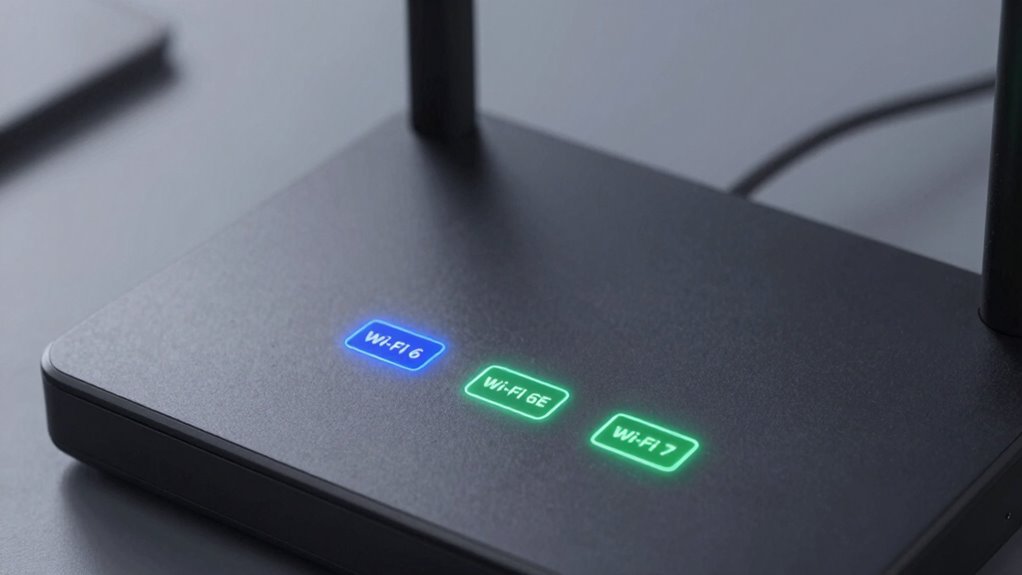
Wondering if your current devices can connect to Wi-Fi 6, 6E, or 7 networks? Device compatibility depends on your hardware and firmware updates. First, check if your device’s network adapter supports the new Wi-Fi standard. Second, confirm your device’s firmware is up to date, as manufacturers often release updates for compatibility. Third, verify your router’s specifications to confirm support for the desired Wi-Fi version. Fourth, consider whether your device is backward compatible—most Wi-Fi 6 and 6E devices are, but Wi-Fi 7 compatibility may require newer hardware. If your device isn’t compatible, firmware updates might add support, but upgrading hardware could be necessary for full functionality. Staying informed about device compatibility guarantees seamless connectivity without unnecessary upgrades.
Should You Upgrade to Wi-Fi 6E or 7? How to Choose the Right Standard for You?
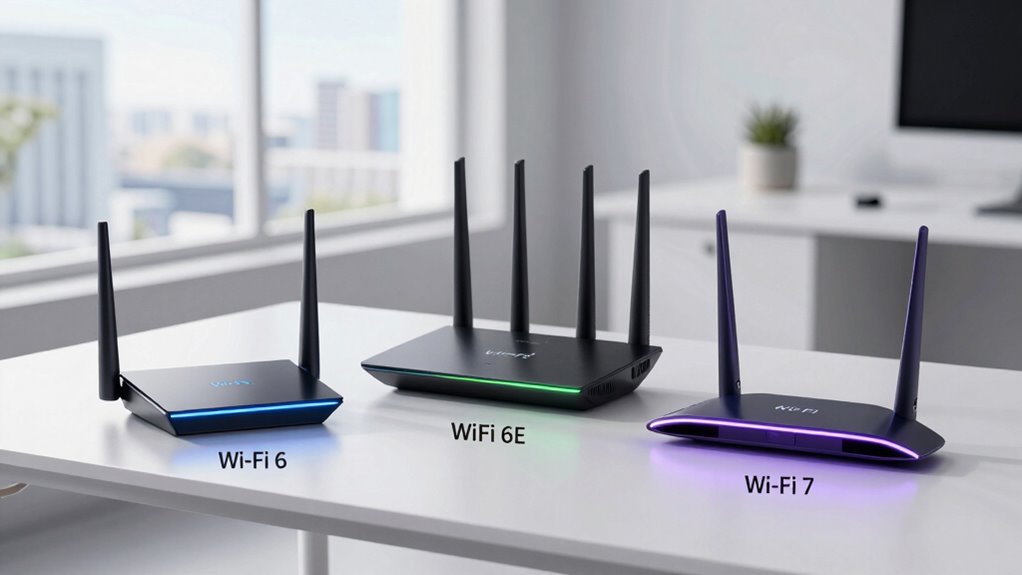
Deciding whether to upgrade to Wi-Fi 6E or 7 depends on your specific needs, device compatibility, and internet usage habits. If you have a smart home setup with multiple devices, Wi-Fi 6E offers better spectrum management and reduces congestion, improving overall smart home integration. For gaming performance, Wi-Fi 6E and 7 provide lower latency and faster speeds, giving you smoother gameplay. If you’re a heavy streamer or work from home, upgrading can boost your connection stability. Consider your current devices and whether they support these standards. Wi-Fi 7 is future-proof but may require new hardware and isn’t yet widespread. Ultimately, choose based on your device ecosystem, whether you prioritize gaming, streaming, or smart home connectivity.
Frequently Asked Questions
How Does Wi-Fi 7 Improve Latency Over Wi-Fi 6 and 6E?
Wi-Fi 7 improves latency over Wi-Fi 6 and 6E by enhancing bandwidth efficiency through advanced techniques like multi-link operation, which allows simultaneous connections across multiple bands. This reduces delays and speeds up data transfer. Additionally, Wi-Fi 7 maintains device compatibility, ensuring older devices still work smoothly while offering lower latency for newer, more demanding applications like gaming and real-time streaming.
Are There Security Differences Among Wi-Fi 6, 6E, and 7?
Did you know Wi-Fi 7 is set to enhance security with stronger encryption protocols? Compared to Wi-Fi 6 and 6E, Wi-Fi 7 offers improved security features, including more robust encryption options and faster firmware updates that patch vulnerabilities quicker. This means your network stays safer, and your data remains protected. You’ll benefit from these advancements as Wi-Fi 7 becomes more widespread, making your wireless connections more secure than ever before.
What Are the Cost Implications of Upgrading to Wi-Fi 7?
Upgrading to Wi-Fi 7 involves significant upgrade expenses, including new compatible routers and devices, which can raise your overall costs. A thorough cost analysis shows that initial upgrade expenses might be high, but you’ll benefit from faster speeds and better performance. Consider whether your current setup supports Wi-Fi 7, or if the long-term gains outweigh the upfront investment. Balancing these factors helps you decide if the upgrade makes financial sense now.
How Does Interference Affect Each Wi-Fi Standard’s Performance?
Interference is like a traffic jam on your network highway, slowing everything down. Wi-Fi 6 handles channel congestion better than older standards, but interference from other devices still hampers performance. Wi-Fi 6E offers an extra lane in the 6 GHz band, reducing congestion, yet still faces interference issues with incompatible devices. Wi-Fi 7 aims to clear the road entirely, but device compatibility remains a hurdle, impacting overall performance.
Will Wi-Fi 7 Support New Iot Device Features?
Yes, Wi-Fi 7 will support new IoT device features, enhancing smart home integration and device compatibility. You’ll notice faster data transfer, lower latency, and improved reliability for your connected devices. This standard is designed to handle more IoT gadgets simultaneously, making your smart home more seamless. With Wi-Fi 7, your devices will work better together, offering a more integrated and responsive smart home experience.
Conclusion
Choosing between Wi-Fi 6, 6E, and 7 isn’t just about faster speeds—it’s about future-proofing your connection. Like a wise captain steering through shifting seas, selecting the right standard ensures smooth sailing for your devices and streaming needs. Don’t get left behind in the digital storm—upgrade wisely and stay connected with confidence. After all, in the race for better Wi-Fi, the right choice keeps you ahead of the wave.