
TL;DR

Get the latest gadgets delivered free with Prime
- Fast, free delivery on millions of items
- Prime Video, Amazon Music and more included
- Member-only deals all year
A developer announced on Show HN that they have created a BASIC interpreter capable of booting directly on UEFI firmware. This allows users to run a classic programming environment on modern PCs without an OS. The project highlights innovative use of UEFI for legacy software compatibility.
A developer has introduced a BASIC interpreter that boots directly on UEFI firmware, eliminating the need for an operating system. This development allows vintage-style programming environments to run on modern hardware, which typically relies on UEFI for system initialization. The project, shared on the Hacker News platform, demonstrates a novel use of UEFI to support legacy software, attracting interest from hobbyists and developers interested in low-level system programming.
The developer, who goes by the username ‘Thoreau’ on Show HN, explained that they built the BASIC interpreter to emulate an old-fashioned programming environment with features like line numbers, immediate mode, simple graphics, strings, and arrays. The core achievement is that the interpreter can be loaded and run directly from UEFI firmware, without requiring a traditional operating system such as Windows or Linux. This was accomplished by writing a minimal UEFI application that initializes hardware and loads the interpreter into memory, allowing it to execute as the system’s primary environment.
The project was motivated by a desire for small, nostalgic programming environments that resemble vintage computers. The developer noted that their goal was to create a lightweight, self-contained environment that could run on modern hardware with UEFI firmware, which is now standard on most PCs. They emphasized that this approach could serve as a foundation for further experiments in low-level programming and firmware-based environments.
While the project is still in the early stages, the developer has shared a prototype that demonstrates successful booting and basic execution of BASIC programs. They have also provided source code and instructions for others to replicate or extend the project. The implementation leverages UEFI’s ability to run custom applications directly from firmware, bypassing the need for a full OS stack.
Potential for Vintage Computing on Modern Hardware
This development is significant because it shows how UEFI firmware can be used as a platform for legacy software, opening possibilities for running vintage programming environments without traditional operating systems. It could inspire hobbyists, educators, and developers to experiment with low-level system programming and firmware-based environments. Additionally, it demonstrates a novel application of UEFI, which is increasingly common on new computers, as a platform for custom, minimal operating environments.
By enabling direct booting of interpreters like BASIC, this project could also serve as a basis for embedded systems, educational tools, or hobbyist projects that require minimal, self-contained environments. It challenges the conventional view that firmware is only for hardware initialization, highlighting its potential as a versatile platform for custom software.
As an affiliate, we earn on qualifying purchases.
Background on UEFI and Legacy Software Compatibility
UEFI (Unified Extensible Firmware Interface) has become the standard firmware interface for modern PCs, replacing legacy BIOS systems. UEFI offers a flexible environment for booting operating systems and running applications directly from firmware. While traditionally used for system startup, developers have increasingly explored UEFI for other purposes, such as secure boot and firmware-based utilities.
Running legacy software, such as vintage BASIC interpreters, on modern hardware has typically required emulators or virtual machines. These solutions often involve overhead and complexity. The idea of booting a simple interpreter directly on UEFI firmware provides a more streamlined alternative, leveraging the firmware’s capabilities to run minimal, specialized environments. This approach is relatively novel and demonstrates a creative use of firmware technology.
The developer’s project follows a growing interest in low-level programming and firmware hacking, where enthusiasts aim to repurpose hardware and firmware for new or nostalgic uses. It also aligns with broader trends toward minimalism and self-contained computing environments.
“I wanted a small, old-fashioned BASIC interpreter that could run directly on modern hardware without an OS.”
— Thoreau (developer)
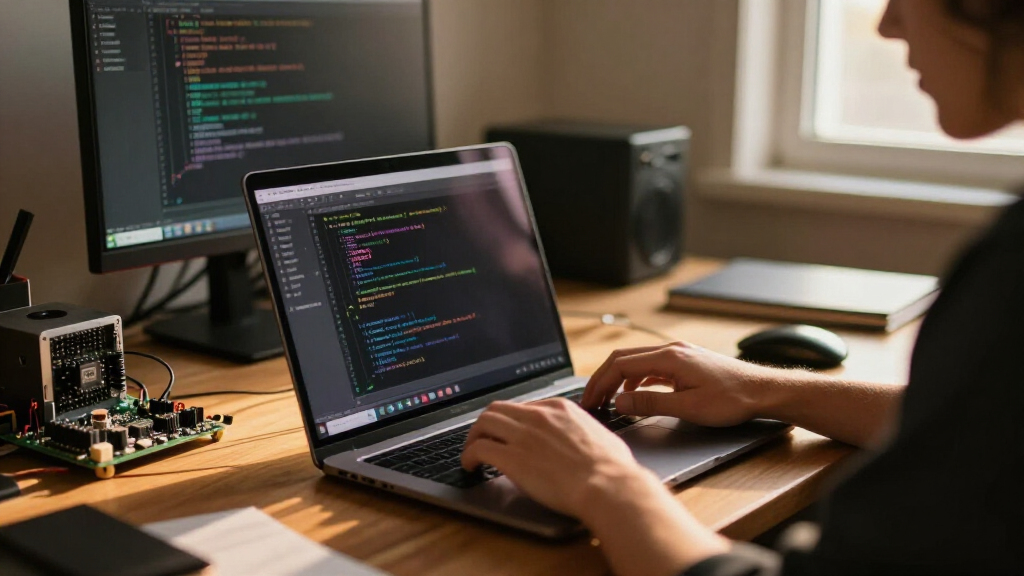
vintage BASIC programming environment
As an affiliate, we earn on qualifying purchases.
As an affiliate, we earn on qualifying purchases.
Limitations and Future Development Questions
It is not yet clear how fully functional the BASIC interpreter is, especially regarding graphics, input, and program storage. The current prototype demonstrates basic execution but may lack advanced features or stability. Compatibility with various hardware configurations and UEFI implementations remains untested. Additionally, questions remain about security implications and how this approach could be scaled or integrated into more complex systems.
bootable UEFI firmware development kit
As an affiliate, we earn on qualifying purchases.
As an affiliate, we earn on qualifying purchases.
Next Steps for the UEFI BASIC Project
The developer plans to improve the interpreter’s features, including better graphics and input handling. They also intend to test the system across different hardware platforms and UEFI firmware versions. Further development might involve creating a more user-friendly boot process and expanding the environment to support more complex BASIC programs. Community feedback and collaboration could accelerate these improvements.
As an affiliate, we earn on qualifying purchases.
Key Questions
How does the BASIC interpreter boot on UEFI?
The interpreter is packaged as a UEFI application that loads directly from firmware, initializing hardware and executing the BASIC environment without an OS.
Can this approach run other legacy software?
Potentially, yes. The current project focuses on BASIC, but the method could be adapted for other simple interpreters or firmware-based environments.
Does this require special hardware or firmware?
It works on standard UEFI firmware found on most modern PCs. Compatibility across different hardware is still being tested.
What are the security implications of booting directly into a custom firmware environment?
Running custom UEFI applications could pose security risks if not properly secured, especially if unsigned code is used. Developers should consider secure boot policies.
Is this project open source?
Yes, the developer has shared the source code and instructions on Show HN for others to experiment with and improve.
Source: hn
Halloween Picks
halloween
As an affiliate, we earn on qualifying purchases.