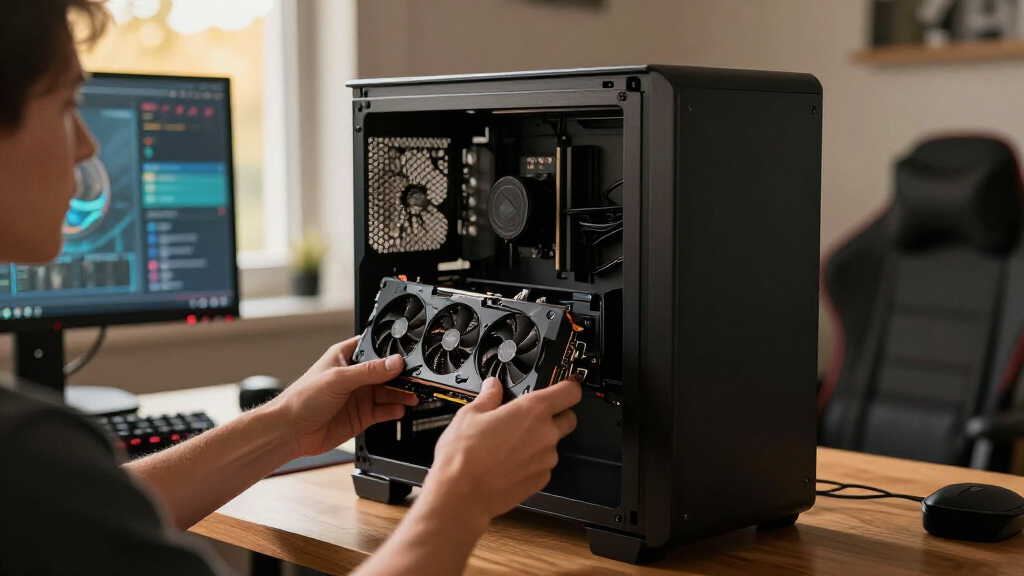

🔍 Read the full analysis: 10 Graphics Card Options For Gaming And Everyday Computing In 2027 on ThorstenMeyerAI.com

Get the latest gadgets delivered free with Prime
- Fast, free delivery on millions of items
- Prime Video, Amazon Music and more included
- Member-only deals all year
TL;DR
A ThorstenMeyerAI.com roundup compares 10 graphics card models across Radeon, GeForce and Intel Arc lineups for gaming and everyday computing. It names the ASUS Prime RX 9070 XT OC as its overall pick, but supplies no benchmark results, pricing, power figures or dimensions, so buyers should verify model-specific details before choosing.
ThorstenMeyerAI.com’s 10-card graphics card roundup covers gaming and everyday computing, ranking models from AMD, Nvidia and Intel by their intended performance class, memory capacity and cooler design. The guide names the ASUS Prime Radeon RX 9070 XT OC Edition its best overall pick, while stressing that it does not include benchmark measurements or current prices.
The roundup favors the RX 9070 XT for a balanced high-performance gaming build and identifies the MSI Gaming RTX 5080 Ventus 3X OC as an option for buyers seeking a higher-end GeForce card, a category also covered in this Nvidia graphics card guide. It also points to the ASUS Dual RTX 5060 Ti 16GB for shoppers prioritizing 16GB of memory without moving into a larger GPU tier. Those are the guide’s recommendations, not independently verified performance findings.
The 10 models covered are the ASUS Prime Radeon RX 9070 XT OC Edition, MSI Gaming RTX 5080 Ventus 3X OC, ASUS Dual RTX 5060 Ti 16GB, Radeon RX 9070 models, ASUS ROG Astral White RTX 5080 OC, ASUS Prime RTX 5070, ASUS TUF RTX 5070, 16GB Radeon RX 9060 XT models, and Intel Arc B570; for more options, see this graphics card roundup. The source does not specify every manufacturer and exact model variant within its references to the RX 9070 and RX 9060 XT models.
The guide says the RTX 5080 models differ mainly in design and cooling: MSI’s Ventus 3X OC is described as more restrained, while ASUS’s ROG Astral White OC is positioned as a premium-styled card. The RTX 5070 options are both 12GB models, with the ASUS Prime presented as simpler and the TUF as a more robustly built alternative. The Arc B570 is the roundup’s 10GB entry-level option.
The 10 picks
- 1
 MSI Gaming RTX 5080 16G Ventus 3X OC Black Graphics CardView on Amazon →
- 2
 ASUS TUF Gaming GeForce RTX 5070 OC Edition 12GB GDDR7 Graphics CardView on Amazon →
- 3
 ASUS Prime GeForce RTX 5070 12GB GDDR7 OC Edition Gaming Graphics CardView on Amazon →
- 4
 ASUS Prime Radeon RX 9070 XT OC Edition 16GB Graphics CardView on Amazon →
- 5
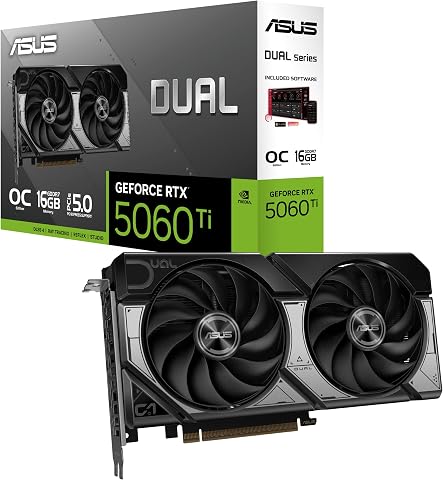 ASUS Dual GeForce RTX 5060 Ti 16GB GDDR7 OC Edition Gaming Graphics CardView on Amazon →
- 6
 ASUS ROG Astral GeForce RTX 5080 16GB GDDR7 White OC Edition Graphics CardView on Amazon →
- 7
 ASUS Prime Radeon RX 9070 EVO 16GB GDDR6 OC Edition Gaming Graphics CardView on Amazon →
- 8
 ASRock Radeon RX 9070 Challenger 16GB OC Graphics Card, RDNA 4, 2520MHz Boost…View on Amazon →
- 9
 ASUS Dual Radeon RX 9060 XT 16GB GDDR6 Gaming Graphics CardView on Amazon →
- 10
 ASRock Intel Arc B570 Challenger 10GB OC GDDR6 Graphics Card, 2600 MHz GPU, D…View on Amazon →
Match Card Tier to Your Build
The guide’s central buying point is that a single specification—especially video memory capacity—does not establish which card is faster or better suited to a workload. Its list includes 16GB cards in different GPU tiers, 12GB RTX 5070 models and a 10GB Arc card. Buyers should compare performance in the games or applications they use, at their target resolution and settings, rather than selecting by memory figure alone.
Physical and electrical fit also affect the real cost of an upgrade. Higher-tier cards may call for a stronger power supply and better airflow, while multi-fan designs can take more space than dual-fan options. The guide advises checking exact dimensions, connectors and power requirements against the PC before ordering. It does not establish which model offers the best value because current prices and measured performance are absent.
How the Guide Ranks Its Picks
ThorstenMeyerAI.com says its ranking weighs expected performance class, memory, cooling, physical fit and the practical role each model might fill. It describes the order as moving from versatile performance picks toward premium, middle-tier, compact and entry-level options. The source material presents this as editorial selection guidance, not as the result of a published benchmark test.
The guide recommends checking independent benchmarks for the specific games and applications a buyer uses, along with card dimensions and power requirements for the exact product variant. Those details matter because product-family names alone do not confirm fit, cooling behavior or power needs. No testing methodology, benchmark data or price comparison is supplied in the material provided.
“GPU tier matters more than a single headline specification; a 16GB card from a lower tier is not automatically a faster choice than a 12GB card from a higher one.”
— ThorstenMeyerAI.com roundup
Missing Benchmarks and Model Details
The source material provides no measured frame rates, power draw, exact dimensions or current prices. It is not possible from the roundup alone to verify how the cards compare in particular games, how loud or cool their specific designs run, or which is the strongest value at current retail prices. The guide also does not give full model names for all the RX 9070 and RX 9060 XT cards it mentions.
The article is framed around 2027 options, but the supplied material gives no publication date and does not explain whether its product list reflects availability in a particular market. Buyers should confirm local stock, exact card specifications, power-supply guidance and compatibility before purchase.
Check Models Before Buying
The next step for readers is to compare independent tests for their preferred games and software, then confirm the exact card variant, case clearance, PSU capacity and connectors. Prices and availability should be checked with current retailers, since the source provides no market snapshot. Any future performance or value comparison would need current pricing and results gathered under comparable test conditions.
Key Questions
Which card does the guide rank as its overall pick?
ThorstenMeyerAI.com names the ASUS Prime Radeon RX 9070 XT OC Edition its best overall choice for a balanced high-performance gaming build. The source does not provide benchmark results to independently confirm that ranking.
Does 16GB of graphics memory mean a card is faster?
No. The guide says GPU tier and workload performance matter alongside memory capacity. It recommends comparing benchmarks for the games or applications you use rather than choosing by memory alone.
What should I check before upgrading my graphics card?
Check the exact card’s dimensions, power requirements, connectors and recommended PSU, then compare those with your case and power supply. Leave room for airflow, especially with larger multi-fan models.
Does the roundup include price or frame-rate comparisons?
No. The supplied source material gives no current pricing or measured benchmarks, so it does not establish exact frame-rate differences or which card is the best value.
Source: ThorstenMeyerAI.com
Halloween Picks
halloween
As an affiliate, we earn on qualifying purchases.