

TL;DR
Experts argue that AI alone cannot make processes faster without proper understanding and addressing bottlenecks. Speeding up workflows requires more than automation; it demands clear problem scope and process improvements.
Recent discussions and analyses indicate that AI alone is unlikely to accelerate organizational processes significantly, emphasizing the importance of addressing bottlenecks and understanding underlying issues.
Many organizations are focusing on process optimization, often driven by market conditions or technological enthusiasm. However, experts caution that deploying AI does not automatically result in faster processes. A common misconception is that AI can bypass or speed up complex tasks like software development or legal approvals simply by generating code or automating steps.
For example, re-reading classic texts like ‘The Toyota Way’ and ‘The Goal’ reveals that process delays often stem from upstream bottlenecks, misaligned scope, or unclear problem definitions. Simply adding AI to generate code or automate tasks without addressing these foundational issues does not improve throughput. Instead, it can lead to more complexity and longer timelines, as AI requires detailed problem specifications and domain expertise to be effective.
In software development, rushing to replace human developers with AI-generated code overlooks the necessity of precise scope, feature clarity, and problem understanding. AI can produce code quickly, but it often lacks the context needed to generate correct and scalable solutions. This results in additional review, correction, and rework, which can negate any speed gains.
Why It Matters
This matters because many organizations are investing heavily in AI-driven automation with the hope of rapid gains in efficiency. Misunderstanding AI’s capabilities can lead to wasted resources and persistent delays. Recognizing that process improvements depend on addressing bottlenecks and clear problem framing can help set realistic expectations and guide more effective optimization strategies.

Theory of Constraints (TOC): Applying Lean Tools To “Identify, Exploit, Subordinate, Elevate, Repeat (CI), in the Constraint.” (Root Cause Mastery Series™)
As an affiliate, we earn on qualifying purchases.
As an affiliate, we earn on qualifying purchases.
Background
The discussion is rooted in principles from manufacturing and process management, notably concepts from ‘The Goal’ and ‘The Toyota Way’, which emphasize identifying and resolving bottlenecks. Historically, process improvements have focused on upstream issues rather than relying solely on automation or technology. Recent trends have seen a surge in AI adoption, often with inflated expectations about its speed benefits, despite evidence that true process acceleration requires foundational changes.
“AI can generate code quickly, but that doesn’t mean it’s generating the correct code or solving the core bottlenecks.”
— industry analyst
“Speeding up processes requires addressing the root causes and bottlenecks, not just automating tasks or adding more AI.”
— process improvement expert

Mastering Claude Code Token Usage Optimization: Reduce API Costs, Extend Context Windows, and Build More Efficient AI Coding Workflows
As an affiliate, we earn on qualifying purchases.
As an affiliate, we earn on qualifying purchases.
What Remains Unclear
It remains unclear how much AI can truly accelerate processes when combined with effective bottleneck management, or how organizations will adapt their strategies to leverage AI effectively without overestimating its capabilities.
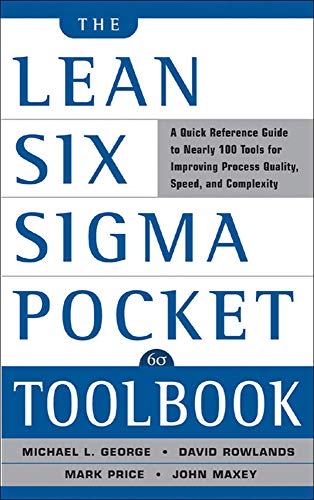
The Lean Six Sigma Pocket Toolbook: A Quick Reference Guide to 100 Tools for Improving Quality and Speed
As an affiliate, we earn on qualifying purchases.
As an affiliate, we earn on qualifying purchases.
What’s Next
Next steps include more empirical studies on AI’s impact on process speed, and organizations refining their process management strategies to incorporate AI as a tool rather than a shortcut. Future developments may clarify how best to balance automation with process optimization.
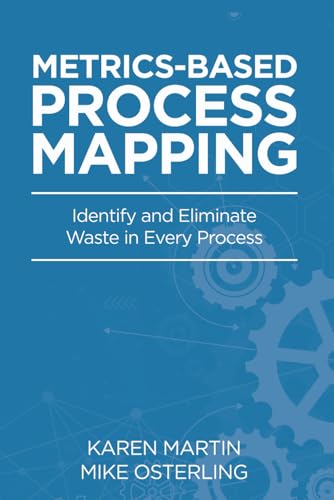
Metrics-Based Process Mapping: Identifying and Eliminating Waste in Office and Service Processes
As an affiliate, we earn on qualifying purchases.
As an affiliate, we earn on qualifying purchases.
Key Questions
Can AI speed up software development?
AI can generate code quickly, but without clear problem definitions and detailed scope, it often produces incorrect or incomplete solutions, which slows down overall progress.
Why doesn’t AI automatically make processes faster?
Because process speed depends on understanding and fixing bottlenecks, not just automating tasks. AI needs detailed input and context to be effective, which is often lacking in rushed automation efforts.
What is the main mistake organizations make with AI and process speed?
They assume AI can bypass or replace fundamental process improvements, ignoring the importance of upstream bottleneck resolution and clear problem framing.
What should organizations focus on to improve process speed?
Addressing bottlenecks, ensuring high-quality inputs, and clearly defining problems are essential steps before considering automation or AI deployment.