
TL;DR
SpaceX’s $60 billion agreement to buy Anysphere, maker of Cursor, has made the AI interface layer a major market signal. The confirmed deal supports a wider industry argument that browsers, IDEs and chat apps may control which models get used, even when the models themselves remain powerful and costly.
SpaceX’s $60 billion stock-based agreement to acquire Anysphere, maker of Cursor, has turned the AI industry’s fight for user interfaces into a balance-sheet event, because the deal values a coding workspace, not a foundation model, as one of the most valuable assets in the AI stack.
The transaction is the clearest confirmed event behind the thesis. The Wall Street Journal reported that SpaceX announced a $60 billion stock-based acquisition of Anysphere, Cursor’s parent company, with closing expected in the third quarter of 2026. Business Insider and Axios also described the deal as a major purchase of a venture-backed AI application company and tied it to an April 2026 partnership that gave SpaceX an option to buy Cursor.
Cursor is not a frontier model lab. It is a developer workspace built around AI-assisted coding, model switching and workflow capture. Thorsten Meyer AI’s Control Series Part 5 argues that this distinction is the point: the buyer is paying for the daily software surface where developers write, review and route work, while the underlying models can be rented from OpenAI, Anthropic, Google, xAI or open-weight providers.
The dispatch treats the deal as part of a wider move toward distribution control. It says browsers, IDEs, operating systems and chat apps are becoming the places where AI demand is created and assigned. That is an analysis, not a settled market fact; what is confirmed is that major firms are now shipping or buying AI-first interfaces across those categories.
The Door: Worth More Than the Model
SpaceX paid $60B for a coding tool — not a model. As the model commoditizes, the surface the human touches captures the value: the default, the habit, the data, and the choice of which model gets called.
Perplexity
The most valuable chokepoint — and, strangely, the most winnable. You can’t bootstrap a gigawatt or a 555K-GPU cluster, but a small team can still build the door (Cursor was a few founders on rented models). Own the interface and the user relationship even if you rent everything underneath — and never let a platform’s default be your only door to your users.
Interfaces Now Set AI Demand
For readers and businesses, the issue is practical. A model can be stronger on a benchmark and still lose work if it is not the default inside the tool people already use. The interface can decide whether a request is sent to GPT, Claude, Gemini, Grok, Perplexity or an open-weight model, and that choice can happen without the user making a fresh comparison each time.
That gives interface owners leverage over subscriptions, usage data and enterprise buying decisions. It also affects publishers and retailers, because AI browsers and agents may fetch pages, compare products and complete tasks without a normal search visit. The source cites a sharp rise in agent web traffic and the Amazon v. Perplexity dispute as early signs that web access, attribution and commerce rules are being tested.
The claim that the interface is worth more than the model remains an interpretation. The evidence supporting it is the price SpaceX agreed to pay for Cursor, the rapid shift of browsers toward agent features, and the fact that a small software team can create a high-value user surface without owning its own data centers.

Google Workspace Mastery 2026: The Complete All-in-One Guide From Gmail to AI Integration (Google Guides Book 3)
As an affiliate, we earn on qualifying purchases.
As an affiliate, we earn on qualifying purchases.
Browsers Become AI Gateways
The browser part of the story has moved quickly. OpenAI launched ChatGPT Atlas on Oct. 21, 2025, saying the browser put ChatGPT directly into web use and included a preview agent mode for paid users. Perplexity’s Comet browser is promoted as available on Mac, Windows, iOS and Android, with assistant features for research, email, building and shopping.
Other moves fit the same pattern. Atlassian bought The Browser Company, maker of Arc and Dia, for $610 million, according to The Verge’s coverage of the September 2025 deal. Microsoft has embedded Copilot into Edge and Windows, Google has been tying Gemini more closely to Chrome and Android, and Anthropic has expanded Claude’s computer-use features. Each move pushes AI from a separate chat box into the software layer that starts the task.
Thorsten Meyer AI estimates Atlas at about 10 million to 15 million monthly users and Comet at 3 million to 5 million, while warning that operating-system defaults could surpass those numbers quickly. Those estimates are approximate and should not be read as company-confirmed user counts.
“Own the door and you own the routing.”
— Thorsten Meyer AI, The Control Series Part 5

AI-Assisted Coding: A Practical Guide to Boosting Software Development with ChatGPT, GitHub Copilot, Ollama, Aider, and Beyond (Rheinwerk Computing)
As an affiliate, we earn on qualifying purchases.
As an affiliate, we earn on qualifying purchases.
Deal Effects Remain Unproven
Several core questions are unresolved. The final terms of SpaceX’s Cursor purchase, any regulatory conditions and the post-close product plan remain to be tested. It is also unclear whether SpaceX will keep Cursor model-neutral, steer more traffic toward Musk-controlled AI systems or use the product mainly for internal engineering and enterprise sales.
The revenue figures are also uneven across reports. The source material says Cursor reached roughly $4 billion in annualized revenue; other public reports have described revenue as above $1 billion and later in the billions. Without audited company statements, the exact current run rate remains a reported figure.
There is a wider uncertainty about user behavior. Developers and consumers may accept routed defaults, or they may demand model choice and portability. Security, privacy and liability rules for agents acting in browsers are still forming.
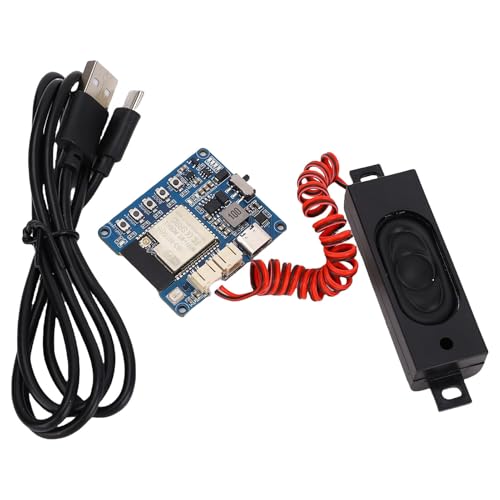
AI Voice Chat Module Type C Interface AI Large Model Support with Technology
- Interface Type: Type C interface for connectivity
- Battery Management: Built-in TP5400 battery management
- Integrated Components: Includes INMP441 microphone and amplifier
As an affiliate, we earn on qualifying purchases.
As an affiliate, we earn on qualifying purchases.
Approval And Integration Ahead
The next marker is whether the acquisition closes in the third quarter of 2026 and whether SpaceX discloses how Cursor will be run inside its AI operation. Any change in default model routing, pricing, enterprise contracts or data-sharing terms would show how aggressively SpaceX plans to use the interface layer.
Outside coding tools, the next phase will come through browser and operating-system releases. OpenAI says Windows, iOS and Android versions of Atlas are planned. Perplexity is pushing Comet across major platforms, and larger companies with browser or device defaults can move quickly if they choose to place an AI agent in front of users.
Legal and policy fights are likely to follow the product launches. Retailers, publishers and software vendors will be watching whether agent traffic is treated as a user action, a bot visit, a search referral or something else.

Getting Started with Visual Studio 2026: Master the New Era of Visual Studio, AI, and Productivity
As an affiliate, we earn on qualifying purchases.
As an affiliate, we earn on qualifying purchases.
Key Questions
What is the actual news development?
SpaceX has agreed to buy Anysphere, the company behind Cursor, in a $60 billion stock-based deal. The news has made AI interfaces, rather than only model labs, a major focus of industry debate.
Why does Cursor matter if it does not own a frontier model?
Cursor sits where developers spend their workday. That position can shape habits, collect workflow data and route tasks to different models, which may be valuable even when the model layer is rented from others.
Does this prove AI models are becoming commodities?
No. Frontier models remain expensive and strategically valuable. The narrower claim is that access to models is becoming easier for application companies, while the user-facing workflow may be harder to replace.
How could this affect ordinary users?
The AI inside a browser, coding tool, phone or chat app may become the default assistant for many tasks. That means users may interact less with model brands directly and more with the software surface that chooses the model for them.
What should companies watch now?
Companies should watch default model routing, data terms, enterprise controls, agent traffic rules and any regulatory conditions on the SpaceX-Cursor deal. Those details will show whether interface control becomes a lasting advantage.
Source: Thorsten Meyer AI