
Time Machine automatically backs up your Mac by scanning for new or changed files during idle times, creating encrypted snapshots that protect your data. It uses efficient, incremental backups, storing only modifications to save space and build multiple versions. You need to select a compatible drive, format it correctly, and enable encryption for security. Regular backups guarantee your data stays safe and easily recoverable. Keep exploring to understand how all these pieces work together seamlessly.
Key Takeaways
- Time Machine automatically backs up your Mac in the background during idle times, ensuring seamless data protection.
- It creates incremental backups by copying only changed files, saving storage space and improving efficiency.
- Backups are encrypted for security, with options to integrate cloud services for additional redundancy.
- Restoring files is simple through the Time Machine interface, allowing browsing of backup versions and easy recovery.
- Regular updates and proper drive formatting ensure reliable, secure, and efficient backup operations.

Seagate Portable 2TB External Hard Drive HDD — USB 3.0 for PC, Mac, PlayStation, & Xbox -1-Year Rescue Service (STGX2000400)
Easily store and access 2TB to content on the go with the Seagate Portable Drive, a USB external…
As an affiliate, we earn on qualifying purchases.
As an affiliate, we earn on qualifying purchases.
How Does Time Machine Automatically Back Up Your Mac?

When you set up Time Machine on your Mac, it automatically starts backing up your files without any extra effort on your part. It handles everything in the background, ensuring your data is protected through backup encryption, keeping your information secure from unauthorized access. If you’ve enabled cloud integration, Time Machine can seamlessly sync your backups with compatible cloud services, providing an extra layer of protection and accessibility. The system intelligently determines when to back up, usually during idle times, so it doesn’t interfere with your workflow. You don’t have to manually initiate backups or worry about missing important files. This automation makes sure your data stays current and safe, giving you peace of mind knowing your Mac’s contents are always protected. Additionally, privacy policies ensure that your data is handled responsibly, especially when cloud services are involved. To enhance security, it is recommended to use secure storage solutions for your backups, which can help prevent unauthorized access in case of device loss or theft. Moreover, understanding the backup process can help you better appreciate how your data remains protected through encryption and regular updates. Familiarizing yourself with backup schedules can further ensure your backups are consistent and reliable, minimizing the risk of data loss. Incorporating automatic scheduling can further optimize your backup routine by ensuring consistent and timely backups.

Maxone 750GB Ultra Slim Portable External Hard Drive HDD USB 3.0 Compatible with PC,Laptop, Charcoal Grey
Ultra Slim and Sturdy Metal Design: Merely 0.4 inch thick. All-Aluminum anti-scratch model delivers remarkable strength and durability,…
As an affiliate, we earn on qualifying purchases.
As an affiliate, we earn on qualifying purchases.
Choosing and Setting Up Your Backup Drive for Time Machine
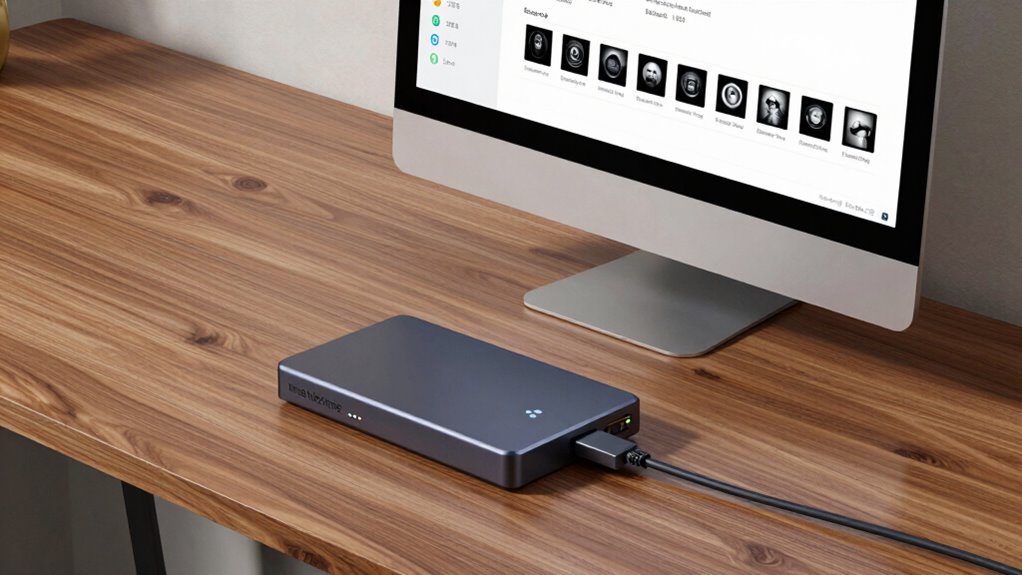
To get started, you need to choose a compatible drive that works with your Mac. Next, you’ll format the drive properly to guarantee it’s ready for backups. Finally, connect and configure the drive so Time Machine can automatically back up your data without any hassle. It’s also important to consider privacy policies and how your data is managed during the backup process. Additionally, using a free online tool to review or adjust your backup settings can streamline the setup process and ensure your data remains protected. Considering proper kitchen gear care and eco-friendly disposal tips can help you maintain your equipment and reduce environmental impact, just as selecting the right backup setup can protect your digital data. Ensuring proper ventilation during the backup process can also prevent overheating of the drive and improve performance.
Selecting Compatible Drive
Have you chosen the right drive for your Time Machine backups? Ensuring drive compatibility is essential for a smooth backup process. Your drive should be formatted correctly and support macOS, ideally using HFS+ or APFS. Check that it has enough storage to handle your data and future backups. Also, consider backup encryption—using a drive that supports this feature adds a layer of security to your backups, safeguarding your data from unauthorized access. If you plan to share the drive across multiple Macs, confirm that it’s compatible with all systems involved. Avoid drives with hardware limitations or incompatible file systems. Choosing a reliable, compatible drive now helps prevent issues later, ensuring your backups are secure, accessible, and easy to manage.
Formatting the Backup Drive
After selecting a compatible drive, the next step is to prepare it for use with Time Machine by formatting it correctly. Proper formatting ensures your backups are secure and compatible with your Mac. You’ll want to choose the right file system—APFS or Mac OS Extended (Journaled)—to optimize performance. During setup, you can enable encryption security, which applies data encryption to protect your backups from unauthorized access. This step is vital for safeguarding sensitive information. Make sure to back up any important data before formatting, as it erases everything on the drive. Once formatted, your drive will be ready for Time Machine to handle automatic, secure backups seamlessly. Proper formatting guarantees reliable, encrypted data encryption for your backups. Additionally, understanding how digital concepts influence backup strategies can help you make informed decisions about data security and management. To further enhance your backup’s resilience, consider exploring backup best practices to ensure your data remains protected under various circumstances. To optimize your backup process, understanding storage compatibility can help prevent potential issues down the line.
Connecting and Configuring
Wondering how to get your backup drive ready for Time Machine? First, connect your external drive to your Mac. You might need to partition the drive if you plan to use it for other purposes; drive partitioning helps organize your data efficiently. Once connected, open Time Machine preferences and select your drive as the backup disk. For added security, enable backup encryption to protect your data from unauthorized access. Make sure your drive is properly formatted, typically as APFS or Mac OS Extended, to guarantee compatibility. If your drive supports it, set up drive partitioning during formatting to keep backups separate from other files. With these steps, your drive is configured for seamless, secure backups with Time Machine.
Seagate Portable 2TB External Hard Drive HDD — USB 3.0 for PC, Mac, PlayStation, & Xbox -1-Year Rescue Service (STGX2000400)
Easily store and access 2TB to content on the go with the Seagate Portable Drive, a USB external…
As an affiliate, we earn on qualifying purchases.
As an affiliate, we earn on qualifying purchases.
Understanding How Time Machine Creates Incremental Backups
Understanding How Time Machine Creates Incremental Backups
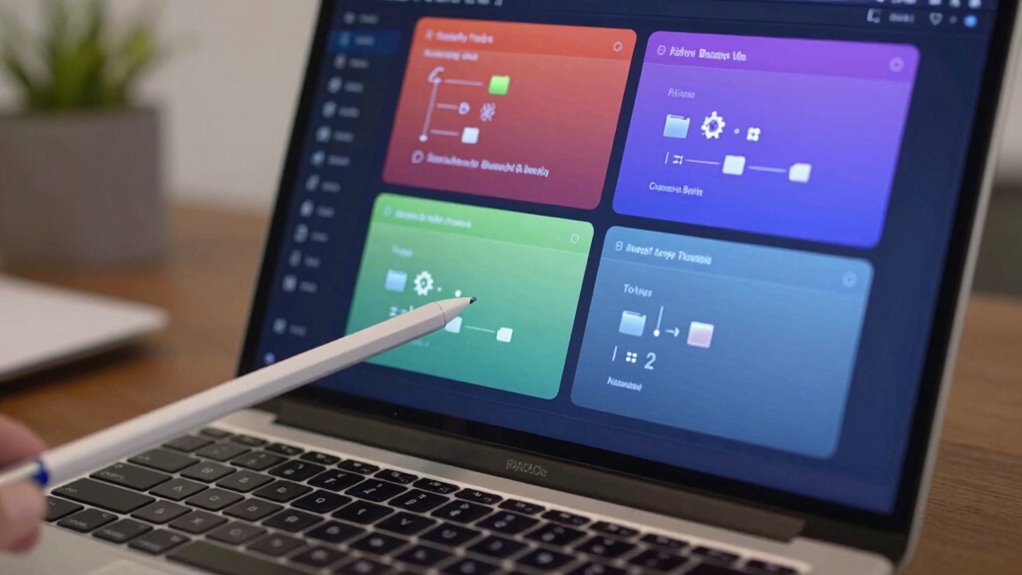
When Time Machine creates incremental backups, it efficiently stores only the changes made since your last backup, saving space through its backup storage mechanism. This process builds a version history, allowing you to access different states of your files over time. Additionally, understanding regional flavors and pairings can enhance your appreciation of the diversity in coffee and tea cultures, much like how incremental backups preserve different versions of your data. Recognizing this file system structure can further clarify how these backups are organized and retrieved efficiently. A clear understanding of backup types can help you better grasp the advantages of incremental versus full backups in maintaining data integrity. Moreover, the backup process relies on the underlying file system to track changes accurately and ensure seamless restoration. Familiarity with advanced filtration systems can also highlight how certain backup methods improve data security and integrity, much like how filtration systems improve air quality.
Backup Storage Mechanism
Have you ever wondered how Time Machine manages to save space while keeping your backups current? It uses a clever storage mechanism that relies on incremental backups, saving only changes since the last snapshot. This approach maximizes storage capacity, allowing you to keep more backups over time. The system also emphasizes encryption security, ensuring your data stays protected even as it’s stored efficiently. Time Machine creates hard links to shared files, avoiding duplication and conserving space. It intelligently manages the backup disk, removing older snapshots when necessary to free up capacity. This process keeps your backups reliable and secure without sacrificing storage or performance. Additionally, affiliate disclosure transparency is maintained, informing users about potential earnings from referrals. Ultimately, Time Machine’s storage mechanism balances security, capacity, and efficiency seamlessly, making your backups both safe and space-friendly. This efficient process aligns with principles from storage management theories, optimizing resource use without compromising data integrity. By understanding this backup storage mechanism, users can better appreciate how their data remains protected while efficiently utilizing available storage resources.
Version History Creation
Ever curious about how Time Machine keeps a detailed history of your files without taking up excessive space? It creates version history through incremental backups, saving only changes since the last snapshot. This process guarantees you can revisit previous file versions without cluttering your storage. Encryption security protects these backups, safeguarding your data from unauthorized access. When you enable cloud synchronization, Time Machine seamlessly integrates with iCloud, allowing your version history to sync securely across devices. This setup not only provides access to previous versions but also enhances data safety with encrypted transmission and storage. Additionally, understanding Italian gelato culture and its pricing strategies can inspire innovative ways to promote your own business. To maintain optimal safety, always ensure your backup devices are kept in secure locations and regularly checked for vulnerabilities, especially when using cloud services for encrypted storage. Recognizing the importance of incremental backups helps you appreciate how this method efficiently manages storage space while maintaining detailed history. As a result, you get a reliable, space-efficient backup system that maintains detailed version history while prioritizing your privacy and security.

Kingwin USB 3.0 Hard Drive Docking Station for 2.5” & 3.5” SATA HDD/SSD, Hot Swap, Tool-Free, UASP Support, 5Gbps High-Speed Transfer, PC Laptop Backup & Storage.
USB 3.0 HDD/SSD dock delivers up to 5Gbps speeds, ideal for PC backups, data transfers, file storage, disk…
As an affiliate, we earn on qualifying purchases.
As an affiliate, we earn on qualifying purchases.
How to Restore Files From Time Machine
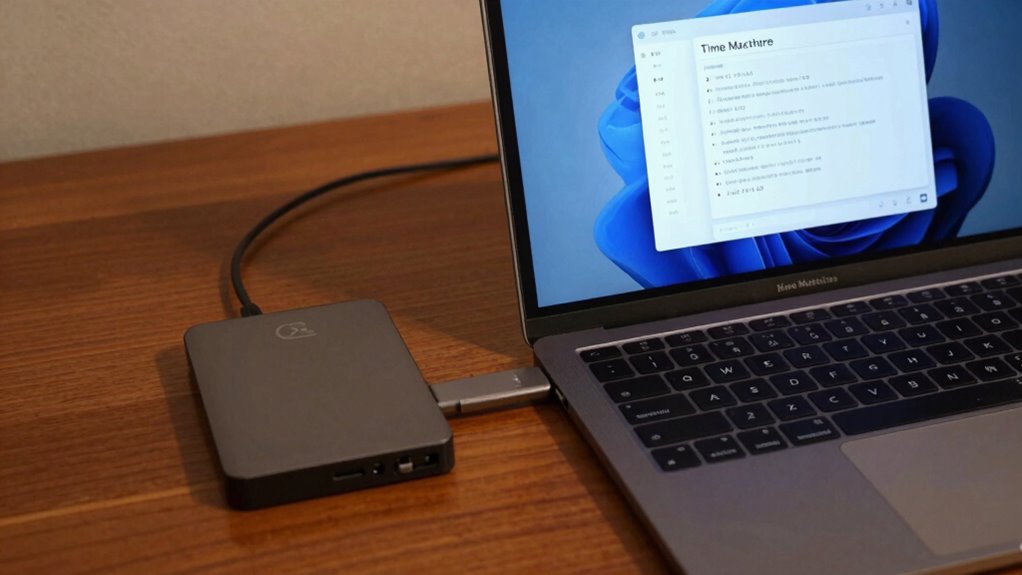
Wondering how to restore your files from Time Machine? Restoring is straightforward. First, connect your backup drive if it isn’t already mounted. Then, open Time Machine from the menu bar or Applications folder. Use the timeline or arrow keys to browse backups. When you find the file or folder you want, select it. You can preview files before restoring, which helps avoid mistakes. Keep in mind that data encryption ensures your backups are secure during the process, and cloud synchronization can help restore files across devices if enabled.
- Browse previous backups using the timeline or arrows
- Preview files before restoring to ensure accuracy
- Confirm restore to replace or duplicate existing files
What Happens During a Typical Backup Session?
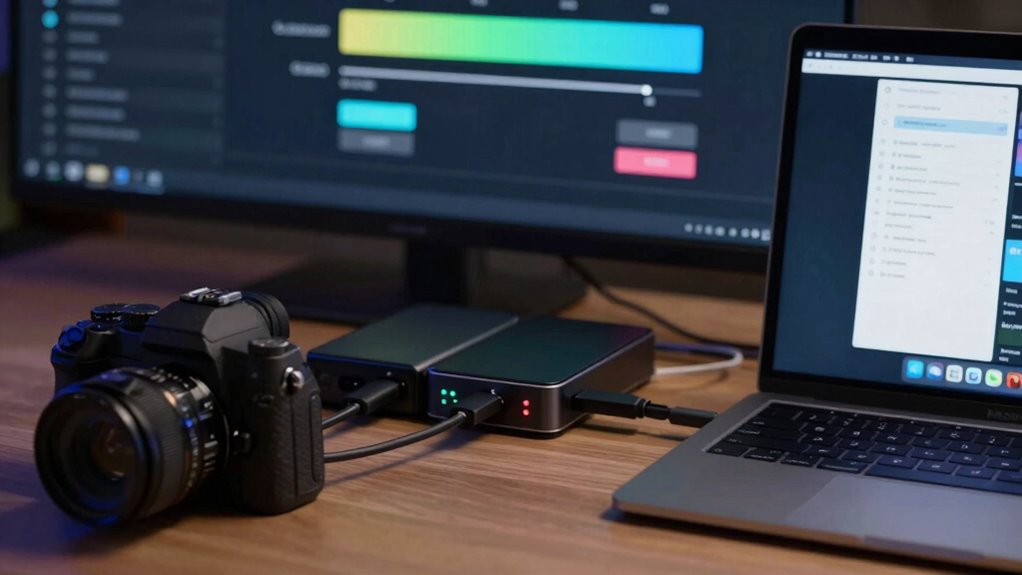
What exactly happens during a typical backup session? When you connect your Mac or set a scheduled time, Time Machine starts by scanning your system for new or changed files. It then creates a snapshot, which is encrypted for security, ensuring your data remains private. During cloud synchronization, your backup updates with any recent changes, syncing securely to your backup disk or cloud service. This process involves copying only the altered data, making backups faster and more efficient. Time Machine maintains multiple versions, allowing you to revert to previous states. The entire process emphasizes data encryption, keeping your information safe during transfer and storage. Here’s a visual overview:
| Step | Description |
|---|---|
| File scanning | Detects new or modified files |
| Data encryption | Secures data during transfer and storage |
| Cloud synchronization | Updates backup with recent changes |
| Version management | Maintains multiple backup snapshots for recovery |
Managing Backup Storage Space and Drive Health
Maintaining sufficient storage space and guaranteeing your backup drive stays healthy are essential parts of managing your Time Machine backups. To optimize drive performance, regularly check for disk fragmentation, which can slow data access. Keep an eye on your available storage; deleting old backups or unnecessary files frees space for new ones. Also, make sure your data encryption settings are up to date, protecting your backups from unauthorized access. To maintain drive health, consider:
- Running disk utility tools to check for errors and defragmentation
- Monitoring storage capacity and deleting obsolete backups
- Verifying that data encryption is properly enabled and current
Troubleshooting Common Time Machine Backup Problems
Even with proper backup management, you might encounter issues that disrupt your Time Machine process. Common problems include backup failures, slow backups, or errors related to data encryption and backup encryption. To troubleshoot, start by checking your drive’s connection and free space. Confirm your backup disk is properly formatted and mounted. If you see encryption errors, verify that your disk’s data encryption settings are correct. Sometimes, backup encryption can cause issues if the password or security settings change unexpectedly. Restart your Mac and reselect the backup disk. You can also try disabling and re-enabling encryption or resetting your Time Machine preferences. Keeping your system updated helps resolve known bugs, ensuring your backups remain secure and functional.
Comparing Time Machine With Other Backup Options
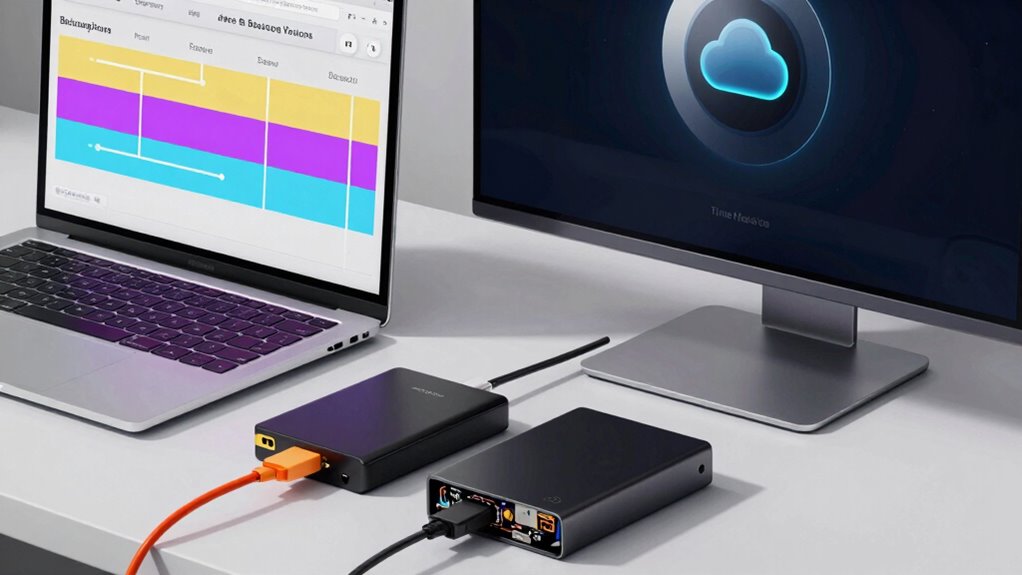
When choosing a backup solution, it’s important to take into account how Time Machine compares to other options like cloud backups, third-party software, or manual copying. Time Machine offers seamless integration with macOS, automatic backups, and local storage, making it easy to restore files quickly. However, cloud storage solutions add the benefit of off-site backups, protecting data from physical damage, and usually include data encryption for security. Third-party software often provides more customization, supporting multiple backup destinations and formats. Manual copying gives full control but requires ongoing effort and is prone to user error.
- Cloud storage guarantees off-site safety and data encryption for security.
- Third-party options often deliver advanced features and flexibility.
- Manual backups require user diligence but offer complete control.
Tips to Improve Backup Speed and Reliability
To improve your backup speed and reliability, start by optimizing your storage settings to guarantee efficient use of space. Using a wired connection can considerably reduce transfer times and prevent interruptions. Additionally, scheduling regular backups keeps your data protected and minimizes the risk of missed or incomplete backups.
Optimize Backup Storage Settings
Optimizing your backup storage settings is essential for boosting both speed and reliability. Properly configured settings ensure your backups are secure and efficient. To enhance backup encryption, choose storage options that support strong encryption security, preventing unauthorized access. Regularly verify that your backup disk has sufficient free space to avoid slowdowns. Additionally, consider excluding unnecessary files and folders from your backup to reduce load and speed up the process. Using encrypted drives or network locations with built-in encryption can further protect your data during backups. Keep your storage device firmware updated to maintain peak performance and security. Implementing these adjustments helps streamline your backups, making them faster and more dependable while safeguarding your data with backup encryption.
Use Wired Connections When Possible
Using a wired connection instead of Wi-Fi can considerably boost your backup speed and reliability. A stable Ethernet connection minimizes interruptions and reduces transfer times, especially with high-quality cables. Confirm your Ethernet cable is in good condition, as poor cable quality can cause slowdowns or connection drops. Wired connections also enhance security, supporting backup encryption by preventing unauthorized access during data transfer. This added layer of protection helps keep your backups secure and private. Unlike Wi-Fi, which can be affected by interference or signal strength issues, a wired setup provides consistent, high-speed performance. If you’re backing up large files or multiple devices, using a wired connection is a simple but effective way to improve both speed and reliability of your Time Machine backups.
Schedule Regular Backup Sessions
Scheduling regular backup sessions guarantees your data stays protected without overwhelming your system or network. Consistent backups help maintain data integrity and prevent loss. To improve backup speed and reliability, consider the following tips:
- Automate backups during off-peak hours to reduce network strain and ensure smoother processes.
- Enable backup encryption to secure sensitive data and prevent unauthorized access.
- Integrate cloud solutions for seamless off-site storage, boosting redundancy and recovery options.
Why Regular Backups Are Essential for Mac Users
Have you ever considered what would happen if your Mac suddenly crashed or was lost? Regular backups are vital to protect your data from such disasters. They guarantee you can quickly restore your files without losing important documents, photos, or settings. Using cloud synchronization makes backing up more efficient, keeping your data updated across devices automatically. Additionally, data encryption adds a layer of security, safeguarding your information from unauthorized access during backup and storage. Without consistent backups, you risk losing everything if hardware fails, gets stolen, or encounters malware. Regular backups give you peace of mind, knowing your data is safe, accessible, and protected. In today’s digital world, backing up regularly isn’t just smart—it’s indispensable.
Frequently Asked Questions
Can I Use Time Machine Without an Internet Connection?
Yes, you can use Time Machine without an internet connection. It doesn’t rely on cloud synchronization, so all backups happen locally on your external drive. You’ll benefit from backup encryption to keep your data secure. Just connect your backup disk, and Time Machine automatically starts backing up without needing internet access. This way, you can maintain your backups offline and protect your privacy with encryption.
How Secure Are Time Machine Backups From Unauthorized Access?
You’re right to be concerned—around 60% of data breaches involve unauthorized access. Time Machine backups are quite secure, thanks to encryption security that protects your data at rest. Access control measures also restrict who can view or restore backups, adding an extra layer of safety. However, make sure your backup disk has a strong password and encryption enabled, so only you can access your sensitive information.
Is It Possible to Back up Only Specific Folders With Time Machine?
Yes, you can perform a selective backup with Time Machine by excluding specific folders you don’t want to back up. To do this, open System Preferences, go to Time Machine, and click on Options. There, you can add folders to the exclusion list, ensuring only your selected folders are backed up. This folder exclusion feature helps you customize your backup process, saving space and focusing on what matters most.
How Does Time Machine Handle Corrupted or Failed Backups?
Sometimes, backups face gentle setbacks, but Time Machine endeavors to maintain backup integrity and smooth data recovery. When a backup is corrupted or fails, it usually skips that snapshot and attempts to create a new, healthy backup. If persistent issues occur, it may remove problematic backups to keep the process reliable. Rest assured, Time Machine’s design aims to protect your data, ensuring you can recover files without worry.
Can Time Machine Backups Be Migrated to a New Mac?
Yes, you can migrate Time Machine backups to a new Mac. First, make certain your backup is encrypted for security and that your external drive is compatible with your new device. Connect the external drive, then use Migration Assistant on your new Mac to transfer your user data, applications, and settings. This process securely imports your encrypted backups, making the shift seamless without losing important files.
Conclusion
Think of your Mac’s backups like a safety net—you hope you never need it, but when you do, it’s there to catch you. Regular backups, like those from Time Machine, keep your data safe and accessible, just like a reliable friend. I once lost important files after a crash, but a quick restore from Time Machine saved the day. Don’t wait—set up your backup today and keep your digital life secure and stress-free.