
If your laptop won’t sleep properly or wakes up randomly, it’s often caused by outdated drivers, incorrect power settings, or peripherals set to wake the device. Hardware issues, background processes, and scheduled updates can also interfere. External devices like mice or keyboards are common triggers, and driver conflicts or firmware problems may be to blame. To fix these issues, you need to check your hardware, update software, and adjust settings—there’s more to uncover if you want your laptop to sleep soundly.
Key Takeaways
- Outdated drivers or firmware may prevent proper sleep and cause unexpected wake-ups.
- Connected peripherals or devices configured to wake the laptop can trigger unintentional wakes.
- Scheduled tasks or wake timers set for updates or maintenance can disrupt sleep cycles.
- Hardware malfunctions or faulty sensors may interfere with power management and cause random wake-ups.
- Incorrect system settings or background processes running silently can prevent sleep or cause unwanted wakes.
![Wesdut 2026 Updated 52in1 Mini Precision Screwdriver Set, [S2 Military-grade alloy] Small Screw Driver Set, Magnetic Repair Tool Kit for Phone, PC, Laptop, Xbox, Switch, Eyeglasses, Watch, Electronic](https://m.media-amazon.com/images/I/51NnTYrs5vL._SL500_.jpg)
Wesdut 2026 Updated 52in1 Mini Precision Screwdriver Set, [S2 Military-grade alloy] Small Screw Driver Set, Magnetic Repair Tool Kit for Phone, PC, Laptop, Xbox, Switch, Eyeglasses, Watch, Electronic
[52in1 Repair Tool Kit] This all-in-one tool set includes 11 accessories in 6 different categories and 40 different…
As an affiliate, we earn on qualifying purchases.
As an affiliate, we earn on qualifying purchases.
How Do Sleep Mode and Wake Functions Work on Your Laptop?

Have you ever wondered what actually happens when you put your laptop into sleep mode? When you activate sleep mode, your device reduces power consumption by turning off the display and suspending most processes, while keeping your session in RAM. This allows quick wake-up times, so you can resume work instantly. To guarantee smooth operation, it’s important to check your sleep mode settings, as incorrect configurations can cause issues. Over time, your battery’s calibration may drift, affecting how sleep mode functions—sometimes preventing your laptop from waking properly. Regularly calibrating your battery helps maintain accurate power readings, particularly in relation to battery health. Proper power management ensures your device transitions smoothly between states and conserves energy effectively. Additionally, understanding the impact of microplastics in dust and other indoor pollutants can help you create a healthier environment that supports your device’s longevity and performance. Being aware of these environmental factors can also contribute to maintaining your device’s overall performance and durability.
USB peripherals that prevent sleep
As an affiliate, we earn on qualifying purchases.
As an affiliate, we earn on qualifying purchases.
Common Causes of Laptop Sleep Problems

Many issues with laptop sleep problems stem from incorrect settings or outdated drivers. Hardware malfunctions can also disrupt sleep mode, such as faulty sensors or damaged components that interfere with power management. Incorrect power settings are a common culprit; if your laptop’s sleep timer is disabled or set improperly, it may not enter sleep mode correctly or wake unexpectedly. Sometimes, devices connected via USB or Bluetooth can prevent sleep, especially if they’re configured to wake your laptop. Outdated drivers, particularly for graphics or chipset hardware, can hinder proper sleep functions. Ensuring your power settings are optimized and drivers are up to date can often resolve these issues, preventing your laptop from failing to sleep or waking at inappropriate times.

Monzlteck All-Metal Adjustable Width Power Strip/Laptop Chargers Holder Mount – Under Desk or Wall Mountable Universal Organizer for Power Strips, Laptop Chargers & Cable Management (Large)
1:UNIQUE and PRACTICAL DESIGN: Sick of reaching under your desk in the dark to find an outlet? Why…
As an affiliate, we earn on qualifying purchases.
As an affiliate, we earn on qualifying purchases.
Why Your Laptop Keeps Waking Up Unintentionally?
Sometimes, your laptop wakes up unexpectedly because certain devices or system settings trigger its wake function without your knowledge. For example, connected peripherals like a mouse or keyboard can send signals that wake your laptop, leading to unnecessary battery drain. Additionally, screen flickering caused by display or driver issues can also prompt your device to wake up. These interruptions not only drain your battery faster but can also disrupt your workflow. Check your device settings to disable wake timers for scheduled tasks or prevent peripherals from waking your laptop. Updating drivers and adjusting display settings can reduce screen flickering and prevent accidental wakes. Staying aware of these triggers helps you maintain better control over your laptop’s sleep behavior. Recognizing peripheral wake signals can help prevent unintentional wakes and extend your device’s battery life. Additionally, reviewing system power settings can identify other factors that might be causing unwanted wakes. Being mindful of power management options can further optimize your laptop’s sleep mode and energy efficiency.

Rongon Button Cell Battery Tester Portable Battery Checker1.5v 3v Small Batteries Tester Meter Tool for LR44 CR2032 CR2025 Button Cell
Easy To Carry: The Watch Battery Tester is made of plastic material and is fairly lightweight , with…
As an affiliate, we earn on qualifying purchases.
As an affiliate, we earn on qualifying purchases.
How Background Processes Keep Your Laptop Awake

Background processes can keep your laptop awake without you realizing it, often running silently in the background to perform updates, backups, or system maintenance tasks. These background processes, like system updates, can sometimes interfere with your sleep settings. A cybersecurity tactic such as monitoring active processes can help identify and mitigate unnecessary wake-ups. Certain apps or system tasks schedule maintenance activities that keep your device awake unexpectedly. Knowing which background processes are active helps you manage them better. Disabling unnecessary ones or scheduling updates for times when you’re not using your laptop can reduce unwanted wake-ups and improve sleep performance. Utilizing system monitoring tools can help you identify and control these background activities more effectively. Regularly reviewing and adjusting power management settings can further minimize disruptions caused by background processes. Understanding how background activity schedules are set up can help you better coordinate maintenance tasks with your usage patterns. Being aware of automatic updates and their timing can help you prevent unexpected wake-ups during critical usage periods.
Checking Hardware Settings and Peripherals That Can Wake Your Laptop
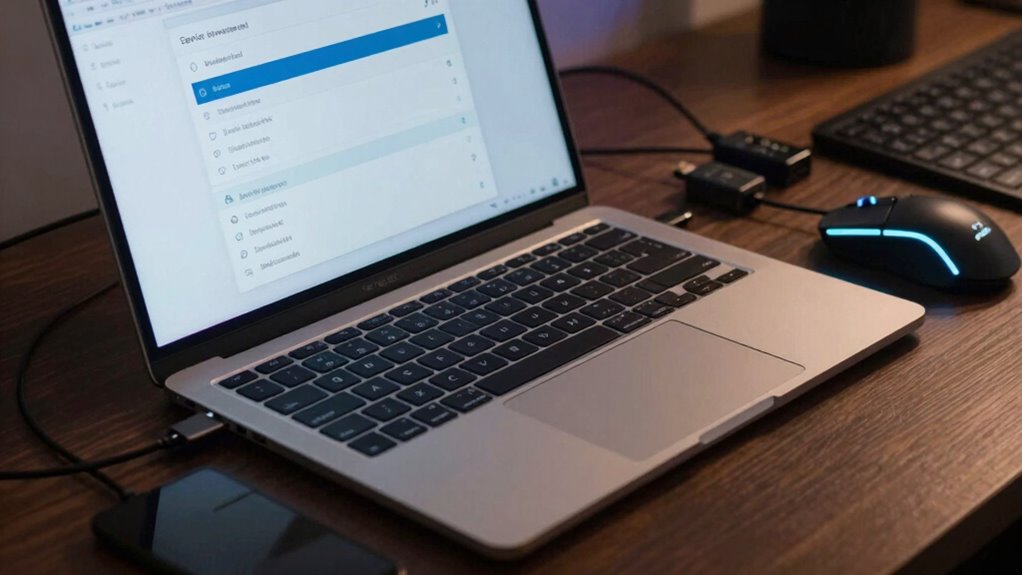
Even when background processes are minimized, hardware settings and peripherals can still wake your laptop unexpectedly. Peripheral interference is a common cause, especially if devices like mice, keyboards, or external drives are configured to wake the computer. To check, go to Device Manager and review the properties of each peripheral under the “Power Management” tab. Disable the option to allow devices to wake your laptop if unnecessary. Running hardware diagnostics can also identify faulty components or conflicts that might cause wake-ups. Confirming that hardware settings are correctly configured helps prevent accidental wakes. Regularly reviewing and adjusting these settings minimizes interruptions and ensures your laptop stays asleep when intended.
Adjusting Power Management Settings to Fix Sleep Issues

Adjusting the power management settings on your laptop can often resolve sleep issues by ensuring that the system and connected devices behave correctly during sleep and wake cycles. Start by optimizing battery settings to prevent unnecessary power drain that may interrupt sleep. Next, adjust the display timeout to enable your screen to turn off more quickly when idle, reducing wake triggers. Finally, review device power settings to disable peripherals or network adapters that might wake your laptop unexpectedly. Implementing these changes can help maintain a stable sleep state, especially when managing modern family dynamics of device usage.
Troubleshooting Software Conflicts and Driver Problems
Conflicting background processes or outdated drivers can cause your laptop’s sleep issues. You might notice certain apps running in the background or driver errors that disrupt sleep mode. Updating or disabling problematic drivers and managing background tasks can often resolve these conflicts. Regularly checking for driver updates can also help ensure compatibility and smooth performance. Additionally, understanding how software conflicts interfere with sleep modes can assist in diagnosing persistent problems.
Conflicting Background Processes
Have you ever wondered if a background process or software conflict is preventing your laptop from waking up properly? Background interference from running apps or services can cause power conflicts, disrupting sleep functions. To troubleshoot, consider these steps:
- Check for unnecessary background processes in Task Manager and disable any non-essential ones.
- Review your system’s power settings for conflicting configurations that might interfere with sleep mode.
- Use tools like Event Viewer to identify processes or drivers that wake your laptop unexpectedly, pinpointing potential software conflicts.
Outdated or Corrupt Drivers
Outdated or corrupt drivers are a common culprit behind sleep issues on your laptop. When drivers aren’t up-to-date or become corrupted, they can cause conflicts that prevent your device from entering or maintaining sleep mode. To fix this, you should regularly check for driver updates. Sometimes, incompatible or faulty drivers lead to software conflicts, which disrupt normal sleep functions. You can update drivers through your device manager or manufacturer’s website. If problems persist, consider rolling back recent driver updates or reinstalling drivers altogether. Here’s a quick comparison:
| Issue | Solution | Result |
|---|---|---|
| Outdated drivers | Driver updates from manufacturer | Restores compatibility |
| Corrupt drivers | Reinstall or rollback | Fixes software conflicts |
| Conflicting drivers | Remove or disable conflicting drivers | Ensures smooth sleep mode |
Keeping drivers current helps maintain proper sleep and wake functions. Regularly updating your drivers can also prevent software conflicts, which are often caused by incompatible versions.
Using Built-In Tools to Diagnose Wake-Up Events

To effectively diagnose wake-up events causing your laptop to exit sleep unexpectedly, you can leverage the built-in tools available in your operating system. These tools help identify what triggered the wake-up, whether it’s hardware or software. Start by checking system logs for wake-up reasons, which can reveal if a device or process is responsible. Consider performing a battery calibration to ensure accurate power management, as faulty readings might cause false wake-ups. Additionally, updating your BIOS can resolve firmware issues that interfere with sleep functions. Exploring local attractions or regional specialties can also provide a relaxing break while troubleshooting, especially if your device issues are linked to hardware stress.
Use system logs, battery calibration, and BIOS updates to identify and fix unexpected wake-up issues.
Here are key steps to diagnose the problem:
- Review Event Viewer or System Log for wake-up sources
- Run battery calibration to rule out power-related glitches
- Update BIOS to fix firmware bugs that could cause unwanted wake-ups
Tips to Prevent Unwanted Wake-Ups and Improve Sleep Stability
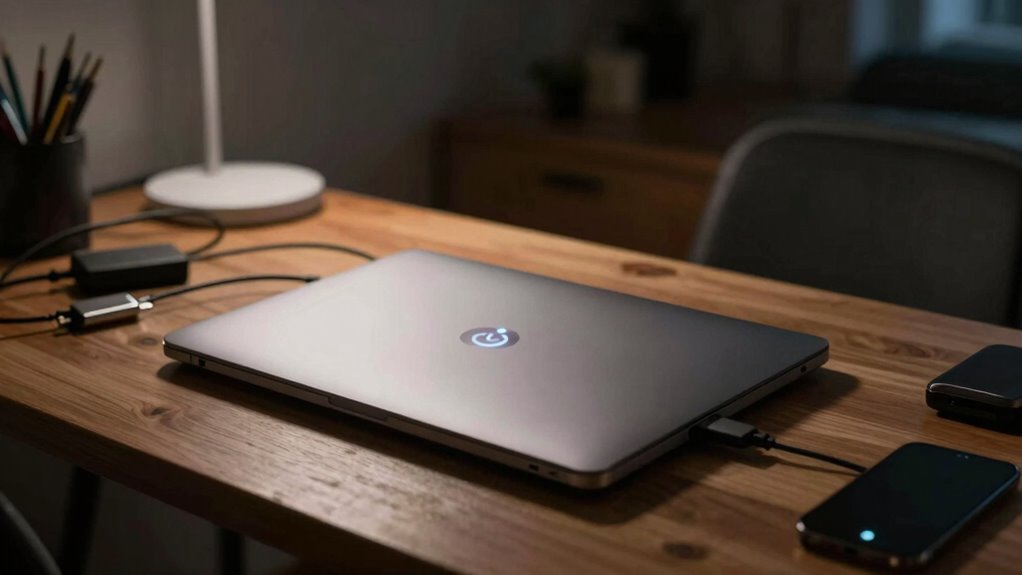
Once you’ve identified what’s causing your laptop to wake unexpectedly, taking steps to prevent these interruptions can considerably improve sleep stability. Adjust your sleep environment by minimizing background noise, dimming lights, and ensuring your laptop is on a flat, stable surface. Changing user habits also helps—avoid opening programs or notifications before sleep, and disable automatic updates during rest periods. Use the table below to reinforce these tips:
| Tip | Benefit |
|---|---|
| Disable wake timers | Prevent scheduled wake-ups |
| Manage notifications | Reduce unexpected activity |
| Adjust power settings | Keep laptop asleep longer and stable |
| Keep environment quiet | Minimize external disruptions |
Implementing these practices helps your laptop stay asleep longer and reduces unwanted wake-ups. Additionally, understanding the importance of privacy settings can help you control which notifications or updates are allowed during sleep, further enhancing your device’s sleep stability.
When and How to Reset or Reinstall Your Operating System

Sometimes, despite troubleshooting, your laptop’s issues persist, making it necessary to reset or reinstall your operating system. If sleep optimization efforts haven’t worked, a system reinstallation might be your best move. Consider doing this when your laptop randomly wakes up or refuses to sleep properly. To guarantee a smooth process:
- Backup all important data before starting the reset or reinstallation.
- Use official recovery tools or installation media to perform a clean install.
- After reinstalling, update drivers and Windows to improve sleep stability and prevent further wake issues.
This approach can resolve underlying system glitches causing sleep problems and restore peak sleep performance. Reinstalling your OS is a decisive way to fix persistent issues and ensure your laptop sleeps and wakes correctly.
Frequently Asked Questions
Can Malware Cause My Laptop to Wake Randomly?
Yes, malware can cause your laptop to wake randomly. It may trigger background processes or interfere with your system’s sleep settings, often due to antivirus conflicts or malicious programs running unnoticed. These background processes can wake your laptop to perform tasks or communicate with a remote server. To fix this, run a full antivirus scan, update your security software, and check for suspicious processes that might be causing the issue.
Do BIOS Settings Affect Sleep and Wake Behavior?
Yes, BIOS settings can affect your laptop’s sleep and wake behavior. Outdated BIOS updates might cause issues, so keeping your BIOS current guarantees better hardware compatibility and stability. Incorrect BIOS configurations, like enabling wake timers or network wake options, can lead to random wakes. Adjusting these settings can help resolve sleep problems, making your laptop sleep properly and wake only when intended.
How Do I Identify Which Device Triggered Wake-Up Events?
Your laptop’s wake-up events are like a sneaky spy revealing themselves through Device drivers and Wake timers. To identify which device triggered it, open Command Prompt and type “powercfg -lastwake” for recent events or “powercfg -devicequery wake_armed” to see active devices. These commands help you track down the culprit, so you can disable unnecessary wake timers and keep your laptop sleeping soundly.
Can Overheating Prevent My Laptop From Sleeping Properly?
Overheating can prevent your laptop from sleeping properly because it disrupts power management. When your device gets too hot, it might stay awake to cool down or avoid damage, making sleep mode ineffective. To fix this, improve cooling solutions like cleaning vents, using a cooling pad, or adjusting power management settings. Ensuring proper cooling helps your laptop sleep smoothly and prevents overheating from interfering with its sleep functions.
Is It Normal for Laptops to Wake During System Updates?
Yes, it’s normal for laptops to wake during system updates. During these updates, power management settings temporarily modify to install updates properly, which can cause your laptop to wake automatically. This process helps maintain system stability and ensures updates are applied correctly. If your laptop keeps waking frequently, check your power management settings and scheduled update times, and consider adjusting them to prevent unnecessary wake-ups during sleep mode.
Conclusion
Ultimately, understanding why your laptop wakes up unexpectedly can save you time and frustration. While it might seem like a simple glitch, it’s often a sign of deeper software or hardware issues. Fixing these problems restores peace to your device’s sleep cycle, like a good night’s sleep for your laptop. So, don’t overlook the details—sometimes, the tiniest setting or background process can make all the difference in keeping your laptop restful and reliable.