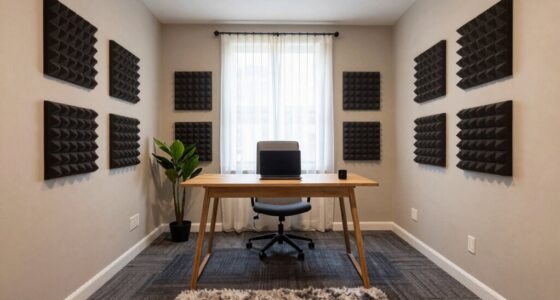
Your desk height plays a bigger role in comfort and health than your chair alone. When your desk is too high or low, it causes strain on your wrists, shoulders, and neck, leading to discomfort and poor posture. Properly adjusted desks promote natural alignment, reduce fatigue, and boost productivity. To keep things comfortable long-term, it’s essential to find the right height and use simple tools to fine-tune your setup. Keep exploring to learn how to optimize your workspace effectively.
Key Takeaways
- Proper desk height ensures natural arm and wrist positioning, reducing strain regardless of chair adjustments.
- Adjusting desk height promotes better posture, preventing slouching and neck discomfort even with an ergonomic chair.
- An ideal desk height allows forearms to be parallel to the floor, supporting comfort during extended work periods.
- Using ergonomic accessories can help fine-tune desk height for optimal body alignment and reduce musculoskeletal issues.
- Regularly checking and maintaining desk height is essential for long-term ergonomic health, beyond just chair adjustments.

Veken 55 Inch Large Electric Standing Desk,Sit to Stand Up, Heights Adjustable, Work Home Office Computer Table for Study, Walking Pad, Writing, and Games, Wooden Desktop Desks, White
Elevate Your Workspace: Enjoy effortless height adjustment from 28.3" to 46.5" to seamlessly transition between sitting and standing…
As an affiliate, we earn on qualifying purchases.
As an affiliate, we earn on qualifying purchases.
Why Proper Desk Height Is Key to Comfort and Health
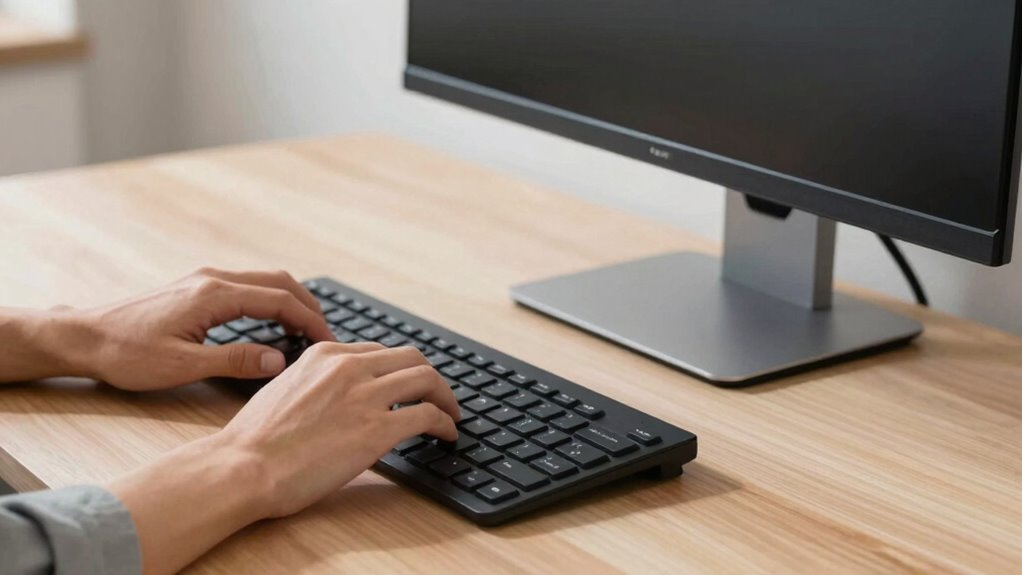
Proper desk height is essential because it directly affects your comfort and reduces strain on your body. When your desk is the right height, you can maintain good posture correction naturally, preventing slouching or neck strain. An ergonomic workspace promotes better alignment, decreasing the risk of discomfort or injury over time. Additionally, a well-organized workspace makes it easier to reach your essentials without unnecessary stretching or twisting. This organization helps you stay focused and reduces fatigue. When your desk supports proper posture and keeps your workspace tidy, you’ll experience less muscle tension and fatigue, boosting productivity and well-being. Ultimately, the right height creates a healthier, more efficient work environment that benefits your body and your overall comfort. Understanding the fundamentals of ergonomics can help you make smarter adjustments for long-term comfort. Incorporating requirements traceability into your workspace setup can ensure your adjustments meet ergonomic standards and promote ongoing well-being. Recognizing proper ergonomic principles can further enhance your setup, ensuring sustained comfort and health benefits, especially when considering individual differences in body size and shape. Paying attention to ergonomic assessments can help tailor your workspace to better suit your specific needs.

HUANUO Keyboard Tray Under Desk, 360 Adjustable Ergonomic Sliding Keyboard & Mouse Tray, Under Desk Keyboard Tray Slide Out, Keyboard Holder Under Desk for Typing in Home, Office Work, 25"W x 9.84"D
Large & Perfect Size – Full size keyboard drawer with a 25” x 9.84” , please kindly confirm…
As an affiliate, we earn on qualifying purchases.
As an affiliate, we earn on qualifying purchases.
How to Find Your Ideal Desk Height
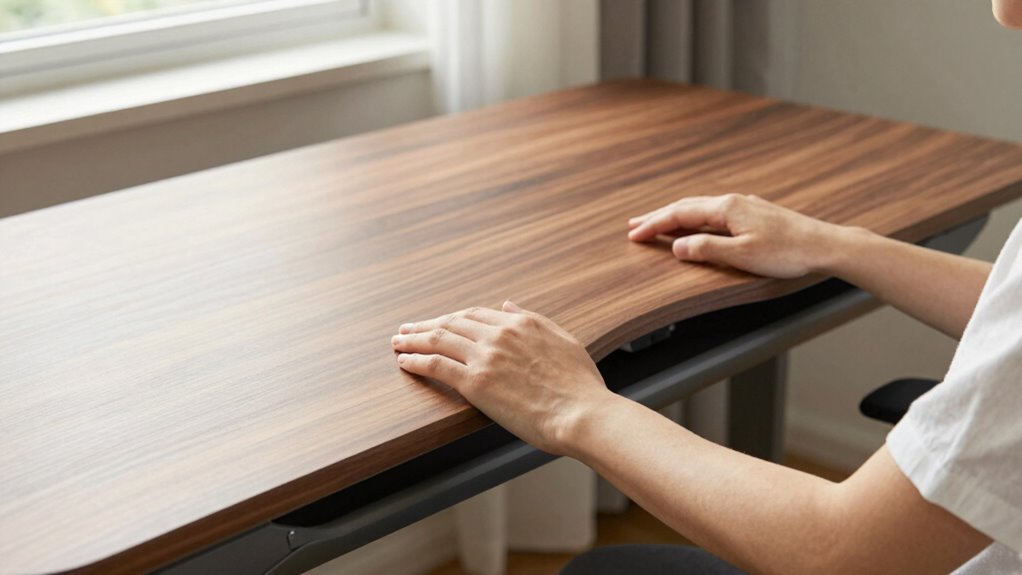
Finding your ideal desk height starts with understanding your body’s natural positioning when sitting comfortably. Your desk should allow your forearms to be parallel to the floor, promoting good desk posture. To achieve this, sit with your feet flat on the ground and your knees at a 90-degree angle. Adjust your chair height so your hips are level with or slightly higher than your knees, ensuring proper chair alignment. Your elbows should rest at about a 90-degree angle when your hands are on the desk. The key is to avoid slouching or reaching up, which can strain your neck and shoulders. Incorporating ergonomic accessories like keyboard trays or monitor stands can further optimize your workspace. Proper tool usage is also essential to prevent strain and injury when adjusting or setting up your workstation. Additionally, understanding posture correction techniques can help maintain your comfort over long periods. Paying attention to body alignment during setup can significantly reduce discomfort and prevent long-term issues. Regularly checking your ergonomic setup can help you stay aligned and prevent fatigue. Once your chair and desk are aligned to support your natural posture, you’ll find your workspace both more comfortable and healthier.

WALI Computer Monitor Stand for Desk, Adjustable Laptop Riser, Desk Monitor Stand Underneath Storage for Office, School Supplies (PTT001-B), 1 Pack, Black
Design: The monitor stand for the desk has a large 14.6 x 9.3 inches metal shelf that fits…
As an affiliate, we earn on qualifying purchases.
As an affiliate, we earn on qualifying purchases.
Tools and Tips for Adjusting Your Desk Easily
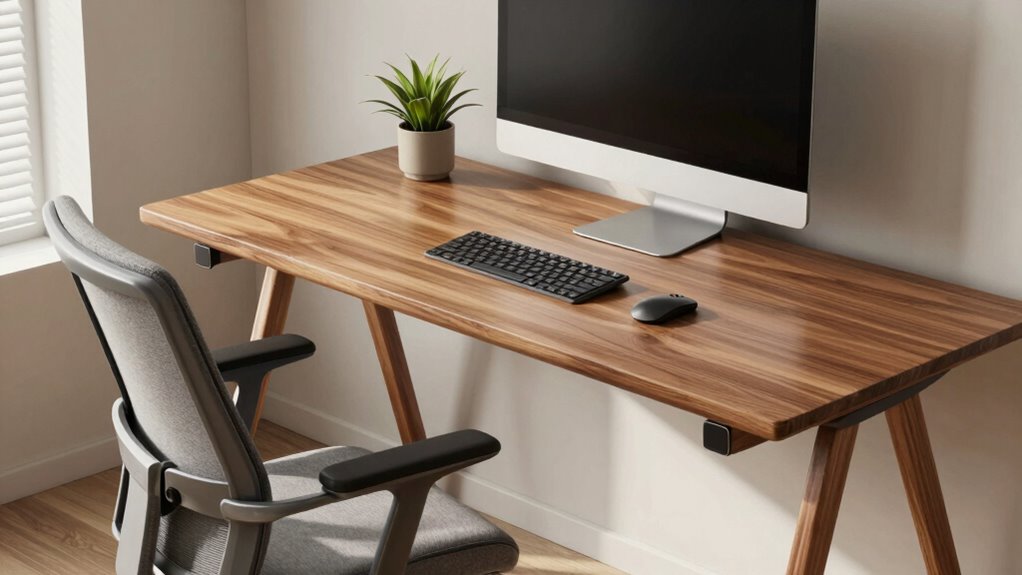
Adjusting your desk height can be straightforward with the right tools and techniques. Start by using ergonomic accessories like adjustable desk risers or monitor stands to make quick changes. If your desk is manual, consider desk adjustment techniques such as loosening clamps or knobs to raise or lower the surface smoothly. For electric desks, simply press the height adjustment buttons and hold until your desired level is reached. Keep a tape measure or a level nearby to confirm your desk is at the ideal height. Regularly check your setup to prevent strain and adjust as needed. Using these tools and techniques makes it easy to customize your workspace for comfort and productivity, helping you maintain proper posture throughout the day.

Egoldto Height Measurement for Wall, Children Adult Height Measure Rod, 3D Removable Growth Chart Stick, Wall Mounted Splicing Ruler for Kids Baby Nursery 79 inch (Blue)
Very accurate -There are inches and centimetres measurement. It's very precise. The scale is very clear to read.
As an affiliate, we earn on qualifying purchases.
As an affiliate, we earn on qualifying purchases.
Common Ergonomic Desk Height Mistakes and How to Avoid Them

Many people make the mistake of setting their desk height without considering their body’s needs, which can lead to discomfort or long-term strain. A common error is placing the desk too high or low, disrupting proper keyboard posture. When your desk is too high, your wrists may bend upward, affecting wrist alignment and increasing strain. Conversely, a desk that’s too low can cause slouched shoulders and poor posture. To avoid these mistakes, confirm your keyboard is at elbow height with your forearms parallel to the ground. This position promotes proper wrist alignment and minimizes fatigue. Adjusting your desk to support a neutral wrist position not only improves comfort but also helps prevent repetitive strain injuries over time. Proper desk height is a simple yet essential step toward ergonomic comfort.
Maintaining an Ergonomic Setup for Long-Term Comfort
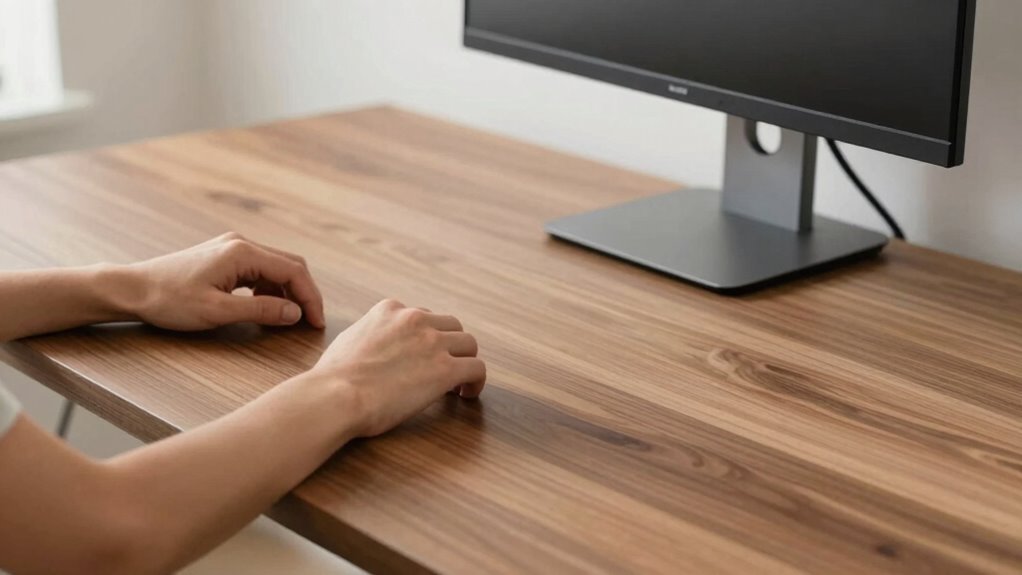
Once you’ve set your desk to the correct height, maintaining an ergonomic setup over time becomes key to long-term comfort. Regularly use ergonomic accessories like wrist supports or monitor risers to support good posture. These tools help reduce strain and keep your setup aligned. Staying mindful of your posture awareness by checking in with yourself throughout the day—sit upright, keep your shoulders relaxed, and avoid slouching. Adjust your chair or desk if you notice discomfort or shifts in your positioning. Incorporating ergonomic habits into your daily routine can significantly improve your comfort and prevent common issues like muscle strain or repetitive motion injuries. Small, consistent habits keep your ergonomics on point, preventing fatigue and injury. Ensuring proper air quality and humidity can also contribute to overall comfort and health in your workspace. Additionally, workspace organization plays a crucial role in maintaining ergonomic health by reducing clutter that can cause awkward postures. Making these adjustments regularly guarantees your workspace remains comfortable and supportive, allowing you to focus without distraction or pain. Proper setup and regular adjustments are essential for lasting ergonomic health.
Frequently Asked Questions
How Often Should I Reassess My Desk Height?
You should reassess your desk height every few months to guarantee ideal comfort and ergonomics. Regularly checking allows you to adjust for changes in your posture or workspace setup. Incorporate ergonomic accessories like keyboard risers or monitor stands, especially if you use a standing desk, to maximize its benefits. Staying proactive helps prevent discomfort and promotes better health, making frequent adjustments a simple but essential part of your routine.
Can Desk Height Affect My Posture Over Time?
Yes, desk height can greatly impact your posture over time. If your desk is too high or low, it can cause you to strain your neck, shoulders, and back. To prevent this, make sure your chair is properly aligned and consider ergonomic cushions for added support. Adjusting your desk to the right height promotes better ergonomics, reducing discomfort and helping maintain good posture during long work hours.
What Signs Indicate My Desk Height Is Incorrect?
Imagine your workspace as a symphony—every part must be in harmony. If your desk height is off, you might feel strain in your shoulders, neck, or wrists, or notice discomfort after long hours. You may also find yourself slouching or leaning forward. These signs indicate your desk height isn’t right. Don’t buy into desk height myths; ergonomic accessories can help you customize your setup for perfect comfort and posture.
Is Adjustable Desk Height Suitable for All Users?
Adjustable desk height is suitable for most users, but it’s essential to customize it properly. While ergonomic accessories can enhance comfort, desk height myths sometimes lead people to overlook proper setup. You should aim for your elbows to be at a 90-degree angle and your monitor at eye level. If you follow these guidelines, adjustable desks can accommodate various body types, promoting better posture and reducing strain.
How Does Desk Height Impact Workstation Productivity?
Proper desk height boosts your workstation productivity by ensuring comfort and reducing strain. When your desk is at an ergonomic height, you can focus better, work longer, and avoid discomfort. Using ergonomic accessories like adjustable risers or footrests helps optimize your setup. Plus, a well-organized desktop allows you to access tools easily, keeping you efficient. Adjust your desk to match your needs for a more productive, comfortable workspace.
Conclusion
Remember, your desk height is the foundation of your comfort and health, like the roots of a sturdy tree. When you get it right, everything else—your posture, productivity, and well-being—falls into place. Don’t let a mismatched desk be the weak link in your ergonomic chain. Take the time to adjust and maintain your setup, and you’ll create a workspace that supports you like a strong, steady trunk—ready to weather any workday storm.