
🔍 Read the full analysis: Revolutionizing Event Management With AI: The ATV Big Air Tour Case Study on ThorstenMeyerAI.com

Get the latest gadgets delivered free with Prime
- Fast, free delivery on millions of items
- Prime Video, Amazon Music and more included
- Member-only deals all year
TL;DR
ATV Big Air Tour claims to have used ChatGPT to cut administrative work from three days to three hours. This self-reported case suggests AI can significantly increase productivity for small tourism operators, though independent verification is lacking.
OpenAI has published a customer story asserting that ATV Big Air Tour used ChatGPT to cut a key administrative task from three days down to three hours. This self-reported achievement highlights the potential for AI tools to boost productivity in small tourism businesses, which often handle heavy administrative workloads with limited staff. For more details, see the original analysis on Thorsten Meyer AI’s coverage.
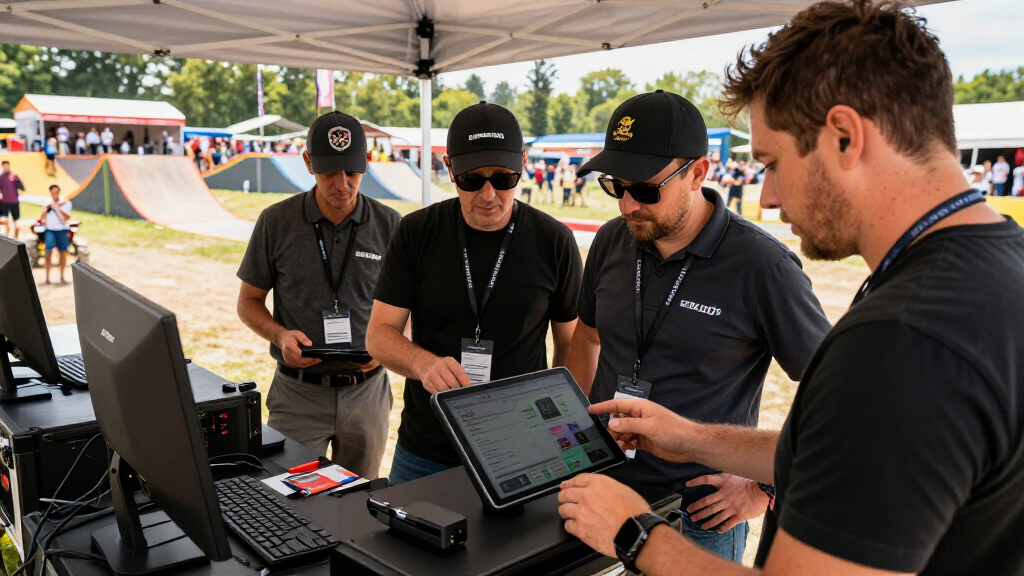
The story, published on OpenAI’s website, details how ATV Big Air Tour, an ATV-guided tour operator, leveraged ChatGPT to streamline tasks such as drafting communications, planning itineraries, and managing bookings. According to the company, these efforts previously took approximately three working days, but with AI assistance, the same workload now takes about three hours. The claim is based on the company’s own account, without independent verification or specific task breakdowns.
OpenAI’s publication emphasizes the dramatic reduction in time, framing it as a 24-fold efficiency gain. However, details such as the number of staff involved, the exact nature of the tasks, and the measurement period are not provided, making it a self-reported estimate rather than an independently validated result. The company’s story is part of OpenAI’s broader marketing approach, which showcases customer experiences with ChatGPT and related tools.
Implications of AI-Driven Efficiency Gains for Small Businesses
This case suggests that conversational AI has the potential to significantly reduce administrative burdens for small tourism operators, enabling them to operate more efficiently with limited staff. If such claims are accurate, AI tools could help small businesses handle tasks traditionally requiring multiple staff hours, freeing resources for customer experience and growth. However, as the claim is self-reported and lacks independent verification, it remains a promising anecdote rather than definitive evidence of widespread impact.
The broader relevance lies in the ongoing debate about AI’s tangible productivity benefits outside large enterprises. For small operators, automation could mean more tours, better customer engagement, and cost savings, but robust, independently validated data is needed to confirm these benefits at scale.
AI productivity tools for small business
As an affiliate, we earn on qualifying purchases.
As an affiliate, we earn on qualifying purchases.
Background on AI Adoption in Small Tourism Businesses
Small tourism companies, such as ATV tour operators, typically operate with lean teams that juggle multiple roles, including marketing, customer service, and scheduling. Administrative tasks often consume a significant portion of their workweek, especially during peak seasons. AI tools like ChatGPT have been increasingly adopted to automate routine activities, including drafting emails, generating itineraries, and managing bookings.
Prior to this story, there have been limited documented cases of measurable productivity improvements in small businesses through AI, with most evidence anecdotal or vendor-driven. OpenAI’s publication of customer stories aims to showcase real-world applications, though these are often self-reported and lack independent validation.
“Using ChatGPT, we’ve cut our planning and communication time from three days to just a few hours, allowing us to focus more on customer experience.”
— ATV Big Air Tour owner
As an affiliate, we earn on qualifying purchases.
Unverified Nature of Reported Time Savings
The key limitation is that the 3-day-to-3-hour reduction is a self-reported figure from ATV Big Air Tour, with no independent audit or detailed task breakdowns provided. It is unclear which specific tasks were accelerated, how the baseline was measured, or whether the time savings have translated into other benefits like increased revenue or customer satisfaction. Without third-party verification or detailed methodology, the claim remains an anecdotal estimate rather than a confirmed outcome.
AI scheduling and booking software
As an affiliate, we earn on qualifying purchases.
As an affiliate, we earn on qualifying purchases.
Next Steps for Validating AI Productivity Claims
Further independent studies or detailed case reports are needed to verify the extent of productivity gains from AI in small tourism businesses. OpenAI and ATV Big Air Tour could publish more comprehensive data, including task specifics, measurement methods, and operational impacts. Future research may also explore whether similar results are achievable across different sectors and business sizes, helping to establish the broader applicability of AI-driven efficiency improvements.
As an affiliate, we earn on qualifying purchases.
Key Questions
Is the time reduction claim verified by independent sources?
No, the claim is based on ATV Big Air Tour’s self-report published by OpenAI, without independent verification or detailed methodology.
What specific tasks did ChatGPT help automate?
The published story does not specify which tasks were accelerated. Likely candidates include drafting communications, planning itineraries, and managing bookings, but details are not confirmed.
Could this AI use case be replicated by other small businesses?
Potentially, yes. Many small businesses handling administrative tasks could benefit from AI tools, but actual results depend on workflow specifics and implementation quality.
Does the story suggest AI will increase revenue?
No, the story only reports time savings. It does not provide evidence of increased sales, customer satisfaction, or other business outcomes.
Will OpenAI publish more detailed case studies?
OpenAI may publish additional stories with more detailed data, but currently, most are marketing-oriented and lack independent validation.
Primary source: OpenAI · via ThorstenMeyerAI.com
Fall Picks
fall essentials
As an affiliate, we earn on qualifying purchases.