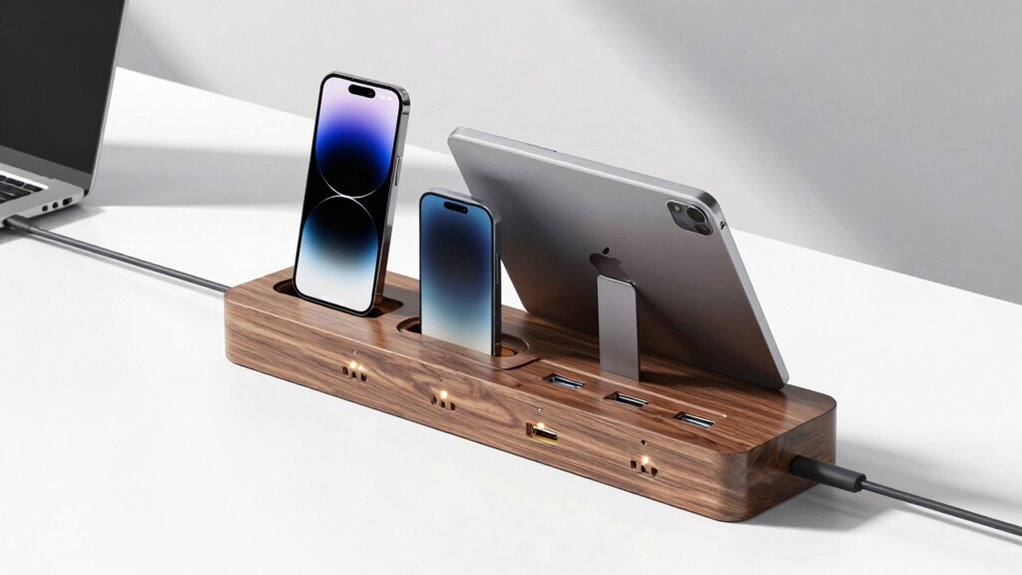

To build a safe multi-device charging station, choose a location that’s accessible, flat, and well-ventilated, away from hazards like water or heat. Use high-quality, fire-resistant materials and organize your cables neatly with proper wiring and surge protectors. Regularly inspect your setup for wear or overheating, and keep airflow unobstructed. Staying proactive with maintenance and safety checks keeps everything running smoothly—if you want the details, there’s more to uncover below.
Key Takeaways
- Select a stable, ventilated location away from hazards, with easy access to power outlets and minimal foot traffic.
- Use high-quality, fire-retardant materials and organize wiring with proper insulation and cable management tools.
- Implement surge protectors with overload protection and avoid daisy-chaining power strips.
- Regularly inspect devices, cables, and vents for wear, overheating, or damage.
- Educate users on safety practices, monitor activity, and maintain routine safety checks for early hazard detection.
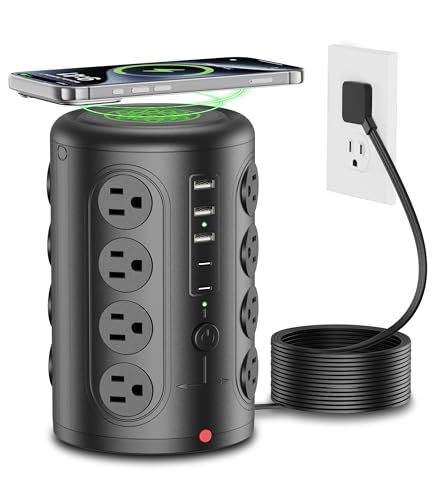
Power Strip Tower Surge Protector, TenTrend 16 Outlets and 5 USB Ports (2 USB-C), 2000 Joules Charging Station, 6FT Flat Plug Extension Cord for Home Office Dorm Room Essentials, Black
【21 in 1 Power Strip Tower】 With 16 AC outlets 3 USB-A ports and 2 USB-C ports, TenTrend…
As an affiliate, we earn on qualifying purchases.
As an affiliate, we earn on qualifying purchases.
How to Choose a Safe and Convenient Location for Your Charging Station
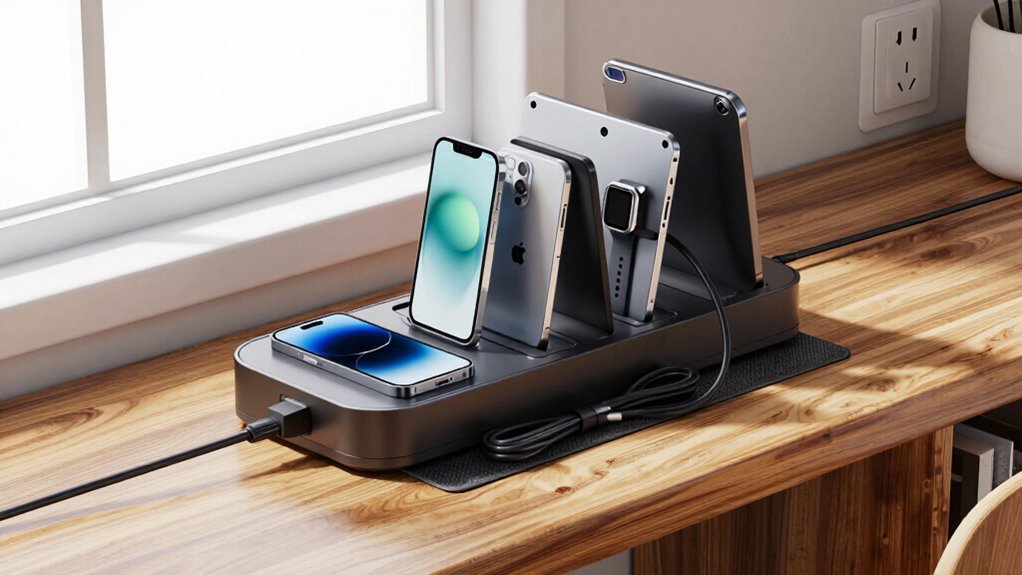
Choosing the right location for your charging station is essential to guarantee safety and convenience. You want a spot that’s easily accessible and free from hazards like water or heat. Consider areas near power outlets for wired charging, but also think about incorporating wireless charging pads for quick, cable-free power-ups. Portable power banks are great for flexibility, so placing your station where you can easily grab one when needed makes sense. Avoid placing chargers in high-traffic zones or near flammable materials. Make sure the surface is stable and flat to prevent devices from falling. Adequate ventilation helps prevent overheating, especially if you’re charging multiple devices simultaneously. Ensuring proper electrical safety measures further protects your devices and household. A well-chosen location keeps your devices safe and ensures your charging routine remains smooth. Additionally, selecting a spot with proper ventilation can help dissipate heat generated during charging, enhancing safety and device longevity. Being mindful of potential overheating risks ensures that your devices operate safely and efficiently during prolonged charging sessions.

CrocSee 25ft – 1/2 inch Flame Retardant Split Wire Loom Tubing with Installation Tool – Flexible Wire Covers Cord Protectors – Black
Inner Diameter: 1/2 Inch | Length: 25 Feet | Material: Thick & flame retardant POLYPROPYLENE (PP), raw material…
As an affiliate, we earn on qualifying purchases.
As an affiliate, we earn on qualifying purchases.
Selecting Durable Materials and Proper Wiring for Safety
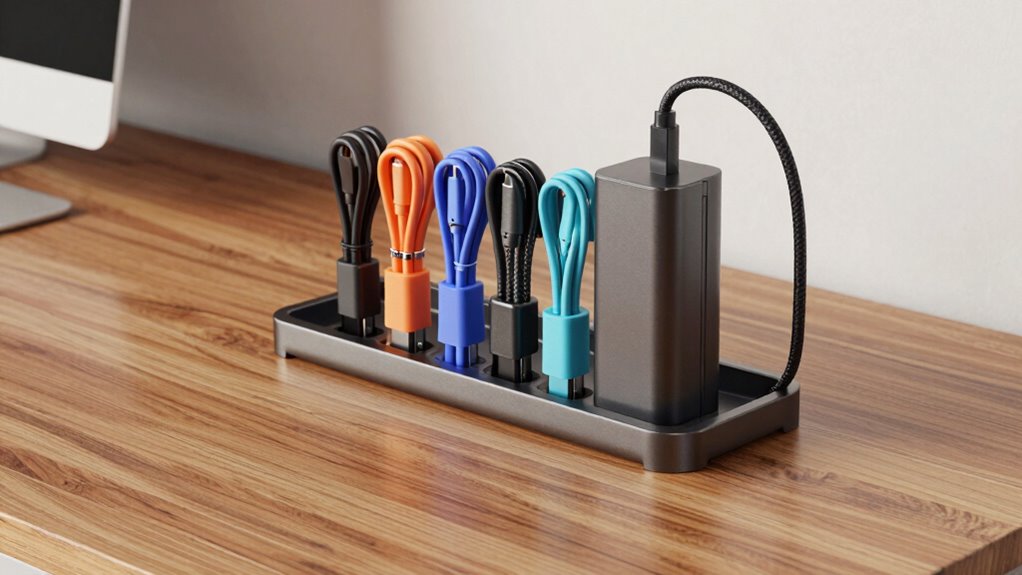
To guarantee your multi-device charging station is safe and long-lasting, selecting durable materials and proper wiring is vital. Use high-quality, heat-resistant materials like fire-retardant plastics or treated wood to prevent hazards. When choosing wire gauge, ensure it matches the power demands of your devices—thicker gauges handle higher currents safely. Avoid thin or cheap wiring, which can overheat or cause shorts. Proper grounding techniques are essential; always connect your station to a grounding outlet and use grounding wires to prevent electrical shocks. Secure all wiring neatly, avoiding sharp bends or exposure to moisture. Additionally, understanding contrast ratio helps ensure your station remains safe and reliable by providing clear visibility of wiring and connections, reducing the risk of accidental damage. Being aware of safety standards and following them can further enhance the overall safety of your charging setup. Regular inspection and maintenance of your wiring and materials are crucial to prevent potential hazards, and incorporating safe wiring practices can significantly reduce the risk of electrical failures. Implementing proper insulation techniques also contributes to a safer environment by minimizing the chances of short circuits. By selecting sturdy materials and adhering to correct wiring practices, you create a safe, reliable charging station that minimizes risks and lasts longer.

Wireless Charging Pad, ZealSound Ultra-Slim Triple Charger Station for Multiple 3 Devices & New Airpods Ultra Slim PU Leather Wireless Charging Mat W/AC Adapter for Smartphone Phone (Black)
3-in-1 Drop-and-Charge Convenience with Up to 3x10W Wireless Output – Simplify your daily charging routine with this 3…
As an affiliate, we earn on qualifying purchases.
As an affiliate, we earn on qualifying purchases.
Organizing Cables and Storage to Prevent Damage and Hazards
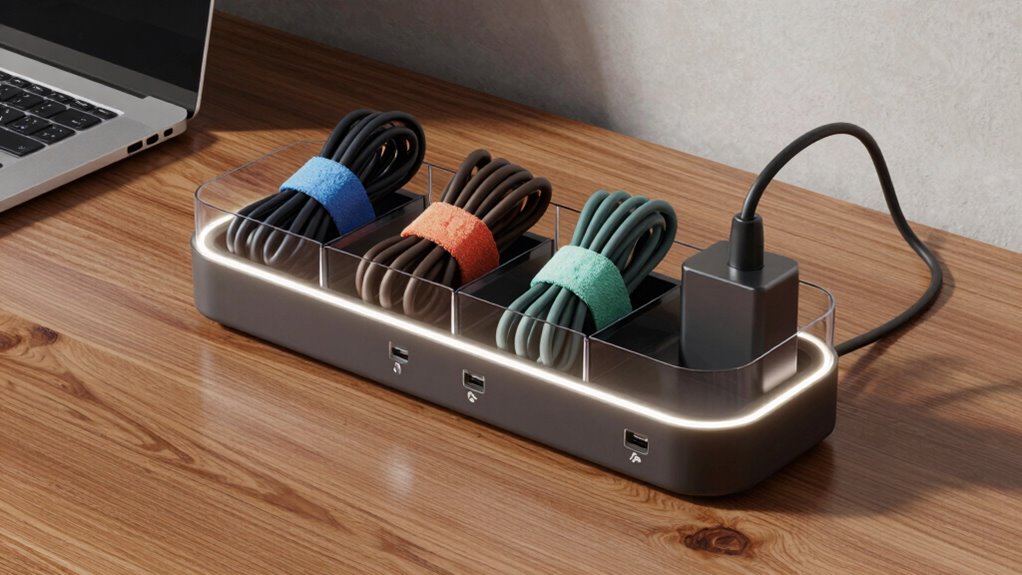
Have you ever experienced the frustration of tangled cables or damaged chargers? Proper cable management is essential to keep your charging station safe and organized. Use cable ties, clips, or sleeves to bundle cords neatly, preventing them from tangling or pulling on connectors. Implement storage solutions like labeled bins or drawers to keep chargers, adapters, and spare cables separated and protected. Avoid stacking chargers or forcing cables into tight spaces, which can cause damage. Regularly inspect cords for wear and replace damaged ones immediately. Proper air purifier maintenance and timely filter replacements can also help reduce dust that contributes to cable and device degradation. Ensuring proper cable organization reduces clutter and minimizes the risk of accidental tripping or damage. Additionally, incorporating safety tips into your setup can further prevent hazards and extend the lifespan of your equipment. By organizing cables and using effective storage solutions, you reduce trip hazards, protect your devices from damage, and keep your charging area tidy. Clear organization promotes safety, saves time, and prolongs the lifespan of your equipment. Incorporating cable management tools from trusted sources can also help you select the best chargers and accessories for your needs.

Portable Charger,50000mAh Power Bank Built-in Cable, 22.5W PD USB C In & Out Fast Charging, External Battery Pack with 6 Output & 2 Input, Travel Camping Essential for iPhone 17/16/15/14/13/12,Android
Portable Charger Built-in 4 Cables: Eliminate cable clutter forever! This portable charger power bank comes with 3 output…
As an affiliate, we earn on qualifying purchases.
As an affiliate, we earn on qualifying purchases.
Using Surge Protectors and Power Strips Safely

While surge protectors and power strips are essential for expanding your charging station, using them safely is crucial to prevent electrical hazards. Always choose quality surge protectors with built-in safety features like overload protection and grounding. Avoid daisy-chaining multiple power strips, as this can overload circuits and risk fire. When using wireless charging, ensure your device and pad are compatible and properly grounded to maintain battery safety. Keep cords organized to prevent tripping and damage, which could expose wires or cause shorts. Regularly inspect power strips for wear or damage, replacing any with frayed cords or scorch marks. Proper use of surge protectors helps protect your devices from power surges, safeguarding both your wireless charging setup and overall battery safety. Additionally, understanding electrical safety principles can help you create a safer and more reliable charging environment. For added security, consider integrating smart surge protectors that can monitor and shut off power during overloads, providing extra protection for your devices. Incorporating proper grounding techniques is also essential to ensure your setup remains safe and effective. Recognizing common electrical hazards can help you avoid dangerous situations in your charging area. Being aware of Glycolic Acid benefits and its applications can also contribute to better skin health, especially when managing skin exposed to frequent contact with devices or environmental factors.
Maintaining and Troubleshooting Your Charging Station for Long-Term Safety
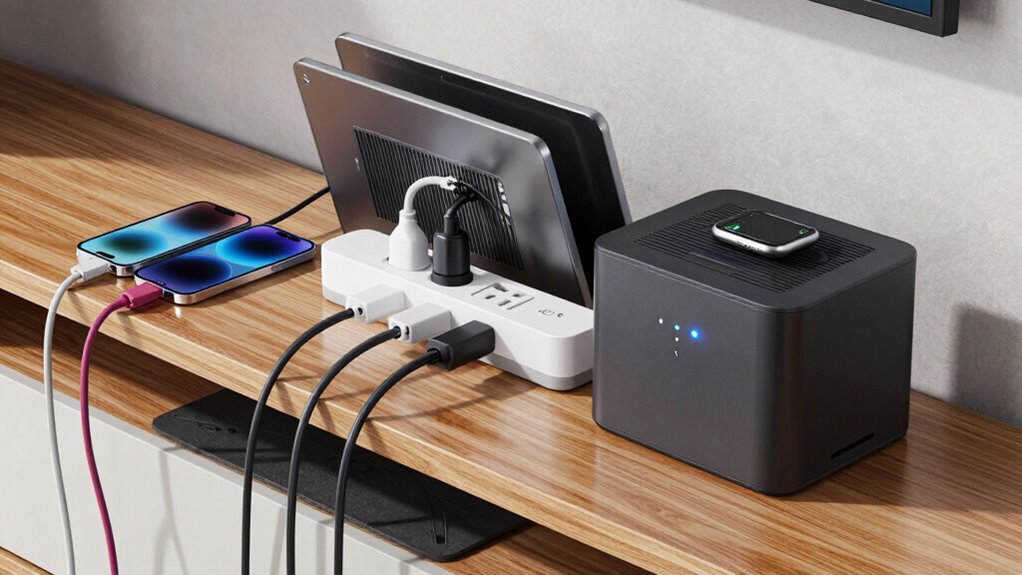
Regularly inspecting your charging station is essential to guarantee long-term safety and reliable performance. Check for signs of wear, loose connections, and overheating, and verify device compatibility to prevent damage. Proper battery maintenance, like avoiding overcharging, extends your devices’ lifespan and minimizes hazards. Troubleshoot issues promptly—such as devices not charging or power interruptions—to address underlying problems early. Use the table below to understand key maintenance aspects:
| Aspect | Action |
|---|---|
| Battery maintenance | Avoid overcharging and unplug when full |
| Device compatibility | Confirm charger and device match |
| Troubleshooting | Identify and fix connection issues |
Staying proactive ensures your multi-device station remains safe, efficient, and reliable for years to come. It’s also important to understand affiliate disclosure policies, as they influence product recommendations and your purchasing decisions. Additionally, paying attention to overheating concerns can prevent potential hazards and extend your equipment’s lifespan.
Furthermore, regularly monitoring noise levels around your charging station can help identify unusual activity or malfunctions early, enhancing overall safety. Being aware of proper ventilation is crucial to prevent overheating and ensure safe operation. Proper nail biology knowledge, such as understanding nail growth and strength, can also be useful when managing physical safety around electrical equipment, especially in shared environments.
Frequently Asked Questions
What Safety Certifications Should I Look for in Charging Station Components?
You should look for safety certifications like UL, ETL, or CSA on your charging station components to guarantee they meet safety standards. When selecting a power strip, choose one with these certifications for reliability. Also, consider the charging station’s aesthetics, making sure the certified components blend seamlessly while providing safe, efficient power. Prioritizing certified parts and a well-chosen power strip helps prevent electrical hazards and keeps your station safe.
How Can I Prevent Overheating of Multiple Devices Simultaneously?
To prevent overheating when charging multiple devices, focus on effective thermal management by incorporating heat sinks or fans to dissipate heat. Guarantee proper electrical insulation between charging ports and wiring to avoid heat buildup caused by electrical faults. Limit the number of devices charged simultaneously based on the station’s capacity, and regularly check for signs of overheating or damaged components, maintaining a safe environment for your devices.
Are There Specific Childproofing Considerations for a Multi-Device Station?
Yes, for childproofing your multi-device station, use child locks on outlets and cords to prevent accidental unplugging or tampering. Implement cord management by securing cables with clips or sleeves, reducing tripping hazards and pulling risks. Keep chargers out of children’s reach and guarantee all connections are secure. Regularly check for damage or loose connections, creating a safer environment that minimizes risks associated with curious or active children.
How Often Should I Inspect Wiring and Connections for Wear or Damage?
You should inspect wiring and connections at least once a month to guarantee cable organization remains intact and power strip safety isn’t compromised. Regular checks help you spot wear, frayed cables, or loose connections early, preventing potential hazards. Keep cords neatly organized, and replace any damaged wires immediately. Maintaining a routine inspection keeps your multi-device charging station safe, functional, and reduces the risk of electrical issues or accidents.
Can I Incorporate Wireless Charging Options Into My Station?
Did you know over 50% of households now use wireless charging? Yes, you can incorporate wireless charging options into your station. Focus on wireless integration by selecting a compatible charging pad that suits your devices. Make certain your charging pad compatibility with different device models, and position it properly within your station. This modern touch keeps your setup organized, reduces cable clutter, and makes charging more convenient for everyone using your multi-device station.
Conclusion
Now that you know the essentials for building a safe multi-device charging station, imagine the peace of mind you’ll gain. Just one overlooked detail could compromise safety or damage your devices. Are you ready to put your plan into action and guarantee everything runs smoothly? Don’t wait—take these steps today, and discover the difference a well-crafted station can make. Your devices—and your peace of mind—depend on it.