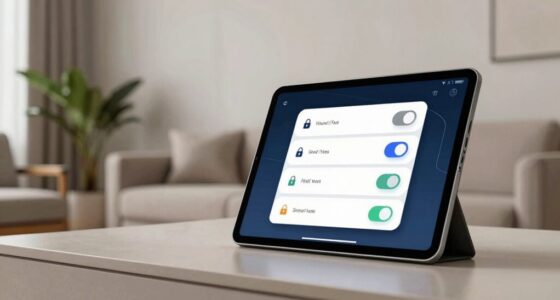

When choosing between Matter, Zigbee, and Z-Wave, consider compatibility, security, and setup costs. Matter offers broad device support and the latest security features, aiming for seamless cross-brand integration without hubs. Z-Wave excels in range and low power, while Zigbee thrives in mesh networks for coverage. Each has different ecosystem strengths and future potential. To build a smarter, more reliable home, understanding these differences can help you pick the best fit—and there’s more to explore ahead.

Get the latest gadgets delivered free — and shop member deals
- Fast, free delivery on millions of items
- Access to Prime Big Deal Days deals on October 6–7
- Prime Video, Amazon Music and more included
Key Takeaways
- Matter offers broad device compatibility, easier setup, and seamless cross-brand integration compared to Zigbee and Z-Wave.
- Zigbee and Z-Wave rely on dedicated hubs, providing reliable mesh networking and longer signal range.
- Z-Wave emphasizes low power consumption and secure communication with S2 security, ideal for battery-powered devices.
- Zigbee supports extensive device ecosystems but may face interoperability issues without a common standard like Matter.
- The industry is shifting toward IP-based standards like Matter for improved security, reliability, and simplified smart home integration.
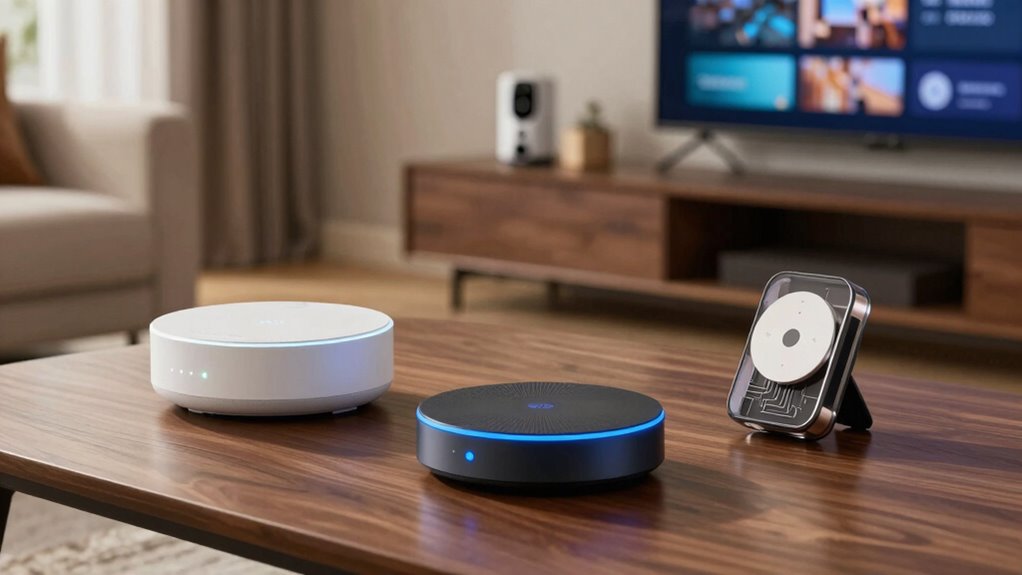
Matter compatible smart home devices
As an affiliate, we earn on qualifying purchases.
As an affiliate, we earn on qualifying purchases.
What Are the Differences Between Matter, Zigbee, and Z-Wave?
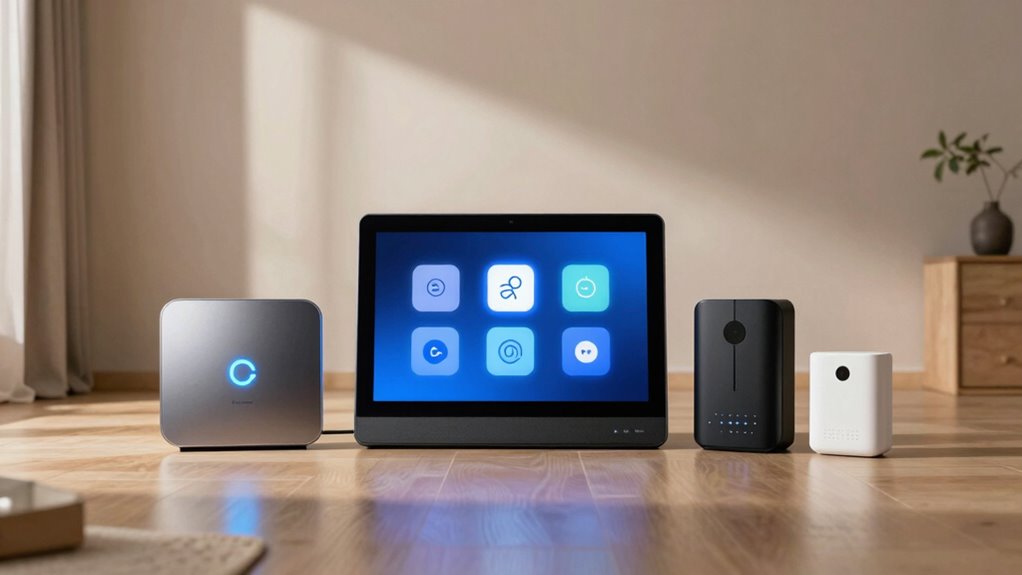
Understanding the differences between Matter, Zigbee, and Z-Wave is essential when choosing a smart home standard. These protocols vary in device integration and signal range, impacting your setup. Matter offers broad compatibility, making it easier to connect devices across brands, but its signal range may be limited compared to others. Zigbee provides good device integration within a mesh network, allowing signals to hop between devices, which extends its range—ideal for larger homes. Z-Wave also uses a mesh network, emphasizing low power consumption and reliable communication, often with a longer signal range than Zigbee. Your choice depends on your priorities: if seamless device compatibility is key, Matter’s the best; for extended signal reach, Z-Wave or Zigbee might suit you better. Additionally, understanding wireless protocols helps in optimizing your smart home setup and ensuring consistent performance across devices.
As an affiliate, we earn on qualifying purchases.
How Compatible Are These Protocols With Your Devices?
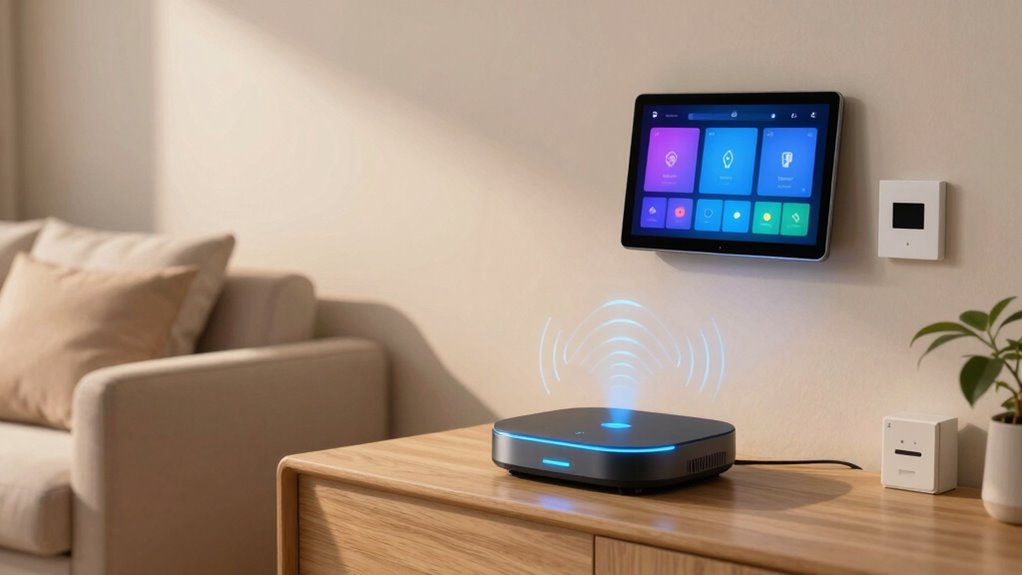
When considering device compatibility, it’s important to recognize how each protocol interacts with your existing smart home gadgets. Your choice impacts device integration and network stability, ensuring your setup runs smoothly. Zigbee and Z-Wave often require specific hubs, limiting compatibility but offering reliable connections. Matter aims for broader device integration, working seamlessly across platforms and brands. Z-Wave typically excels with low-power devices, while Zigbee supports a wide variety of gadgets. Compatibility with your current devices depends on whether they support these standards or need new hubs. Keep in mind, network stability can vary based on protocol congestion and device density. Additionally, standard support plays a crucial role in ensuring your devices work well together across different protocols. It’s also important to consider how protocol congestion can affect overall network performance, especially as your device ecosystem grows. As your smart home expands, understanding network scalability becomes essential to maintain smooth operation and avoid performance issues. Moreover, choosing a protocol with robust interoperability can significantly enhance your overall smart home experience. Being aware of how interoperability standards evolve can help future-proof your setup and facilitate easier device addition.
As an affiliate, we earn on qualifying purchases.
What Security and Privacy Features Do These Protocols Offer?
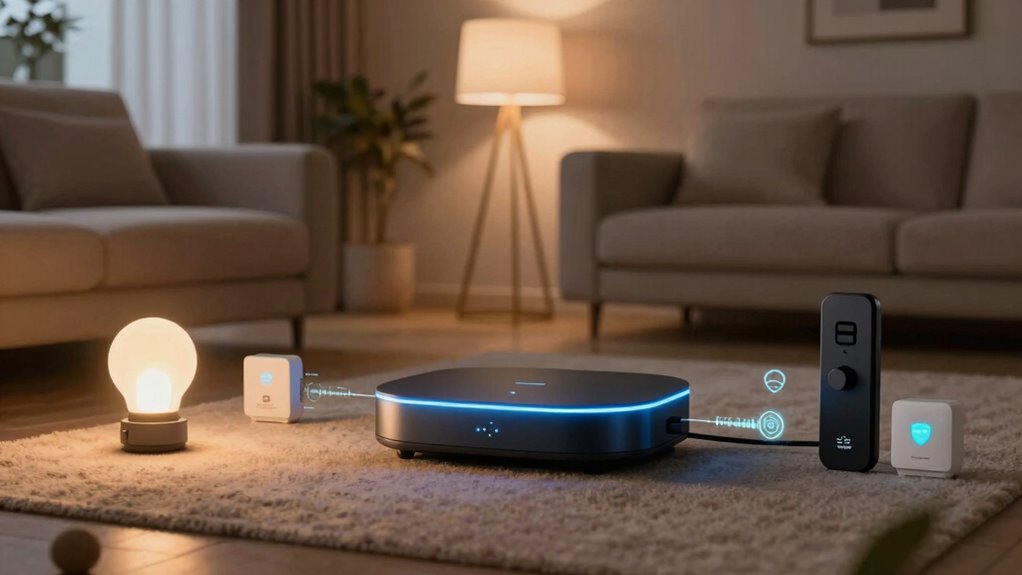
Security and privacy are essential considerations when choosing a smart home protocol, as they determine how well your devices are protected from unauthorized access and data breaches. Each protocol offers different security features to safeguard your data. Matter uses advanced encryption standards like TLS and AES, ensuring strong data privacy and secure communication. Zigbee also employs AES-128 encryption, but its security depends on device implementation. Z-Wave offers S2 security with encryption, but older versions may lack robust features. Additionally, understanding the underlying encryption standards is crucial for assessing overall security. Incorporating end-to-end encryption can further enhance protection by securing data throughout its entire transmission process. Recognizing the importance of security protocols helps users make more informed decisions to maintain their smart home safety.
smart home hub for Zigbee and Z-Wave
As an affiliate, we earn on qualifying purchases.
As an affiliate, we earn on qualifying purchases.
How Much Do These Standards Cost and How Do You Install Them?
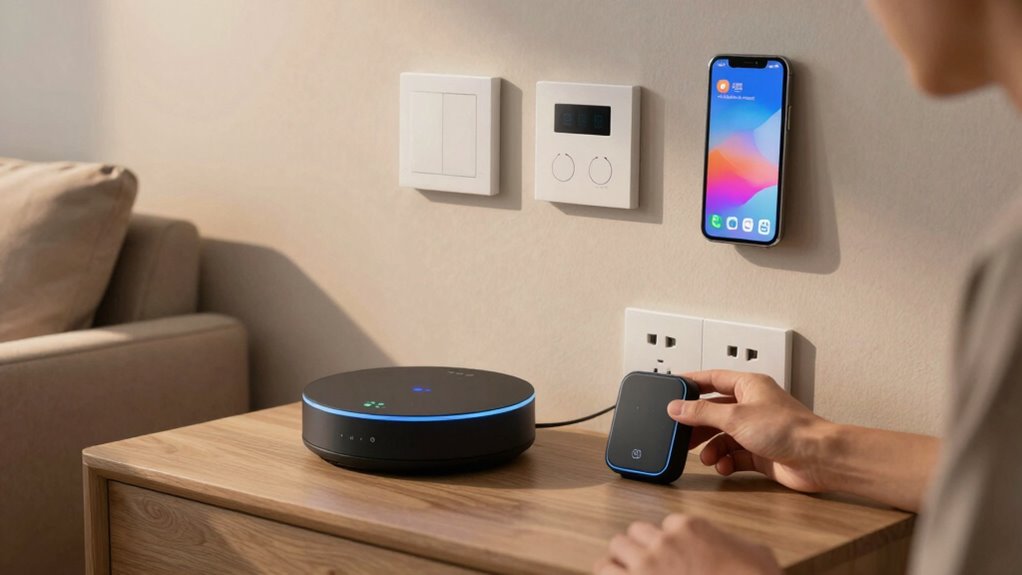
Are the costs and installation processes of Matter, Zigbee, and Z-Wave protocols significant factors in choosing a smart home standard? Pricing transparency varies, with Matter often offering more straightforward pricing due to its open standards, while Zigbee and Z-Wave require compatible hubs that add to the cost. Installation methods differ: Zigbee and Z-Wave typically need a dedicated hub or controller, making setup slightly more complex. Matter aims for simplified installation through direct device-to-device communication, reducing setup time. Consider these factors:
Choosing a smart home standard depends on costs, installation complexity, and device compatibility.
- Cost of hubs or controllers
- Compatibility with existing devices
- Ease of installation
- Long-term maintenance expenses
- Transparency in pricing and updates
Understanding these elements helps you evaluate which standard fits your budget and installation preferences. Additionally, the interoperability of devices plays a crucial role in ensuring seamless integration across different smart home products. When selecting a protocol, it’s also important to consider the cost of compatible devices, as this can vary significantly depending on the ecosystem.
Which Protocol Is Best for Your Smart Home Needs?
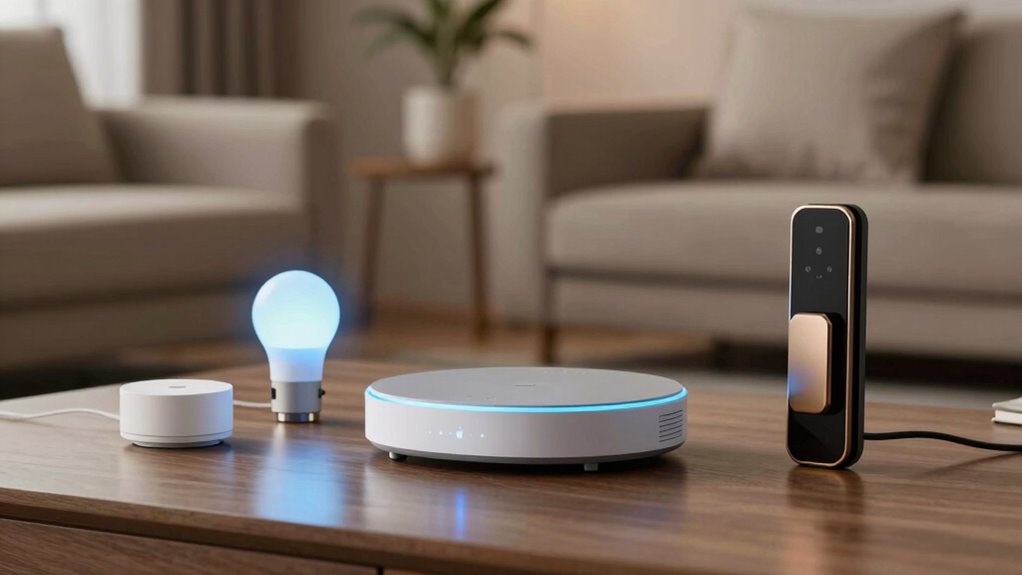
Choosing the right smart home protocol depends heavily on your specific needs and priorities. If energy efficiency is your main concern, consider protocols that optimize power consumption, like Z-Wave, which is known for low energy use. For device diversity, Zigbee offers a broad selection of compatible devices, giving you more flexibility in building your smart home ecosystem. Matter is designed to unify standards, making it easier to connect devices across brands and protocols. Think about your priorities: if you want a wide range of devices, Zigbee might be best; for energy savings, Z-Wave could be ideal; and if future-proofing is important, Matter offers promising compatibility. Align your choice with your goals to guarantee your smart home functions smoothly and efficiently.
What’s the Future of Smart Home Connectivity With Matter, Zigbee, and Z-Wave?
The future of smart home connectivity depends on how industry support and adoption grow around these protocols. Compatibility and interoperability will be key to making devices work seamlessly together, no matter which standard you choose. As new developments emerge, you’ll want to stay informed about protocol updates and how they’ll shape your smart home experience.
Industry Support and Adoption
Industry support and adoption play a crucial role in shaping the future of smart home connectivity, and recent developments suggest a shifting landscape. As market dominance evolves, more companies are forming industry partnerships to back the standards they see as most promising. This accelerates adoption and influences consumer choices. You’ll notice major players investing heavily in Matter’s open standards, aiming for seamless integration. Meanwhile, Zigbee and Z-Wave continue to maintain strong footholds through established ecosystems. The growing support from manufacturers and service providers indicates a future where interoperability becomes easier. Additionally, industry collaboration is fostering faster innovation and wider compatibility across devices. The growing support from manufacturers and service providers indicates a future where interoperability becomes easier. However, market trends show a clear shift toward unified standards, driven by industry alliances and strategic alliances. This dynamic environment promises more compatibility, better user experiences, and a more competitive market landscape.
Compatibility and Interoperability
As smart home devices become more prevalent, the ability for different systems to work seamlessly together is increasingly important. Compatibility and interoperability are key to achieving smooth device integration across platforms. With Matter, cross platform compatibility aims to unify smart devices, making it easier to connect products from different brands without hassle. Zigbee and Z-Wave have long supported device integration within their ecosystems, but interoperability between the two has been limited. The future of smart home connectivity depends on standards that prioritize seamless communication, reducing frustration and expanding options. By focusing on open standards like Matter, you’ll find it easier to build a cohesive smart home system, where devices work together reliably, regardless of their manufacturer or protocol.
Future Protocol Developments
Looking ahead, the future of smart home connectivity is poised to evolve considerably as new protocols and standards develop. Emerging standards like Matter aim to unify device communication, simplifying integration across brands. Market trends suggest increased adoption of IP-based protocols, making devices more reliable and secure. You’ll likely see more interoperability driven by industry collaboration, reducing fragmentation. Future developments may include enhanced security features, lower latency, and energy efficiency improvements. As market demands grow, expect more intelligent, seamless experiences with fewer compatibility issues. The focus will be on creating a cohesive ecosystem where devices communicate effortlessly, regardless of brand. Overall, these advancements will shape smarter, more responsive homes that adapt to your needs with minimal setup.
Frequently Asked Questions
Can These Protocols Work Together in a Single Smart Home System?
Yes, these protocols can work together in your smart home, but interoperability challenges and manufacturer fragmentation can complicate integration. You might need a hub or bridge that supports multiple standards, which helps devices communicate smoothly. Always check device compatibility and platform support beforehand to avoid issues. With careful planning, you can create a unified smart home system that leverages the strengths of Matter, Zigbee, and Z-Wave.
Do These Standards Support Energy Efficiency and Battery Life Improvements?
Imagine your smart home as a garden where energy savings bloom and battery longevity thrives. These standards support energy efficiency by reducing power consumption, helping your devices conserve energy. Matter, Zigbee, and Z-Wave optimize battery life through low-power operation modes, extending device longevity. By selecting compatible protocols, you guarantee your smart home remains energy-efficient, with devices lasting longer and saving you money in the long run.
Are There Any Regional Restrictions for Using Matter, Zigbee, or Z-Wave?
Regional regulations can restrict or influence your choice of smart home standards like Matter, Zigbee, or Z-Wave. For instance, some regions may have specific rules on wireless frequencies or security protocols, impacting device compatibility and operation. Standard interoperability is vital, so check local regulations before purchasing. Ensuring your devices meet regional standards helps avoid issues and guarantees seamless integration within your smart home ecosystem.
How Do Firmware Updates Impact Device Compatibility and Security?
Imagine firmware updates as a shield that keeps your smart home devices secure and compatible. When you update firmware, firmware security gets strengthened, closing vulnerabilities. Compatibility updates guarantee your devices stay in harmony, preventing conflicts or obsolescence. Regular updates act like a steady stream of fresh paint, maintaining your system’s resilience and seamless operation, so your smart home remains safe, efficient, and future-proof.
What Are the Long-Term Reliability Differences Among These Protocols?
You’ll find that long-term reliability varies among protocols due to interoperability challenges and adoption rates. Matter, with its focus on universal compatibility and growing industry support, promises better reliability over time. Zigbee and Z-Wave, while proven, face potential issues as newer standards emerge and adoption slows. Your experience depends on device support, firmware updates, and how well each protocol integrates into your smart home ecosystem.
Conclusion
Choosing between Matter, Zigbee, and Z-Wave might feel overwhelming, but it’s the difference between living in a smart home paradise or a tech nightmare! Get it right, and you’ll have a seamless, secure, and future-proof setup that makes your friends jealous. Forget confusion—pick the perfect protocol, and watch your home transform into a futuristic wonderland where everything just works, feels safe, and makes you feel like a true tech wizard. Your smart home dreams are just a choice away!
Halloween Picks
halloween
As an affiliate, we earn on qualifying purchases.