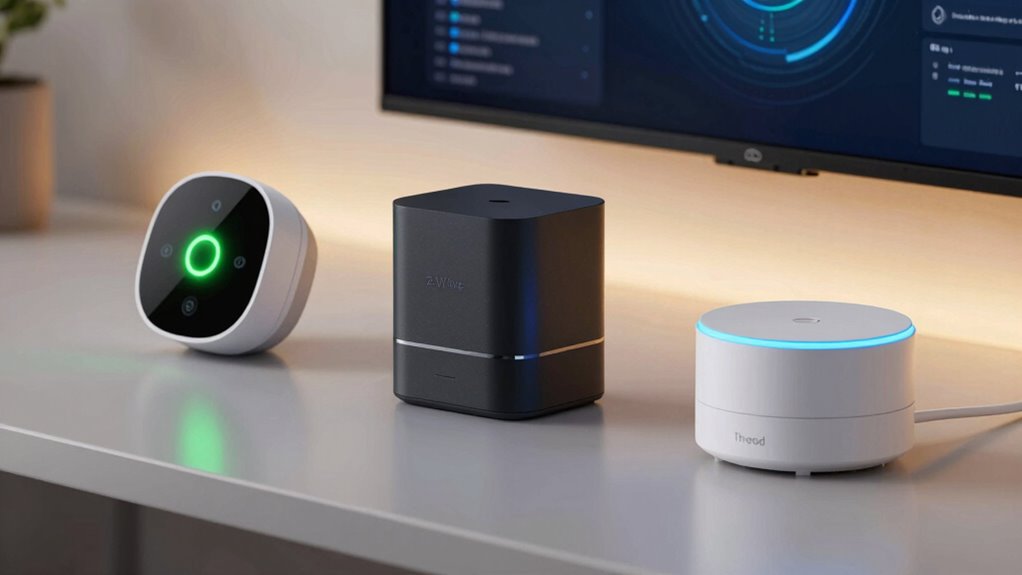

Zigbee, Z-Wave, and Thread are popular wireless protocols that connect smart devices in your home. Zigbee offers broad device support and low power use, but can face compatibility issues. Z-Wave provides reliable communication with a curated device list, yet is slightly more expensive. Thread focuses on seamless IP-based communication, energy efficiency, and security. To choose the best fit, consider your budget, device ecosystem, and future plans—more details will help you make an informed decision.

Get the latest gadgets delivered free with Prime
- Fast, free delivery on millions of items
- Prime Video, Amazon Music and more included
- Member-only deals all year
Key Takeaways
- Zigbee supports many devices and offers flexible ecosystem options, but may have interoperability issues.
- Z-Wave provides reliable, secure mesh networks with fewer device choices and easier setup for smaller homes.
- Thread emphasizes IP-based communication, energy efficiency, and seamless integration without needing a hub.
- Range varies: Zigbee (10-100m), Z-Wave (30-100m), Thread (10-50m), affecting coverage and reliability.
- Security features are strong across all protocols, with Thread offering the most advanced, future-proof encryption.
As an affiliate, we earn on qualifying purchases.
How Do Zigbee, Z-Wave, and Thread Connect Devices?
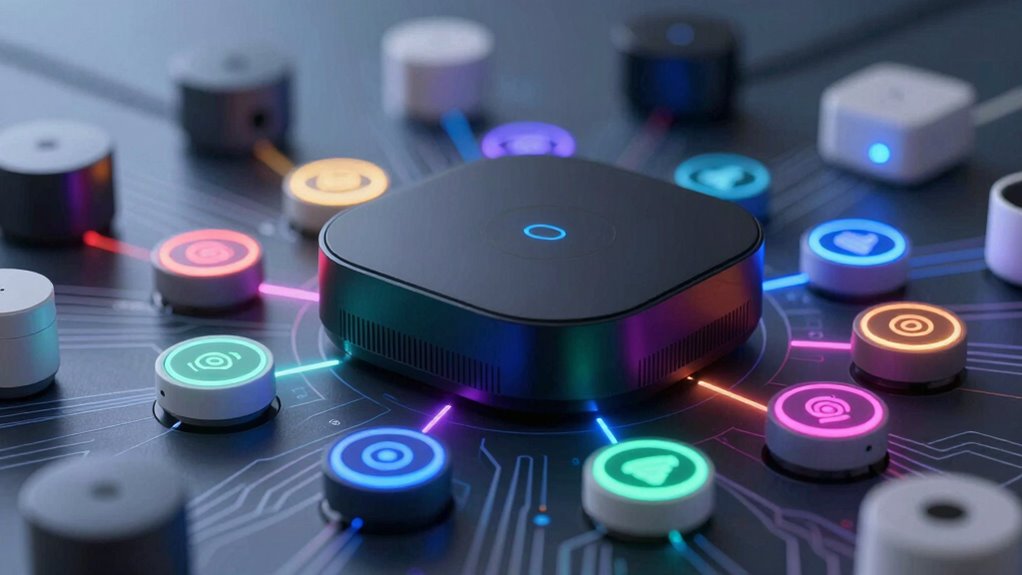
While all three protocols—Zigbee, Z-Wave, and Thread—are designed to connect smart home devices, they do so in different ways. Zigbee and Z-Wave use mesh networks, allowing devices to communicate directly with each other, which improves device scalability. Z-Wave offers simpler setup for smaller homes. Thread, on the other hand, also builds a mesh network but is optimized for smart home energy efficiency and reliability. When you set up your smart home, these protocols determine how easily devices communicate and expand. Zigbee often supports more devices in a single network, making it ideal for larger setups. Thread’s focus on low power consumption helps your devices operate longer without frequent battery changes. Additionally, contrast ratio can influence the clarity and depth of the visual display, which is important when considering multimedia integration in smart home environments. Understanding digital concepts can help you make more informed choices about smart home connectivity, especially when considering the different wireless protocols and their compatibility with various devices. Each protocol’s approach influences your network’s stability and energy efficiency.
As an affiliate, we earn on qualifying purchases.
Key Differences Between Zigbee, Z-Wave, and Thread
Understanding the key differences between Zigbee, Z-Wave, and Thread helps you choose the right protocol for your smart home. Zigbee offers high energy efficiency, making it ideal for battery-powered devices, but its signal reliability can vary depending on network congestion. Z-Wave is known for strong signal reliability within its network, providing consistent performance, though it’s typically less energy-efficient than Zigbee. Thread emphasizes energy efficiency and creates a self-healing mesh network, which enhances signal reliability, especially in larger setups. Each protocol has unique strengths: Zigbee excels in low power consumption, Z-Wave in reliable connections, and Thread in scalable, energy-efficient networks. Your choice hinges on balancing energy needs and signal stability based on your specific smart home setup. Understanding protocol differences can help you make an informed decision tailored to your needs. Additionally, considering network scalability ensures your smart home can grow without sacrificing performance. Recognizing the compatibility of these protocols with your existing devices can also influence your selection. Incorporating interoperability considerations can further streamline device integration and future upgrades. It’s also helpful to understand how wireless standards impact overall network performance and device compatibility.
As an affiliate, we earn on qualifying purchases.
Choosing a Protocol Based on Your Budget

Your budget plays a big role in choosing a smart home protocol, especially when considering device costs and installation expenses. Some protocols have more affordable devices but might require more setup time or additional equipment. Weigh these factors carefully to find the best fit for your financial situation. Additionally, understanding the privacy policies and how data is managed can help you make a more informed decision that aligns with your budget and privacy preferences. Considering recovery routines and the compatibility of protocols with your existing devices can also contribute to a smoother, more cost-effective setup. It’s also helpful to evaluate the installation complexity involved, as certain protocols may require more extensive cabling or specialized equipment.
Cost of Devices
Choosing a smart home protocol often comes down to your budget, as device costs can vary considerably. Device manufacturing influences prices, with some protocols having more affordable options due to widespread adoption and mass production. Zigbee devices tend to be less expensive because of established protocol standards and a large ecosystem of manufacturers. Z-Wave devices might be a bit pricier, reflecting its more specialized protocol standards and smaller manufacturer base. Thread devices, still emerging, can be costly initially but may become more affordable as adoption grows. Your choice depends on balancing device costs with protocol compatibility and features. Keep in mind that investing in protocol standards that support a broader selection of devices can save you money over time, even if the upfront costs are higher. Additionally, free floating backyard features and eco-friendly natural pools can influence the types of smart devices you choose to optimize outdoor living spaces cost-effectively. As the smart home market continues to expand, expect the costs to become more competitive across all protocols. Moreover, considering device interoperability can help you build a more flexible and future-proof smart home setup, potentially reducing upgrade costs later. As newer protocols gain popularity, the cost of devices for all standards is likely to decrease, making smart home technology more accessible for everyone.
Installation Expenses
When considering installation expenses, the cost of setup can markedly influence your choice of smart home protocol. Zigbee often requires a hub, which adds to initial costs, but its device durability and strong brand reputation can justify higher investments. Z-Wave devices tend to be more reliable and reputed for longevity, though they may also need a dedicated hub, increasing upfront expenses. Thread, on the other hand, typically supports mesh networking without a hub, reducing installation costs but may involve higher-priced compatible devices. Understanding protocol compatibility can help you select a system that balances cost and performance effectively. Additionally, considering the compatibility with existing smart home devices can further optimize your investment and ensure seamless integration. Being aware of installation expenses can help you plan your budget better and choose a protocol that aligns with your financial goals. Furthermore, exploring the protocol’s ecosystem and device availability can help ensure long-term support and expansion options for your smart home setup. The table below compares key aspects affecting expenses: exploring diverse herbal traditions to broaden your understanding of reliable and effective options.
mesh network smart home products
As an affiliate, we earn on qualifying purchases.
As an affiliate, we earn on qualifying purchases.
Compatibility and Ecosystem: What Devices Work Together?
You’ll want to take into account how well devices from different protocols work together and how easy it is to integrate them into your existing setup. Compatibility can vary, making interoperability a challenge if you mix brands or protocols. Understanding these factors helps ensure your smart home ecosystem functions smoothly without surprises. Incorporating herbal wellness practices like herbal baths or spices can enhance your overall well-being and create a more holistic environment. Additionally, researching device compatibility across protocols can help you avoid potential interoperability issues before making a purchase. Paying attention to protocol standards can also streamline the integration process and improve device performance.
Device Compatibility Across Protocols
Device compatibility across Zigbee, Z-Wave, and Thread largely depends on the ecosystems and device standards each protocol supports. You’ll find a broad device diversity within each, but cross-protocol compatibility isn’t always guaranteed. Zigbee offers more protocol flexibility, allowing a wide range of devices from different manufacturers to work together, but often requires hubs or bridges. Z-Wave tends to have a more curated device list, ensuring reliable operation but limiting options slightly. Thread, being newer, emphasizes seamless device interoperability through IP-based communication, making it easier for devices to work across ecosystems over time. Ultimately, your device choices may be constrained by which protocol your existing smart home ecosystem supports, but understanding each protocol’s device diversity helps you make smarter, future-proof decisions.
Ecosystem Integration Ease
Ecosystem integration is a key factor in choosing between Zigbee, Z-Wave, and Thread because it directly impacts how seamlessly your devices communicate and work together. With good integration, your devices respond quickly, minimizing device latency and ensuring smooth interactions. Zigbee and Thread often offer more flexible ecosystems, allowing a broader range of compatible devices, but signal interference can sometimes cause delays or disruptions. Z-Wave tends to have tighter device compatibility within its ecosystem, which can reduce latency issues, but it might limit your options. The ease of ecosystem integration depends on whether devices are certified for the same protocol and how well they handle interference. Ultimately, choosing a protocol with a cohesive ecosystem simplifies setup and improves overall reliability.
Interoperability Challenges
How well devices from different brands or protocols work together can be a major hurdle when building a smart home. Compatibility issues often stem from limited device scalability within each protocol’s ecosystem, making it difficult to expand or customize your setup. Different protocols may also face signal interference, especially in crowded wireless environments, which can cause devices to drop offline or respond slowly. Zigbee, Z-Wave, and Thread each have their own standards, so not all devices are interchangeable across ecosystems. You might find some devices work smoothly within their native protocol but struggle to communicate with others. These interoperability challenges can limit your options and increase setup complexity, requiring you to carefully choose devices that are certified or designed to work together.
Power Consumption and Range: What to Expect

When evaluating Zigbee, Z-Wave, and Thread for your smart home setup, understanding their power consumption and range is essential. Zigbee and Thread typically offer lower power use, promoting longer battery longevity for devices like sensors. Z-Wave consumes more power but provides reliable signal strength over moderate distances. Your environment influences signal strength, impacting how far devices can communicate.
| Protocol | Typical Range | Battery Impact | Signal Strength | Power Efficiency |
|---|---|---|---|---|
| Zigbee | 10-100 meters | Longer battery life | Strong in dense areas | Very efficient |
| Z-Wave | 30-100 meters | Moderate battery life | Good, limited interference | Moderate efficiency |
| Thread | 10-50 meters | Prolongs battery life | Consistent in mesh networks | Highly efficient |
Security Features of Zigbee, Z-Wave, and Thread
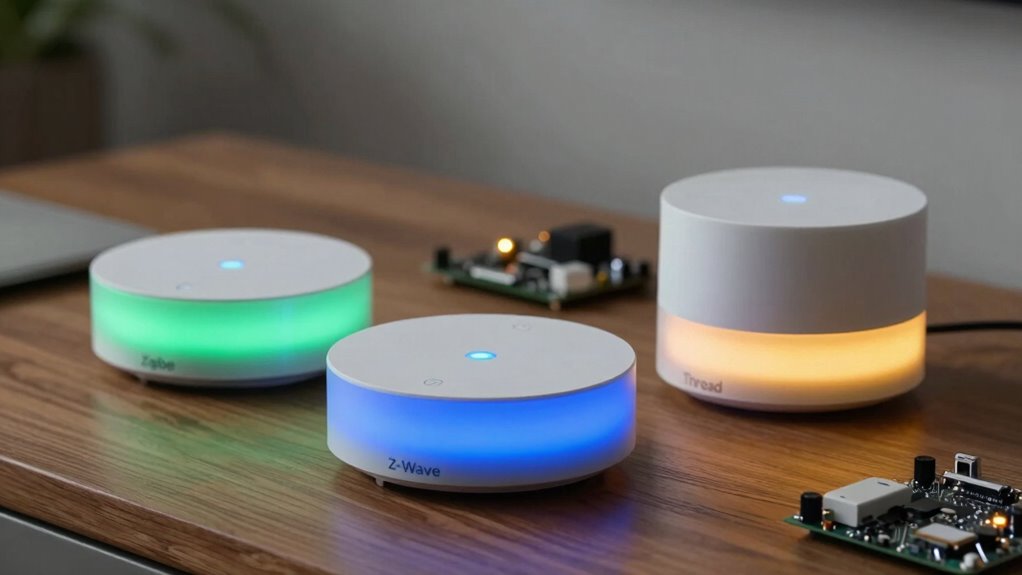
Security is a critical aspect to take into account when choosing between Zigbee, Z-Wave, and Thread for your smart home. Each protocol incorporates different security measures to protect your wireless communication and prevent unauthorized access. Zigbee uses AES-128 encryption and offers device authentication, making it reliable for secure smart home automation. Z-Wave also employs AES-128 encryption and includes secure pairing methods to ensure only trusted devices connect. Thread prioritizes security with end-to-end encryption and device authentication, providing a robust framework for smart home networks. While all three protocols focus on safeguarding your data, Zigbee and Z-Wave have been around longer, with proven security track records. Thread, being newer, emphasizes advanced security features, making it suitable for future-proof wireless communication in your smart home.
Setting Up and Managing Your Smart Home Protocols
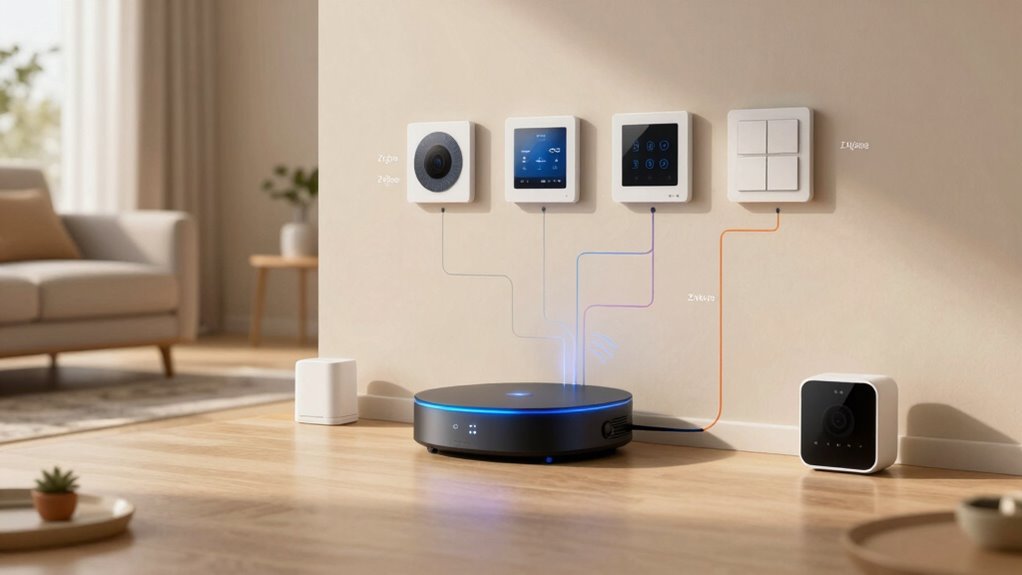
When setting up your smart home protocols, you need to take into account device compatibility and how easily they integrate with your existing system. Managing network security measures is vital to keep your devices safe, while troubleshooting and maintenance help keep everything running smoothly. Being proactive about these points guarantees a seamless and secure smart home experience.
Device Compatibility and Integration
Device compatibility and integration are crucial factors to contemplate when setting up your smart home protocols, as they determine how easily your devices communicate and work together. You want a system with good device scalability, so as your smart home grows, new devices will seamlessly connect without compatibility issues. Protocol flexibility is equally important, allowing your devices to communicate across different brands or standards. For example, Zigbee and Z-Wave support a wide range of devices, making integration straightforward. Thread, on the other hand, emphasizes native IP support for easier compatibility with internet-based devices. Choosing a protocol with strong device compatibility ensures you won’t face roadblocks when expanding your smart home or adding new gadgets, making setup and management smoother overall.
Network Security Measures
As your smart home expands and incorporates more devices, setting up strong network security measures becomes increasingly important to protect your data and privacy. You can enhance security by enabling device encryption, which safeguards your data during transmission. Implementing robust network authentication ensures only trusted devices connect to your network. Visualize your network as a fortress with multiple layers of protection.
- Locking your Wi-Fi with a strong password and WPA3 encryption
- Using unique, complex passwords for each device and account
- Regularly updating firmware to patch security vulnerabilities
- Segregating smart devices on a separate network for added isolation
- Enabling encryption protocols like Zigbee or Z-Wave’s security features
These steps create a secure environment, preventing unauthorized access and maintaining your privacy.
Troubleshooting and Maintenance
Managing your smart home protocols requires regular troubleshooting to guarantee everything runs smoothly. You should check device durability, ensuring devices respond consistently over time. Signal interference can cause connectivity issues; relocating devices or reducing obstacles can help. To streamline maintenance, monitor the network for dead spots or slow responses. Use this table to identify common issues:
| Issue | Cause | Solution |
|---|---|---|
| Devices not responding | Signal interference | Minimize obstacles, change channels |
| Frequent disconnects | Device durability decline | Replace aging devices |
| Slow network speed | Signal interference or overload | Limit connected devices, optimize placement |
Regularly updating firmware and repositioning devices keeps your network stable, minimizes troubleshooting, and prolongs device lifespan.
Future Growth: How These Standards Will Evolve

Looking ahead, the evolution of Zigbee, Z-Wave, and Thread will be shaped by increasing demand for seamless, secure, and energy-efficient smart home solutions. As smart home trends progress, these standards will adapt through wireless protocol innovations, ensuring faster, more reliable connectivity. You can expect greater interoperability among devices, making setup easier and more intuitive. Manufacturers will focus on enhancing security features to protect your data while optimizing battery life for longer device operation. These standards will likely see increased integration with emerging technologies like AI and voice control. Imagine a future where your smart home responds instantly, seamlessly, and securely to your needs. The continuous evolution will foster more intelligent, interconnected environments that simplify everyday life.
The future of smart home standards promises seamless, secure, and energy-efficient connectivity with smarter security, faster links, and AI integration.
- Devices communicating effortlessly across brands
- Smarter security measures protecting your data
- Faster, more reliable wireless connections
- Longer-lasting batteries for your gadgets
- Deeper integration with AI and voice assistants
Pros and Cons of Zigbee, Z-Wave, and Thread
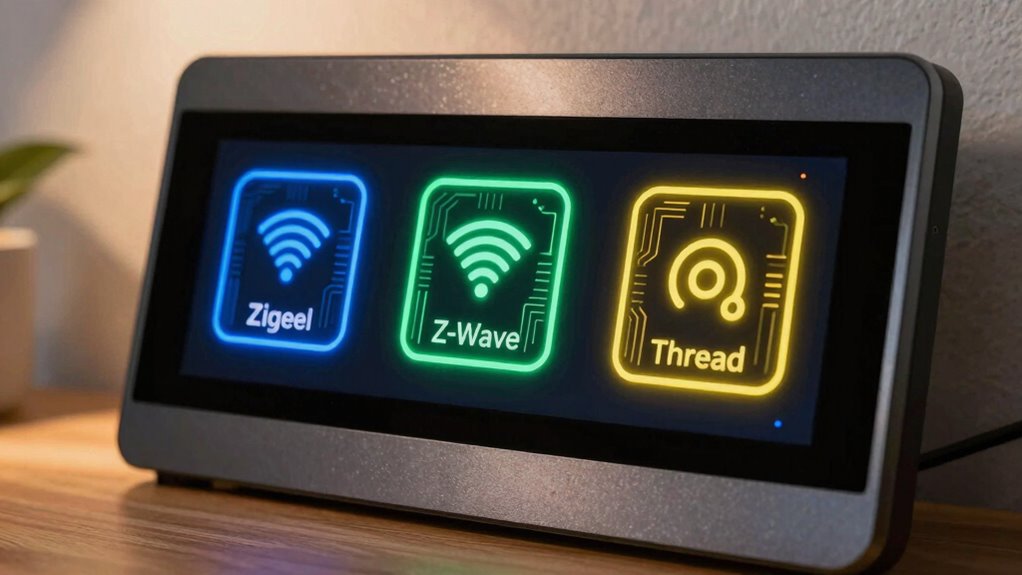
Each of these smart home standards—Zigbee, Z-Wave, and Thread—offers unique advantages and challenges that can influence your choice. Zigbee excels in energy efficiency and has a large device ecosystem, making it great for expanding your smart home. However, it can face interoperability issues across brands. Z-Wave is known for its reliable mesh network and strong security features, which boost smart home security but may have limited device options and slightly higher costs. Thread provides low latency, high security, and excellent energy efficiency, especially for battery-powered devices. Its compatibility with IP-based networks makes integration easier over time. Ultimately, your decision depends on your priorities for smart home security, device compatibility, and energy use, rather than just technical specifications.
How to Pick the Right Wireless Protocol for Your Smart Home
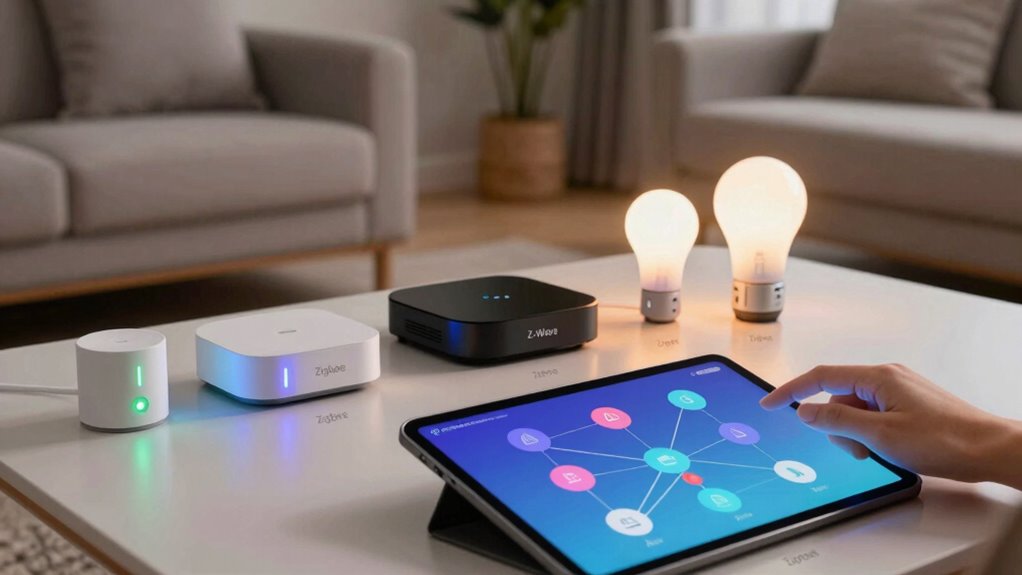
Choosing the right wireless protocol for your smart home depends on understanding your specific needs and priorities. Start by considering your goals for smart home scalability—do you want a setup that easily grows with your devices? Next, evaluate the wireless protocol standards that best suit your environment. Think about the following:
Selecting the right wireless protocol ensures your smart home is scalable, reliable, and secure for the future.
- The size of your home, which impacts signal range
- The number of devices you plan to connect
- Your need for low latency or energy efficiency
- Compatibility with existing smart home systems
- Security features to protect your data
Imagine a network that seamlessly connects all your devices, with signals bouncing reliably across walls and floors. By appraising these factors, you can choose a protocol that offers ideal performance and future-proofing for your smart home.
Frequently Asked Questions
Can These Protocols Be Integrated With Voice Assistants Like Alexa or Google Assistant?
Yes, these protocols can be integrated with voice assistants like Alexa or Google Assistant. You’ll find good voice assistant compatibility with many Zigbee, Z-Wave, and Thread devices, especially when using compatible hubs or third-party integration platforms. This setup allows you to control your smart home easily through voice commands, making your devices more accessible and convenient to operate. Just make certain your devices and hub support the specific voice assistant you prefer.
How Do Firmware Updates Differ Across Zigbee, Z-Wave, and Thread Devices?
Firmware updates differ quite a bit across these protocols. With Zigbee, you typically rely on the hub’s firmware update procedures, while Z-Wave devices often require manual updates or specialized tools. Thread devices can receive over-the-air updates directly, making security patch management more streamlined. You find that Thread’s process is more automated, whereas Zigbee and Z-Wave depend heavily on the ecosystem’s update strategies.
Are There Any Regional Restrictions or Licensing Issues With These Protocols?
You’ll find that regional regulations and licensing concerns influence Zigbee, Z-Wave, and Thread devices differently. Zigbee and Thread generally face fewer restrictions, but Z-Wave often requires licensing fees due to its proprietary nature. In some regions, certain frequencies may be restricted or require compliance with local standards, so you should check regional regulations before purchasing or deploying these protocols to verify compliance and avoid licensing issues.
Which Protocol Offers the Best Scalability for Large Smart Home Setups?
Think of your smart home network as a thriving city; Zigbee shines brightest when it comes to scalability. It handles high network density well and supports a wide range of device compatibility, making it ideal for large setups. Z-Wave and Thread are also good, but Zigbee’s ability to manage numerous devices without congestion guarantees your expanding smart home runs smoothly and efficiently as your city grows.
How Do Interference and Signal Congestion Impact Device Reliability?
Wireless interference and signal congestion can considerably impact your device reliability. When multiple devices or networks operate nearby, they create signal congestion, making it harder for your smart home devices to communicate effectively. Interference from other wireless gadgets, like Wi-Fi or Bluetooth, can cause dropped signals or delays. To improve reliability, keep devices spaced out, avoid overlapping channels, and guarantee your network is optimized to minimize congestion and interference.
Conclusion
So, there you have it—your quick guide to choosing between Zigbee, Z-Wave, and Thread. Whether you’re a savvy tech guru or just trying to keep your smart home from turning into a sci-fi nightmare, remember: pick what fits your budget, ecosystem, and patience level. Otherwise, you might end up with a smart home that’s smarter than you, or at least more confused. Happy automating—may your devices never ghost you!
Halloween Picks
halloween
As an affiliate, we earn on qualifying purchases.