
🔍 Read the full analysis: What Happened To Switchboard Operators As Calls Went Digital? on ThorstenMeyerAI.com

Get the latest gadgets delivered free with Prime
- Fast, free delivery on millions of items
- Prime Video, Amazon Music and more included
- Member-only deals all year
TL;DR
Automatic telephone exchanges gradually replaced manual switchboards in the United States, reducing demand for operators over several decades. Research cited by ThorstenMeyerAI.com estimates that about one in seven white, American-born women born around 1900 worked as an operator at some point; younger women found other jobs, while many incumbent operators faced worse employment prospects.
A November 19 report from ThorstenMeyerAI.com traces how automatic telephone exchanges displaced manual switchboard operators in the United States, a job held by large numbers of women in the early 20th century. The shift reduced opportunities for operators already in the work, while younger women moved into other occupations rather than leaving employment altogether, according to research cited in the article.
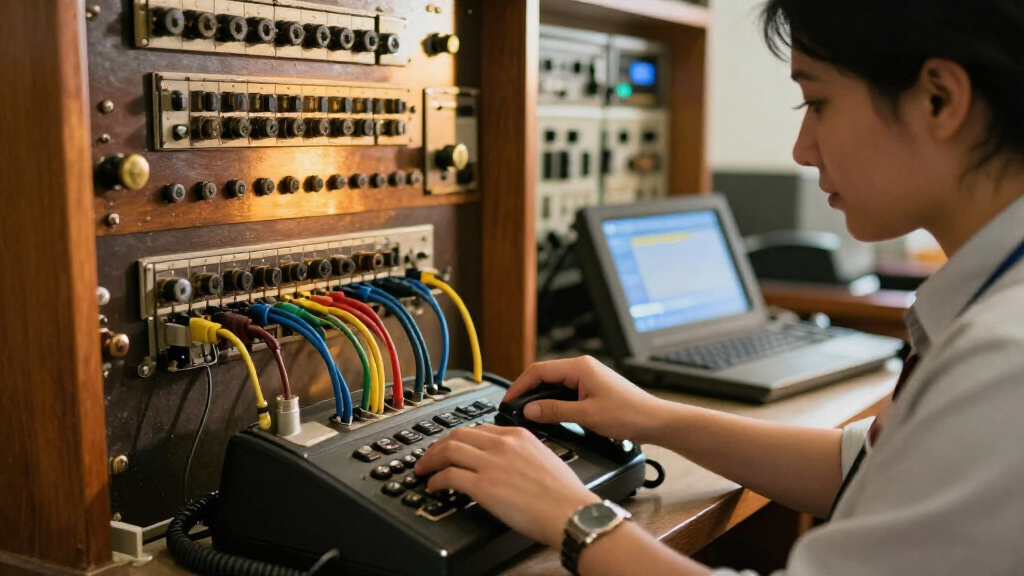
The report says telephone operators made up about 2% of working women in the United States in 1920. They connected calls by plugging cords into switchboard jacks. The Bell System started converting exchanges to mechanical switching in 1919, after years of relying on manual service. Preparing a city for the change took two to three years, although the final transfer of wires to the new equipment could take only minutes.
Conversion proceeded over decades rather than in a single nationwide changeover. The report gives estimates that 32% of Bell telephones used dial service by 1930 and 60% by 1940. Wartime copper rationing slowed the work, and the last Bell System exchanges reached dial service in 1978. The census counted about 182,000 operators in the telephone industry at its 1930 peak, plus another 23,000 working private switchboards in places such as hotels, hospitals and large businesses.
Drawing on estimates by economists James Feigenbaum and Daniel Gross, the article says about 13.7%—roughly one in seven—of white, American-born women born around 1900 worked as telephone operators at some point between 1910 and 1940. This is an estimate of people who held the job at any time, not a count of operators employed simultaneously. The report notes the racial boundary: AT&T did not hire Black operators until after 1940.
Infographic 01 · Rise and fall
The switchboard job: 70 years up, half a century down
The dial arrived city by city from 1919. Yet the number of telephone operators kept growing until 1970, because calls, long distance and office switchboards grew too.
All telephone operators in the US census · thousands
Share of Bell System telephones on dial
Census counts: persons 14 and over, economically active (1950 in the 1950 classification); they include operators at private switchboards. After 1970: −75,000 telephone operator jobs in 1972-1980 (BLS), all of them held by women. 2025: wage and salary jobs (BLS survey), split into telephone operators (3,430) and switchboard operators incl. answering services (34,280). Definitions differ: compare orders of magnitude only.
Sources: US Census Bureau, Historical Statistics of the United States (1975), series D 351; J. Feigenbaum & D. P. Gross, Quarterly Journal of Economics 139(3), 2024 (AT&T archive data, 1930 count, 1 in 7 estimate); C. B. Leon, Monthly Labor Review (June 1982); BLS, Occupational Employment and Wage Statistics, May 2025.
Powered by Thorsten Meyer AI
The Uneven Cost of Dial Conversion
The historical record presented in the report separates the effects on current workers from the opportunities available to later generations. After a city switched to dial service, the number of young operators fell by an estimated 50% to 80%. Feigenbaum and Gross’s research, as summarized in the article, also found that operators already in the occupation were less likely to be employed ten years later; those still working were more likely to have lower-paid jobs.
By contrast, employment among young women did not fall overall, according to the report. Many found work as typists, secretaries or in food service, including in industries that had not previously hired many women in those roles. That distinction matters to readers considering automation today: a technology can remove demand for a particular occupation without producing the same outcome for every worker or ending employment across a broader group. The report does not claim that the shift was painless or that every displaced operator found comparable work.
The article connects the episode to current concerns about generative AI. It cites the International Labour Organization’s assessment that clerical work is among the occupations most exposed to generative AI, with exposure in high-income countries falling more heavily on women’s jobs than men’s. That comparison is a warning about potential exposure, not proof that AI will reproduce the telephone industry’s timeline or employment outcomes.
Products Worth Considering

DJI Mini 4K Drone Combo with 4K Camera, 3-Axis Gimbal, and Two Batteries

LG UltraGear 27-inch QHD OLED Gaming Monitor, 240Hz, 0.03ms, G-SYNC Compatible, FreeSync Premium Pro, HDR True Black 400

Apple MacBook Air 13-inch with M5 Chip, 16GB Memory, 512GB SSD, Liquid Retina Display, and 12MP Center Stage Camera – Midnight
As an affiliate, we earn on qualifying purchases.
From Manual Jacks to Dial Service
The first telephone exchanges required a person to complete each connection. Bell opened an exchange in New Haven, Connecticut, in 1878, and operators linked callers by inserting cords into the correct jacks. The report says early operators were mostly boys and young men, but telephone companies came to recruit young women. By 1910, operators were almost all women. The job could be better paid and more social than factory work, though it demanded concentration and quick responses to customers.
Almon B. Strowger received a U.S. patent for an automatic telephone exchange in 1891. In the system described by the report, a caller used a dial to send electrical pulses that moved switches at the exchange and connected the call. AT&T began experimenting with the technology in 1902, but manual switching initially remained cheaper and more effective in many places. Bell engineers recommended mechanical switching for large cities in 1917, and the system began conversions two years later.
The article also flags a familiar story about Strowger: that he invented the exchange because he believed an operator was diverting his customers to a competitor. Its author says no primary source confirming that account was found and describes it as a legend. The report’s broader point does not depend on that story; the dated patent and the gradual Bell System rollout provide the documented timeline.
“About 13.7% of white, American-born women born around 1900 were telephone operators at some point between 1910 and 1940.”
— James Feigenbaum and Daniel Gross, as cited by ThorstenMeyerAI.com
What the Historical Estimate Leaves Open
The one-in-seven estimate applies specifically to white, American-born women born around 1900, and depends on census counts, operators’ ages and turnover estimates. It does not represent all women, all workers or every country. The report notes that Black women were excluded from AT&T operator hiring until after 1940, but the material provided does not quantify their employment across other telephone companies or private exchanges.
The source also does not give a detailed breakdown of outcomes by city, race, age or individual operator. Its broad account says incumbent workers had worse later employment prospects and younger women entered other occupations, but it does not establish that every operator experienced the same result. Nor does the historical comparison establish what generative AI will do to clerical employment; that remains a separate and developing question.
How the AI Comparison Develops
The article is part of ThorstenMeyerAI.com’s “Work After Work” series, which examines automation in history; the source identifies it as Episode 17 in Arc 3. Its next step is to use the switchboard story as historical context for current automation debates, rather than as a direct forecast. The provided material gives no date for a follow-up installment or new research release.
For the present-day comparison, the key developments to watch are how generative AI affects hiring, job tasks, wages and employment in clerical occupations, and whether those changes differ by gender and income level. The ILO assessment cited in the report concerns exposure to the technology; actual workplace effects will require evidence from employment data and further research.
Key Questions
When did dial telephones begin replacing U.S. switchboard operators?
The Bell System began converting exchanges in 1919. The process took decades: the report says 32% of Bell telephones were on dial service by 1930, 60% by 1940, and the whole network by 1978.
How many women worked as telephone operators?
The report cites an estimate that about 13.7%, or one in seven, of white, American-born women born around 1900 worked as operators at some point from 1910 to 1940. It is a cumulative estimate, not a count employed at one time.
What happened to operators after their city switched to dial service?
According to the research summarized in the article, the number of young operators fell by 50% to 80% after a local conversion. Incumbent operators were less likely to be working ten years later, and those still employed more often held lower-paid jobs.
Did automation reduce employment for all young women?
The report says young women’s employment did not fall overall. Many moved into work such as typing, secretarial jobs and food service, though the source does not say that every displaced operator found work or maintained her previous pay.
Does the switchboard history predict what AI will do?
No. The article uses the episode as historical context, not a forecast. It cites the International Labour Organization on clerical jobs’ exposure to generative AI, but the future effects on employment and wages remain uncertain.
Source: ThorstenMeyerAI.com