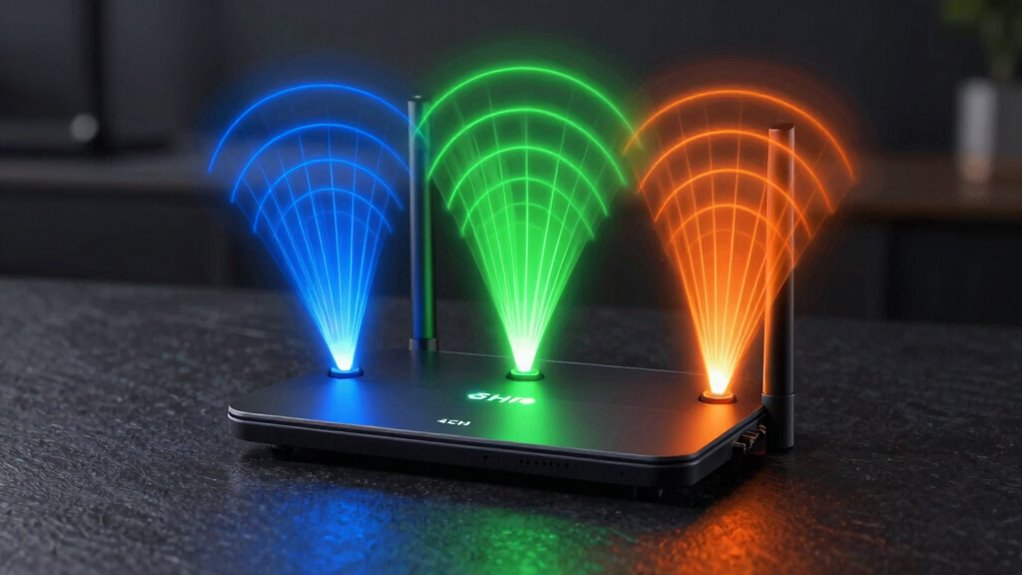
For most households, choose 4GHz for reliable coverage through walls and obstacles, especially if you have many devices or large spaces. Use 5GHz for faster speeds like streaming, gaming, or video calls when you’re close to the router and interference is low. Turn to 6GHz for the highest speeds and capacity in small, interference-free areas. Keep in mind these tips to guarantee your Wi-Fi works best—more details will help you optimize your setup even further.
Key Takeaways
- Use 4GHz for broader coverage and obstacle penetration in large or complex environments.
- Choose 5GHz or 6GHz for faster speeds, higher capacity, and activities like streaming or gaming.
- Opt for 6GHz in interference-free, small areas for the highest speed and lowest latency.
- 4GHz is best for long-distance connections through walls, while 5GHz/6GHz are optimal for high-performance tasks nearby.
- Consider device compatibility, environment, and security features when selecting the appropriate Wi-Fi band.

TP-Link AXE5400 Tri-Band WiFi 6E Router (Archer AXE75), 2025 PCMag Editors' Choice, Gigabit Internet for Gaming & Streaming, New 6GHz Band, 160MHz, OneMesh, Quad-Core CPU, VPN & WPA3 Security
Tri-Band WiFi 6E Router – Up to 5400 Mbps WiFi for faster browsing, streaming, gaming and downloading, all…
As an affiliate, we earn on qualifying purchases.
As an affiliate, we earn on qualifying purchases.
How Do 4GHz, 5GHz, and 6GHz Wi-Fi Bands Differ?
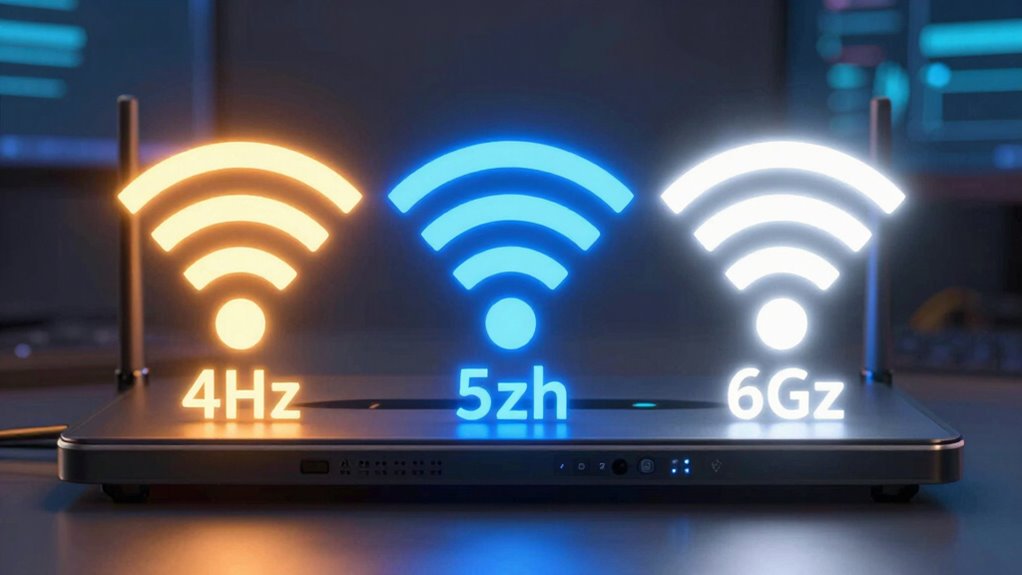
While all three bands—4GHz, 5GHz, and 6GHz—are used for Wi-Fi connections, they differ considerably in their frequency ranges and performance. The 4GHz band offers broader coverage and better signal penetration, making it suitable for devices farther from the router. In contrast, the 5GHz and 6GHz bands provide faster speeds but have shorter ranges. Security protocols can vary across these bands, with newer standards often supported on higher frequencies. Device antennas play an essential role, especially on the 4GHz band, where larger antennas improve connection stability. For maximum security and performance, verify your device antennas are compatible with your chosen band and that your network supports the latest security protocols, protecting your data across all frequencies. Additionally, antenna design impacts signal strength and stability, especially on the 4GHz band where larger, more efficient antennas can significantly enhance connection quality. Being aware of Wi-Fi band differences can help you optimize your network setup for better coverage and speed, especially as newer standards and frequency allocations evolve over time to support faster and more secure wireless connections.

1200Mbps Dual Band 5GHz/2.4GHz WiFi Extender, WiFi Extender Signal Booster, 12880 Sq.Ft Coverage, 105-Device Support, Setup for Home & Outdoor Use
12880 Sq.Ft 360°Indoor-Outdoor Coverage: The WiFi Extender, paired with four high-gain antennas, delivers 360°comprehensive coverage up to 12880…
As an affiliate, we earn on qualifying purchases.
As an affiliate, we earn on qualifying purchases.
How Does Wi-Fi Range and Signal Penetration Vary by Frequency?
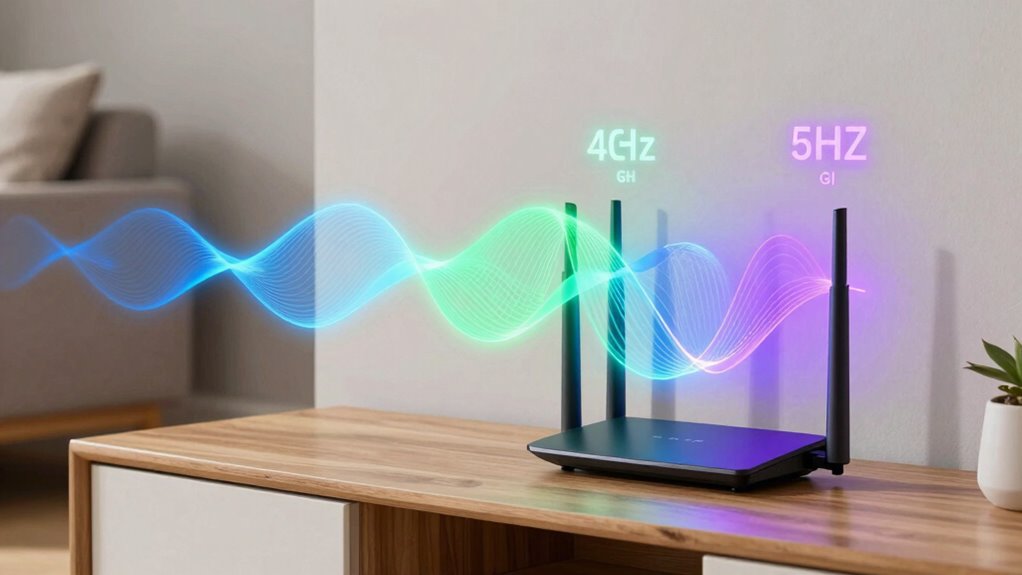
Higher Wi-Fi frequencies like 5GHz and 6GHz typically don’t penetrate walls as well as 4GHz, which means your signal may weaken more quickly with distance or obstacles. While 4GHz offers broader coverage and better range, the faster bands provide higher speeds but shorter reach. Understanding these differences helps you choose the right band based on your space and needs. Additionally, selecting the appropriate frequency can impact your overall Wi-Fi performance, especially in environments with many obstructions. Recognizing how signal penetration varies by frequency can help optimize your network setup for a more reliable connection. Since frequency and coverage are key factors, knowing how different bands behave can assist in creating a more efficient network tailored to your environment. Being aware of device vulnerabilities can also guide you in improving your Wi-Fi security alongside performance. Moreover, considering capacity and bandwidth can ensure your network handles multiple devices effectively without congestion.
Signal Penetration Differences
Understanding how Wi-Fi signals penetrate walls and obstacles is essential when choosing the right band. Lower frequencies, like 4GHz, generally penetrate obstacles better, offering more reliable coverage in challenging environments. Higher frequencies, such as 5GHz and 6GHz, tend to have weaker penetration, which can lead to dead zones indoors. To improve signal quality, interference mitigation techniques are vital, especially at higher frequencies where signals are more easily disrupted. Signal amplification through repeaters or mesh networks can help extend coverage, but they work best when the initial signal can pass through obstacles effectively. Ultimately, if you need better penetration and coverage in complex environments, sticking with lower frequencies will serve you better, while higher frequencies excel in short-range, high-speed scenarios. Additionally, considering factors like microplastics in dust can impact indoor air quality and signal interference, influencing overall network performance.
Range Limitations and Benefits
Different Wi-Fi frequencies offer distinct advantages and limitations when it comes to range. Lower frequencies like 4GHz provide better signal penetration through walls and obstacles, making them ideal for larger spaces. Higher frequencies like 5GHz and 6GHz have shorter ranges but support higher bandwidth allocation, enabling faster speeds for your devices. However, these higher bands are more susceptible to interference management issues, especially in crowded environments, which can reduce effective coverage. The shorter range of 6GHz limits its use to smaller areas but offers less interference and more channels for bandwidth-intensive applications. Additionally, signal penetration varies with frequency, affecting how well Wi-Fi signals can pass through various materials. To optimize your network, consider your space size and device needs, balancing the benefits of higher frequency bands against their range limitations. Understanding the interference susceptibility of different bands can help in selecting the best option for your environment. Moreover, just as electric bikes have varying horsepower and performance capabilities, Wi-Fi bands differ in how well they perform under different conditions, influencing your overall connectivity experience. Recognizing these frequency differences can assist in making more informed networking decisions.
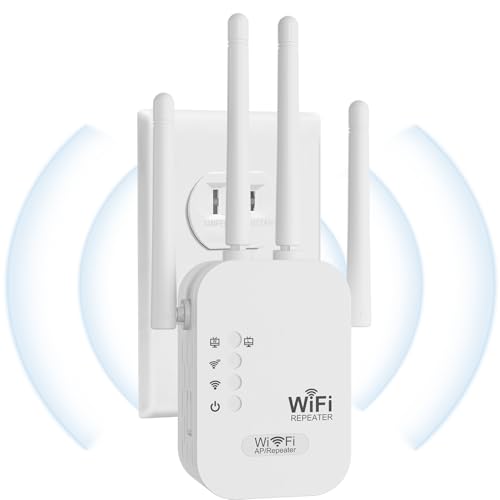
2026 WiFi Extenders Signal Booster for Home Long Range Up to 9800 sq. ft & 40 Devices, WiFi Extender Signal Booster, Internet Booster, Long Range WiFi Extender,Quick Setup-Medium
EXTEND WIFI COVERAGE : The wifi extenders to bring you wide coverage of signals,Coverage up to 9789Sq. ft,Eliminating…
As an affiliate, we earn on qualifying purchases.
As an affiliate, we earn on qualifying purchases.
Which Devices Support Each Wi-Fi Band?
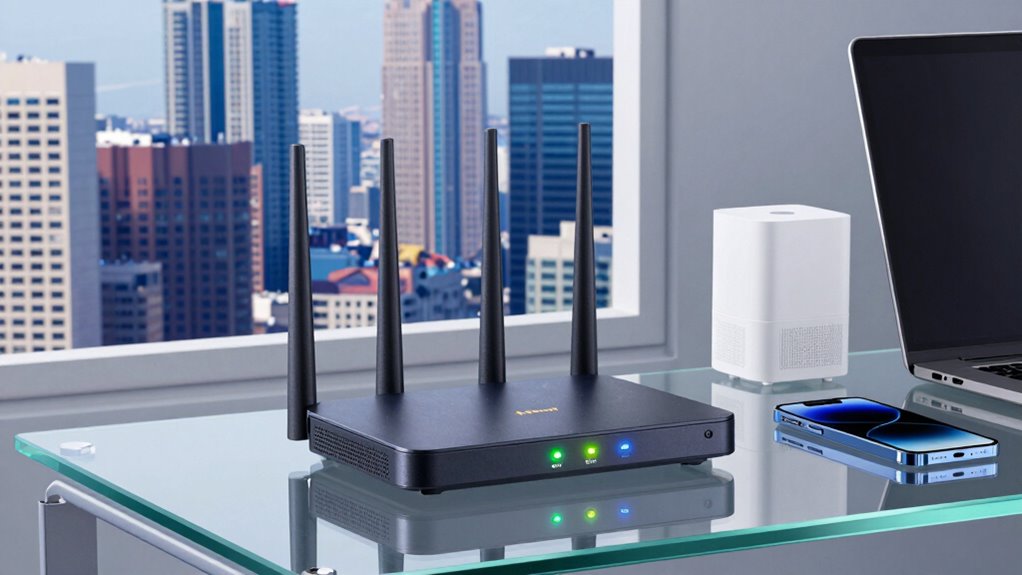
Your devices’ support for different Wi-Fi bands depends on their compatibility standards and age. Modern gadgets often support 5GHz and even 6GHz, while older devices may only work on 2.4GHz. Knowing what your devices can handle helps you choose the best band for speed and coverage.
Device Compatibility Standards
Many modern devices now support multiple Wi-Fi bands, but compatibility can vary depending on their hardware. Devices supporting interference mitigation features often handle different bands better, ensuring smoother performance across 4GHz, 5GHz, and 6GHz networks. Older devices may only support 2.4GHz or 5GHz, limiting their device interoperability with newer standards. Check your device specifications to confirm supported bands, especially if you want seamless switching or best performance. Some devices, like recent smartphones, laptops, and routers, support all three bands, maximizing compatibility and reducing interference issues. However, legacy devices might lack support for 6GHz or advanced interference mitigation, making them less adaptable to newer Wi-Fi standards. Understanding these standards helps you choose devices that work well together, ensuring a reliable, interference-free connection. Additionally, being aware of device compatibility standards ensures you select the right devices that support the latest Wi-Fi bands for optimal performance. Recognizing interference mitigation capabilities can also improve overall network stability and speed.
Modern Device Support
As Wi-Fi technology advances, a wide range of modern devices now support multiple bands, but compatibility isn’t universal. Many smartphones, laptops, and smart home gadgets feature device interoperability across 2.4GHz, 5GHz, and even 6GHz, reducing frequency interference. However, some older devices only support 2.4GHz, limiting their performance on newer bands. Check your device specs to verify compatibility, especially when upgrading your network. Here’s a quick overview:
| Device Type | Supported Bands |
|---|---|
| Smartphones & tablets | 2.4GHz, 5GHz, 6GHz |
| Laptops & PCs | 2.4GHz, 5GHz, 6GHz (varies) |
| Smart home gadgets | Mostly 2.4GHz, some 5GHz |
Being aware of modern device support is essential for ensuring your network runs smoothly and efficiently. Additionally, understanding Wi-Fi band compatibility can help you make better decisions when choosing or upgrading your router. Recognizing how device support varies across different gadgets can also help optimize your network performance and avoid connectivity issues. Moreover, selecting Suprem fabric for device accessories or clothing can contribute to a more sustainable and durable setup.
Older Device Limitations
Not all devices support the latest Wi-Fi bands, which can create compatibility issues when upgrading your network. Older devices often rely on earlier Wi-Fi standards, limiting them to 2.4GHz or 5GHz bands, depending on their device age. These devices may struggle with higher frequency bands like 6GHz, which are more sensitive to interference sources like walls or appliances. If you have a mix of older and newer devices, you might experience slower speeds or connection drops on certain bands. Upgrading your network without considering device limitations can cause frustration. To guarantee smooth connectivity, identify which devices support each band and plan your router setup accordingly. This way, you maximize compatibility while minimizing interference sources affecting your older devices.

8dBi High Gain Long Range Dual Band WiFi 2.4GHz 5GHz 5.8GHz MIMO RP-SMA Male Antenna for PCI WiFi Router Wireless Network Bluetooth Card USB Adapter Security IP Camera Video Surveillance Monitor PC
Dual Band WiFi: 2.4GHz (2400 – 2485 MHz),5GHz/5.8GHz (5150 – 5850 MHz); Gain: 8dBi; Direction: Omni-directional; Antenna Connector:…
As an affiliate, we earn on qualifying purchases.
As an affiliate, we earn on qualifying purchases.
What Are the Speed and Capacity Benefits of 5GHz and 6GHz?
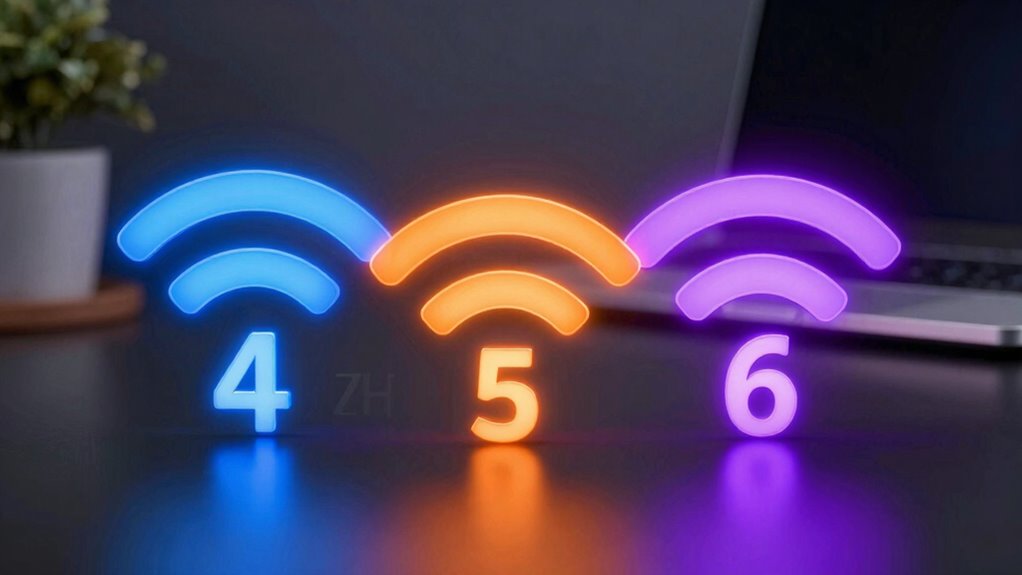
Curious about how 5GHz and 6GHz bands boost your Wi-Fi performance? These higher-frequency bands offer considerably greater speed and capacity thanks to improved bandwidth allocation. They can handle more data at once, making them ideal for high-demand activities like streaming, gaming, and large file transfers. Plus, their wider channels help reduce interference, leading to more stable connections. With better interference management, your devices experience fewer disruptions, ensuring smoother performance. The 6GHz band, in particular, provides even more room for data traffic, further increasing capacity. This means fewer bottlenecks and faster data transfer rates. Additionally, understanding wireless spectrum management is essential for optimizing your network’s performance. Overall, upgrading to 5GHz or 6GHz bands helps you enjoy quicker, more reliable Wi-Fi that can support multiple devices simultaneously without sacrificing speed.
What’s the Best Wi-Fi Band for Streaming, Gaming, and Video Calls?
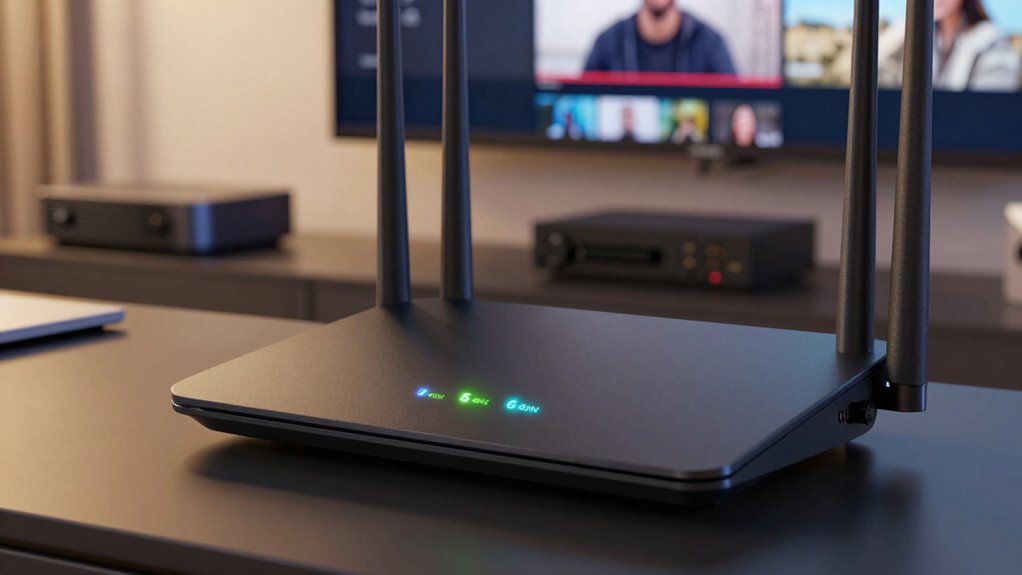
Choosing the right Wi-Fi band can make a significant difference in your streaming, gaming, and video call experiences. The best band depends on your environment and needs. For stable connectivity with fewer interference sources, consider these options:
- 6GHz: Ideal if you’re in a clean environment with minimal interference sources, offering high speeds and low latency for smooth gaming and video calls.
- 5GHz: Great for fast streaming and gaming, especially if your space has some interference, as it’s less crowded than 2.4GHz.
- 4GHz (or 2.4GHz): Best if you need maximum connectivity stability over longer distances or through walls, though it’s more prone to interference sources.
Choose based on your environment to optimize your connection quality. Additionally, understanding wireless protocols can help you select the best setup for your needs.
When Should You Use 4GHz Instead of 5GHz or 6GHz?
You should use the 4GHz band when your priority is maintaining a stable connection over longer distances or through obstacles like walls, rather than chasing the highest possible speeds. It’s better suited for environments with more interference, as it manages interference more effectively than higher bands. When bandwidth allocation needs to be more flexible for multiple devices, 4GHz guarantees consistent performance. Use this band if you’re in a large home or office with many walls or furniture that block signals. Here’s a quick comparison:
| Feature | 4GHz | 5GHz | 6GHz |
|---|---|---|---|
| Range | Longer | Shorter | Shortest |
| Interference management | Better | Moderate | Less interference |
| Bandwidth allocation | More stable across distances | Faster speeds, less coverage | Future-proof, high capacity |
Understanding the wireless frequency bands can help you optimize your network setup for the best performance and reliability based on your specific environment and needs. Additionally, being aware of how different frequency bands operate can aid in troubleshooting connectivity issues more effectively.
A Simple Rule to Choose the Right Wi-Fi Band

Selecting the right Wi-Fi band doesn’t have to be complicated; instead, it boils down to understanding your primary needs. To choose wisely, consider these simple rules:
- Use 6GHz if you want minimal interference and faster speeds for device migration within a small area. It’s ideal for high-performance tasks and reduces interference from other networks.
- Switch to 5GHz if you need a balance of speed and range, especially in environments with many competing signals. It offers less interference than 2.4GHz but more range than 6GHz.
- Opt for 4GHz (or 2.4GHz) if you need broader coverage and better interference reduction over larger spaces, especially when devices are spread out or walls block signals.
These rules help you pick the best band based on interference reduction and device migration needs.
Tips to Optimize Your Wi-Fi Setup for Better Performance
To get the most out of your Wi-Fi network, start by placing your router in a central, elevated location away from obstructions and electronic interference. This helps improve signal strength and reduces interference mitigation issues. Next, maximize spectrum allocation by selecting the least congested bands, especially when using 5GHz or 6GHz. Use dual-band or tri-band routers to balance device connections and prevent bottlenecks. Position devices closer to the router to boost speeds. Regularly update firmware for security and performance. Consider using Wi-Fi analyzers to identify interference sources and adjust channels accordingly. Here’s a quick overview:
| Tip | Benefit |
|---|---|
| Central, elevated placement | Minimizes obstructions and interference mitigation |
| Spectrum analysis | Ensures ideal spectrum allocation for speed |
| Device proximity | Improves overall Wi-Fi performance |
| Firmware updates | Enhances security and stability |
Frequently Asked Questions
Can I Use All Three Bands Simultaneously on My Device?
Yes, you can use all three bands simultaneously if your device supports it and your router allows it. Check your device’s compatibility with 4GHz, 5GHz, and 6GHz bands. Using multiple bands can reduce signal interference, improving your connection. Many modern routers enable band steering, automatically directing devices to the best band. This setup enhances overall network performance and minimizes signal interference for a smoother online experience.
How Do Wi-Fi Bands Impact Battery Life on Connected Devices?
You might notice that using higher Wi-Fi bands can subtly influence your device’s power consumption, often leading to slightly quicker battery drain. However, modern devices are designed with smart power management, balancing performance and battery life. Always check your device compatibility with these bands, as using incompatible ones may cause more power use or connectivity issues. Staying updated with your device’s settings can help optimize battery life while enjoying fast, reliable connections.
Are There Security Differences Between 4GHZ, 5GHZ, and 6GHZ?
You’re generally safe across all bands because security depends on encryption protocols like WPA3, not the frequency. However, higher bands like 5GHz and 6GHz might be less prone to signal interference, which can impact connection stability and security. Keep your router’s firmware updated and use strong encryption to protect your network, regardless of whether you’re on 4GHz, 5GHz, or 6GHz.
Will Upgrading to 6GHZ Require New Routers or Hardware?
Upgrading to 6GHz is like switching to a new language—your current hardware might not comprehend it. Most existing routers and devices don’t support 6GHz yet, so you’ll likely need new hardware for compatibility and future proofing. As technology evolves rapidly, investing in 6GHz-compatible equipment now guarantees you stay ahead, but check your device specs to avoid surprises.
How Does Congestion Differ Across the Three Wi-Fi Frequency Bands?
You’ll find that congestion varies across the three Wi-Fi bands due to interference sources and signal stability. The 4GHz band experiences more interference from household devices, leading to potential congestion. The 5GHz band offers less interference and better signal stability, reducing congestion. The 6GHz band, being newer and less crowded, has minimal interference sources, ensuring the best signal stability and lowest congestion, especially in busy environments.
Conclusion
Choosing the right Wi-Fi band is like picking the perfect lane on a busy road—you want smooth, fast traffic without congestion. Whether you prioritize range, speed, or device support, understanding these bands helps you make smarter choices. By following the simple rule outlined, you’ll navigate your Wi-Fi setup with confidence. So, tune into the best band for your needs and enjoy seamless streaming, gaming, and calls—your digital life will thank you just like a well-tuned engine.