Bufferbloat causes high latency and delays that can ruin your calls, leading to dropouts and echoes. To check for it, run speed tests and look for spikes in latency, especially during peak times. Fixing the issue involves optimizing your router, enabling Quality of Service (QoS), and limiting bandwidth-heavy activities during calls. Upgrading your internet plan or equipment might be necessary if problems persist. Keep exploring to learn practical tips that can improve your call quality.
Key Takeaways
- Conduct speed tests during calls to identify high latency and bufferbloat symptoms like lag and audio dropouts.
- Use tools like DSLReports Speed Test to measure bufferbloat scores and monitor network performance over time.
- Prioritize VoIP traffic with Quality of Service (QoS) settings on your router to reduce latency and improve call quality.
- Optimize router placement, update firmware, and select less congested Wi-Fi channels to minimize interference and buffer buildup.
- Upgrade to higher-tier internet plans or fiber connections if persistent bufferbloat degrades call clarity despite optimizations.

MSI Radix AXE6600 WiFi 6E Tri-Band Gaming Router, AI QoS, RGB, 1.8GHz Quad-Core Processor, MU-MIMO, Tri Band Gigabit Wireless, 8-Stream, High Speed Long Range Gaming Router
Tri-band 2.4GHz + 5GHz + 6GHz; latest WiFi 6E supports 8-streams on tri-band simultaneously, up to 6.6Gbps speed
As an affiliate, we earn on qualifying purchases.
As an affiliate, we earn on qualifying purchases.
What Is Bufferbloat and How Does It Affect Your Calls?
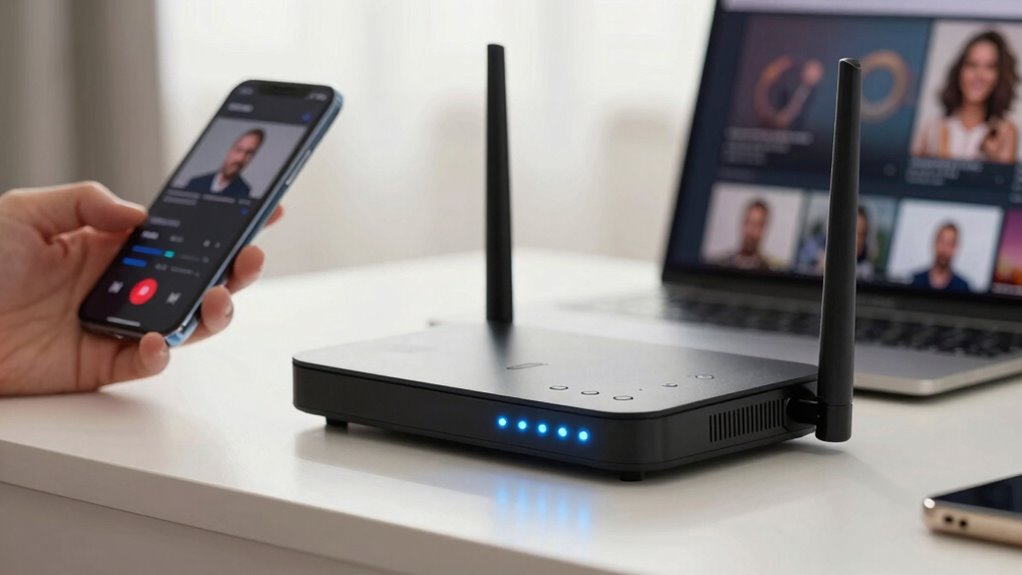
Have you ever experienced your video calls constantly freezing or lagging, even though your internet connection seems fast? That’s often caused by bufferbloat, a condition where excessive data builds up in your network buffers. It leads to high latency and slow response times, disrupting your calls. Bufferbloat is frequently worsened by network congestion, especially when many devices use the internet simultaneously, overwhelming your router’s buffers. ISP throttling can also play a role, intentionally slowing your connection during peak times or data-heavy activities. This combination causes delays, jitter, and poor call quality. Understanding how bufferbloat impacts your network helps you recognize why your calls suffer despite a seemingly good internet connection. Fixing it involves managing your network traffic and reducing buffer buildup. Additionally, implementing airless paint spraying tips and gear can help optimize your home network setup for better performance. Knowing how to manage network buffers effectively can significantly improve your overall connection quality, especially when combined with network diagnostics to identify issues. Being aware of internet congestion and how it contributes to bufferbloat can further assist in troubleshooting and optimizing your network. Recognizing the signs of bufferbloat can help you take proactive steps to improve your call quality before frustration sets in.

Hitron CODA56 DOCSIS 3.1 Cable Modem ONLY (NOT Fiber) | 2.5 Gbps | NO WiFi/Voice/Router | Single Ethernet Port | Xfinity/Spectrum/Cox Compatible | Requires Separate WiFi Router
🚫 CABLE MODEM ONLY – NOT FOR FIBER: This is EXCLUSIVELY for cable internet (DOCSIS) from Xfinity, Spectrum,…
As an affiliate, we earn on qualifying purchases.
As an affiliate, we earn on qualifying purchases.
Recognize the Symptoms of Bufferbloat During Calls

When bufferbloat is affecting your calls, you’ll notice certain telltale signs that indicate network congestion and high latency. Your call quality may suffer, with frequent audio dropouts, echoes, or choppiness. You might also experience delayed responses, making conversations feel disjointed or difficult to follow. During calls, high network latency becomes obvious as speech takes longer to transmit and arrive, creating a lag between talking and hearing responses. You may find yourself asking others to repeat themselves more often or noticing that the conversation feels unsteady. These symptoms point to bufferbloat causing excessive buffering in your network, leading to degraded call quality. Recognizing these signs early helps you understand that network congestion is impacting your calls, prompting you to take steps to fix it. Monitoring your network’s performance and understanding network congestion can help you identify and address the root causes of bufferbloat.

5 PCS Network Cable Untwist Tool,Wires Separator Tools, Wire Straightener Engineer Wire Straightener for CAT5/CAT5e/CAT6/CAT7 Wires Pair Separator Tools Quickly Easily Untwists (blue)
Ergonomic and User-Friendly: Designed with a focus on user comfort, this set of 5 cable separators features ergonomic…
As an affiliate, we earn on qualifying purchases.
As an affiliate, we earn on qualifying purchases.
How to Test for Bufferbloat at Home

Wondering if your network is causing call issues? To test for bufferbloat at home, start by conducting a simple speed test on your connection. Many websites and apps measure your upload and download speeds while also showing bufferbloat scores. If your speeds seem normal but calls still lag, network congestion or signal interference might be causing delays. Use a dedicated bufferbloat testing tool, like the DSLReports Speed Test, which measures latency under load. Run the test multiple times during different times of the day to identify patterns. If the latency spikes during peak hours, it indicates bufferbloat due to congestion or interference. This straightforward testing helps you pinpoint whether your network conditions are contributing to call quality problems, especially if you’re troubleshooting issues related to network diagnostics.

5G WiFi Analyzer, 2.4G Signal Strength Meter, Network Analyzer with 2.4 Inch TFT Color Screen and Light Indication – Rechargeable Battery, Type C Charging, Ideal for WiFi Optimization
[Wifi Signal Strength Meter]: Easily identify crowded frequency points and switch to clearer channels to boost your Wi-Fi…
As an affiliate, we earn on qualifying purchases.
As an affiliate, we earn on qualifying purchases.
How to Read Bufferbloat Test Results and What They Mean

Understanding your bufferbloat test results is essential to diagnosing network issues that impact call quality. High latency or jitter indicates network congestion, often caused by overwhelmed buffers. Look for a “bufferbloat” score or delay measurement; lower is better. To interpret results, compare the delay against acceptable thresholds to see if data prioritization is needed. The table below illustrates typical results:
| Result Type | Meaning |
|---|---|
| Low delay (< 20ms) | No significant bufferbloat |
| Moderate delay (20-50ms) | Slight congestion, monitor for calls |
| High delay (> 50ms) | Severe network congestion, fix required |
These results help you understand whether your network can handle real-time calls without suffering from bufferbloat, which can be mitigated by network performance optimization.
Simple Ways to Reduce Bufferbloat on Your Network
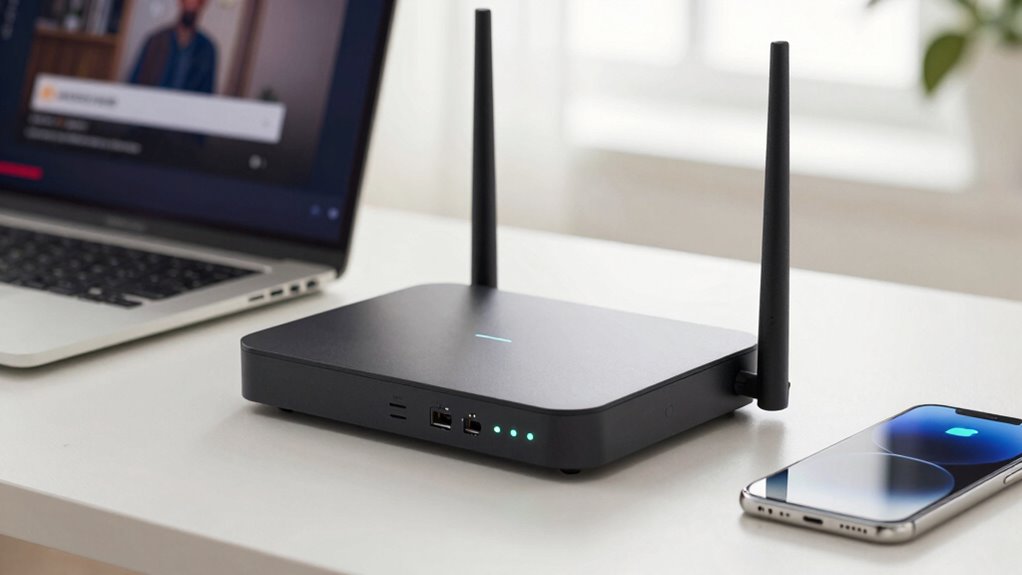
Reducing bufferbloat doesn’t require complex technical skills; simple adjustments can substantially improve your network performance. To combat network congestion and signal interference, try these quick fixes:
- Limit bandwidth-heavy activities during peak times to reduce congestion.
- Rearrange your Wi-Fi setup to minimize signal interference, such as placing your router away from metal objects and electronics.
- Upgrade your router firmware for better traffic management and buffer control.
- Use Quality of Service (QoS) settings to prioritize calls and essential traffic over other data.
- Implementing network traffic monitoring can help identify and manage bottlenecks that contribute to bufferbloat. Additionally, understanding network hardware options like routers with better buffer management can lead to more effective solutions.
- To further optimize your network, consider buffer management techniques, which can help in reducing latency and improving overall performance.
These steps can help decrease latency and smooth out your network, especially when multiple devices are connected. Small changes go a long way in reducing bufferbloat and improving call quality.
Configure Your Router to Fix Bufferbloat
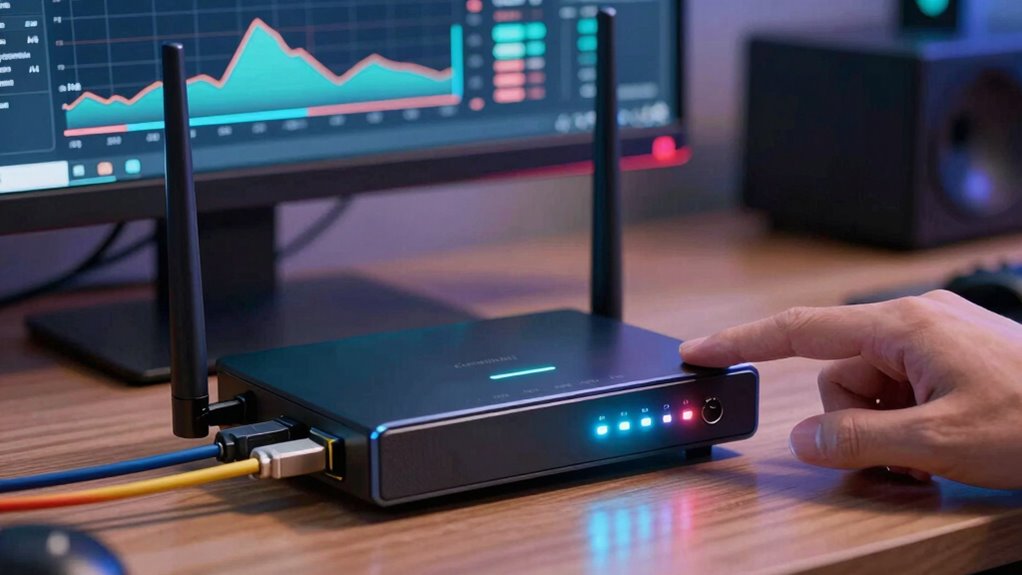
To effectively reduce bufferbloat, configuring your router’s settings is essential. Start by enabling Quality of Service (QoS) features, which prioritize voice calls and critical traffic over less important data. This helps manage network congestion and prevents buffers from filling up unnecessarily. Adjust the buffer sizes—reducing them limits delay caused by excessive buffering. Also, update your router’s firmware to ensure it runs the latest optimizations. If you experience wireless interference, consider switching to a less congested Wi-Fi channel or moving your router to a more central location to improve signal strength. These adjustments help your network handle traffic more efficiently, minimizing latency and buffering during calls. Proper configuration ensures smoother calls and a better overall internet experience, especially when integrating smart home technology that relies on seamless connectivity. Additionally, understanding printmaking paper choices can inspire improvements in your design process, just as optimizing network settings enhances call quality. Incorporating AI-driven network management tools can further refine your setup by automatically balancing traffic and reducing lag. Being aware of buffer management techniques can also provide additional ways to optimize your network performance.
Best Hardware to Reduce Bufferbloat
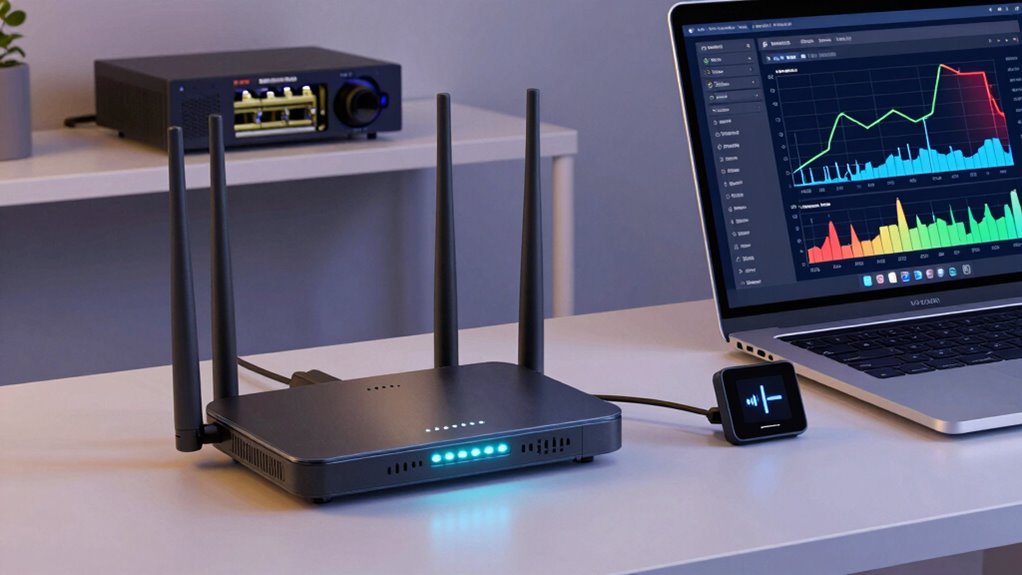
Choosing the right router is key to reducing bufferbloat, so look for models with advanced traffic management features. Investing in quality QoS devices can prioritize your calls and critical data, preventing congestion. With the right hardware, you’ll see a noticeable improvement in call clarity and overall network performance. Additionally, understanding the challenges in nanotech fabrication can help you select devices built with better precision and efficiency. Being aware of the hardware limitations can guide you toward equipment that better handles network traffic and reduces latency issues. Upgrading to high-quality components can further enhance your network’s ability to manage traffic effectively. Incorporating auditory processing strategies, such as sound therapy techniques, can also improve communication clarity during calls, especially if auditory challenges are involved.
Optimal Router Selection
Selecting the right router is essential if you want to minimize bufferbloat and improve your call quality. A good router can handle traffic efficiently and reduce latency. When choosing hardware, prioritize models with strong processor speeds and ample RAM, which help manage buffer sizes better. Proper router placement is critical; position it centrally and elevated to avoid signal interference from walls or electronics. Look for routers with advanced features like QoS settings to prioritize voice traffic. Avoid routers with outdated firmware or low-quality components that can contribute to congestion. Additionally, selecting routers with Quality of Service (QoS) capabilities allows you to prioritize voice and video calls over other network traffic, significantly reducing bufferbloat’s impact. Also, consider dual-band or mesh systems to reduce signal interference and guarantee stable connections across your space. Incorporating network optimization techniques can further enhance your setup and minimize bufferbloat’s impact on your calls. The right hardware, combined with ideal placement, markedly cuts down bufferbloat’s impact on your calls.
Quality QoS Devices
Investing in quality QoS (Quality of Service) devices is one of the most effective ways to reduce bufferbloat and improve your call quality. These devices prioritize critical traffic, guaranteeing voice packets get through with minimal delay. With proper packet prioritization, your voice clarity markedly improves, reducing lag and choppiness during calls. High-quality QoS hardware manages network congestion by assigning bandwidth to essential applications, preventing buffers from filling up unnecessarily. Look for routers or dedicated hardware that offers advanced QoS features and customizable rules. By doing so, you guarantee your voice traffic receives priority, leading to clearer, more reliable conversations. In short, reliable QoS devices are an essential investment in eliminating bufferbloat and maintaining smooth, high-quality communication.
Adjust Your Internet Settings and QoS for Better Calls
To improve your call quality, start by adjusting your internet settings and prioritizing your voice traffic. Network congestion and ISP throttling can cause delays and jitter, affecting your calls. You can reduce these issues by:
- Enabling Quality of Service (QoS) settings on your router
- Assigning higher priority to VoIP or video call applications
- Limiting bandwidth-heavy activities during calls
- Ensuring your firmware and router settings are optimized
- Monitoring your network for microplastics in dust, which can affect electronic components over time and impact network stability. Regularly checking your network environment can help prevent hardware degradation that may contribute to poor call quality.
These adjustments help manage traffic flow, so voice data gets through smoothly even when your connection is strained. Prioritizing your voice traffic minimizes the impact of network congestion and ISP throttling, leading to clearer, more reliable calls. Keep in mind, proper settings can considerably improve your experience without needing immediate hardware upgrades.
When to Upgrade Your Internet Plan or Equipment for Bufferbloat
Sometimes, no matter how much you tweak your settings, bufferbloat still causes lag and poor call quality. If you notice persistent issues despite optimizing your network, it’s time to contemplate upgrading your internet plan or equipment. When your current Internet speed isn’t enough to handle your household’s bandwidth demands, or if network congestion is frequent during peak hours, upgrading can help reduce bufferbloat.
Consider these factors:
| Indicator | Action | Recommended Upgrade |
|---|---|---|
| Slow speeds during calls | Contact provider or upgrade plan | Higher-tier internet package |
| Frequent network congestion | Upgrade router/modem | Modern, high-capacity equipment |
| Multiple devices online | Increase bandwidth | Fiber or gigabit internet |
Upgrading ensures smoother calls and better handling of network traffic.
Troubleshooting Persistent Bufferbloat: Expert Tips
Persistent bufferbloat can be tricky to resolve, even after upgrading your equipment or internet plan. To troubleshoot effectively, focus on reducing network congestion and signal interference. Start by checking your router placement—keep it central and away from thick walls or electronics that cause interference. Use Quality of Service (QoS) settings to prioritize voice and video traffic, reducing bufferbloat during high demand. Regularly update firmware to fix bugs that worsen latency issues. Ultimately, monitor your network with tools like speed tests and latency meters to identify persistent congestion points or interference sources.
Address bufferbloat by optimizing router placement, using QoS, updating firmware, and monitoring network performance.
- Optimize Wi-Fi channels to avoid interference
- Limit background device activity during calls
- Use wired connections for critical calls
- Schedule bandwidth-heavy tasks outside peak hours
Frequently Asked Questions
Can Bufferbloat Affect Video Streaming Quality as Well as Calls?
Yes, bufferbloat can affect your video streaming quality, causing buffering delays, pixelation, and dropped frames. It impacts streaming protocols and video compression by increasing latency and jitter, which disrupt smooth playback. When buffers fill up, your connection struggles to handle real-time data transfer, leading to poor quality. To improve, optimize your network and reduce bufferbloat, ensuring better streaming experiences and smoother video calls.
Are There Free Tools to Automatically Detect Bufferbloat Issues?
Yes, you can find free tools that automatically detect bufferbloat issues, revealing hidden network congestion. These tools scan your network and analyze your router configurations, exposing problems that might be slowing down your calls or streaming. By running these tests regularly, you can stay ahead of the congestion, make informed adjustments, and improve your overall internet experience. Stay vigilant—your connection’s performance depends on it.
How Often Should I Test My Network for Bufferbloat?
You should test your network for bufferbloat weekly or whenever you notice call quality issues. Regular testing helps you catch network congestion early and guarantees QoS prioritization is working effectively. If you see persistent problems, increase testing frequency. Monitoring frequently allows you to adjust your setup, like enabling QoS features or reducing background traffic, to keep your calls clear and smooth.
Does Upgrading My Modem Alone Fix Bufferbloat Problems?
Upgrading your modem alone might not fully fix bufferbloat problems. Make sure your new modem is compatible with your network and supports features like QoS, which helps manage traffic. Also, check for firmware updates, as they can improve performance and reduce bufferbloat. Combining a compatible modem with proper firmware updates can greatly improve your call quality and overall internet experience, but you might also need to optimize your router settings.
Can Bufferbloat Cause Latency Issues During Online Gaming?
Did you know that bufferbloat can cause latency spikes of over 300 milliseconds during online gaming? Yes, it can profoundly impact your experience. Bufferbloat causes network congestion, leading to delays in data transmission. Proper router configuration can help manage buffer sizes and reduce latency. By optimizing your router settings and monitoring network congestion, you can improve game responsiveness and enjoy smoother gameplay without frustrating lag spikes.
Conclusion
If you ignore bufferbloat, your calls could become an unending nightmare of lag and frustration, turning every conversation into a test of patience. By understanding, testing, and optimizing your network, you can reclaim crystal-clear communication and restore your sanity. Don’t let bufferbloat continue to sabotage your calls — take action now before your network becomes a slow, choppy battlefield where every word gets lost in the digital chaos. Your voice deserves better.