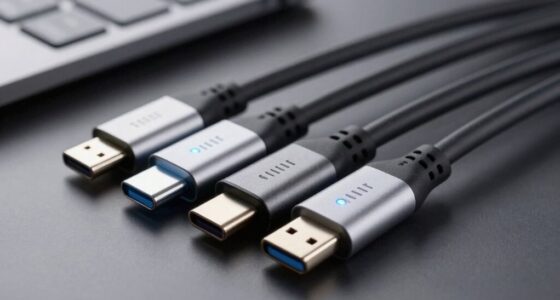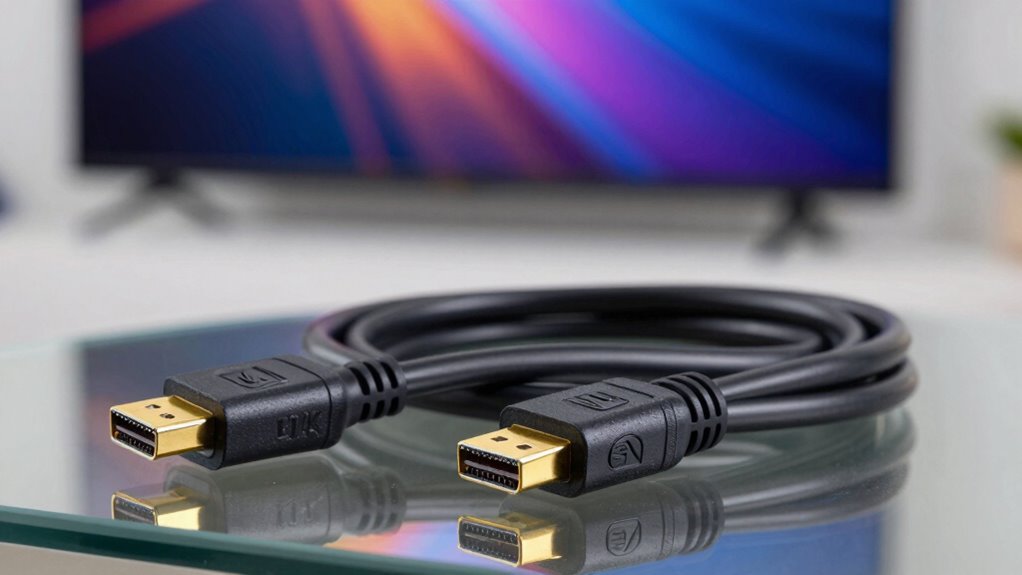

Many believe all HDMI cables are the same for 4K, but quality and standards truly matter. You don’t need fiber optics or expensive brands—just focus on certified HDMI 2.0 or higher cables that support 4K, HDR, and high refresh rates. Cheaper cables can still work if they meet these specs, but poor build quality may cause issues. Want tips on choosing the best cable for your setup? Keep exploring to get the facts straight.

Get the latest gadgets delivered free with Prime
- Fast, free delivery on millions of items
- Prime Video, Amazon Music and more included
- Member-only deals all year
Key Takeaways
- Not all HDMI cables support 4K; ensure they meet HDMI 2.0 or higher standards for reliable 4K and HDR performance.
- Cable quality and specifications matter more than price or brand reputation.
- Fiber optic cables are unnecessary for 4K; high-quality standard HDMI cables handle 4K content effectively.
- Proper bandwidth, durability, and shielding are crucial for maintaining signal quality over long distances.
- Upgrading to certified, high-quality HDMI cables enhances reliability, supports higher refresh rates, and improves overall picture quality.
As an affiliate, we earn on qualifying purchases.
What Are Common Myths About HDMI Cables for 4K?
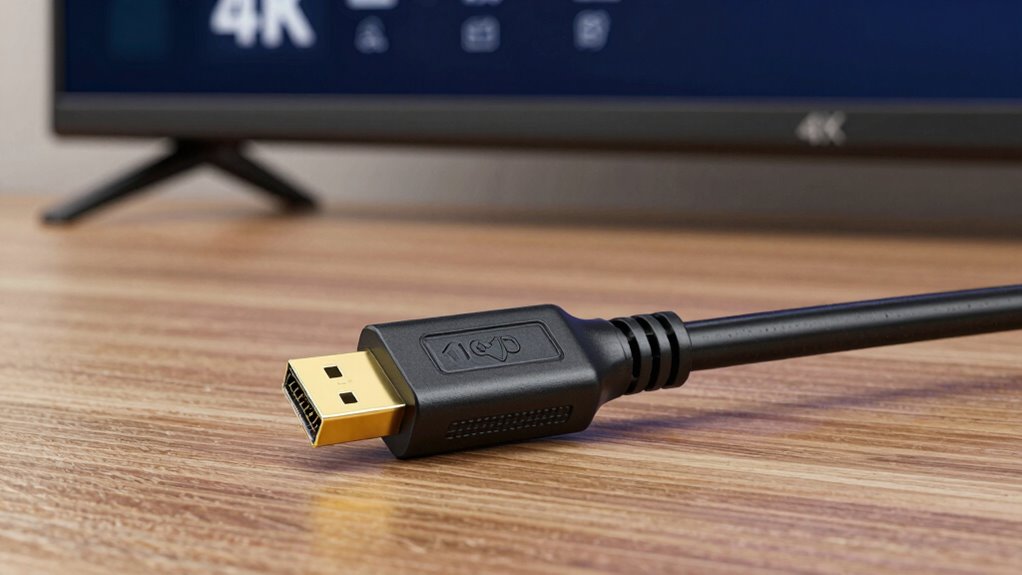
Have you ever wondered if all HDMI cables are created equal when it comes to 4K? Many believe that just any cable will do, but that’s a myth. Some assume fiber optics are necessary for high-quality 4K, but most standard HDMI cables handle 4K just fine. Others think wireless transmission can replace cables entirely, yet wireless options often struggle with stability and latency. The real issue isn’t always the cable type but the quality and specifications it meets—like HDMI 2.0 or higher. Confusing fiber optics with standard copper cables leads to misconceptions, since fiber optics are more common in high-end, long-distance setups. Understanding these myths helps you make smarter choices without overpaying for unnecessary features. Additionally, knowing the role of contrast ratio in image quality can influence your overall home cinema setup decisions. Recognizing that cable quality and specifications are more critical than the cable type itself can save you money and improve your viewing experience. Moreover, paying attention to signal bandwidth ensures your setup supports 4K content smoothly without issues. It’s also helpful to understand that connection stability plays a key role in maintaining consistent high-quality playback during extended viewing sessions.
high-speed HDMI cable HDR support
As an affiliate, we earn on qualifying purchases.
As an affiliate, we earn on qualifying purchases.
Does Cable Quality Really Impact 4K Picture Quality?
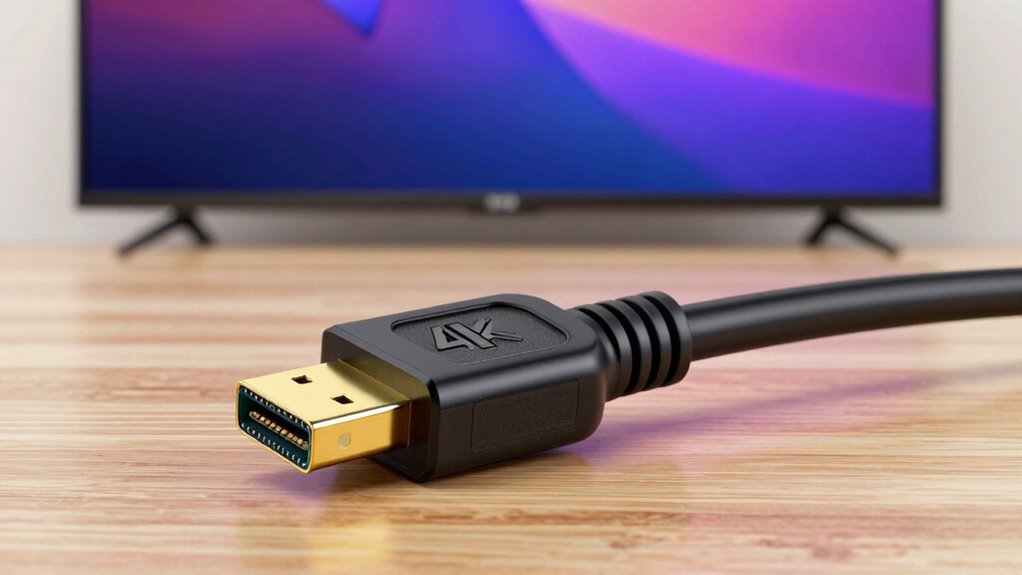
Many believe that the quality of your HDMI cable directly affects your 4K picture, but in reality, a well-made cable that meets the necessary specifications will transmit 4K content effectively. Cable aesthetics may look appealing, but they don’t influence picture quality. Instead, focus on brand reputation and whether the cable adheres to standards like HDMI 2.0 or 2.1. A cheaper cable with good specs can perform just as well as a pricier one. The key is ensuring the cable is certified for 4K transmission, not its appearance or brand prestige.
| Aspect | Impact on 4K Quality |
|---|---|
| Cable Aesthetics | No real impact on picture quality |
| Brand Reputation | Not necessarily indicative of quality |
| Certification | Critical for reliable 4K transmission |
| Price | Not always an indicator of performance |
| Specifications | Must meet HDMI 2.0/2.1 standards |
As an affiliate, we earn on qualifying purchases.
How Do HDMI Standards Like 2.0 and 2.1 Affect 4K Compatibility?
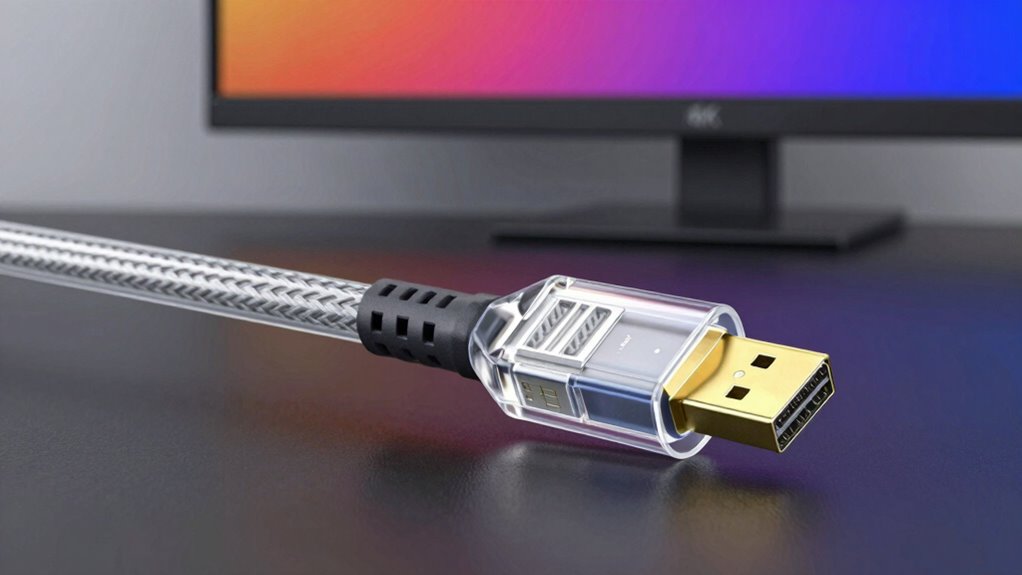
HDMI standards like 2.0 and 2.1 improve 4K compatibility by increasing bandwidth, allowing for higher resolutions and refresh rates. They also support advanced features such as HDR and enhanced audio, ensuring better picture and sound quality. As these standards evolve, they help future-proof your setup for upcoming 4K and even 8K content.
Bandwidth Requirements
Wondering how HDMI standards like 2.0 and 2.1 impact 4K compatibility? The key is bandwidth. Higher standards demand more data transfer, which affects your cable’s performance and overall picture quality. Here’s what you need to know:
- Increased Bandwidth for 4K: HDMI 2.0 supports up to 18 Gbps, enough for 4K at 60Hz, ensuring smooth motion and sharp images.
- Future-Proofing with HDMI 2.1: It boosts bandwidth to 48 Gbps, supporting 4K at 120Hz and beyond, with better color accuracy.
- Cable Quality Matters: A durable cable maintains consistent bandwidth, resisting wear that can impair color accuracy and signal stability over time.
Choosing the right cable guarantees reliable performance and long-term durability for your 4K setup.
Supported Features
The supported features of HDMI standards like 2.0 and 2.1 directly influence your ability to enjoy 4K content at higher refresh rates and with richer colors. These standards enhance bandwidth, enabling features like HDR and variable refresh rates, which improve image quality. The right cable must support these features for ideal performance. Consider the table below:
| Feature | Impact on 4K Experience |
|---|---|
| Higher refresh rates | Smoother motion, ideal for gaming |
| Dynamic HDR | Better color and contrast |
| Cable durability | Ensures longevity and consistent quality |
| Aesthetic design | Complements your setup without compromising function |
Choosing a cable with supported features ensures durability and aesthetic design, making your 4K experience seamless.
Future Compatibility
As technology advances, newer HDMI standards like 2.0 and 2.1 are designed to support higher resolutions and refresh rates, guaranteeing your 4K setup remains future-proof. These standards improve not just resolution but also aspects like cable durability and color accuracy, essential for long-term use. Incorporating outdoor entertainment features can further enhance your backyard experience alongside your upgraded HDMI setup. Consider these points:
- HDMI 2.0 offers 4K at 60Hz, compatible with most current devices, extending cable lifespan.
- HDMI 2.1 supports 4K at 120Hz and even 8K, safeguarding your investment as content quality evolves.
- Upgrading cables ensures maximum color accuracy, critical for vivid, true-to-life visuals over time.
Choosing the right HDMI standard helps your setup stay compatible and delivers consistent, high-quality performance.
As an affiliate, we earn on qualifying purchases.
Is Bandwidth the Key to Smooth 4K HDMI Performance?
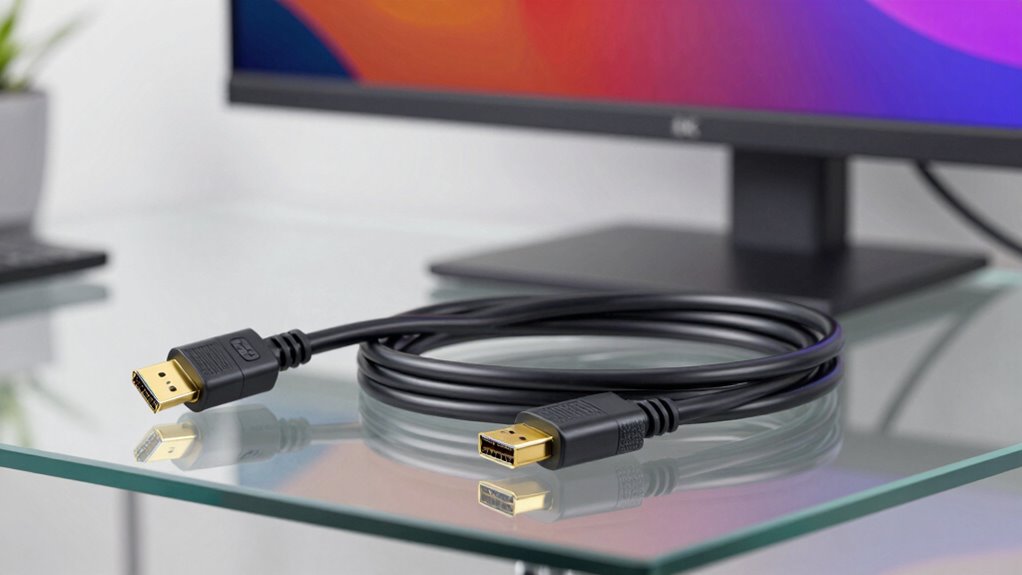
While bandwidth is often highlighted as a crucial factor for smooth 4K HDMI performance, it’s not the only element that matters. A high-bandwidth cable helps guarantee enough data transfer for 4K content, but other factors influence performance too. Cable durability is essential; a well-made cable resists wear and maintains consistent signal quality over time. Additionally, aesthetic design matters if you prefer a sleek, unobtrusive setup, but it shouldn’t compromise build quality. Focus on choosing a cable with adequate bandwidth for 4K HDR content, while also considering durability and design to match your setup. Remember, a sturdy, well-designed cable with the right specs will deliver smoother performance and longer lifespan, making it a smarter investment beyond just bandwidth. Proper fabric decorating markers or other tools for customization can also help personalize your setup, ensuring it fits your style while functioning perfectly. Ensuring your cable has the right construction quality can significantly impact its overall performance and longevity.
Can a Cheap HDMI Cable Handle 4K HDR Content?
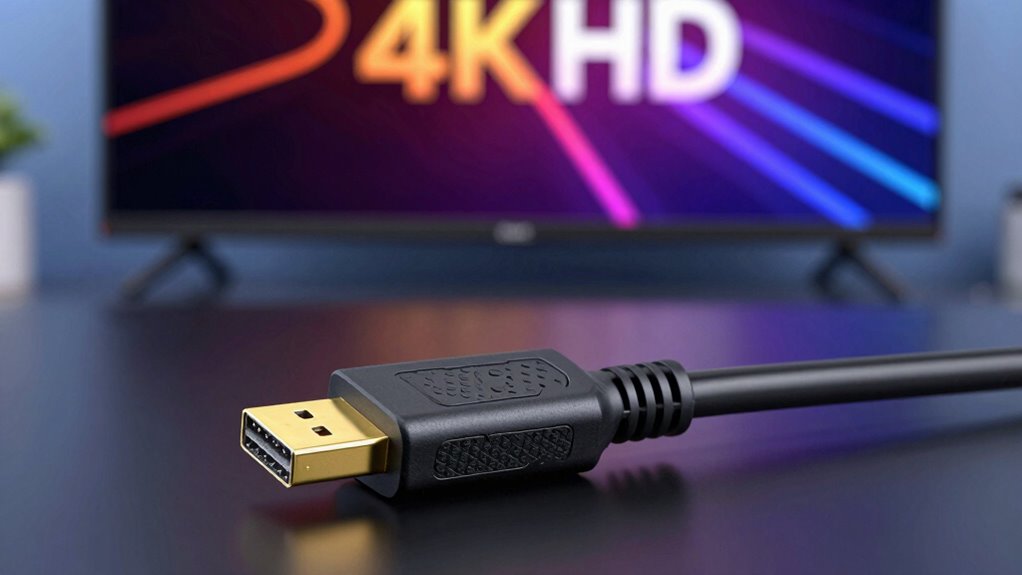
Many people wonder if a cheap HDMI cable can handle 4K HDR content without issues. The truth is, not all inexpensive cables are equal. Here are three key points to consider:
- Cable durability: Cheaper cables often use lower-quality materials, which can lead to breakage or poor connections over time, affecting 4K HDR playback.
- Price comparison: While budget cables are tempting, investing a bit more can ensure better performance and longevity, making them more cost-effective in the long run.
- Performance for 4K HDR: Some inexpensive cables may lack the necessary bandwidth or build quality, resulting in flickering, color issues, or signal drops during high-quality 4K HDR content. Additionally, content quality can be impacted if the cable cannot support the required data transfer speeds.
How Do HDMI Cable Length and Signal Loss Affect 4K Performance?
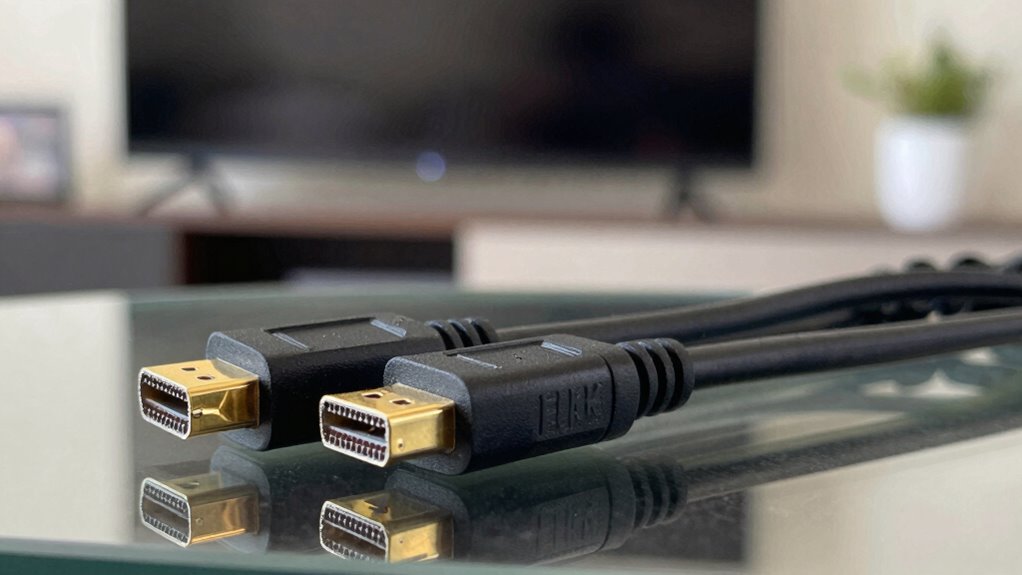
Even a high-quality HDMI cable can experience performance issues if it’s too long, especially when transmitting 4K HDR signals. Signal loss increases over longer distances, leading to reduced image clarity or flickering. Cable shielding helps minimize electromagnetic interference, preserving signal integrity during extended runs. Additionally, the durability of connectors matters; well-designed connectors guarantee a secure connection, preventing signal degradation caused by loose contacts. Proper cable installation and regular checks can also help maintain optimal performance over time. Understanding how signal attenuation affects long cables can help you choose the right solution for consistent 4K quality. Properly selecting cables with appropriate shielding can significantly reduce interference and maintain signal strength. While shorter cables generally deliver the best performance, high-quality longer cables with proper shielding and durable connectors can maintain 4K signal quality. Keep in mind that beyond a certain length, signal boosters or active cables might be necessary to prevent loss and guarantee your 4K content looks sharp and vibrant without interruptions.
Should You Upgrade Your HDMI Cables for 4K Content?
Upgrading your HDMI cables for 4K content can make a noticeable difference in picture quality, especially if you’re using older or lower-quality cables. Newer cables often feature enhanced cable durability, reducing the risk of signal issues over time. Additionally, modern cables come with sleek aesthetic designs that blend seamlessly with your setup, avoiding clutter. Consider these factors before upgrading:
- Cable Durability: Newer cables are built to withstand wear and tear, ensuring longevity and consistent performance.
- Aesthetic Design: Slimmer, more attractive cables improve the look of your entertainment setup.
- Performance Assurance: Upgrading can guarantee your cable supports high-bandwidth 4K and HDR signals without compromise.
- Understanding Content Quality: Knowing what actually matters in HDMI cables helps you make informed decisions and avoid overspending on unnecessary features.
If your current cable is old or poorly made, upgrading is a smart move for better reliability and style.
How to Verify If Your HDMI Cable Supports 4K and HDR?
To verify if your HDMI cable supports 4K and HDR, start by checking its HDMI version compatibility, as newer versions like HDMI 2.0 or higher are required. Next, inspect the cable’s specifications or packaging for clear mention of 4K or HDR support. Confirming these details guarantees your setup delivers the picture quality you expect. Additionally, understanding HDMI standards can help ensure your equipment and cable are fully compatible with the latest features.
Check HDMI Version Compatibility
Wondering how to confirm if your HDMI cable supports 4K and HDR? Start by checking the HDMI version. Here are three quick tips:
- Read the packaging or label – Look for HDMI 2.0 or higher, which supports 4K at 60Hz and HDR.
- Test HDMI color performance – A compatible cable maintains vibrant, accurate colors without flickering.
- Assess cable durability – Quality cables resist wear and tear, ensuring consistent performance for 4K content.
Matching the right HDMI version ensures your cable can handle the high bandwidth needed for 4K and HDR. Don’t forget, a well-constructed cable with good durability improves overall HDMI color quality, giving you sharper images and richer tones. This verification step guarantees you get the best picture and sound experience.
Inspect Cable Specifications
Checking the specifications of your HDMI cable is the most reliable way to confirm if it supports 4K and HDR. Start by examining the cable’s packaging design, which often highlights key features like 4K and HDR support. Look for labels such as “High-Speed” or “Premium High-Speed,” indicating compatibility with advanced formats. Cable aesthetics can also provide clues—thicker cables with gold-plated connectors typically support higher bandwidths needed for 4K HDR. However, don’t rely solely on visuals; verify the specifications printed on the packaging or included documentation. Manufacturers may list detailed data rates and standards, such as HDMI 2.0 or later. This guarantees you’re choosing a cable that truly supports the high bandwidths necessary for pristine 4K and HDR content.
What Mistakes Should You Avoid When Choosing HDMI Cables for 4K?
Choosing the right HDMI cable for 4K content might seem straightforward, but many people make common mistakes that can affect performance. One mistake is ignoring cable durability; cheap cables often break or lose signal over time. Second, overlooking color accuracy can lead to dull or washed-out images, ruining your viewing experience. Finally, selecting a cable based solely on price without verifying specifications can result in poor 4K support or incomplete features. To avoid these pitfalls, check that the cable is certified for 4K and HDMI 2.0 or higher. Also, prioritize quality construction for longevity. Remember, a durable cable ensures consistent performance, and proper color accuracy guarantees your visuals are true to life. Making informed choices will help you enjoy the full benefits of your 4K setup. Additionally, understanding credit card terms can be crucial if you’re purchasing new electronics or accessories online to ensure secure transactions. It’s also important to recognize the significance of cable materials, as they impact both longevity and signal quality, especially for high-resolution content.
Final Tips for Choosing the Right HDMI Cable for 4K
To guarantee you get the best performance from your 4K setup, focus on verifying that the HDMI cable is certified for HDMI 2.0 or higher, which guarantees support for 4K resolution and HDR features. Beyond technical specs, consider cable aesthetics—choose a cable that’s durable, flexible, and fits well with your setup. A tidy, well-made cable reduces signal interference and makes installation easier. Don’t overlook brand reputation; trusted brands often guarantee quality and compatibility, reducing the risk of issues down the line. While cheaper options might seem tempting, investing in a reputable brand ensures you’re getting a reliable product that supports your 4K needs. Ultimately, pairing good quality, well-designed cables with reputable brands will give you the best viewing experience.
Frequently Asked Questions
Do All HDMI Cables Support 4K HDR Simultaneously?
Not all HDMI cables support 4K HDR simultaneously. You need a high-speed or premium HDMI cable that offers sufficient bandwidth for both 4K resolution and HDR. When choosing, consider cable durability and connector compatibility to guarantee long-lasting performance. Cheaper or older cables might not handle the data load, leading to issues. Always verify that your cable is rated for 4K HDR to enjoy the full, high-quality experience.
How Does HDMI ARC Differ From Standard HDMI for 4K?
You might think HDMI ARC is just about audio, but it actually differs from standard HDMI by using a specific HDMI version that includes an audio return channel. This allows your TV to send audio back to a soundbar or receiver without extra cables. So, if you’re aiming for seamless 4K setup with integrated sound, HDMI ARC simplifies connections, making your entertainment system cleaner and more efficient.
Can Using Older HDMI Ports Affect 4K Performance?
Using older HDMI ports can affect your 4K performance because they might not support the latest standards needed for high-quality video. Port compatibility issues can limit your cable’s ability to transmit 4K signals properly. Additionally, older ports may have reduced cable durability, increasing the risk of connection problems over time. To guarantee the best 4K experience, always use the latest HDMI ports that support higher bandwidth and newer features.
Is There a Difference Between HDMI Cables for Gaming and Movies?
Think of HDMI cables as versatile tools—some are built for gaming’s quick reactions, others for movies’ rich visuals. You’ll notice differences in cable durability and aesthetic design, but for 4K, the core specs matter most. Whether gaming or watching movies, choose a cable with high-speed capabilities and reliable build quality. This guarantees smooth gameplay and stunning visuals, making your experience as seamless as a well-oiled machine.
Do HDMI Cable Color or Branding Indicate 4K Support?
No, HDMI cable color or branding doesn’t indicate 4K support. Instead, focus on cable durability and specifications like HDMI 2.0 or higher. Color coding is often used for easy identification, but it doesn’t guarantee compatibility. Reliable cables with proper certifications ensure you get true 4K performance. So, don’t rely on looks or brand names—verify the specs to confirm your cable supports your 4K needs effectively.
Conclusion
Choosing the right HDMI cable for 4K isn’t about myths or price tags—it’s about understanding standards like HDMI 2.0 and 2.1. Did you know that over 80% of users don’t realize their cables can limit 4K HDR performance? By verifying your cable’s compatibility and avoiding common mistakes, you’ll enjoy smoother, richer visuals. Remember, upgrading your cable can make a real difference in your viewing experience—so don’t settle for less than what your 4K content deserves.
Halloween Picks
halloween
As an affiliate, we earn on qualifying purchases.