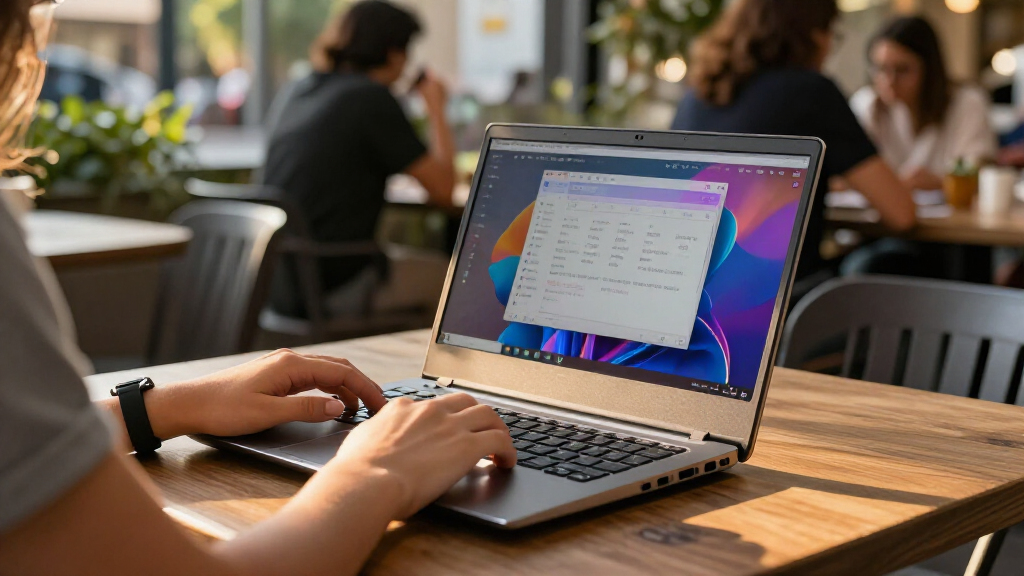

For the best Lenovo Chromebooks, I’d start with the Lenovo Chromebook Plus 2-in-1: its 8GB of RAM, 256GB of storage, and convertible design give it the most room for everyday multitasking. The IdeaPad Slim 3 Chromebook with a 14-inch FHD+ touch display is a strong alternative for shoppers who want a sharper touchscreen, while the Chromebook M 15 suits buyers who prefer a larger WUXGA screen and 8GB of RAM. The main tradeoffs are screen size versus portability, 4GB versus 8GB of memory, and the flexibility of a 2-in-1 versus a simpler laptop. I compare all 15 Lenovo options by their stated specifications, design, and likely buyer fit. Read on for the full breakdown and guidance on choosing the right model for your needs.

Get the latest gadgets delivered free with Prime
- Fast, free delivery on millions of items
- Prime Video, Amazon Music and more included
- Member-only deals all year
Complete the kit



Key Takeaways
- The Chromebook Plus 2-in-1 has the strongest listed mix of capacity and flexibility: 8GB of RAM, 256GB of UFS storage, a 14-inch touchscreen, and a fingerprint reader distinguish it from the 4GB models.
- Screen resolution and size shape the shortlist: the 14-inch FHD+ IdeaPad Slim 3 and 15-inch-class WUXGA Chromebook M models offer sharper listed displays than the HD 14-inch Slim 3.
- 8GB of RAM appears on only a few standout configurations: the Chromebook Plus 2-in-1, IdeaPad 3i 15.6-inch, Chromebook M 15, and Chromebook M14 give multitaskers more headroom than the many 4GB options.
- The two renewed 300e models trade newer hardware for a compact convertible format: their 11.6-inch touchscreens and 2-in-1 designs suit basic portable use, while their 32GB storage calls for careful file planning.
- Similar Lenovo names can hide different specifications: the IdeaPad Slim 3 entries vary in display, storage, and processor, so I’d compare the exact configuration rather than shop by family name alone.


| Lenovo Chromebook | Processor | Memory | Storage | Display |
|---|---|---|---|---|
| Lenovo IdeaPad Slim 3 Chromebo | MediaTek Kompanio 520 | 4GB RAM | 64GB | 14-inch LCD; supplied details conflict between 1920 × 1080 and 1366 × 768 |
| Lenovo IdeaPad Slim 3 Chromebo | MediaTek Kompanio 540, 8 cores, up to 2.6GHz | 4GB LPDDR5X | 576GB SSD | 14-inch FHD+ touchscreen, 1920 × 1200 |
| Lenovo Chromebook 14" Touchscr | MediaTek Kompanio 520 octa-core | 4GB RAM | 128GB eMMC plus 64GB memory card | 14-inch FHD touchscreen, 1920 × 1080 |
| Lenovo Chromebook 300e 2nd Gen | Intel Celeron N4000, dual-core, 1.1GHz | 4GB DDR4 | 32GB eMMC | 11.6-inch IPS LED touchscreen, 1366 × 768 |
| Lenovo IdeaPad 3i Chromebook | Intel Celeron N4500 | 8GB DDR4 SDRAM | 64GB eMMC | 15.6-inch FHD, 1920 × 1080 |
| Lenovo IdeaPad Flex 3i Chromeb | Intel N100, 4 cores, up to 3.4GHz | 4GB LPDDR5 | 128GB eMMC plus 64GB SD card | 12.2-inch WUXGA IPS touchscreen, 1920 x 1200 |
| Lenovo Chromebook 14 Touchscre | MediaTek Kompanio 520, octa-core | 4GB LPDDR4x | 128GB total: 64GB eMMC plus 64GB SD card | 14-inch FHD anti-glare touchscreen, 1920 x 1080 |
| Lenovo Chromebook M 15" | MediaTek Kompanio 540 | 8GB | 128GB SSD | 15.3-inch WUXGA IPS, 1920 x 1200, anti-glare |
| Lenovo Chromebook Laptop | MediaTek Kompanio 520 | 4GB DDR4 | 128GB total: 64GB eMMC plus 64GB SD card | 14-inch FHD touchscreen, 1920 x 1080 |
| Lenovo Chromebook 2-in-1 | Intel N150 | 4GB | 128GB SSD | 14-inch WUXGA IPS touchscreen, 1920 x 1200 |
| Lenovo Chromebook Plus 2-in-1 | Intel N355 | 8GB LPDDR5 | 256GB UFS | 14-inch WUXGA (1920 x 1200) IPS touchscreen, 60Hz |
| Lenovo Chromebook 15 Laptop | Intel Celeron N4500 | 4GB LPDDR4x-2933 | 128GB eMMC plus 64GB SD card | 15.6-inch Full HD (1920 x 1080) |
| Lenovo Flagship Chromebook 14′ | MediaTek Kompanio 520, octa-core | 4GB | 64GB eMMC | 14-inch Full HD (1920 x 1080) touchscreen |
| Lenovo 11.6" 300e Chromebook T | MediaTek M8173C, quad-core, 2.1GHz | 4GB LPDDR3 | 32GB eMMC | 11.6-inch HD IPS touchscreen, 1366 x 768 |
| Lenovo Chromebook M14 14-Inch | MediaTek Kompanio 540 | 8GB | 64GB UFS | 14-inch WUXGA IPS, 1920 x 1200 |
More Details on Our Top Picks
Lenovo IdeaPad Slim 3 Chromebook Laptop 2024, 14″ HD Display, Waves MaxxAudio Speakers, 4GB RAM, 64GB Storage, MediaTek Kompanio 520, Abyss Blue
The IdeaPad Slim 3 Chromebook 2024 suits students and commuters who want a light laptop with fewer charging stops. Its stated battery life of up to 13.5 hours outlasts the IdeaPad 3i Chromebook’s listed 10 hours, while the 2.9-pound build is easier to carry than that larger 15.6-inch model. Waves MaxxAudio speakers and a camera privacy shutter add practical touches for video calls and streaming. The tradeoff is the 4GB of RAM and 64GB of storage, which limit heavy multitasking and offline files. Display information is inconsistent: the title and supplied specs say Full HD, but the product details also describe a lower-resolution panel. I’d favor this pick for portability and battery claims, not for buyers who need dependable display detail or more performance headroom.
Pros:- Listed weight of 2.9 pounds makes it easy to carry
- Battery life is stated at up to 13.5 hours
- Waves MaxxAudio speakers suit calls and casual video
- Camera privacy shutter offers a simple way to cover the webcam
Cons:- 4GB RAM can constrain heavier multitasking
- 64GB storage leaves limited room for offline files
- Display resolution details conflict across the supplied product information
Best for: Students and commuters who prioritize a light 14-inch Chromebook, long stated battery life, and built-in camera privacy.
Not ideal for: People who keep large media libraries offline, run many demanding tabs, or need a clearly verified Full HD display.
- Processor:MediaTek Kompanio 520
- Memory:4GB RAM
- Storage:64GB
- Display:14-inch LCD; supplied details conflict between 1920 × 1080 and 1366 × 768
- Operating system:Chrome OS
- Weight:2.9 pounds
- Battery life:Up to 13.5 hours
- Camera:Front-facing HD camera with privacy shutter
Our verdict“Choose this Slim 3 for portability and its long stated battery life, but verify the display resolution if sharpness matters.”
Lenovo IdeaPad Slim 3 Chromebook Laptop, 14″ FHD+ Touch Display, 4GB RAM, 576GB Storage, MediaTek Kompanio 540, Chrome OS, Blue
This IdeaPad Slim 3 stands out for pairing a 14-inch 1920 × 1200 touchscreen with a listed 576GB of storage, far more space than the 64GB IdeaPad Slim 3 2024. That capacity makes it a better fit for users who keep documents, downloads, and media on the device, while the Kompanio 540 is a newer processor than the Kompanio 520 in the other Slim 3. Its 4GB RAM remains the limiting factor: plentiful storage does not make a large number of active tabs or demanding apps run smoothly. The listed 6-pound weight also weakens its portability, despite the Slim name. I’d rank it for screen flexibility and storage, but buyers who carry a Chromebook daily should compare its weight carefully with the 2.9-pound 2024 Slim 3.
Pros:- 14-inch FHD+ touchscreen supports touch-based browsing and interaction
- Listed 576GB SSD capacity exceeds the 64GB Slim 3 2024
- Kompanio 540 processor is a newer listed platform than the Kompanio 520
- USB-C, USB-A, HDMI, and audio ports support varied accessories
Cons:- 4GB RAM can limit intensive multitasking
- Listed weight of 6 pounds is substantial for a 14-inch Chromebook
- Chrome OS does not support every desktop application available on Windows or macOS
Best for: Home users and students who want a high-resolution touchscreen and substantial local storage for files and downloads.
Not ideal for: Daily commuters or users who routinely multitask across many demanding tabs, given the listed 6-pound weight and 4GB RAM.
- Processor:MediaTek Kompanio 540, 8 cores, up to 2.6GHz
- Memory:4GB LPDDR5X
- Storage:576GB SSD
- Display:14-inch FHD+ touchscreen, 1920 × 1200
- Operating system:Chrome OS
- Weight:6 pounds
- Ports:2 × USB-C, 2 × USB-A, HDMI 1.4, headphone/mic combo jack
- Camera:Camera with privacy shutter
Our verdict“Pick this model for its touchscreen and unusually generous listed storage, not for lightweight travel or demanding multitasking.”
Lenovo Chromebook 14″ Touchscreen Slim Laptop – Business & Student
For a balanced 14-inch Chromebook, this model offers a clearer display specification than the IdeaPad Slim 3 2024, whose supplied resolution details conflict. Its 1920 × 1080 touchscreen, 2.86-pound weight, and stated 13.5-hour battery life make it a practical choice for classes, documents, and streaming away from an outlet. It also includes Wi-Fi 6 and 128GB of eMMC storage plus a 64GB memory card, giving it more stated capacity than the Slim 3 2024’s 64GB. The Kompanio 520 and 4GB RAM are still entry-level choices for demanding workloads, and the keyboard is not backlit. Compared with the 300e 2nd Gen, this Chromebook gives you a larger, sharper display, but it lacks that model’s convertible form.
Pros:- Full HD touchscreen offers a sharper, more spacious workspace than the 300e 2nd Gen’s 1366 × 768 panel
- Listed weight of 2.86 pounds is well suited to carrying between classes
- Up to 13.5 hours of stated battery life
- Wi-Fi 6 and a webcam privacy shutter add useful everyday features
Cons:- 4GB RAM can restrict heavier multitasking
- Kompanio 520 is not intended for intensive workloads
- Keyboard is not backlit
Best for: Students and mobile workers who want a lightweight 14-inch Full HD touchscreen for browsing, documents, and video calls.
Not ideal for: Users who need a backlit keyboard, frequent high-intensity multitasking, or a convertible tablet-style hinge.
- Processor:MediaTek Kompanio 520 octa-core
- Memory:4GB RAM
- Storage:128GB eMMC plus 64GB memory card
- Display:14-inch FHD touchscreen, 1920 × 1080
- Operating system:Chrome OS
- Weight:2.86 pounds
- Battery life:Up to 13.5 hours
- Wireless:Wi-Fi 6 and Bluetooth 5.1
- Webcam:720p HD with privacy shutter
Our verdict“Choose this Chromebook for a lightweight, clearly specified Full HD touchscreen, provided 4GB RAM meets your workload.”
Lenovo Chromebook 300e 2nd Gen 2-in-1 11.6″ Touchscreen Laptop, 4GB RAM, 32GB Storage, Black (Renewed)
The renewed Chromebook 300e 2nd Gen is the specialist pick here: its 11.6-inch touchscreen and convertible 2-in-1 design suit simple tasks in laptop or tablet mode. That flexibility is useful for younger students, shared household use, or reading and browsing in tighter spaces. Compared with the 14-inch Chromebook with Kompanio 520, however, the 300e gives up both screen size and resolution: its panel is 1366 × 768, and its 32GB storage is the smallest in this group. The older dual-core Celeron N4000 is best kept to basic web use rather than heavier workloads. Its renewed condition adds another reason to check the seller’s refurbishment and return details. I’d choose it for compact touch use, not as the strongest all-purpose Lenovo Chromebook here.
Pros:- Convertible 2-in-1 design supports laptop and tablet-style use
- 11.6-inch touchscreen is compact for small desks and younger users
- Up to 10 hours of stated battery life
- IPS panel provides wider viewing angles than a basic TN display
Cons:- 32GB eMMC storage is limited for offline files
- 1366 × 768 resolution is less sharp than the 14-inch Full HD Chromebook in this lineup
- Older Celeron N4000 and 4GB RAM suit basic tasks, not heavier workloads
- Renewed condition may involve cosmetic wear or refurbishment variation
Best for: Families or students seeking a compact renewed Chromebook for basic browsing, reading, and touch-friendly school tasks.
Not ideal for: Buyers who need ample storage, a sharp large display, demanding app performance, or a new device.
- Processor:Intel Celeron N4000, dual-core, 1.1GHz
- Memory:4GB DDR4
- Storage:32GB eMMC
- Display:11.6-inch IPS LED touchscreen, 1366 × 768
- Form factor:Convertible 2-in-1
- Operating system:Chrome OS
- Battery life:Up to 10 hours
- Weight:4.2 pounds
Our verdict“Choose the renewed 300e for compact convertible use and basic tasks, but opt for a newer 14-inch model for a sharper screen and more storage.”
Lenovo IdeaPad 3i Chromebook, 15.6” FHD Display, Intel Celeron N4500, 8GB RAM, 64GB eMMC, Abyss Blue
The IdeaPad 3i is the better fit for buyers who value screen space and multitasking memory over easy carrying. Its 15.6-inch Full HD display gives spreadsheets, video, and side-by-side windows more room than the 14-inch Chromebook with Kompanio 520. It also has 8GB RAM, twice the memory listed for the other four models here, which can help keep ordinary browser-based work responsive with more tabs open. Storage remains modest at 64GB, and the Celeron N4500 is still aimed at everyday Chromebook tasks rather than intensive editing or demanding software. At 5.5 pounds, it is also notably less travel-friendly than either 14-inch Slim 3. The listed battery life reaches up to 10 hours, shorter than the 13.5-hour claims for the Slim 3 models.
Pros:- 15.6-inch Full HD display provides more room for documents and video
- 8GB RAM exceeds the 4GB configurations in the other products reviewed here
- Wi-Fi 6 and Bluetooth 5.2 support modern wireless connections
- HDMI and USB connectivity make it easier to connect displays and accessories
Cons:- 5.5-pound weight makes it less convenient to carry than the 14-inch models
- 64GB eMMC storage may require external or cloud storage for larger libraries
- Celeron N4500 and integrated graphics are not suited to demanding workloads
- Stated battery life of up to 10 hours is shorter than the Slim 3 models’ 13.5-hour claims
Best for: Home-based students and office users who want a roomy Full HD screen and more memory for everyday browser multitasking.
Not ideal for: Frequent travelers, users who need substantial offline storage, or anyone planning intensive creative or processing work.
- Processor:Intel Celeron N4500
- Memory:8GB DDR4 SDRAM
- Storage:64GB eMMC
- Display:15.6-inch FHD, 1920 × 1080
- Operating system:Chrome OS
- Weight:5.5 pounds
- Battery life:Up to 10 hours
- Wireless:Wi-Fi 6 and Bluetooth 5.2
- Camera:720p HD
Our verdict“Choose the IdeaPad 3i if you want the largest screen and 8GB RAM for everyday work, and can accept its weight and limited storage.”
Lenovo IdeaPad Flex 3i Chromebook 12.2″ 2-in-1 Laptop, Intel N100, 4GB DDR5
The IdeaPad Flex 3i Chromebook is the compact pick for buyers who want a touchscreen that can fold into different viewing positions without carrying a large laptop. Its 12.2-inch WUXGA display keeps the body easy to carry, while the Intel N100 and 4GB of RAM suit everyday browsing, schoolwork, and video calls better than demanding multitasking. Compared with the 14-inch Lenovo Chromebook 2-in-1, this model gives up screen space but includes a stated Wi-Fi 6 connection and a broader listed port selection, including HDMI. The convertible design and up-to-12-hour battery target flexible use away from a desk. The tradeoffs are its limited memory, modest eMMC storage, and basic webcam; buyers who keep many tabs or need a larger workspace should look at the Chromebook M 15 instead.
Pros:- Compact 12.2-inch convertible design supports laptop and tablet-style use
- 1920 x 1200 IPS touchscreen gives more vertical workspace than a standard FHD panel
- Up to 12 hours of stated battery life suits school or travel days
- Wi-Fi 6 and listed HDMI, USB-A, USB-C, and microSD connections add flexibility
Cons:- 4GB RAM can constrain heavier multitasking
- 128GB eMMC plus SD card storage is less suited to large offline libraries
- Basic built-in webcam is a weak fit for frequent video calls
Best for: Students and commuters who want a small touchscreen Chromebook for notes, browsing, and watching videos in different positions.
Not ideal for: People who routinely keep many demanding tabs or apps open, need a large screen for split-screen work, or depend on a high-quality webcam.
- Display:12.2-inch WUXGA IPS touchscreen, 1920 x 1200
- Processor:Intel N100, 4 cores, up to 3.4GHz
- Memory:4GB LPDDR5
- Storage:128GB eMMC plus 64GB SD card
- Battery:47Wh, up to 12 hours
- Weight:2.76 lb
- Connectivity:Wi-Fi 6, Bluetooth 5.3, NFC
- Ports:USB-C, 2 x USB-A, HDMI 1.4, microSD, headphone/mic jack
- Operating system:Chrome OS
Our verdict“Choose the IdeaPad Flex 3i for a compact, flexible touchscreen; choose the Chromebook M 15 if screen space and multitasking matter more.”
Lenovo Chromebook 14 Touchscreen Laptop, MediaTek Kompanio 520, 4GB RAM, 128GB Storage
This 14-inch Chromebook is the straightforward choice for buyers who prioritize long battery life and a roomy touchscreen over extra memory or premium performance. Its stated 13.5-hour runtime exceeds the Lenovo IdeaPad Slim 3 Chromebook’s 13 hours, while the 14-inch FHD anti-glare display offers a more generous workspace than the smaller IdeaPad Flex 3i. The Kompanio 520 and 4GB of RAM are aimed at everyday Chrome tasks—browsing, streaming, and online learning—not intensive workloads. A webcam privacy shutter is a useful practical touch for students and remote workers. I’d skip it if low-light typing matters: its keyboard is not backlit. The Chromebook M 15 is a better fit for heavier multitasking thanks to 8GB RAM, but it is larger and sacrifices this model’s all-day portability focus.
Pros:- Stated 13.5-hour battery life is the longest among these five options
- 14-inch FHD touchscreen provides more workspace than the 12.2-inch Flex 3i
- Anti-glare finish supports use in varied lighting
- 720p webcam includes a physical privacy shutter
Cons:- 4GB RAM and the Kompanio 520 are not suited to demanding multitasking
- Keyboard has no backlight for low-light typing
- At 2.87 lb, it is portable but not as light as the listed 1.5-pound 14-inch convertible
Best for: Students and mobile workers who need a 14-inch touchscreen for everyday tasks and want to stretch use between charges.
Not ideal for: Users who work in dim rooms, regularly run demanding workloads, or want more than 4GB of memory for multitasking.
- Display:14-inch FHD anti-glare touchscreen, 1920 x 1080
- Processor:MediaTek Kompanio 520, octa-core
- Graphics:ARM Mali-G52
- Memory:4GB LPDDR4x
- Storage:128GB total: 64GB eMMC plus 64GB SD card
- Battery life:Up to 13.5 hours
- Weight:2.87 lb
- Camera:720p HD with privacy shutter
- Connectivity:Wi-Fi 6, Bluetooth 5.3, USB-C, USB-A, microSD, audio jack
Our verdict“Pick this Chromebook for a large touch display and especially long stated battery life, but look to the Chromebook M 15 for more memory.”
Lenovo Chromebook M 15″ – 15.3-inch WUXGA IPS Display, MediaTek Kompanio 540, 8GB RAM, 128GB SSD, Luna Grey
The Chromebook M 15 earns its place as the productivity-leaning option here: its 8GB of RAM gives it more room for multiple browser tabs and apps than the four 4GB models in this group. The 15.3-inch 1920 x 1200 IPS display also offers the most generous workspace, with an anti-glare coating that can help when working near bright windows. Compared with the 14-inch Lenovo Chromebook 14 Touchscreen, it trades some portability for more screen area and memory, making it a better fit for desk-based study or home use. Its Kompanio 540 and shared graphics are not a gaming or graphics-workstation setup, however. Storage is listed at 128GB, and the supplied data does not state a battery-life figure, so buyers who need a defined all-day runtime may prefer the IdeaPad Slim 3 Chromebook.
Pros:- 8GB RAM gives more multitasking headroom than the 4GB models in this group
- 15.3-inch WUXGA IPS display offers ample space for documents and split-screen use
- Anti-glare coating is useful in bright rooms
- Wi-Fi 6E is listed for wireless connectivity
Cons:- 128GB storage may limit large offline media or file collections
- Shared graphics are not intended for demanding gaming or graphics workloads
- At 3.4 lb, it is less convenient to carry than the smaller options
Best for: Students and home users who keep several browser tabs open and want a larger anti-glare screen for coursework, documents, and streaming.
Not ideal for: Frequent travelers who prioritize a smaller, lighter system, or gamers and creators who need dedicated graphics or substantial local storage.
- Display:15.3-inch WUXGA IPS, 1920 x 1200, anti-glare
- Processor:MediaTek Kompanio 540
- Memory:8GB
- Storage:128GB SSD
- Graphics:Shared ARM graphics
- Weight:3.4 lb
- Connectivity:Wi-Fi 6E
- Operating system:Chrome OS
- Color:Luna Grey
Our verdict“Choose the Chromebook M 15 for the largest screen and strongest stated multitasking capacity here, not for gaming or frequent travel.”
Lenovo Chromebook Laptop, 14″ FHD Touchscreen, 4GB RAM, 128GB Storage
The IdeaPad Slim 3 Chromebook is a sensible everyday pick for learners and casual users who want a 14-inch touchscreen and a long stated runtime without stepping up to a larger, heavier display. Its listed 13-hour battery life is close to the 14-inch Lenovo Chromebook 14 Touchscreen’s 13.5 hours, while the familiar Kompanio 520 and 4GB RAM keep the intended workload to browsing, streaming, and school documents. Compared with that Chromebook 14, this model is listed at 3.6 pounds and gives fewer stated battery hours, so it is not the stronger choice for carrying all day. It does offer Wi-Fi 6, Bluetooth 5.3, and useful USB and microSD connections. The 4GB memory ceiling and combined eMMC/SD storage arrangement make it less appealing for heavy multitasking or large offline collections.
Pros:- 14-inch FHD touchscreen suits lessons, browsing, and video
- Up to 13 hours of stated battery life supports extended use away from an outlet
- Wi-Fi 6 and Bluetooth 5.3 provide modern wireless connections
- USB-C, USB-A, microSD, and audio jack support common accessories
Cons:- 4GB RAM limits demanding multitasking
- Kompanio 520 is intended for everyday Chrome tasks rather than heavy computing
- Listed weight of 3.6 lb is heavier than the Lenovo Chromebook 14 Touchscreen
Best for: Students and casual home users who want a 14-inch touchscreen for web research, video lessons, and everyday documents.
Not ideal for: Frequent commuters seeking the lightest option, power users with many active apps, or buyers who need substantial built-in storage.
- Display:14-inch FHD touchscreen, 1920 x 1080
- Processor:MediaTek Kompanio 520
- Memory:4GB DDR4
- Storage:128GB total: 64GB eMMC plus 64GB SD card
- Graphics:ARM Mali-G52
- Battery life:Up to 13 hours
- Weight:3.6 lb
- Camera:Front 0.9 MP
- Connectivity:Wi-Fi 6, Bluetooth 5.3, USB-C, USB-A, microSD, audio jack
Our verdict“Choose this IdeaPad Slim 3 for routine study and browsing on a 14-inch touchscreen, but favor the Lenovo Chromebook 14 Touchscreen for longer battery life and lower listed weight.”
Lenovo Chromebook 2-in-1 – 14″ WUXGA IPS Touchscreen, 4GB RAM, 128GB SSD, Intel N150, Google Gemini, Luna Grey
This Lenovo Chromebook 2-in-1 combines a 14-inch WUXGA IPS touchscreen with an Intel N150 processor and convertible design, making it a flexible choice for buyers who want a larger panel than the 12.2-inch IdeaPad Flex 3i. Its listed stylus support, fingerprint reader, and physical webcam shutter add useful options for note-taking and sign-in, while the 11-hour stated battery life is reasonable for mobile use. Compared with the Flex 3i, this model offers a larger display and N150 processor, but the Flex lists Wi-Fi 6 and more detailed port options; this product lists 802.11ac Wi-Fi instead. The advertised 1.5-pound weight would be unusually low for a 14-inch convertible, so buyers may want to verify that specification before purchase. As with the other 4GB options, memory limits heavier multitasking, and shared graphics are not meant for demanding games.
Pros:- Convertible 14-inch WUXGA IPS touchscreen supports flexible viewing and touch use
- Stylus support and fingerprint reader add useful study and sign-in options
- Physical webcam shutter provides a simple privacy measure
- Stated 11-hour battery life supports mobile everyday use
Cons:- 4GB RAM can restrict heavier multitasking
- Shared Intel graphics are not designed for demanding graphics workloads
- Listed 802.11ac Wi-Fi is older than the Wi-Fi 6 connection specified for the IdeaPad Flex 3i
Best for: Mobile students and note-takers who want a 14-inch convertible with stylus support, fingerprint sign-in, and a webcam shutter.
Not ideal for: People who need ample memory for heavy multitasking, dedicated graphics for demanding games, or Wi-Fi 6; verify the unusually low listed weight if portability is a deciding factor.
- Display:14-inch WUXGA IPS touchscreen, 1920 x 1200
- Processor:Intel N150
- Memory:4GB
- Storage:128GB SSD
- Battery life:Up to 11 hours
- Weight:1.5 lb (as listed)
- Connectivity:Bluetooth, HDMI, USB, Wi-Fi 802.11ac
- Additional features:Convertible form, stylus support, fingerprint reader, physical webcam shutter
- Operating system:Chrome OS
Our verdict“Pick this model for its larger convertible screen, stylus support, and fingerprint reader, but choose the Flex 3i if Wi-Fi 6 and detailed port flexibility matter more.”
Lenovo Chromebook Plus 2-in-1 14″ Laptop – Intel N355 – 8GB RAM – 256GB UFS – Fingerprint Reader
I’d pick the Chromebook Plus 2-in-1 for buyers who want a flexible daily laptop without stepping up to a larger, heavier screen. Its 14-inch WUXGA touchscreen folds into tablet and tent modes, while 8GB of memory and 256GB of UFS storage give it more room for multitasking and offline files than the 4GB, 64GB Chromebook 14 Flagship. A fingerprint reader and webcam shutter add useful privacy and login convenience, and the listed ports include HDMI alongside USB-A and USB-C.
The tradeoff is that its integrated graphics and Chrome OS are a poor match for demanding games, video editing, or software that requires Windows or macOS. At 3.3 pounds, it is portable but not as featherweight as the Chromebook M14. I’d choose this model for convertible flexibility and security, not maximum graphics power or the lightest carry.
Pros:- WUXGA IPS touchscreen supports laptop, tent, and tablet-style use
- 8GB RAM and 256GB UFS storage exceed the memory and storage in the Chromebook 14 Flagship
- Fingerprint reader and physical webcam shutter add convenient privacy features
- USB-C, USB-A, and HDMI provide useful connections for accessories and displays
Cons:- Integrated graphics are not suited to demanding gaming or intensive video editing
- At 3.3 pounds, it weighs more than the Chromebook M14
- Chrome OS cannot run many native Windows or macOS applications
Best for: Students and mobile professionals who want a 14-inch touchscreen convertible, stronger local storage, and fingerprint login for everyday Chrome OS work.
Not ideal for: Buyers who need Windows or macOS applications, graphics-heavy creative software, or a particularly light laptop for frequent carrying.
- Processor:Intel N355
- Memory:8GB LPDDR5
- Storage:256GB UFS
- Display:14-inch WUXGA (1920 x 1200) IPS touchscreen, 60Hz
- Weight:3.3 pounds
- Ports:2 USB-C, 2 USB-A, HDMI
- Camera:FHD webcam with physical shutter
- Security:Fingerprint reader
- Operating system:Chrome OS
Our verdict“Choose this convertible if you want a well-equipped 14-inch Lenovo Chromebook with flexible modes and stronger storage, and can work within Chrome OS.”
Lenovo Chromebook 15 Laptop, 15.6″ FHD, Intel Celeron N4500, 4GB RAM, 128GB Storage
The Lenovo Chromebook 15 is the straightforward choice here for buyers who want a roomy display for browser tabs, lessons, and video. Its 15.6-inch Full HD panel gives more screen area than the 14-inch Chromebook Plus 2-in-1, though this model lacks that convertible’s touchscreen and tablet modes. Wi-Fi 6, HDMI, a microSD slot, and a privacy-shutter camera make it practical for home study or a desk-based routine; the listed battery life is up to 10 hours.
The compromise is its 4GB of RAM and entry-level Celeron N4500, which are better suited to basic browsing and streaming than demanding multitasking. It also weighs 3.5 pounds, so the large screen comes with less portability than the 2.86-pound Chromebook 14 Flagship. I’d favor this model for screen space and familiar laptop use, but skip it if touch input or heavier workloads matter more.
Pros:- 15.6-inch Full HD display offers more workspace than the 14-inch models in this group
- Wi-Fi 6 and Bluetooth 5.2 support current wireless connections
- HDMI, USB ports, microSD, and headphone/mic jack offer flexible connectivity
- Listed battery life is up to 10 hours, with a privacy-shutter webcam
Cons:- 4GB RAM and Celeron N4500 limit demanding multitasking and intensive workloads
- Display is not a touchscreen, unlike the Chromebook Plus 2-in-1
- At 3.5 pounds, it is less convenient to carry than the Chromebook 14 Flagship
Best for: Students and home users who prioritize a large Full HD screen for online lessons, documents, and streaming over touchscreen features or compact carry.
Not ideal for: Frequent travelers, touchscreen shoppers, and users who routinely keep many demanding tabs or apps open.
- Processor:Intel Celeron N4500
- Memory:4GB LPDDR4x-2933
- Storage:128GB eMMC plus 64GB SD card
- Display:15.6-inch Full HD (1920 x 1080)
- Battery life:Up to 10 hours
- Weight:3.5 pounds
- Connectivity:Wi-Fi 6, Bluetooth 5.2
- Ports:USB-C 3.2 Gen 1, 2 USB 3.2 Gen 1, HDMI, microSD, headphone/mic jack
- Camera:HD 720p with privacy shutter
Our verdict“Pick this Lenovo if a large Full HD display matters more to you than touch controls, light weight, or performance headroom.”
Lenovo Flagship Chromebook 14” FHD Touchscreen Laptop, 8-Core MediaTek Kompanio 520, 4GB RAM, 64GB eMMC, WiFi 6, Chrome OS, Abyss Blue
For a buyer who wants touch input in a standard laptop shape, the Chromebook 14 Flagship offers a useful middle ground: its 14-inch Full HD touchscreen is roomier and sharper than the 11.6-inch HD panel on the renewed 300e, while its 2.86-pound weight keeps it relatively easy to carry. Wi-Fi 6, a microSD reader, and a webcam privacy shutter round out a sensible setup for schoolwork, browsing, and remote tasks.
Its limits are clear beside the Chromebook Plus 2-in-1: this model has just 4GB of RAM and 64GB of eMMC storage, and the listed design is not a convertible. The octa-core Kompanio 520 is intended for everyday Chrome OS use, not heavy workloads, and the small internal drive may call for a microSD card or cloud storage. I’d choose it for affordable-feeling portability and touch, not extensive local files or serious multitasking.
Pros:- 14-inch Full HD touchscreen is sharper and larger than the renewed 300e’s HD display
- 2.86-pound weight is convenient for carrying between classes or rooms
- Wi-Fi 6 and a microSD reader support modern connectivity and expandable file storage
- Webcam privacy shutter offers a simple physical privacy measure
Cons:- 4GB RAM can constrain heavier multitasking
- 64GB eMMC storage leaves limited room for offline files
- Unlike the Chromebook Plus 2-in-1, it is not listed as a convertible
Best for: Students and everyday users who want a portable 14-inch Full HD touchscreen for browsing, online coursework, and light remote work.
Not ideal for: Multitaskers who need more memory, users with large offline file libraries, or shoppers seeking a fold-back 2-in-1 design.
- Processor:MediaTek Kompanio 520, octa-core
- Memory:4GB
- Storage:64GB eMMC
- Display:14-inch Full HD (1920 x 1080) touchscreen
- Graphics:ARM Mali-G52 2EE MC2, shared
- Weight:2.86 pounds
- Connectivity:Wi-Fi 6, Bluetooth 5.1
- Ports:2 USB-A 3.2 Gen 1, USB-C 3.2 Gen 1, microSD, headphone/microphone combo jack
- Camera:720p HD webcam with privacy shutter
Our verdict“Choose this model for a light, everyday 14-inch touchscreen Chromebook, but look elsewhere if you need more memory, storage, or convertible modes.”
Lenovo 11.6″ 300e Chromebook Touchscreen 2-in-1 – MediaTek M8173C, 4GB RAM, 32GB eMMC, Chrome OS (Renewed)
The renewed Lenovo 300e has a distinct purpose in this lineup: it is a small touchscreen convertible for basic browsing and classroom tasks, rather than a general-purpose workhorse. Its 11.6-inch display and foldable design make it easier to use in tablet-style situations than the fixed-screen Chromebook 15, while the listed battery life reaches up to 10 hours. For simple web activities, Chrome OS keeps the setup focused on browser-based work.
That compact format brings meaningful limits. Its 1366 x 768 display is less detailed than the Full HD screens on the Chromebook 14 Flagship and Chromebook 15, and 32GB of eMMC storage leaves little space for offline material. The older MediaTek M8173C and 4GB RAM also make this a poor fit for demanding tabs or apps. Since it is renewed, condition and included support may differ from a new Chromebook. I’d pick it for basic convertible use, not as the strongest long-term everyday computer.
Pros:- 11.6-inch touchscreen and 2-in-1 hinge suit compact, touch-led use
- HD IPS display is suitable for basic browsing and school tasks
- Listed battery life is up to 10 hours
- Wi-Fi 802.11ac, Bluetooth 4.2, HDMI, USB, and media card slot provide useful basics
Cons:- 1366 x 768 resolution is less detailed than the Chromebook 14 Flagship’s Full HD screen
- 32GB eMMC storage limits offline files and installed content
- Older processor and 4GB RAM are not suited to intensive workloads
Best for: Families or students seeking a compact renewed Chromebook for basic web browsing, simple school tasks, and touchscreen use.
Not ideal for: Buyers who need a crisp Full HD display, substantial local storage, demanding multitasking, or the predictability of a new device.
- Processor:MediaTek M8173C, quad-core, 2.1GHz
- Memory:4GB LPDDR3
- Storage:32GB eMMC
- Display:11.6-inch HD IPS touchscreen, 1366 x 768
- Graphics:Integrated PowerVR GX6250
- Battery life:Up to 10 hours
- Weight:3 pounds
- Connectivity:Wi-Fi 802.11ac, Bluetooth 4.2
- Form factor:2-in-1 convertible; renewed
Our verdict“Choose the renewed 300e for compact, basic touchscreen use, but favor the Chromebook 14 Flagship for a sharper screen and more capable everyday setup.”
Lenovo Chromebook M14 14-Inch Laptop – MediaTek Kompanio 540, 8GB RAM, 64GB Storage, WUXGA IPS Display, Cosmic Blue
The Lenovo Chromebook M14 is the standout for buyers who carry a Chromebook often: the listed weight is just 1.4 pounds, paired with a 14-inch WUXGA IPS display. Its 1920 x 1200 resolution gives more vertical workspace than the Full HD Chromebook 14 Flagship, and 8GB of RAM provides more breathing room for everyday tabs than that model’s 4GB. The durable build, Wi-Fi 6, and HDMI, USB-C, and USB-A connections also suit study or work away from a fixed desk.
Its main compromise is storage: 64GB UFS is far less room than the 256GB in the Chromebook Plus 2-in-1, so users with large offline libraries should plan around cloud storage or external options. The Kompanio 540 and integrated graphics are aimed at routine Chrome OS tasks, not intensive creative work. I’d put this ahead of heavier options for portability, but not for local file capacity or graphics demands.
Pros:- Listed weight of 1.4 pounds makes it the lightest carry in this group
- WUXGA IPS display offers more vertical resolution than the Chromebook 14 Flagship
- 8GB RAM gives more multitasking headroom than 4GB models
- Military-grade durability and HDMI, USB-C, and USB-A connectivity suit mobile work
Cons:- 64GB UFS storage is much smaller than the Chromebook Plus 2-in-1’s 256GB
- Integrated graphics are not designed for demanding games or creative workloads
- The supplied product details do not specify a numeric battery runtime
Best for: Students and mobile workers who prioritize a very low listed weight, a high-resolution 14-inch screen, and enough memory for everyday Chrome OS multitasking.
Not ideal for: Users who keep large collections of files offline or need dedicated graphics and performance for intensive creative applications.
- Processor:MediaTek Kompanio 540
- Memory:8GB
- Storage:64GB UFS
- Display:14-inch WUXGA IPS, 1920 x 1200
- Graphics:Integrated ARM Mali-G57 MC2
- Weight:1.4 pounds
- Connectivity:Wi-Fi 6
- Ports:USB-C, USB-A, HDMI
- Build:Military-grade durability
Our verdict“Pick the M14 if carrying weight matters most and 64GB of storage is enough for your Chrome OS routine.”
How We Picked
I ranked these Lenovo Chromebooks by how well their stated specifications suit common buying needs: schoolwork, browsing, video calls, multitasking, travel, and touchscreen use. I weighed memory and processor details against display size and resolution, storage capacity, convertible flexibility, and practical portability. Models with 8GB of RAM and more capable listed configurations earn an advantage for handling several browser tabs and apps, while compact 2-in-1s score for flexibility rather than raw capacity.
The order also reflects how clearly each model makes its case. The Chromebook Plus 2-in-1 leads for its combination of 8GB RAM, 256GB storage, and convertible design; the larger Chromebook M models and sharper-screen Slim 3 follow for buyers with different display priorities. Entry-level 4GB options remain useful for lighter workloads, but I rank them lower when comparable models offer more memory or a more versatile screen. Renewed 300e models have a distinct place for buyers who want a small, touch-first device, with their older platform and limited storage treated as real compromises.
| Lenovo Chromebook | Battery life |
|---|---|
| Lenovo IdeaPad Slim 3 Chromebo | Up to 13.5 hours |
| Lenovo IdeaPad Slim 3 Chromebo | — |
| Lenovo Chromebook 14" Touchscr | Up to 13.5 hours |
| Lenovo Chromebook 300e 2nd Gen | Up to 10 hours |
| Lenovo IdeaPad 3i Chromebook | Up to 10 hours |
| Lenovo IdeaPad Flex 3i Chromeb | — |
| Lenovo Chromebook 14 Touchscre | Up to 13.5 hours |
| Lenovo Chromebook M 15" | — |
| Lenovo Chromebook Laptop | Up to 13 hours |
| Lenovo Chromebook 2-in-1 | Up to 11 hours |
| Lenovo Chromebook Plus 2-in-1 | — |
| Lenovo Chromebook 15 Laptop | Up to 10 hours |
| Lenovo Flagship Chromebook 14′ | — |
| Lenovo 11.6" 300e Chromebook T | Up to 10 hours |
| Lenovo Chromebook M14 14-Inch | — |
Factors to Consider When Choosing Best Lenovo Chromebooks
Before choosing among these Lenovo models, I’d match the configuration to how you actually use a Chromebook. Model names repeat across different screens, processors, and storage options, so the listing details matter as much as the family name.
Choose memory for your tab and app habits
Memory affects how comfortably a Chromebook handles a busy set of browser tabs alongside video calls, documents, or Android apps. A 4GB model can make sense for focused tasks, but it leaves less room for simultaneous work than the 8GB configurations in this lineup. If you routinely keep many tabs open or switch between apps, I’d favor 8GB before paying extra for storage you may not use. A common mistake is assuming that a faster-sounding processor removes the limits of low memory. Think about your normal workload, not just occasional light browsing, when deciding whether 4GB is enough.
Read the screen specification, not just the screen size
A larger display gives documents and side-by-side windows more room, but resolution determines how crisp text and images appear. These listings include HD, FHD, FHD+, and WUXGA screens, so two Lenovo Chromebooks with similar dimensions may feel different for reading or streaming. Touch support adds convenience for scrolling and drawing, though it is most useful when paired with a convertible hinge. If you work with text for long stretches, prioritize the listed resolution over a small difference in diagonal size. For travel, remember that a larger screen also means a less compact device to carry.
Treat storage capacity and storage type as separate questions
Storage determines how much you can keep locally, while the listed type can affect how a configuration is described and distinguished. The products here range from 32GB eMMC to 256GB UFS, with some listings using terms such as SSD or broad storage totals. Chromebooks can work well with cloud files, but downloads, offline documents, and Android apps still occupy local space. Check whether a listing’s capacity refers to built-in storage and verify the precise configuration before ordering. If you expect to work offline or keep many files on the device, favor more capacity instead of assuming cloud access will cover every situation.
Pay for a 2-in-1 only if you will use both modes
A convertible Chromebook can serve as a laptop for typing and a tablet-style touchscreen for reading, presenting, or casual use. That flexibility is especially useful in classrooms and shared spaces, but it may matter little if the device will stay on a desk with a keyboard. Compare hinge style and screen size with the way you plan to hold or position the device; a compact 11.6-inch model is easier to handle than a 15-inch-class convertible. Don’t let touch capability distract from memory, storage, or screen clarity. I’d choose a standard laptop when typing and a fixed desk setup are the priority, and a 2-in-1 when touch use is part of the routine.
Check processor details and exact configurations
Processor names help separate configurations, but they should not be treated as a complete measure of speed. This roundup includes MediaTek Kompanio chips and Intel N-series processors, paired with different amounts of memory and storage. The overall experience depends on the complete combination, so an unfamiliar chip name alone is not a reason to rule out a model. Listings with similar product titles may describe different generations or specifications; confirm the processor, display, RAM, and storage on the exact item page. When two options are close, I’d give more weight to the features that affect your daily tasks, such as 8GB RAM for multitasking or a sharper screen for reading.
Be cautious with renewed compact models
The renewed 300e Chromebooks stand apart because their compact convertible design and touchscreen can suit younger students or basic portable tasks. Their listed 32GB storage and older processor platform make them less fitting for buyers who need room for extensive offline files or heavier multitasking. With renewed hardware, condition and included accessories can vary by seller, so read the specific listing rather than assuming it matches a new model. Check return terms and the stated condition before choosing one for school or work. A newer 4GB Chromebook may be a better fit when longevity, storage, or a larger screen matters more than the small 300e form factor.
Frequently Asked Questions
Is 4GB of RAM enough for a Lenovo Chromebook?
For browsing, email, and a document at a time, 4GB can be adequate. It offers less breathing room when you keep many tabs open, join video calls, and switch between apps. In this lineup, the 8GB models are the safer choices for heavier multitasking, while 4GB configurations make more sense for focused or occasional use. I’d prioritize memory over a small increase in storage if your work involves several apps at once. If you expect your workload to grow, the extra RAM is a useful buffer.
Which Lenovo Chromebook here is the better choice for offline files?
Look for a configuration with more built-in storage, such as the Chromebook Plus 2-in-1 with 256GB listed or a model with 128GB. The 32GB renewed 300e options leave less room for downloads, Android apps, and documents kept on the device. Storage labels vary across these listings, so check the exact configuration rather than relying on a family name. If you mostly use cloud documents and have dependable internet, a smaller drive may be workable. For travel or unreliable connectivity, more local capacity reduces file juggling.
Should I choose a touchscreen Chromebook or a regular Lenovo laptop?
A touchscreen is useful for direct scrolling, sketching, and tablet-style use, but it is not a requirement for ordinary typing and browsing. A 2-in-1 adds value when you expect to fold the screen back for reading, presenting, or touch-based tasks. If the Chromebook will mainly sit on a desk, a standard laptop can give you the features you care about without making touch the deciding factor. Check whether the specific listing has a convertible hinge; touchscreen alone does not mean it folds into tablet mode. Your choice should follow how often you will use touch, not just whether the feature is available.
Are the renewed Lenovo 300e Chromebooks a good fit for a student?
They can suit a student who needs a small touchscreen convertible for basic school tasks and values a compact design. Their 11.6-inch displays are easier to handle than the larger models, but the listed 32GB storage and 4GB RAM call for modest expectations. A student who saves many files locally or runs several apps at once may be better served by a newer model with more memory and storage. Since these are renewed listings, check the stated condition, included charger, and return policy for the specific offer. For younger users or simple assignments, the 300e format may be more practical than a larger laptop.
When is it worth choosing a Chromebook with 8GB of RAM?
I’d choose 8GB when you regularly keep multiple tabs open, attend video calls while working, or move between several apps. It is also a sensible buffer if you expect to keep the Chromebook for several years and your habits may become more demanding. The 8GB models in this roundup include options with different strengths, from the convertible Chromebook Plus to larger-screen IdeaPad and Chromebook M configurations. You do not need to pay for more memory solely for occasional browsing and simple documents. Match the upgrade to your actual workload and balance it against screen and storage needs.
Conclusion
For the broadest mix of multitasking capacity and flexibility, I’d choose the Lenovo Chromebook Plus 2-in-1 as the best overall pick and the strongest premium-style option in this lineup. The IdeaPad Slim 3 with a 14-inch FHD+ touchscreen is my best value-oriented choice for shoppers who want a sharper touch display without stepping up to the Plus configuration, while the IdeaPad Slim 3 HD model is the simpler fit for beginners with basic needs. If a large screen and 8GB of RAM matter most, compare the Chromebook M 15 and IdeaPad 3i 15.6-inch; for a compact convertible, look at the 300e only if its renewed condition and limited storage suit your plans. Before buying, confirm the exact RAM, storage, processor, and display listed for the configuration you’re choosing.
Columbus Day / Indigenous Peoples' Day Picks
long weekend sales
As an affiliate, we earn on qualifying purchases.