
TL;DR

Get the latest gadgets delivered free with Prime
- Fast, free delivery on millions of items
- Prime Video, Amazon Music and more included
- Member-only deals all year
Hugging Face has announced Grabette, an open-source handheld system that records human manipulation demonstrations for robot training datasets. Its effectiveness and adoption are still under evaluation, but it aims to lower data collection costs.
Hugging Face has unveiled Grabette, an open, handheld system designed to record human manipulation demonstrations and convert them into robot-ready datasets. This development aims to facilitate easier data collection for robot learning by removing the need for a robot during demonstration recording, potentially accelerating research and reducing costs. For more details, see the original analysis on Grabette’s open system.
Grabette combines a handheld gripper with two cameras, an inertial measurement unit, and magnetic encoders, all managed via a Raspberry Pi. The system records manipulation tasks performed by a human, capturing wrist-level fisheye camera footage and RGBD data, then uploads episodes to the Hugging Face Hub through a browser-based dashboard. The collected data is converted into LeRobot datasets using a SLAM-based process called Grabette-SLAM, which uses RTAB-MAP for trajectory recovery.
The estimated cost of hardware components is approximately €490, with a motorized end effector, Gripette, costing about €120. The project provides open-source hardware files, software, and processing pipelines, aiming to lower the barriers to large-scale manipulation data collection. More information can be found in the original analysis. This approach separates demonstration from robot execution, allowing data collection across diverse environments and tasks without operating a robot during demonstration.
While promising, the project has not yet provided independent performance evaluations or validation against existing systems. Details on dataset size, demonstration diversity, and policy transferability remain unavailable, and the reliability of tracking fast or occluded movements is still untested.
Potential Impact on Robot Learning Data Collection
Grabette could significantly reduce the costs and logistical barriers associated with gathering large, varied datasets for robot manipulation tasks. By enabling human demonstrations without a robot, it opens opportunities for broader participation in dataset creation, potentially leading to more robust and generalizable robot policies. If successful, this system may accelerate progress in robot learning and facilitate collaboration across institutions, ultimately improving robot autonomy and versatility.
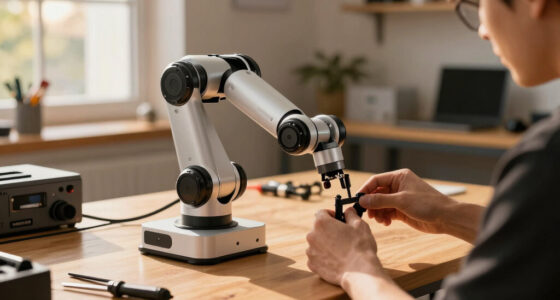
robot manipulation demonstration device
As an affiliate, we earn on qualifying purchases.
As an affiliate, we earn on qualifying purchases.
Background on Human Demonstration Data Collection for Robots
Traditional robot data collection relies heavily on dedicated robot arms, teleoperation systems, and laboratory setups, which are costly and limit the volume and diversity of collected demonstrations. Inspired by Stanford’s UMI project, which used handheld devices and SLAM techniques for outside-lab data gathering, Hugging Face’s Grabette aims to democratize and scale this process. Previous commercial devices from companies like Agibot and Genrobot have attempted similar approaches, but Grabette emphasizes open hardware and software, browser-based processing, and distribution via Hugging Face Hub.
The system’s development builds on prior research into handheld manipulation recording, seeking to overcome limitations of fixed laboratory setups and enable more flexible, widespread data collection for robot training.
“The bottleneck isn’t the model. It’s the data.”
— Hugging Face project team
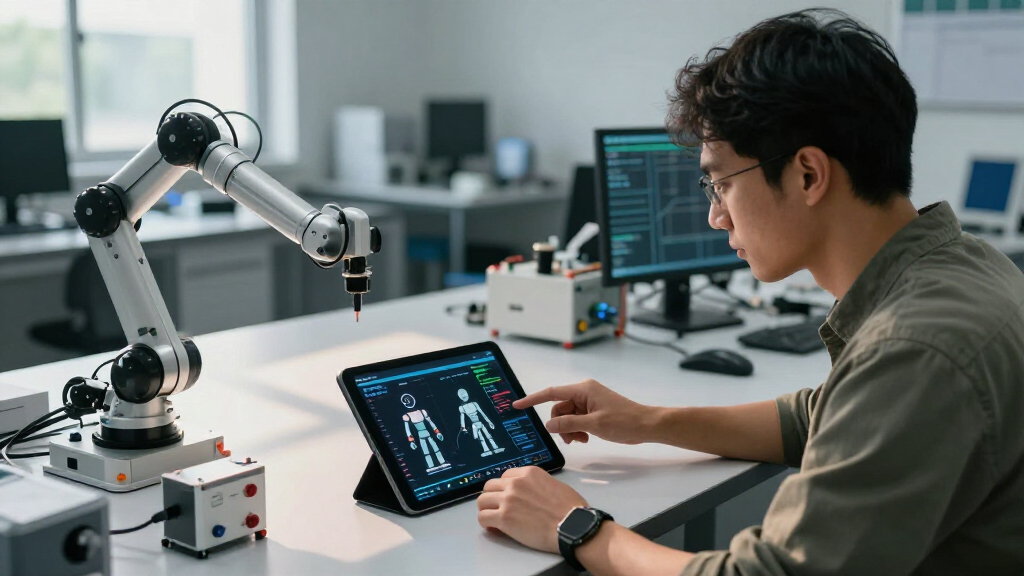
handheld robot data collection system
As an affiliate, we earn on qualifying purchases.
As an affiliate, we earn on qualifying purchases.
Performance Reliability and Validation Unknowns
There are no published independent evaluations or peer-reviewed studies comparing Grabette’s performance with existing data collection systems. It remains unclear how well the system tracks fast or complex movements, handles occlusions, or maintains accuracy in diverse environments. Details on dataset size, demonstration quality, and policy transferability are also absent, making it uncertain how effective Grabette will be in real-world applications.
As an affiliate, we earn on qualifying purchases.
Community Testing and Dataset Expansion Goals
The next phase involves researchers and developers reproducing the hardware and software setup, contributing demonstrations, and building shared datasets via Hugging Face Hub. Monitoring dataset growth, tracking reliability, and evaluating policy performance on various robot platforms will be key milestones. Updates to documentation, validation procedures, and licensing terms are expected to clarify Grabette’s role in collaborative robot learning efforts.
As an affiliate, we earn on qualifying purchases.
Key Questions
What exactly is Grabette?
Grabette is a handheld device equipped with cameras, sensors, and a gripper that records manipulation demonstrations by a human, then converts these recordings into datasets for robot training.
Does Grabette need a robot during recording?
No. The system is designed to record human demonstrations without operating a robot during the collection process.
How does Grabette convert recordings into datasets?
The system uses a SLAM-based process called Grabette-SLAM, which recovers device trajectories and converts the data into LeRobot format suitable for training robot policies.
Is Grabette ready for widespread use?
While the developers consider it usable for public testing, comprehensive validation and performance evaluations are still pending, and broad adoption remains to be seen.
What are the costs involved in building Grabette?
The estimated hardware cost is around €490, with an additional €120 for the motorized end effector, Gripette. Actual costs may vary based on parts and location.
Source: ThorstenMeyerAI.com
Halloween Picks
halloween
As an affiliate, we earn on qualifying purchases.