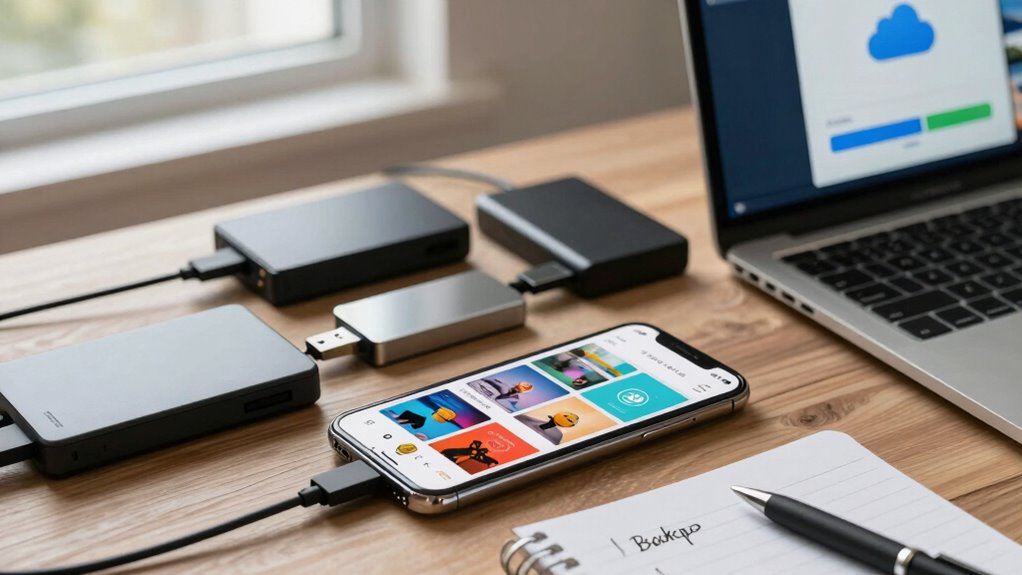

To build a backup plan for your Android photos, start by choosing a mix of cloud services like Google Photos for automatic uploads and local options like external drives or SD cards. Enable encryption and security settings to protect your images. Regularly update your backups—weekly or daily if possible—and organize your files for easy recovery. If you keep these steps in mind, you’ll guarantee your photos stay safe and accessible whenever you need them.

Get the latest gadgets delivered free with Prime
- Fast, free delivery on millions of items
- Prime Video, Amazon Music and more included
- Member-only deals all year
Key Takeaways
- Choose reliable cloud services and local storage options to ensure comprehensive photo backups.
- Enable automatic backups and encryption for secure, seamless photo synchronization across devices.
- Regularly organize, delete duplicates, and update backups to maintain data clarity and prevent storage issues.
- Verify backup integrity and security settings before restoring or sharing photos.
- Establish a consistent backup schedule, such as weekly or daily, to prevent data loss and keep backups current.
Android photo backup external drive
As an affiliate, we earn on qualifying purchases.
As an affiliate, we earn on qualifying purchases.
How Do Android Photo Backups Work?

Have you ever wondered how Android photo backups actually work? When you back up photos, the system often compresses them to save space, reducing file size through photo compression without sacrificing too much quality. This process helps you store more images efficiently. Meanwhile, backup encryption plays an essential role by securing your photos during transmission and storage. Encryption transforms your images into unreadable data, preventing unauthorized access. When you need to restore your photos, the backup system decrypts and decompresses them, making them accessible again. These processes work seamlessly in the background, ensuring your memories are safely stored and protected. Additionally, understanding the importance of **photo compression** helps you appreciate how storage efficiency is achieved without compromising quality. Furthermore, the efficiency of these backup processes depends on the compression algorithms used, which can vary between different Android devices and cloud services. These algorithms directly influence the backup speed and overall effectiveness of the backup process. Optimizing backup protocols can further enhance the security and speed of your photo backups. These processes work seamlessly in the background, ensuring your memories are safely stored and protected. Contrast ratio in projectors impacts the perceived sharpness and clarity of images, similar to how proper backup methods ensure your photos remain clear and intact over time. Understanding how photo compression and backup encryption operate helps you appreciate the significance of a reliable backup system for your Android photos.
As an affiliate, we earn on qualifying purchases.
Choosing the Best Backup Method for Your Android Photos
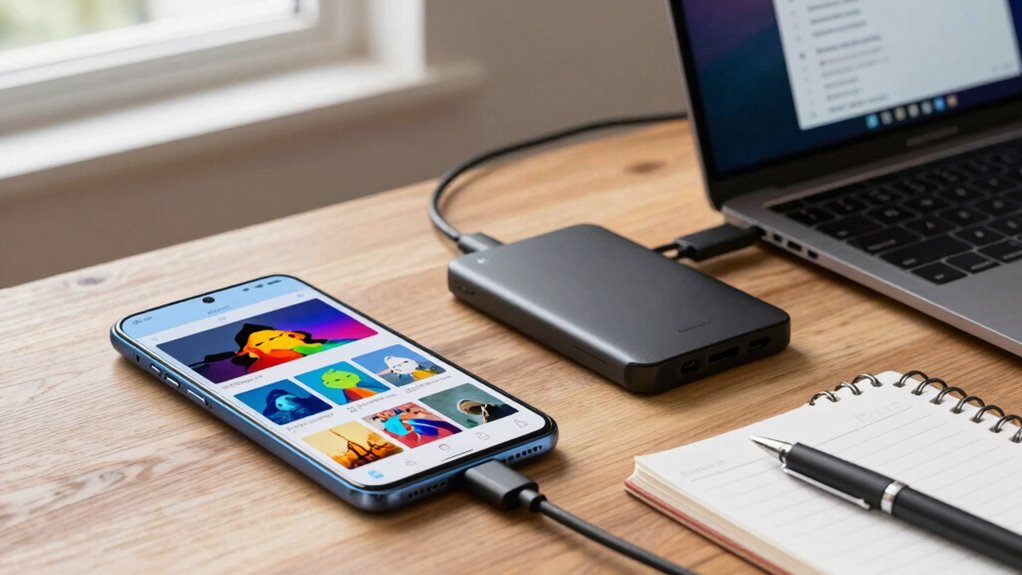
When selecting a backup method for your Android photos, you need to evaluate cloud storage options like Google Photos or Dropbox, as well as local backup devices such as external drives or SD cards. Each method has its own advantages and potential drawbacks, depending on your storage needs and accessibility. Incorporating Free Floating concepts like outdoor storage options or backup strategies can further enhance your photo safety plan. Understanding digital concepts and how they impact long-term data preservation can help you make more informed decisions about your backup approach. For example, considering the resilience of resale value in related technology investments might influence your choice of reliable backup devices or services. Additionally, assessing the Power of Imagination can inspire innovative backup solutions tailored to your specific needs, ensuring your memories remain protected in any situation. Exploring cloud security measures can also add an extra layer of protection to your backups against unauthorized access or data breaches.
Cloud Storage Options
Choosing the right cloud storage option is essential for reliably backing up your Android photos. To pick the best service, consider these key factors:
- Storage Space & Cost: Guarantee the plan offers enough space for your photo collection without breaking the bank.
- Security & Backup Encryption: Prioritize providers that offer strong encryption to keep your photos safe, especially if you do photo editing or work with sensitive images.
- Ease of Use & Accessibility: Look for seamless syncing and easy access across devices. Reliable access ensures you can retrieve your photos whenever needed.
- Additional Features: Some services provide specialized options like automatic photo backups or editing tools, which can enhance your overall experience. Remember to review the provider’s data privacy policies to ensure your photos are protected in accordance with your security preferences. Ensuring the provider maintains compliance with data regulations can also help safeguard your information. Understanding the capacity and storage options offered by each service can help you select the most suitable backup solution.
Local Backup Devices
While cloud storage offers convenience, maintaining a local backup of your Android photos provides an added layer of security and immediate access. Using external drives or SD cards for backup allows you to quickly retrieve photos without an internet connection. When selecting a device, consider options with ample storage and reliable backup encryption to protect your images. This method is ideal for quick photo editing, as you can directly access files without waiting for uploads. Regularly updating your local backups guarantees your photos stay safe from device failures or cloud outages. Keep your backup devices organized and encrypted to prevent unauthorized access. Incorporating reliable backup encryption enhances the security of your stored images. Understanding neural interfaces and future tech innovations can inspire smarter ways to manage and secure your digital assets. Additionally, choosing durable storage devices ensures your backups remain intact over time, even in harsh conditions. Exploring regional flavors and innovative storage solutions can help you develop a more comprehensive backup strategy. Combining local backups with cloud storage creates a robust, flexible system to preserve your Android photos securely and efficiently. Embracing regional backup solutions can also help tailor your strategy to different environments and needs.
As an affiliate, we earn on qualifying purchases.
Set Up Automatic Cloud Backups on Android
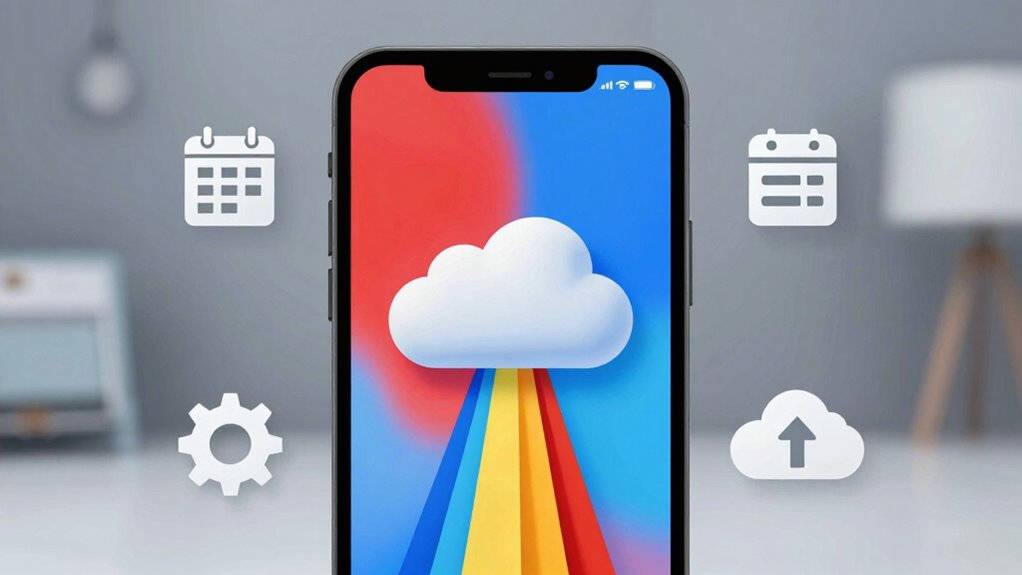
Setting up automatic cloud backups on your Android device is a straightforward way to guarantee your photos are always protected. To do this effectively, follow these key steps:
Automate your Android photo backups easily to keep your memories safe and secure in the cloud.
- Enable backup in your Google Photos app, ensuring photos are automatically uploaded and organized.
- Turn on Backup & Sync in your device settings, which manages photo editing and uploads securely.
- Confirm that Backup encryption is active, so your photos are safely stored with encryption during transfer and storage.
- Be aware of your cookie preferences, as these can affect how your data is tracked and stored during the backup process. Additionally, review your privacy policy to understand how your data is protected during backups and storage. Regularly updating your app settings can help improve data security and ensure your backups are consistent.
This setup keeps your images safe from device loss or damage. Automatic backups also streamline your workflow, allowing seamless photo editing with peace of mind. Regularly check your settings to ensure backups stay current, and enjoy worry-free photo storage on the cloud.
photo backup encryption software
As an affiliate, we earn on qualifying purchases.
As an affiliate, we earn on qualifying purchases.
Manual Ways to Transfer Photos to External Storage
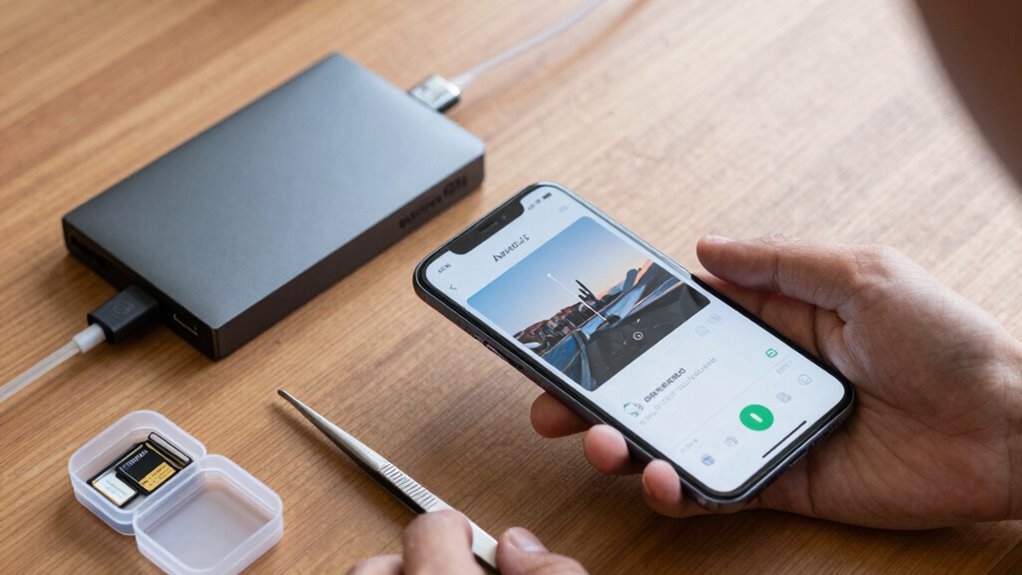
If you prefer more control over your photo backups or want to save storage space on your device, transferring photos manually to external storage is a reliable option. Connect your Android device to a computer via USB and select “File Transfer” mode. Then, locate your photos in the gallery or file manager. You can copy and paste them directly onto your computer or external drive. For better organization, consider editing photos before transferring or removing duplicates. When transferring, verify your external storage device is formatted correctly—preferably in a compatible format like FAT32 or exFAT—to prevent access issues later. This manual method gives you a hands-on approach, allowing you to choose specific photos for backup and ensuring your storage format is optimized for future use. Incorporating inclusive casting in your backup process can also help ensure your stored content reflects diverse representation. Additionally, understanding digital safety best practices can protect your data during transfer.
Organize and Manage Your Backed-Up Photos Effectively
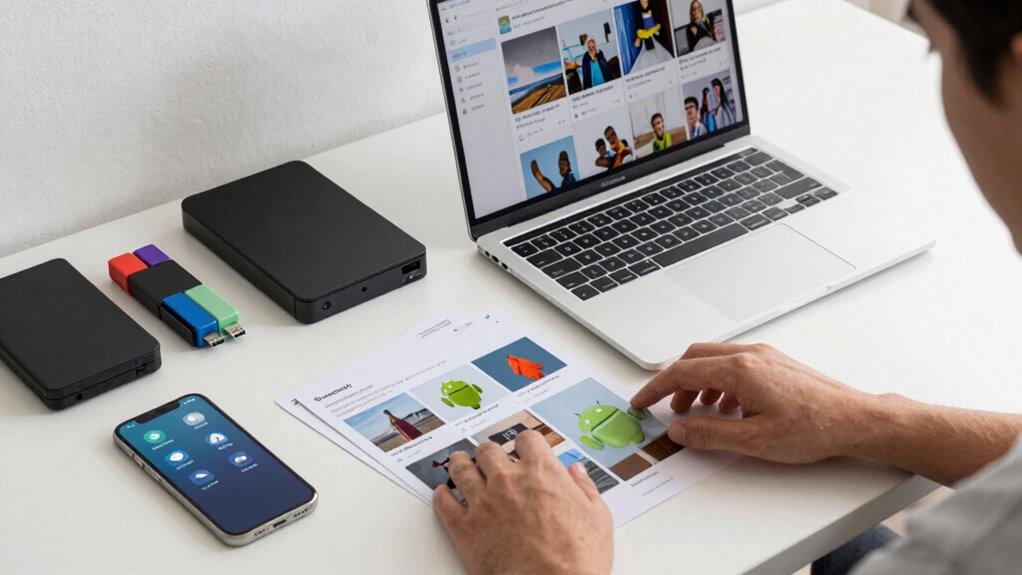
Once you’ve backed up your photos, organizing them is essential to keep your collection manageable and easy to access. Effective photo organization streamlines backup management and prevents clutter. To do this:
- Create folders or albums based on events, dates, or subjects for quick navigation.
- Rename files with descriptive titles to identify photos without opening them.
- Delete duplicates and blurry images to save space and improve the overall quality of your collection.
Fix Common Cloud Backup Errors
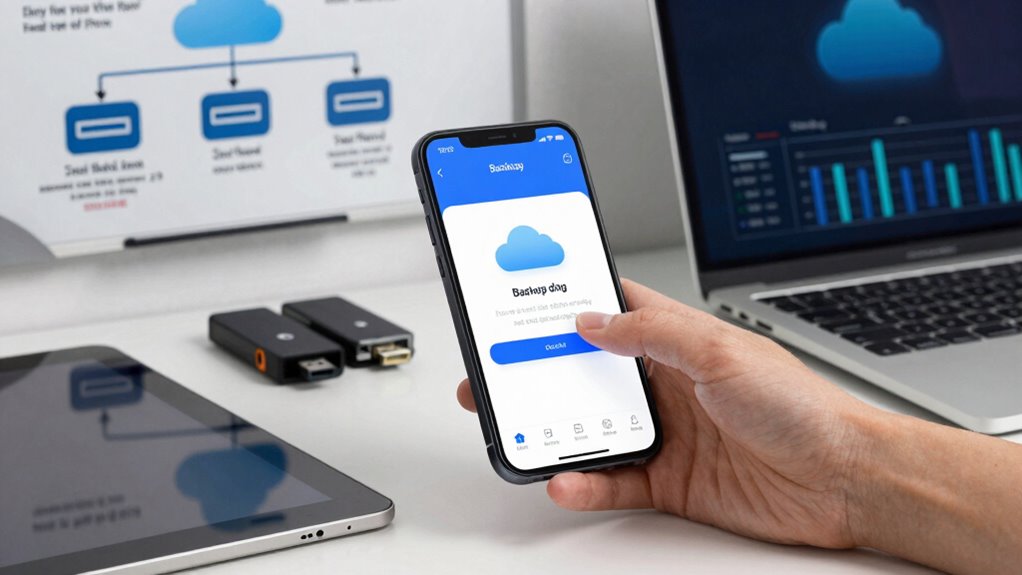
After organizing and managing your backed-up photos, it’s common to encounter issues when syncing with cloud services. One frequent problem is failed cloud sync, often caused by exceeding your storage quota. Check your cloud account to see if you’ve run out of space; if so, delete unnecessary files or upgrade your plan. Another issue is slow or interrupted uploads, which can result from poor internet connection or app glitches. Restart the app, make certain your device is connected to a stable network, and try again. Sometimes, incorrect app permissions or outdated software cause sync errors. Verify app permissions for storage access and update both the app and your device’s OS. Address these common issues, and your cloud backup will run smoothly.
Protect Your Android Photo Backups With Secure Practices
To guarantee your Android photo backups remain safe from theft, unauthorized access, and data breaches, adopting secure practices is essential. First, always enable backup encryption to protect your data during transit and storage. Second, be mindful of photo metadata; removing sensitive information like location tags can prevent privacy leaks. Third, use strong, unique passwords for your cloud accounts and enable two-factor authentication to add an extra security layer. Regularly review your backup settings to confirm encryption remains active and access controls are up-to-date. These steps help safeguard your photos from potential threats and unauthorized viewing, maintaining your privacy and peace of mind. Applying these secure practices ensures your Android photo backups stay protected against evolving cyber risks.
How Often Should You Update Your Backup?

Maintaining your backup schedule is key to guaranteeing your photos stay current and protected. How often you update your backup depends on how frequently you take new photos or edit existing ones. If you’re a casual user, updating weekly or biweekly might suffice. For avid photographers or those doing regular photo editing, daily backups are ideal to prevent data loss. Consistent updates ensure your backup storage stays current with your latest images. Automate backups whenever possible to save time and avoid forgetting. Remember, the more often you update, the less you’ll risk losing recent photos. Regular backups also help keep your backup storage organized and manageable, making recovery easier if needed. Staying consistent is the best way to protect your valuable memories.
Recover Lost Photos From Your Backup
Have you ever lost photos despite having a backup? Don’t worry—restoring them is straightforward. First, access your backup location, whether it’s cloud storage or an external device. Then, follow these steps:
- Browse your backup and locate the photos you want to recover.
- Use photo editing tools to enhance or adjust your images after recovery, if needed.
- Ensure your backup encryption is intact to keep your photos safe during restoration.
Always verify that the backup is up-to-date and properly encrypted before restoring. If your backup uses encryption, you’ll need the password or key to decrypt files. This process helps you recover lost photos efficiently, ensuring your memories are preserved securely.
Frequently Asked Questions
Can I Back up Photos From Third-Party Apps on Android?
Yes, you can back up photos from third-party apps on Android. Many third-party apps, like Google Photos or Dropbox, support direct backup of images from various apps, thanks to their compatibility features. You can customize backup frequency options, ensuring your photos stay safe without manual effort. Just check the app’s settings for third-party app compatibility and set your preferred backup schedule to keep your photos secure effortlessly.
What Is the Cost Difference Between Free and Paid Backup Services?
The pricing comparison between free and paid backup services varies considerably. Free plans often offer limited storage, typically around 15GB, which may not be enough for extensive photo backups. Paid plans, on the other hand, provide larger storage options, starting from 100GB to several terabytes, at a monthly or annual fee. If you have many photos, investing in a paid service helps avoid storage limitations and guarantees your backups stay safe.
How Do I Ensure Privacy and Security of My Cloud Backups?
Oh, you want your photos to stay as secret as a spy’s diary? Use strong encryption methods, like end-to-end encryption, and enable access controls. Regularly update passwords and two-factor authentication, because hackers love weak links. Keep your cloud provider’s privacy policies in check. Remember, if you don’t lock the vault, anyone can walk in. Privacy and security don’t happen by accident—so, lock it tight!
Are There Any Limitations on Backup Sizes or Formats?
There are some limitations on backup sizes and formats depending on your chosen service. Backup storage plans often cap the total space you can use, so large photo collections might require extra storage. Additionally, photo resolution can affect backup size; higher resolution images take up more space, but some services compress or resize images to save storage. Always check your backup service’s specifications to guarantee your photos fit within their size and format guidelines.
How Long Are My Photos Stored in Cloud Backup Services?
Your photos stay in cloud backup services as long as the company’s policies, which can be as fleeting as a Snapchat. Photo compression might reduce quality, but not storage duration—many services keep backups indefinitely unless you delete them. However, some providers might purge inactive accounts or when storage limits are exceeded. So, if you’re banking on eternal storage, better read the fine print or prepare for digital archaeology.
Conclusion
Now that you know how to build a backup plan for your Android photos, you’re the captain steering your digital ship through the stormy seas of data loss. By choosing the right methods, setting up automatic backups, and practicing secure habits, you’ll keep your precious memories safe and sound. Remember, a well-crafted backup is your lifeboat in rough waters—ready to rescue your photos when needed. Sail confidently knowing your memories are protected!
Halloween Picks
halloween
As an affiliate, we earn on qualifying purchases.