
🔍 Read the full analysis: How To Pick From 10 Best Studio Monitor Headphones In 2027 For AI Production on ThorstenMeyerAI.com

Get the latest gadgets delivered free with Prime
- Fast, free delivery on millions of items
- Prime Video, Amazon Music and more included
- Member-only deals all year
TL;DR
ThorstenMeyerAI.com’s 2027 guide ranks 10 closed-back studio headphones for audio production, naming the Audio-Technica ATH-M50x its best overall pick and the Yamaha HPH-MT5 a strong choice for flatter response. The guide is an editorial comparison, not a new independent test or a report of a product announcement; its recommendations should be weighed against personal fit, workflow and current availability.
ThorstenMeyerAI.com’s 2027 buyer’s guide, the original analysis, compares 10 studio monitor headphones for production work, including workflows that use AI-generated audio, and names the Audio-Technica ATH-M50x its best overall choice. The guide says buyers should balance sound accuracy against isolation, comfort and repairability; it does not describe a new product launch or independent laboratory test.
The guide says its ranking considers frequency accuracy, comfort and isolation, build quality and serviceability, and value, criteria also explored in studio monitor headphone comparisons. It describes comparing the same test tracks across the models in mixing scenarios, but the supplied material does not provide measurements, scores, prices or a publication date. Its conclusions are editorial recommendations rather than independently verified performance findings.
For versatile use, the guide favors the ATH-M50x, citing its folding design and detachable cable, while it describes the Sony MDR-7506 as a longstanding studio option with revealing mids, alongside options covered in this guide to studio headphones for editing. It recommends the Yamaha HPH-MT5 for listeners seeking a flatter response. The guide also names the newer Sony MDR-M1 as an upgrade option, though it gives no test data to substantiate its soundstage comparison.
The remaining models in the ten-headphone lineup are the Sennheiser HD 280 Pro, Audio-Technica ATH-M30x and ATH-M20x, TASCAM TH-02, and OneOdio Pro-10. The source text does not include full individual reviews for every pick, so it is not possible to reproduce a complete, evidence-backed ranking for all ten from the material provided.
The 10 picks
- 1
 Sony MDR-M1 Professional Reference Closed Monitor HeadphonesView on Amazon →
- 2
 Audio-Technica ATH-M50x Professional Studio Monitor HeadphonesView on Amazon →
- 3
 Sony MDR7506 Professional Large Diaphragm HeadphonesView on Amazon →
- 4
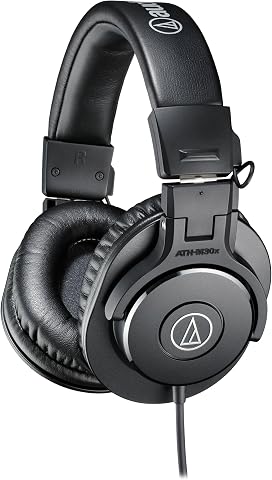 Audio-Technica ATH-M30x Professional Studio Monitor Headphones, BlackView on Amazon →
- 5
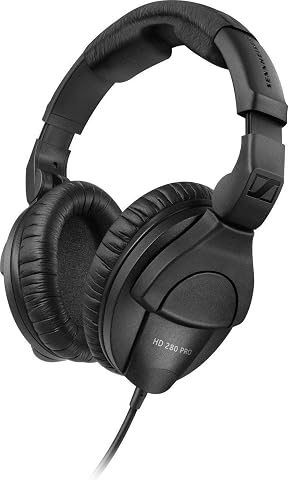 Sennheiser HD 280 Pro Headphones, BlackView on Amazon →
- 6
 Audio-Technica ATH-M20x Professional Studio Monitor HeadphonesView on Amazon →
- 7
 Yamaha HPH-MT5 Monitor Headphones, WhiteView on Amazon →
- 8
 Yamaha HPH-MT5 Monitor Headphones, BlackView on Amazon →
- 9
 OneOdio Pro-10 Wired Over-Ear Headphones with 50mm Drivers and Dual Jack – BlackView on Amazon →
- 10
 TASCAM TH-02 Professional Studio Monitor Headphones, Wired, Over EarView on Amazon →
Choosing Headphones for AI Audio Work
Headphones affect how producers judge balances, edits and tonal problems, whether a track begins with a live recording, a software instrument or AI-generated material. A model that emphasizes bass or treble can influence those decisions, while closed-back isolation can help during recording near a microphone. These are practical considerations, not evidence that any headphone is specifically optimized for AI production.
For a working studio, ownership costs also matter. Replaceable cables and ear pads may extend a headphone’s useful life, while clamp force and weight can shape comfort over long sessions. The guide’s comparisons give readers a starting point, but fit and sound preferences still need to be checked firsthand where possible.
Products Worth Considering

Amazon Kindle Scribe Colorsoft 64GB with Premium Pen

Samsung 32 Odyssey G5 QHD Gaming Monitor

Kindle Paperwhite Signature Edition 32GB (2024 Model) – Metallic Black
As an affiliate, we earn on qualifying purchases.
How the Guide Frames Its Picks
The source presents its list as a comparison of 10 closed-back models, emphasizing versatility for both listening and recording. It argues that closed backs help limit sound leakage into microphones, while noting that a more open presentation can appeal to people who mix but do not record. The lineup described in the supplied material is closed-back, so it does not directly compare open-back alternatives.
The guide warns that consumer-style bass and treble boosts can make a mix sound more exciting while obscuring problems. It describes the ATH-M50x as having a modest bass emphasis and the MDR-7506 as having an upper-mid lift some listeners may find tiring. Those characterizations come from the guide; no response graphs or standardized listening-test results were supplied here to confirm them.
“The ATH-M50x stands out as the best overall for its balanced signature and detachable cable.”
— ThorstenMeyerAI.com guide
What the Comparison Does Not Establish
The supplied source does not state when the guide was published, give current prices, or identify retailers and regional availability. It also does not provide measurement charts, detailed scores, the full review text for all 10 models or a reproducible test protocol. The claim that the MDR-M1 has a wider soundstage while retaining similar reference tuning is not accompanied by supporting data in the material provided.
The guide’s framing around AI production does not identify AI-specific listening tests or explain how AI-generated audio changes headphone requirements. Its advice concerns general studio listening and monitoring. Buyers should treat rankings and descriptions as the author’s judgments, not universal findings.
Check Fit, Pricing and Availability
Readers comparing the list should confirm current prices and replacement-part availability, then try their preferred models with familiar material and their usual interface or headphone output. The guide points to comfort, isolation and serviceability as decision factors, but the supplied information does not announce a follow-up test or a future product milestone.
For recording, prioritize a secure seal and limited sound leakage; for extended mixing, assess clamp force and pad comfort. A final choice should account for the buyer’s own listening needs rather than rely on the guide’s ranking alone.
Key Questions
Which headphone does the guide rank first?
The guide names the Audio-Technica ATH-M50x its best overall pick, citing its balanced sound, folding design and detachable cable. That is the source’s editorial recommendation, not a verified universal ranking.
Which picks does the guide describe as more neutral?
It highlights the Yamaha HPH-MT5 for a flatter response and describes the Sony MDR-7506 as revealing in the midrange. The source provides no measurement charts to independently compare their frequency response.
Does the guide test headphones specifically for AI production?
The supplied material describes general studio and mixing considerations, but it does not report AI-specific tests. The AI production framing does not establish that any model is designed or specially validated for AI-generated audio.
What should buyers check before choosing a model?
Consider comfort, isolation, sound character, cable and pad replacement, and compatibility with your audio source. The source does not provide current prices or full specifications for every model, so verify those details before buying.
Source: ThorstenMeyerAI.com